Jacob Fenston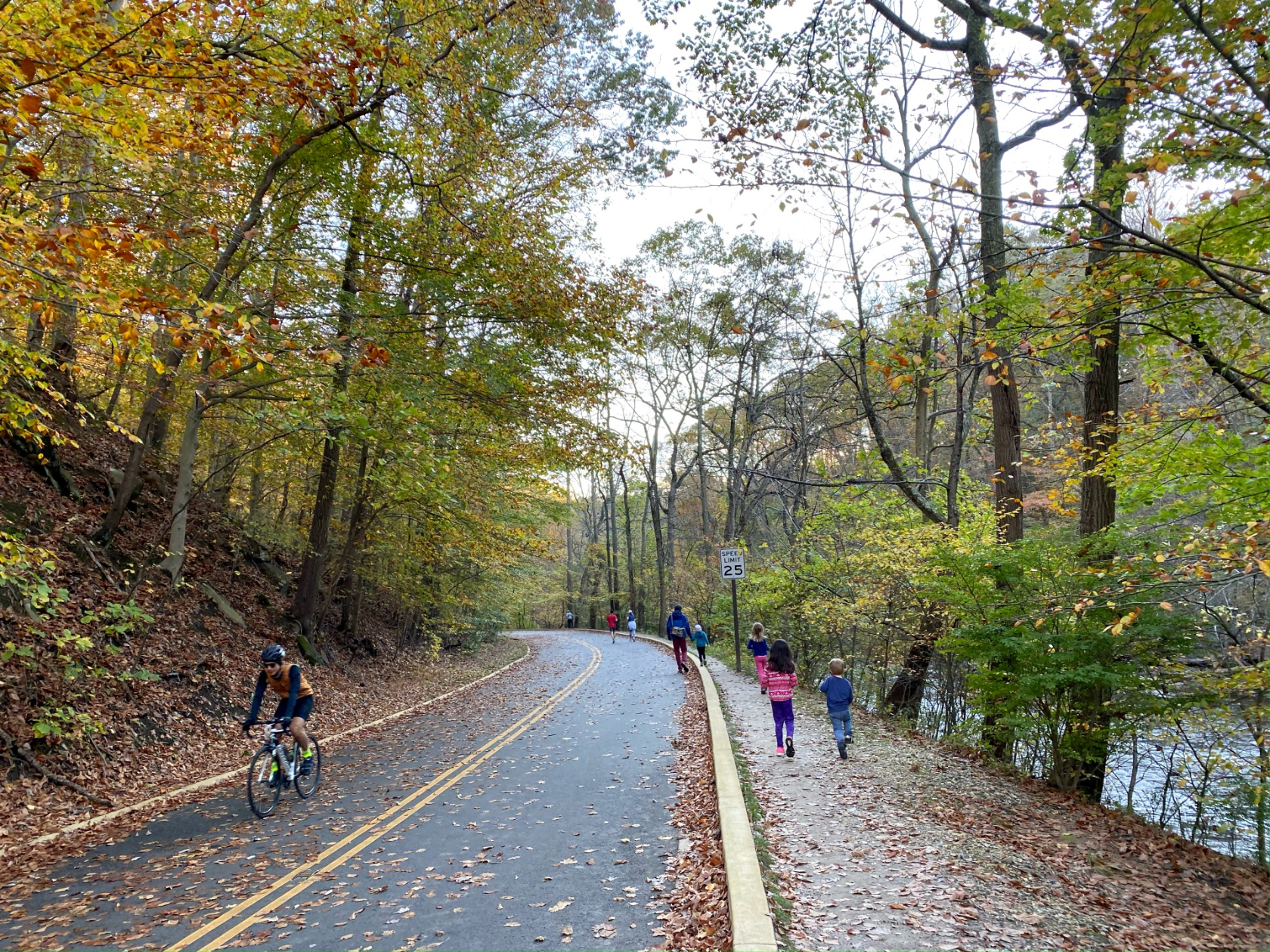
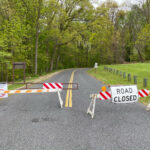
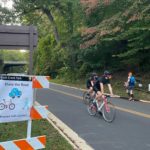
The National Park Service will keep Rock Creek Park’s Beach Drive closed to cars year-round, backing away from an earlier proposal to reopen the road to drivers, except during summer months.
“This was a very difficult decision,” says Rock Creek Park Superintendent Julia Washburn. “We had some deep conversations, some good analysis, a lot of thoughtful input from the public.”
According to NPS officials, the full-time closure will make the park safer, by cutting down on “conflicts between people who walk, bicycle and drive,” while also expanding access for visitors with disabilities. The portion of Beach Drive in question has no other paved pathway, making it inaccessible for many people when it is used as a car commuter route.
“It is open to people to exercise, to walk, to contemplate nature, to sit quietly without the noise of the cars, to get exercise,” says Washburn. “We know that outdoor recreation, especially in nature, is very, very good for your mental health and your physical health.”

“Oh, my God, it’s amazing,” says Jeanne Braha, executive director of the nonprofit Rock Creek Conservancy. “It’s really a wonderful, wonderful decision by the National Park Service.”
Rock Creek Park was created by Congress in 1890 — four days before Yosemite — as “a public park or pleasure ground for the benefit and enjoyment of the people of the United States.”
“Rock Creek Park was one of the first national parks established, so it’s fitting that it’s leading the charge and figuring out how to manage amazing natural areas in the 21st century,” Braha says.
Previously NPS proposed reopening Beach Drive to cars for 9 months a year. In an environmental assessment released in July, NPS recommended keeping the road closed during the summer, but allowing car traffic during weekdays the rest of the year. Park officials said this was a compromise, allowing people to enjoy Beach Drive by bike or on foot for part of the year, while also letting car commuters use the road during the most-traffic plagued months.
During a public comment period over the summer, after NPS proposed reopening Beach Drive to drivers, the agency received 3,696 correspondences from the public. These overwhelmingly supported keeping cars off the road: 67% of comments supported a year-round closure, 9% supported the NPS-preferred seasonal closure, while just 4% supported returning to the pre-pandemic status quo, with the road open to cars year-round. Additionally, the D.C. Council and the Montgomery County Council both passed resolutions calling on NPS to make the pandemic closures permanent.
“It’s clear that the park service took to heart the interest in the community in having this space for recreation, recognizing the need for those spaces,” Braha says.
In its initial proposal to reopen Beach Drive to drivers, NPS officials argued that bringing car traffic back into the park was the best option for the environment. Washburn acknowledged at the time that this was counterintuitive, but said car traffic would “create a deterrent,” preventing hikers and dog walkers from cutting through the park on unofficial trails. These unofficial trails can kill plants, fragment habitat, and cause erosion — lowering water quality and harming aquatic creatures.
The environmental assessment included a map of unofficial trails in the park, and officials said these trails had expanded greatly in recent years. Pre-pandemic, officials documented 21.5 miles of unofficial trails; two years later, in Oct. 2020, they found 30 miles of these trails.
However, officials did not provide evidence to back up the claim that more cars would limit off-trail hiking. The argument was met with derision by many commenters at a public meeting on July 18, though a few commenters welcomed the proposal to reopen the road to drivers, noting an increase in traffic in adjacent neighborhoods.
Washburn says that NPS officials listened to the public feedback — though she added, “policy decisions the park service makes are not by popular vote.” NPS plans to try different methods of keeping people off unofficial trails, she says.
This includes developing a visitor use management plan, “to come up with solutions to help people stay on the trails, keep their dogs leashed, and not trample through sensitive, forested areas,” Washburn says. Also, NPS is partnering with Rock Creek Conservancy to launch a public relations campaign to get people to stay on official trails.
NPS closed the roughly 3.5 mile northern section of Beach Drive to car traffic at the beginning of the pandemic, in April 2020. Initially the plan was to reopen the road to drivers when the city ended pandemic restrictions, but after public pressure, including from the D.C. Council and Delegate Eleanor Holmes Norton, NPS announced in July 2021 that it would study the possibility of keeping cars off Beach Drive for good.
The battle over cars in Rock Creek Park dates back more than 100 years, to the early 20th century, when automobiles were first making their mark on the city. In a 1918, a park master plan prepared by the famous Olmsted brothers warned against allowing the “noise and tangle” of motorized traffic into the heart of Rock Creek valley. A 1934 report declared, “The automobile can be designated as one of the greatest detriments to the enjoyment of Rock Creek Park today.”
By 1966, the automobile had largely won, with the opening of the zoo tunnel, connecting the freeway-like Rock Creek and Potomac Parkway with the more bucolic northern sections of Rock Creek Park, and transforming Beach Drive into a natural route for drivers commuting from Maryland and upper Northwest D.C. into downtown offices.
That same year, NPS instituted the first closures of Beach Drive to cars — the road was closed on Sundays, between Broad Branch and Joyce Rd. NW. In the early 1980s, NPS expanded the closures to include Saturdays and federal holidays, and added another 1.3 mile section from Sherrill Dr. NW to the Maryland border.
In 2007, NPS considered closing Beach Drive to cars year-round, but decided against it, opting instead to install speed enforcement and traffic calming measures, including speed tables, in an attempt to slow down drivers and cut down on traffic volume. However, none of these were measures were implemented, with the exception of two speed tables and a pedestrian sign at Harvard St. NW, by the zoo entrance.
“This has been a tug of war,” says Peter Harnik, coordinator of the People’s Alliance for Rock Creek, a grassroots group that has been campaigning to close Beach Drive to cars for some 40 years. “There was so much pushback from Montgomery County, from people in Ward 3 and Ward 4 in the District, that the park service really was kind of caught on the horns of a dilemma, and reluctant to take any action.”
When closing the road to cars came up in the past, there were always powerful interests opposing it, Harnik says. “As with everything else in Washington, it was political.”
Colin Browne, communications director for the Washington Area Bicyclist Association, welcomed the news. “This is just a treasured green space in the middle of a city, and people should be able to use it on foot or on a bike, and experience the outdoors,” Browne says. “Using that space as a commuter thoroughfare, it’s not really in line with what parks are supposed to be.”
According to NPS, keeping Beach Drive closed to cars will have “minimal impact” on rush hour commute times for drivers.
“The upper portion of Beach Drive is a minor road that carries a small amount of traffic relative to nearby roadways,” NPS says.
NPS officials plan to work with the District Department of Transportation to install a new traffic signal and adjust signal timing nearby the park to improve traffic flow. NPS also plans to improve the gates around the closed portions of Beach Drive to make access easier for emergency vehicles.
NPS will monitor the effects of the closure, and the park superintendent could modify the closure in the future.
Supporters of the road closure plan to celebrate: Braha says Rock Creek Conservancy is putting together a “Beach Party” in the near future. “I think it can be both a “Beach” — like Beach Drive — party as well as a “beech” — like the beech trees that are dominant in the canopy over it — party.”
This story was updated to add comments from Julia Washburn and others.