“When do you open? What do you serve? Can I order dinner?”
Susan Qin, the owner of east Asian pantry Chinese Street Market, gets these questions nearly every day from curious would-be patrons rapping on the locked door — even though there’s a “closed” sign propped up on the glass. And every time, she opens the door to explain.
The storefront at the southern end of Shaw near Mount Vernon Square is not a restaurant, but it’s many other things: pop-up prepared food shop, farmers market vendor, website dedicated to Chinese food and culture, and event organizer.
Those passersby can be forgiven for their mistake: Chinese Street Market is located in a former restaurant with big windows showing off a dining room full of tables and chairs. They opened on 10th Street NW in May, hosting cooking classes, workshops, and weekend pop-ups offering prepared meals like dumplings and noodles.
The business aims to educate Washingtonians about Chinese food and culture, and build a community for locals with Chinese ancestry through events, meals, products, and educational blog posts, says Qin.
“Our focus is educational and promoting small Asian makers in [the] DMV, and [to] just do whatever we need to sustain that goal,” Qin says. Expanding into a full-blown restaurant — or even a regular grocery store — would just be a distraction from that path, she adds.
How it started
Qin hails from Chengdu, China, and has lived in D.C. since she was 17. She was working in financial strategy and analysis when she was inspired to start Chinese Street Market because she encountered an underserved Asian clientele in the region.
Qin threw the first Chinese Street Market in Chinatown in September 2019, drawing over 3,000 visitors to the one-time street fair.
She soon left behind the financial career to embark on a journey to bring a wider variety of Chinese cuisine to D.C. and pursue her lifelong passion for cooking. The original market turned into a regular gig at local farmers markets, as well as the Trash Panda pop-ups Qin brought to local restaurants.
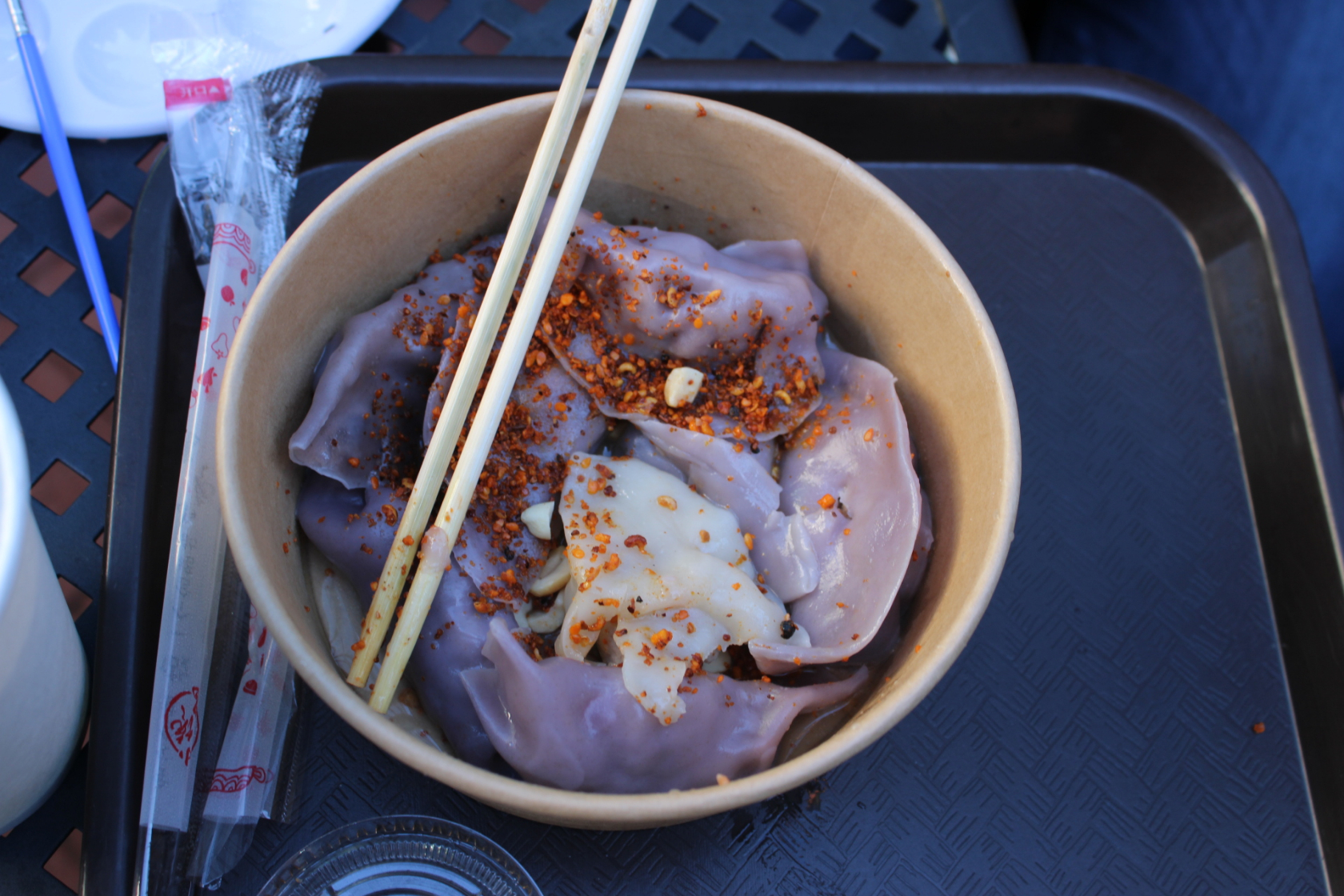
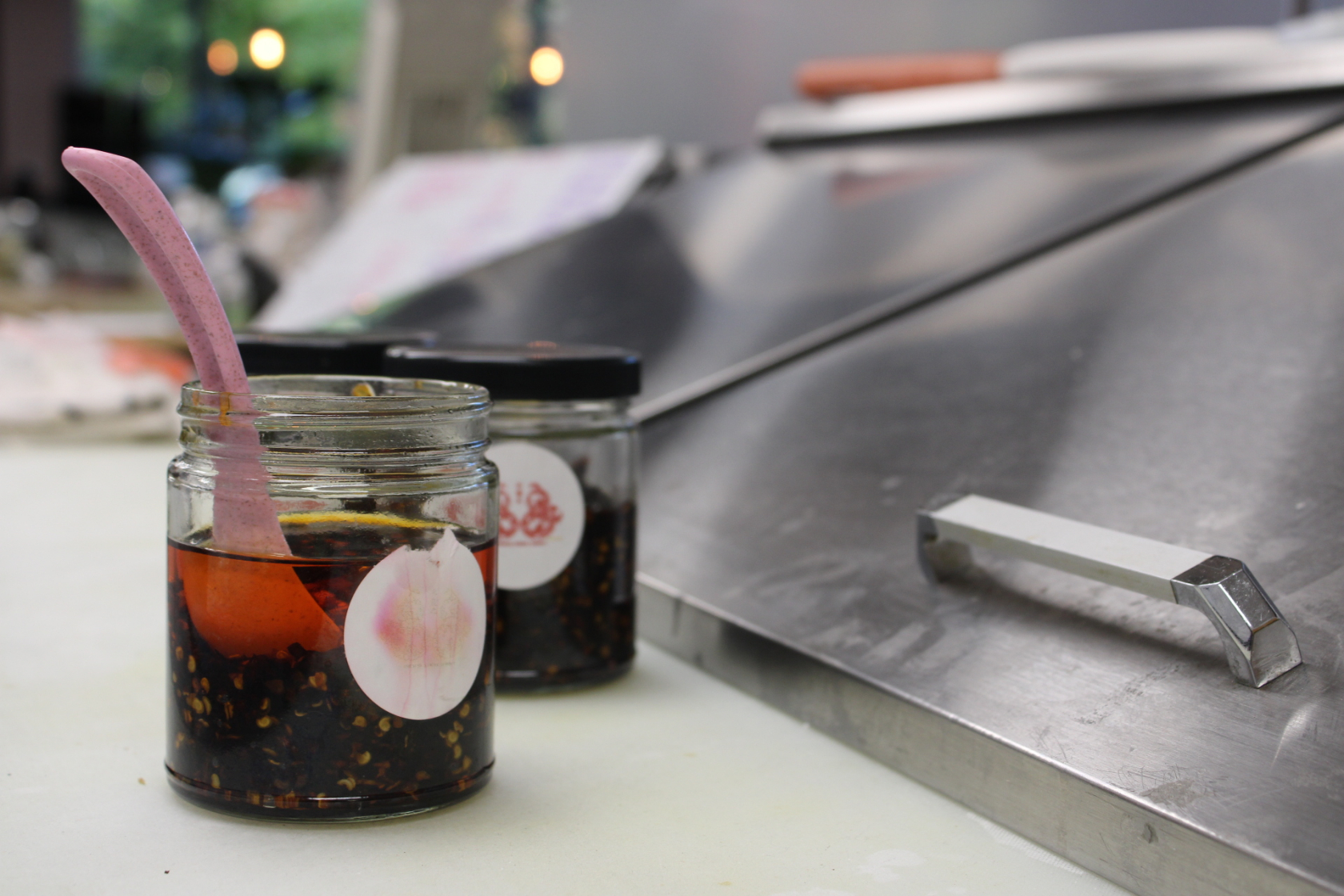
Growing demand has led her to expand the menu to include ready-made meals, dumplings, noodles, and chili oil sold at various local farmers markets and businesses like Teaism, she says.
The frozen dumplings, one of her main sellers, are handmade in the new space each week with fresh dough, and fillings like beef and carrot, pork and Chinese celery, tofu and vegetable, and others. Customers can also choose from at least six different sauce options from various regions of China, such as Sichuan spicy hotpot and Chaoshan barbecue.
When her current space became available, Qin saw her opportunity to take Chinese Street Market to the next level in connecting food and culture.
“People want something to cook at home, but there’s the culture piece of it as well,” Qin says. “Here at our location it’s about what you want to learn and having fun with friends and making connections.”
So far, she’s hosted classes to make pumpkin rice cakes and mooncakes in October, where she invited local ice cream maker Olivia Green to dole out specially made toasted sesame and oolong tea ice creams. (They paired the former with Qin’s chili oil and the latter was sandwiched between two slices of a mooncake.)
A growing footprint
Qin’s business now consists of seven kitchen staff members making vats of chili oil and 2,000 dumplings each week; eight guest chefs who sell pastries and products at Qin’s farmers market stalls and pop-ups; a logistics team; volunteers who assist with markets and events; a PhD candidate at Cambridge University who researches recipes and blog posts; and a traditional Chinese medicine expert who also happens to be the historian’s father.
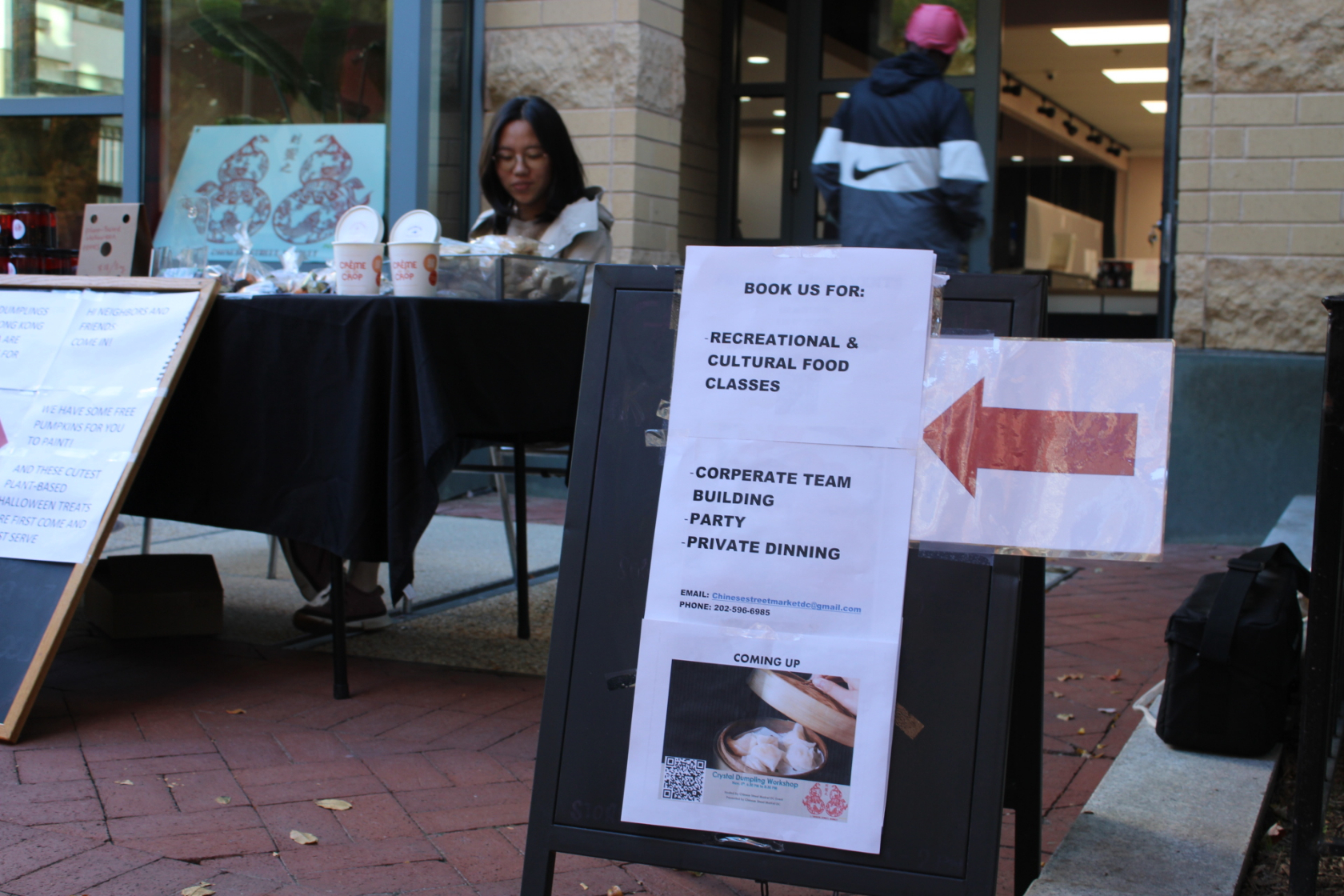
Raheem, a volunteer who asked to be identified only by his first name, met Qin at a farmers market and appreciated her dedication to researching authentic recipes for products using local ingredients, he says. That’s why he was at the table selling Taiwanese pineapple cakes and Halloween plant-based Su cookies at a pumpkin painting event at Chinese Street Market in late October.
Local maker Jing Liu, who made those Su cookies, began working with Qin after signing on as a vendor for the 2019 street fair. Since then, she’s created her own line of vegan and gluten-free products called Jings Plant-Based Patisserie that she sells at Qin’s farmers market stalls.
Liu continues to work with Qin not only because it’s helping her business, but also because she believes in the mission to spread appreciation for Chinese food and culture, she says.
“As a mom of a second-generation Asian American kid, I truly feel the importance of not only preserving and passing down our own traditions but also encouraging multi-generational diaspora to learn and embrace their own culture and form their own identities,” Liu says.
Incorporating Chinese — and Chinatown — history
Yuxuan Cai, the historian that works with Chinese Street Market, has also taken up that mantle. Cai met Qin at the Palisades farmers market in 2020, and began telling Qin about the regional dishes she made with the dumplings she purchased, including yellow garlic chive and ground beef dumplings in a Xi’An style spiced sour soup, or mackerel dumplings cooked in a Shanghai style clay pot dish.
Their shared passion for authentic, homemade Chinese food soon grew into a partnership to share the story behind the food. The two collaborate on content for the site: Cai proposes a topic she wants to write about to inspire a product or workshop, or Qin will ask Cai to do something like researching a celebratory dish for a holiday that the shop can offer.
“We are aiming at something for the person beyond filling the belly, satisfying the appetite, and catering for the desires,” Cai writes in an email.
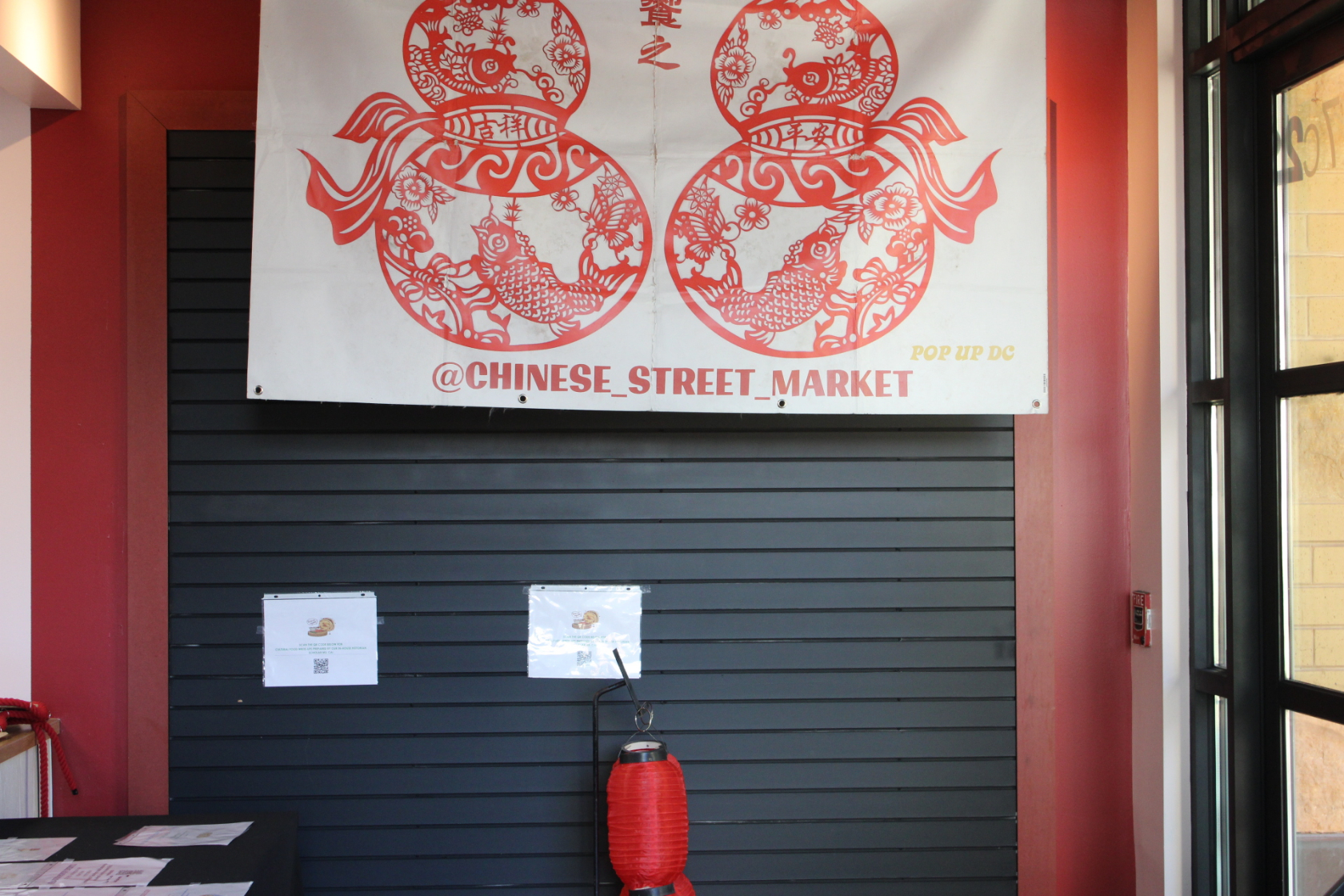
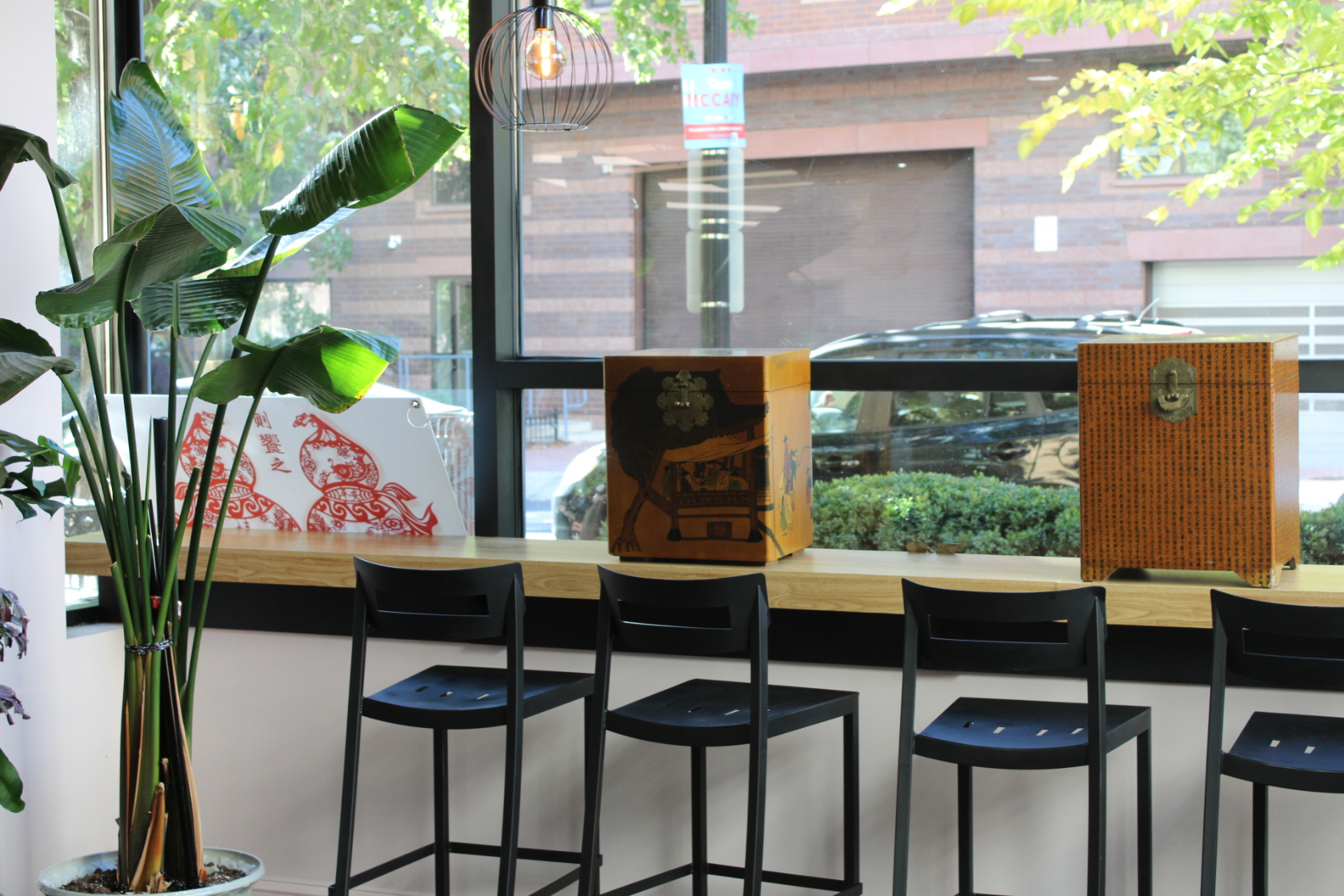
Similarly, the market location’s proximity to Chinatown was an intentional nod to the neighborhood’s past.
Displacement of Chinese-owned businesses and the Chinese community in D.C.’s Chinatown is well-documented. In 2021, Qin posted publicly about out-of-order Chinese characters on a business in Chinatown, noting “Chinatown should have more than just shops with random Chinese characters… right?? And if anyone decides to use the characters, please at least make it right.”
Qin’s original street fair aimed to bring Asian vendors into the neighborhood. “There needs to be some Asian presence in Chinatown,” Qin says.
While she doesn’t think her business can entirely fix the problem, she hopes building a community at Chinese Street Market will help — at least as long as she’s near the neighborhood.
She’s going to continue tweaking the business — like adding a pre-order option for pop-ups in the store — and to host events in the space at least through Chinese New Year at the end of January 2023, when her lease may end. After that, Qin isn’t sure whether she’ll be able to stay, but she’s prepared to pivot to wholesale and business-to-business sales and focus on the farmers market component.
“All I’m trying to do is add some value with my own hands. I want to add something to this community and see how far this can go,” Qin says.
Chinese Street Market is located at 1117 10th Street, NW. Pop-up hours are Friday-Sunday 11 a.m. to 7 p.m. Details for upcoming events will be released on Instagram.