Jacob Fenston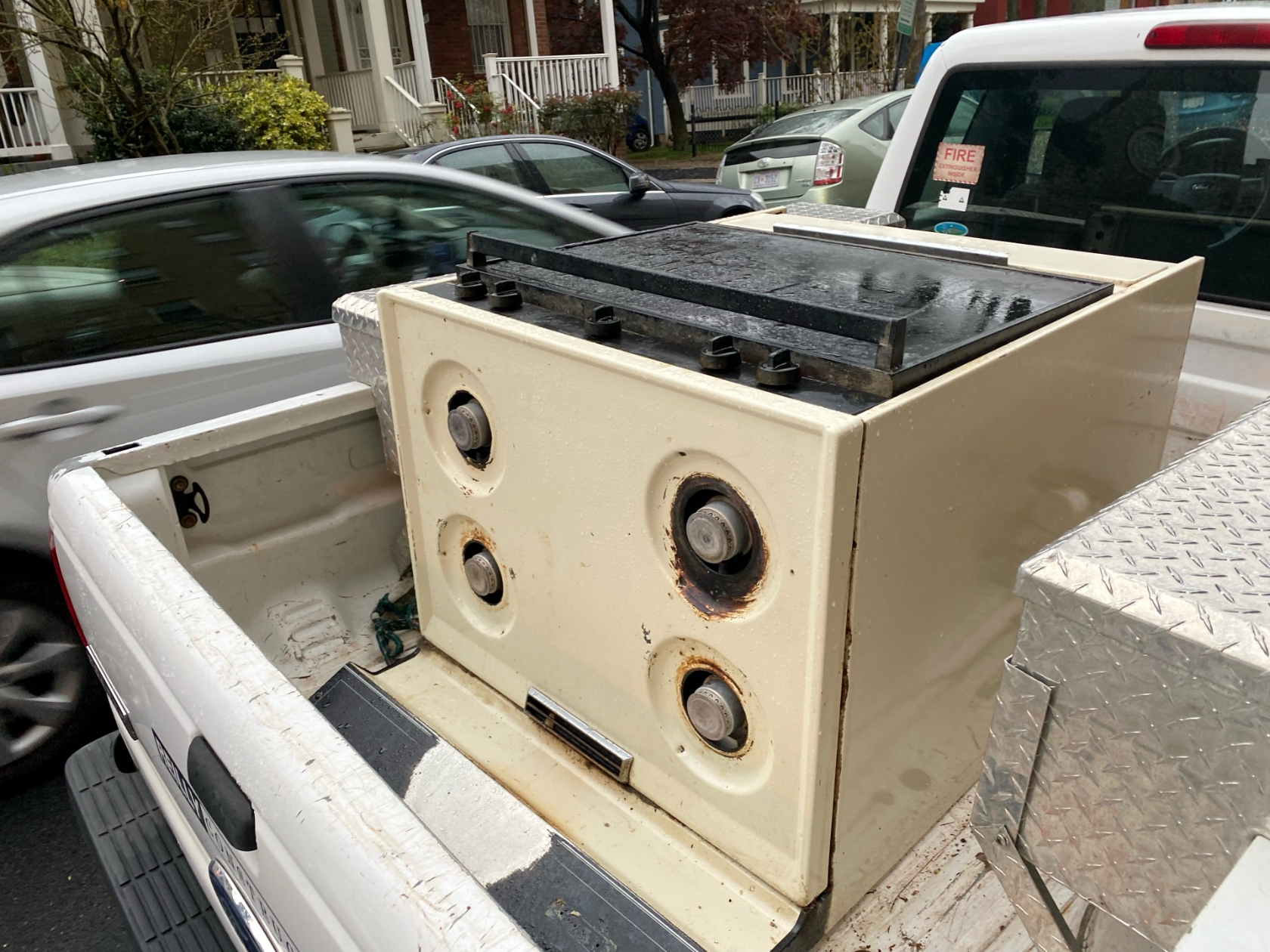
In the English language, the idiom “cooking with gas” means to be “doing something very well” or “making very good progress,” according to the dictionary. But if you stop to think about it, it’s actually a little barbaric: cooking over an open flame by burning a fossil fuel inside your home, while you and your family breathe in the exhaust.
“Anyone who’s ever been outside and had a fire – you know what particulates are going to be created in the air,” says D.C. Councilmember Charles Allen (D-Ward 6). “Now imagine you’re in a place where there’s not much air flow, you don’t have healthy air coming in, and you just have that burner going.”
Allen is introducing legislation with a goal to retrofit 30,000 low-income homes in D.C. with induction stoves, heat pumps, heat pump water heaters, and other highly efficient electric appliances for free. The legislation, he says, would cut greenhouse gas emissions by phasing out fossil fuels in existing buildings, while at the same time making the air people breathe at home a lot cleaner.
“It’s not just something that, ‘gosh, doesn’t sound good for the planet?'” Allen says. “This impacts air quality. It impacts kids’ asthma. It impacts seniors.”
Natural gas is mostly methane, a highly potent greenhouse gas. When burned for heat or cooking, it releases planet-warming carbon dioxide. But natural gas also causes a lot of pollution before it gets burned – leaking from pipes before it reaches your home, and leaking from appliances inside the home.
Burning natural gas also creates nitrogen dioxide and fine particulate matter, which can exacerbate asthma, especially in children. One study found children living in homes with gas stoves were 42% more likely to have asthma; other research has shown that gas appliances also give off toxic, cancer-causing chemicals including benzene.
“Gas appliances fill our homes with many of the same pollutants as car exhaust,” says Mark Rodeffer, with the D.C. chapter of the Sierra Club.
The legislation, which Allen introduced today, would create a Methane Free Homes program within the District Department of Energy and Environment. The program would provide subsidized retrofits on a sliding scale to households making less than 150% of the area median income. It would be funded mostly or entirely by federal funds through the recently-passed Inflation Reduction Act, Allen says.
The program would also provide training and education to local contractors who would perform the electrification retrofits. (Currently, many contractors are less familiar with heat pumps and other efficient electric appliances and may recommend against them.)
The federal Inflation Reduction Act includes tax credits for going electric that many wealthier residents will take advantage of. This includes tax credits to pay for 30% of the cost of installing heat pumps and heat pump water heaters, up to $2,000.
“Higher-income households are going to be able to navigate using the tax incentive systems to be able to make improvements on their homes,” Allen says. “Lower and moderate-income households are going to need government to step up to the plate, and this legislation is going to help make sure that happens.”
Allen’s bill would require DOEE to complete 10,000 free electrification retrofits to low-income households by 2030, and 30,000 by 2040. Retrofits could also be provided to wealthier households, making more than 150% of area median income, if funding allows.
In addition to making indoor air quality cleaner for D.C. residents and cutting greenhouse gas emissions, the program would also ease the burden of household energy bills, Allen says.
The bill would also disincentivize the purchase of natural gas appliances, levying an additional permitting fee on them. This fee would be about $800 to $1,150 for a typical gas-powered furnace to heat a 2,000 sq. ft. home.
The legislation would also ban the installation of gas appliances in some public housing upgrades.
“D.C. has pledged to eliminate carbon emissions and eliminate the use of fossil fuels by 2045,” Rodeffer says. “If we are going to do that, we have to stop burning fracked gas in our buildings, and Councilmember Allen’s bill is taking us in that direction.”
Natural gas does pollute less than other fossil fuels like coal and gasoline. In the past, when the electric grid relied largely on coal, heating a home with gas could be a more climate-friendly option. But as more renewable sources like wind and solar go online, the electric grid is getting cleaner. D.C. law requires 100% of electricity in the city to come from renewables by 2032. That’s well within the lifespan of appliances being installed today, meaning a heat pump installed now will get greener with each passing year over the next decade, as electricity gets cleaner.
D.C. lawmakers have already passed legislation to ban most natural gas appliances in new buildings and major renovations, which will go into effect in 2026. The new bill would help transition older buildings off of gas.