 Jordan Pascale
 Tyrone Turner
Who will ride the new Silver Line extension? We interviewed a handful of people who told us how and why they’ll take it — and some of the concerns they have.
The 11.5-mile extension with six new stations will serve a number of purposes — getting commuters to work in D.C., shoppers to Tysons, flyers to Dulles, and so much more.
Suburban teens will have more transit access than ever. Airport workers will get rail access to Dulles for the first time. And, heck, maybe even this potential relationship will work out because of the Silver Line.

Ben Neely
Ben Neely lives in Nashville now, but he was headed home to Gaithersburg to surprise his little brother at his football game.
He took a bus from Dulles Airport to Wiehle-Reston and was heading to Maryland. He moved away from the region six years ago and he was surprised to find the silver line still wasn’t done.
“I thought it was going to be built by now,” Neely said. “It’s a little bit of a hassle. Just trying to get on (the train) — wait for the shuttle, get on the shuttle, travel from there to here. It would have been a lot easier to just do everything from the Metro station. We don’t have to go through traffic… coming out of the airport gets a little sketchy and hairy with the drivers.”

Matthew Anderson
Matthew Anderson recently moved to Alexandria and has used Metro to get to his job in Tysons. But one of his passions is biking. He hopes to take the Silver Line out to the end at Ashburn, and ride trails and gravel roads out in Loudoun County.
“I’m still pretty new to the D.C. area, and I want to explore as much of it as possible… preferably by bike.,” Anderson said.
“There are only so many hours in the day, so being able to take the Metro to an outlying point and biking home has been, for me, one of the best parts of living here so far. Some days I just don’t have the whole ride in me either because of stamina or because of time… so the Silver Line extension only widens that exploration.”
He also looks forward to saving money on Ubers and parking, whether that’s getting to Dulles for a flight or having a safer, cheaper way to get back from a brewery along the line.
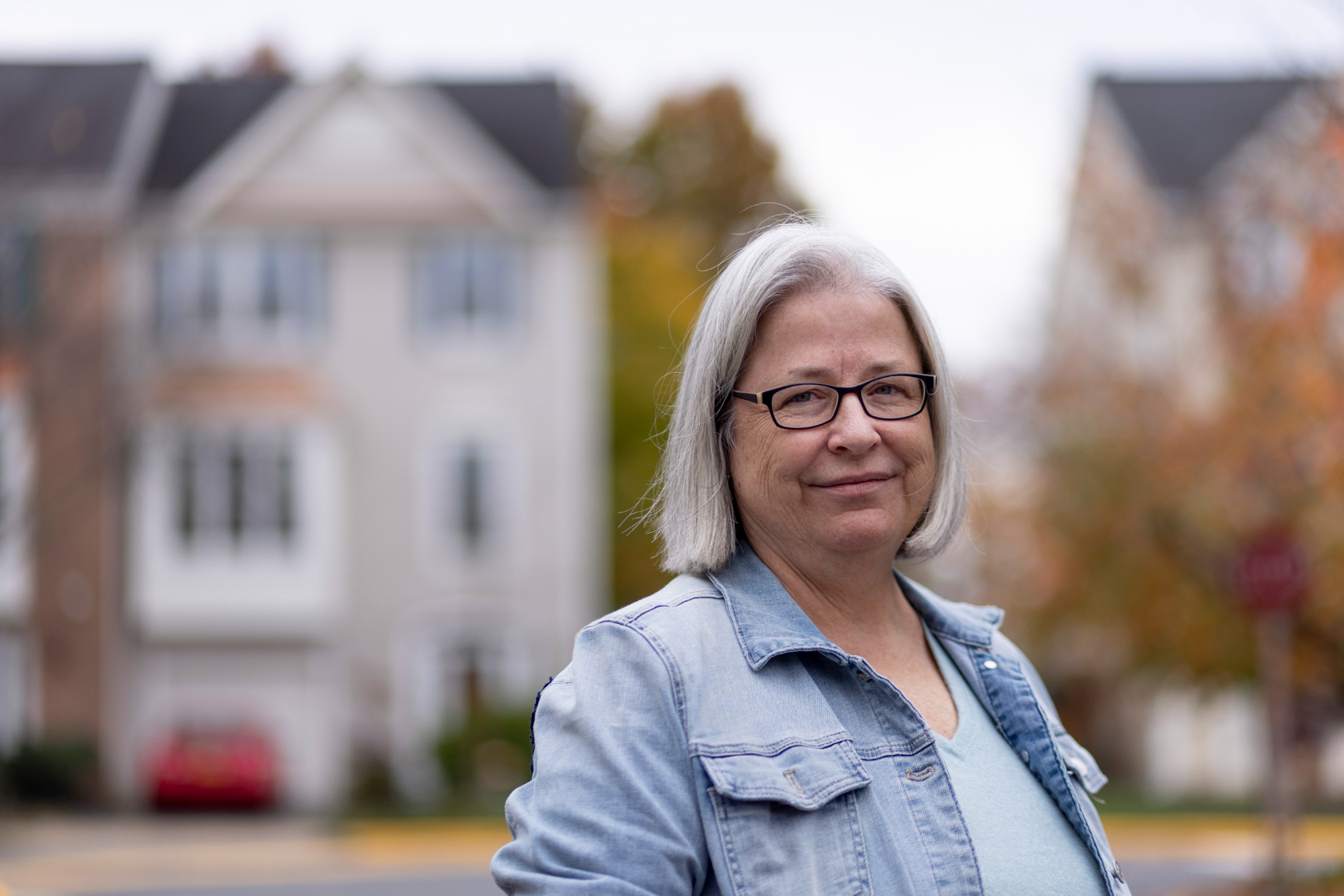
Andrea McGimsey
Andrea McGimsey tracks pedestrian and bike safety issues around her townhouse about a mile from the Ashburn station. She’s lived in the area since 2001 and once served on the county board of supervisors. She now leads a faith-based nonprofit, Faith Alliance for Climate Solutions.
She’s worried the wide, fast streets around the Silver Line stations will be a deterrent to ridership for those who walk — or even worse, a deadly problem.
“I’ve watched the county grow and that’s included turning these little country roads into these huge giant thoroughfares,” she said. “I have been advocating like crazy to try to get their attention. We’ve had a teeny bit of progress… instead of insanely dangerous, (the roads are now just) completely giant and dangerous.”
McGimsey gave us a tour of the roads within a half-mile of the Metro. Some are four-to-six lanes wide. Some don’t have sidewalks at all. Some intersections have curb ramps but don’t connect to sidewalks. Some areas have little lighting. Many streets don’t have crosswalks for long stretches.
“The county has known Metro is coming for a decade, so they could’ve been planning a way for people to get there other than in a car,” she said. “I think about walking there and I’m like, ‘No, I can’t put myself in that danger.’
“But the thing is, people are gonna walk there and I hope they’re going to be okay… I hope we can somehow slow down the traffic.”
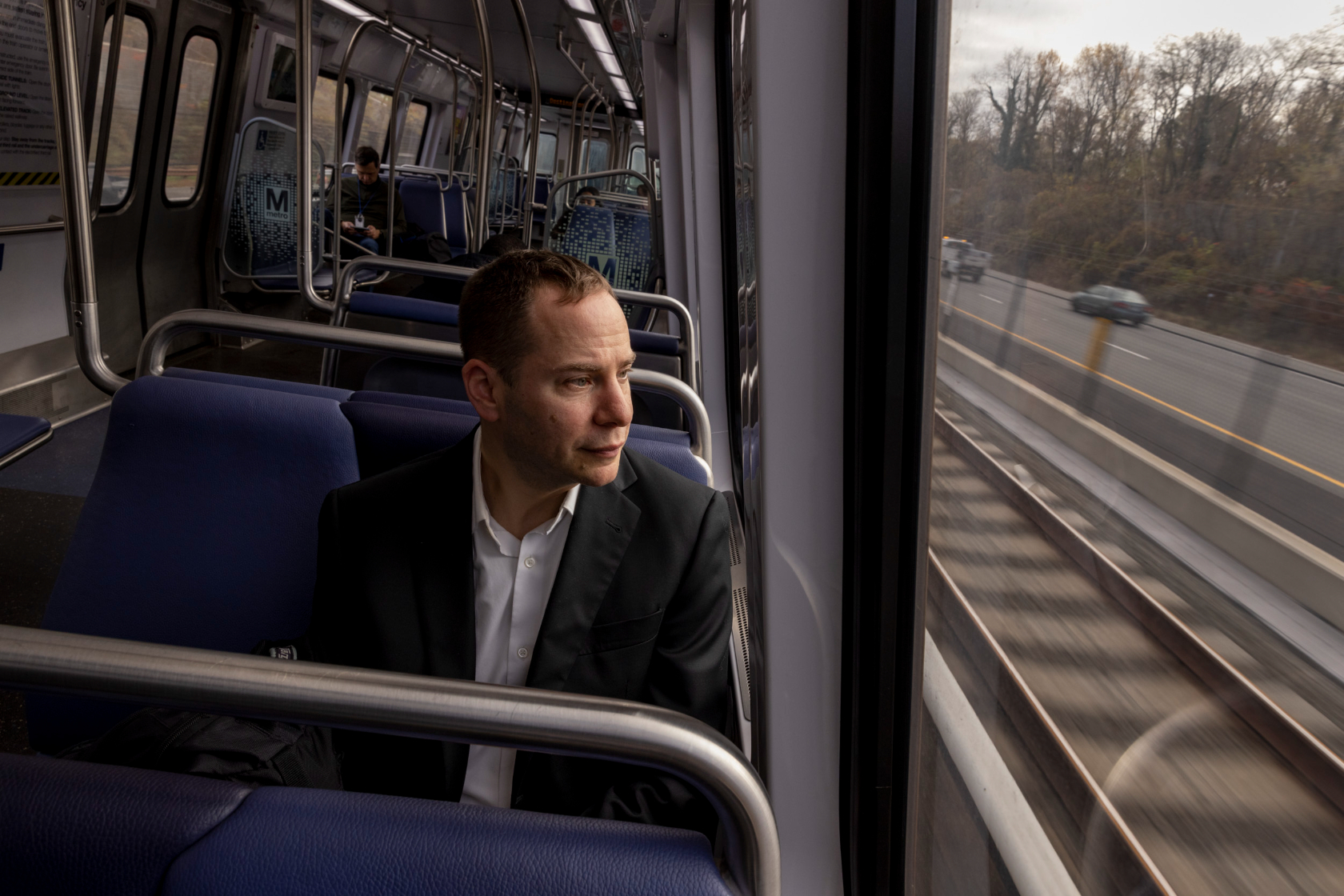
Mike Lebowitz
Mike Lebowitz has lived near the Reston/Herndon border and taken the Silver Line stop at Wiehle-Reston for years. This summer, he joined Metro’s Riders Advisory Council because he felt like further-out commuter voices weren’t being heard as much. His commute how grown over the years from an average of 42 minutes to about 52 or 53 minutes as train waits increased. Those wait times became a deterrence.
“Things are a lot more spread out than in the inner core… most people don’t live right on Metro,” he says. “We’re in our 40s in the suburban life, we have children and families and you know, the first casualty of the plan is the plan.”
“So we try to time it, to take a kid to school and get to the Metro. You always run into that issue of do I sprint for the train or do I just wait for the next one? And then you’re waiting for 15 minutes or longer.”
Lebowitz lives closest to the new Reston Town Center station, but there’s no parking there, so he’ll likely continue boarding at Wiehle-Reston East.
“The best way Metro can help incentivize Silver Line commutes is to bring the wait times down and maintain consistent travel along the system,” he said. “Most people I speak to have adjusted their schedule to not take Metro.”
“It just has this reputation that’s kind of festered over the last few years that it’s unreliable, or the bigger issue is that it just takes too long.”
He said he’s unsure what the new Silver Line extension will mean for residents of Fairfax and Loudoun because most residents are so ingrained in car culture that’s he’s not sure who will make the switch regularly.

Brandy Jenkins
Brandy Jenkins from Fauquier County was making sure she parked her car in the right garage for her reserved parking spot at Dulles Airport. She said the Silver Line wouldn’t work for her unless it went farther out. Parking at Ashburn and taking the train to Dulles isn’t worth it to her.
“I know going into D.C. there’s been a lot of closures and delays,” she said.