 Jordan Pascale
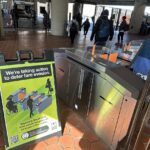
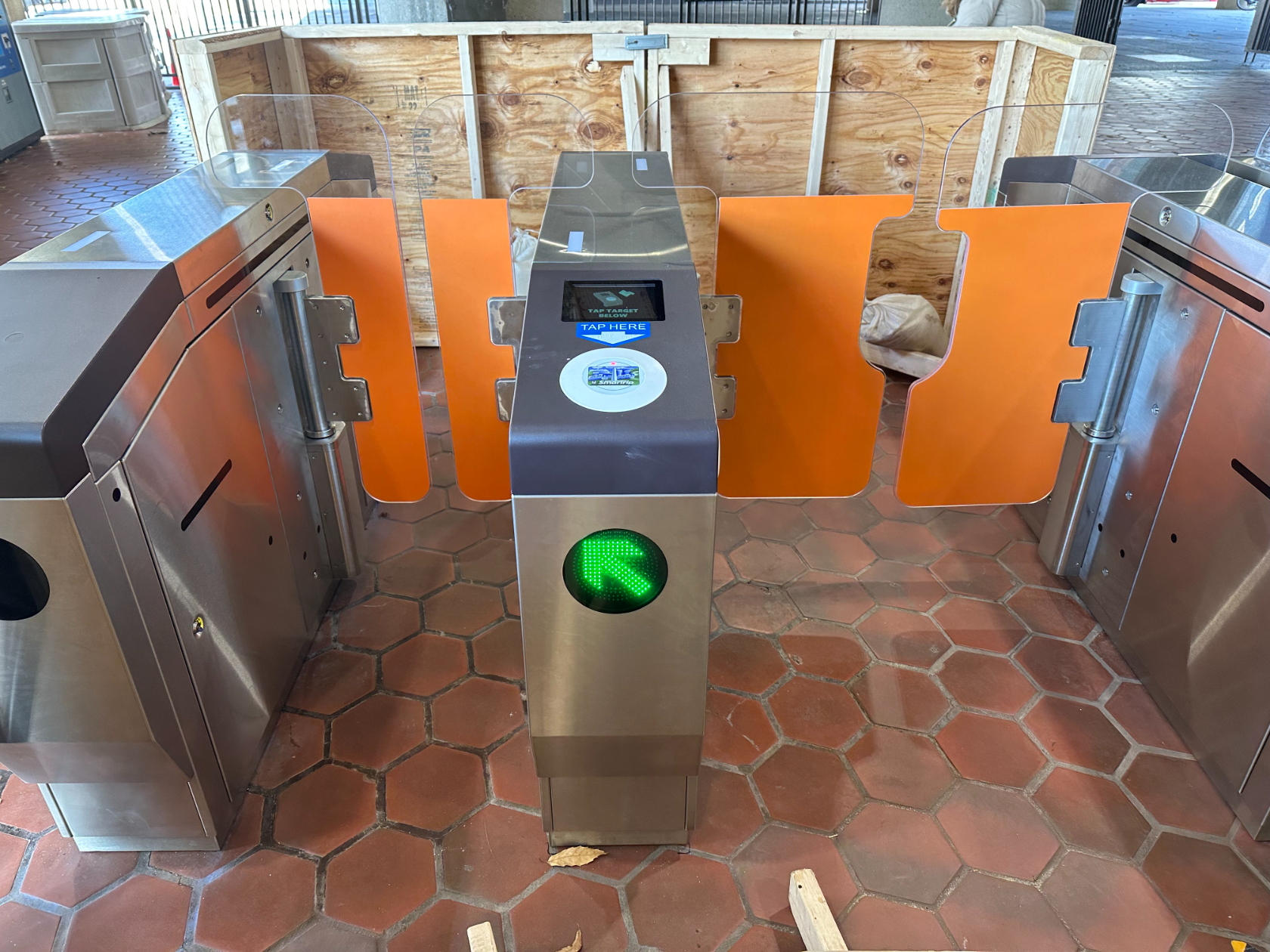
Two new prototype faregates have popped up at Fort Totten as Metro continues to try different ways to deter people from evading fares.
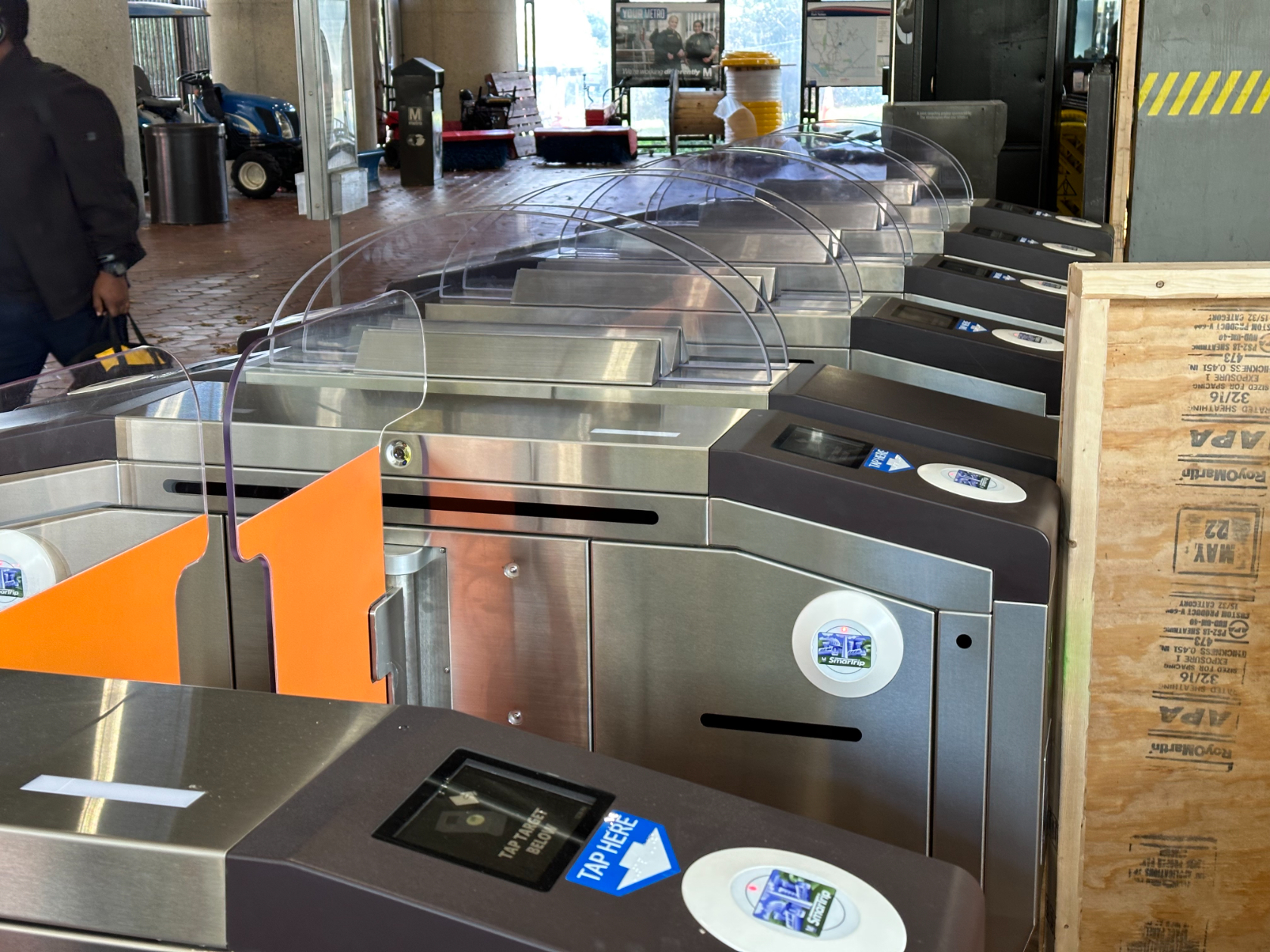
One version has plexiglass half circles on top of the gates, often where people plant their hands to hurdle over the yellow paddles. When a WAMU/DCist reporter observed how the new faregates worked, it appeared that version did little to stop people from either just high stepping over the paddles or placing their hands in a different area.
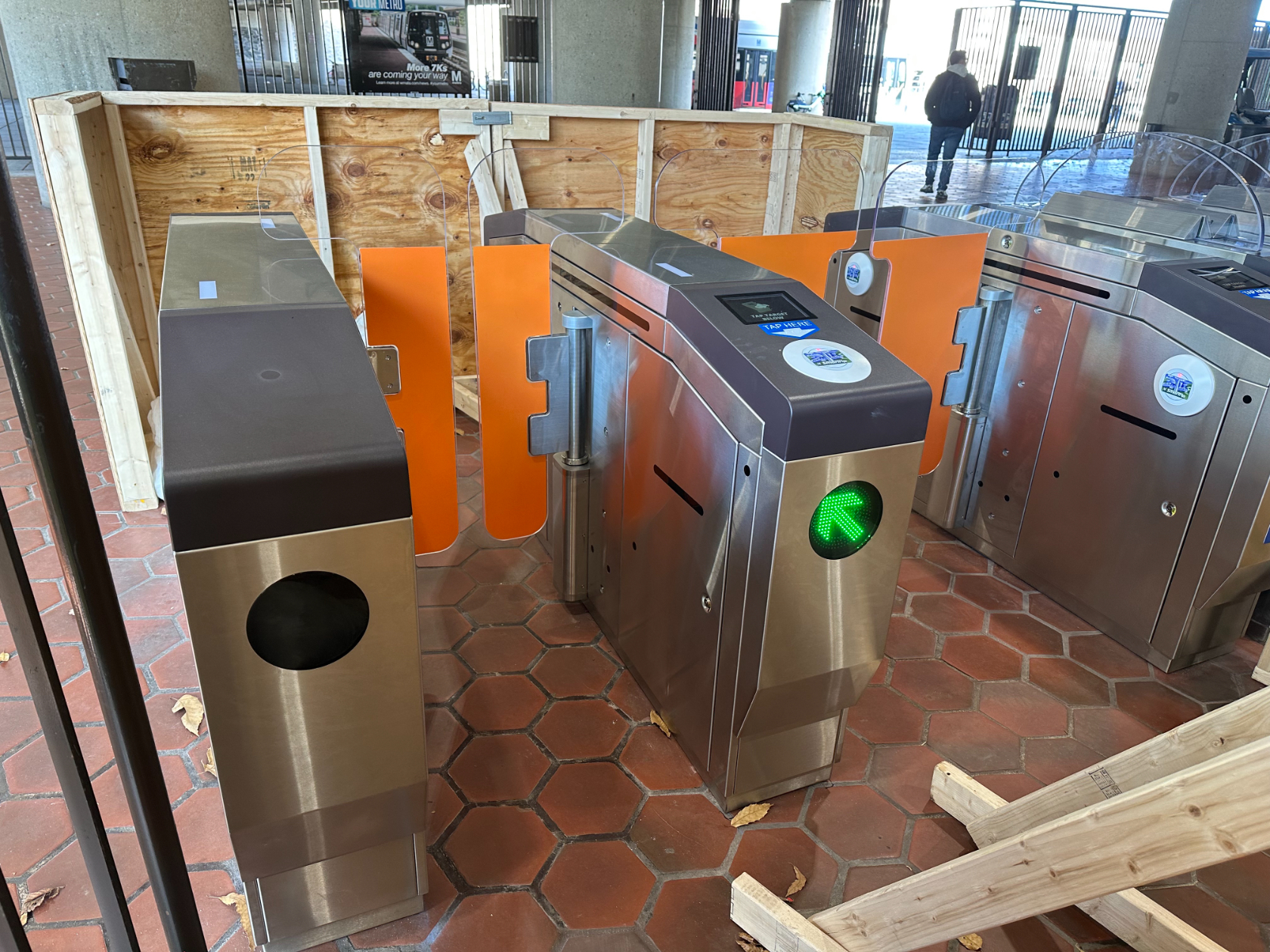
Another, not yet in use, is called a “saloon style” door, which has plexiglass barriers that are about four and a half feet high.
Metro General Manager Randy Clarke says each design has its own pros and cons. He said the saloon door should reduce jumping, but could encourage more people to sneak in behind paying customers.
“There is never a perfect gate,” he said at Thursday’s board meeting. “If we want to have a gate that (prevents all) fare evasion, that’s called a wall and we will never run service.”
Here are the new fare gate prototypes at Fort Totten.
Saloon door style ones not operational yet.
Definitely seeing people simply high stepping over the yellow paddles without putting their hands where new plexiglass is.
Metro trying several ideas. pic.twitter.com/DJmZI1LgOn
— Jordan Pascale (@JWPascale) November 17, 2022
The agency replaced all of its brown faregates during the last year but did not install a radically different design that would deter fare evasion. The new faregate, however, does allow for better mobile payment and other connectivity. It also includes sensors to detect when people jump them, providing Metro with more data. That data shows how the wider and lower ADA gate saw the most fare evasion because it is easiest to jump. Metro is also working on creating a dashboard to highlight where fare evasion is happening the most.
Now the transit agency is trying different retrofit designs, and some solutions are expensive, Clarke said. Metro would not provide a cost estimate to retrofit the gates, saying it is too early in the pilot stage. Some Metro riders say the agency is devoting too many resources to fare evasion.
Metro and its board have placed increased attention on fare evasion as it faces growing concerns over its long-term financial stability. Metro estimated it lost $40 million in fares between July 2021 to June 2022 from fare evasion. Meanwhile, the pandemic and changing ridership have cut into the agency’s fare revenues, which make up about 35% percent of operating expenses. Much of the rest is tax contributions from local governments. Some elected officials, frustrated with watching people blatantly skip the fare without impunity, have said Metro needs to fix the issue before coming to them for additional subsidies. In surveys, many riders have also expressed concern about fare evaders.
In response, Metro has stepped up the number of officers at stations that see high fare evasion and issued 35 citations since the beginning of November, when Metro said it would ramp back up citations. More importantly, Clarke said that hundreds of people corrected their behavior — by paying the fare or leaving the station.
“We’re trying to do this in the most humane way, we’re trying to avoid confrontation,” Clarke said. “But we have rules and the rules have to be followed in the system.”
The law is different in D.C. and Maryland and Virginia. In D.C. citations are civil penalties. Clarke said they haven’t written any tickets in D.C. yet, but if people evade fares there and refuse to leave, they can be arrested for trespassing. In Virginia and Maryland, they can write a simple criminal ticket for fare evasion. Clarke says next year he wants to have a conversation about what Metro tariff policy should look like.
“We have a police officer out there with three different ticket books… that’s not normal,” he said.

Clarke says it will take a combination of strategies to address the fare evasion problem: better gates, more enforcement, a monitor with a live feed of the fare gate area to deter people, and a low-income fare program to help those in need.
The prototypes are only at Fort Totten for now but will be rolled out to more stations before Metro officials decide whether to do something similar in the whole system.
“We’re not going to go system-wide until we collect data, and figure out what the ROI on this is,” Clarke said. “We’re not gonna spend $100 million to collect $100 million.
“At the same time, what we have isn’t working to the full level right now, so it will be very data-driven, and we’ll see the best way to put that package together.”