Martin Austermuhle
Much of my recent professional life has been spent in a small press room on the fifth floor of the Wilson Building, just around the corner from the D.C. Council chambers. It’s not much to speak of; a small number of desks that go largely unused by the dwindling number of reporters covering city government, a few aging copies of The Washington Post, and a collection of old pictures of the city’s once-larger press corps.
Along one wall hangs a black and white photograph of a young Black reporter, Maurice Williams. In 1977, Williams, then only 24, was killed during a shooting at the Wilson Building — it was then simply known as the District Building — becoming one of the few local reporters to die while doing his job. The press room was later named after him.
Over the years of reporting on and reading about D.C., I picked up a rough outline of what happened to Williams. A group of Muslim gunmen stormed into the District Building on March 9, 1977, taking hostages and engaging in a brief shootout that killed Williams and wounded then-councilmember Marion Barry. At the same time, gunmen also stormed two other locations in D.C. — the B’nai B’rith headquarters on Rhode Island Avenue NW and the Islamic Center on Massachusetts Avenue NW — taking almost 150 hostages and prompting a massive local, federal, and even international response to what become a tense standoff that ended three days later.
Even those basic details seem incredible, but a new book on the 1977 siege richly recounts an event that was years in the making, unearthing new information and masterfully tying together multiple storylines stretching from D.C. to the Middle East and involving everyone from local police to a Libyan dictator.
“This was an amazing story,” says Shahan Mufti, the author of “American Caliph: The True Story of a Muslim Mystic, a Hollywood Epic, and the 1977 Siege of Washington, D.C.” (Farrar, Straus and Giroux, 367 pages), which published Tuesday. “I was fascinated by how these events reached out in all kinds of different places that I hadn’t imagined.”
Mufti, who teaches journalism at the University of Richmond, says he first heard of the 1977 siege shortly after the 2015 terrorist attack on the Charlie Hebdo newspaper in Paris over its publication of cartoons of the Prophet Mohammed. The siege in D.C. some four decades prior had similar roots. In D.C., the 12 Muslim gunmen believed that a new biographical movie about Mohammed bankrolled by Libyan dictator Muammar Gaddafi was blasphemous, and they demanded that it not be shown in the U.S.
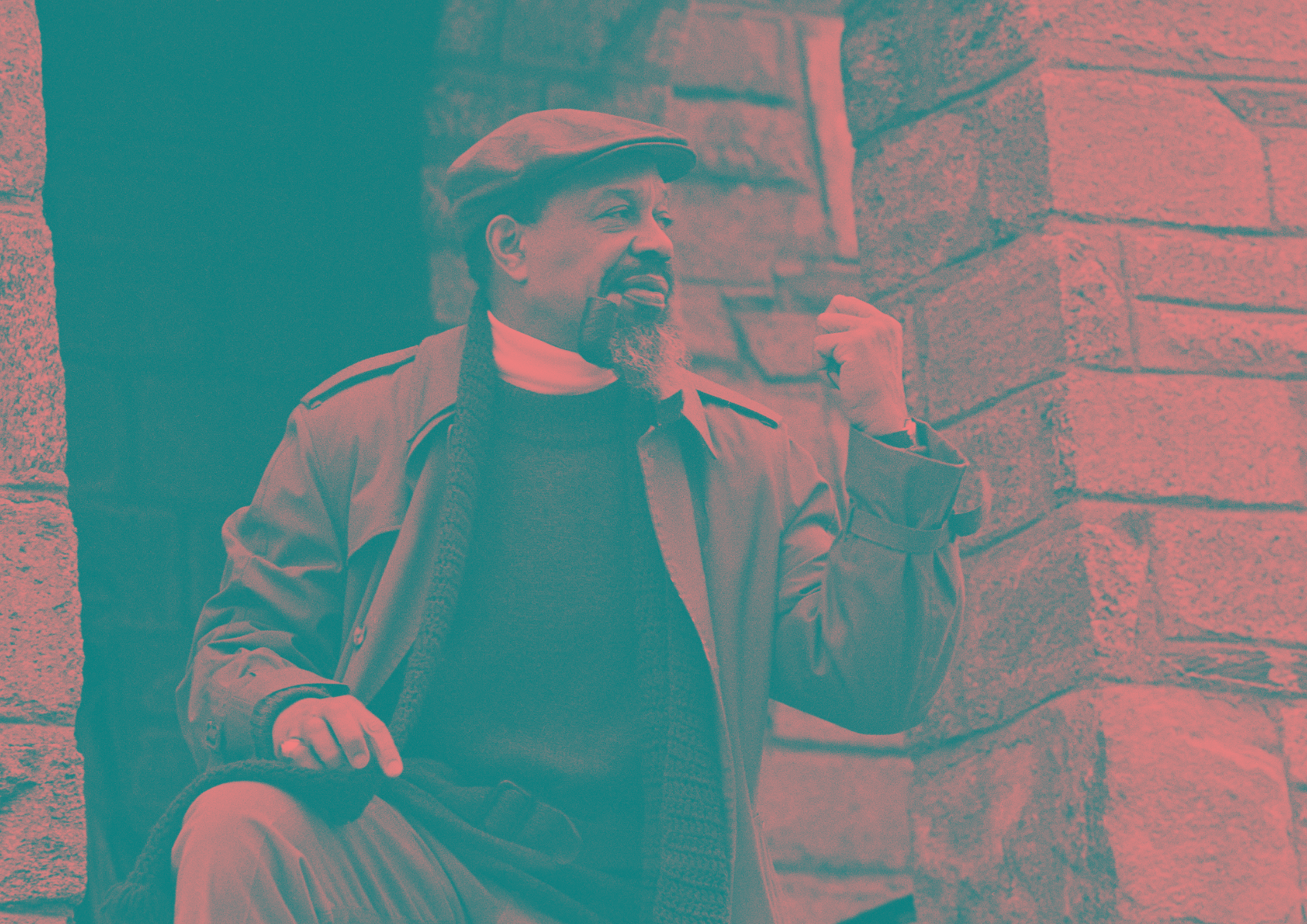
But the siege was about much more than a movie. It also grew out of a particularly vicious battle for leadership of Muslims in the U.S. On one side was the Nation of Islam, a Black nationalist Muslim group founded in the U.S. in 1930, and the other was Hamaas Abdul Khaalis, an accomplished jazz musician who eventually rose through the ranks of the Nation before falling out with its leadership and starting his own Sunni community, the Hanafi Muslims, in a house on 16th Street NW. (The house had been purchased by basketball star Kareem Abdul-Jabbar, a prominent follower of Khaalis’s.)
In 1973, gunmen associated with the Nation killed seven people at that house, including some of Khaalis’s children, in a brutal massacre. The trial of the gunmen went poorly for Khaalis and his family, spurring him to start plotting vengeance in the form of the siege four years later.
“This was a really elaborately planned operation. It was designed to not just touch the local level in D.C. and not just rattle the White House across the street here, but to resonate abroad as well, especially in the Middle East, where there were a lot of oil-rich people watching this very carefully,” Mufti told me. “One of the things [Khaalis] was doing was trying to make a move for leadership of Muslims in America. And he wanted to kind of get to that perch where he could be the single most important Muslim in the country. And for that, he knew from his the experience of his former friend and and acquaintance, Malcolm X, that the way to get to that place of leadership in America was through Muslim countries abroad, to get their blessings and get their support.”
Mufti meticulously builds the story of the 1977 siege through the different threads that led to it, relying on interviews with more than 100 people, tens of thousands of local and federal records, and court transcripts he recovered from a damp garage. (He says he tried to speak to the Hanafi Muslims who remain in D.C., but had no luck.)
He traces Khaalis’s personal history and rise through the ranks of the Nation of Islam, and the eventual infighting and splintering of Muslim power in the U.S. He also tells the story of Mohammad, Messenger of God, the epic movie by Syrian-American director Moustapha Akkad (and bankrolled by Gaddafi; it cost $17 million to make, more than Star Wars), which enraged Khaalis and the leaders of many Muslim-majority countries. And Mufti recounts in intimate detail the siege itself, the negotiated end to it, and its aftermath, notably the trial that sent Khaalis and many of his fellow gunmen to prison for long sentences. (Khaalis died in prison in 2003; Abdul Muzikir, who shot and killed Maurice Williams, was released from prison last year.)
Mufti says that the siege largely reshaped how the federal bureaucracy viewed and responded to terrorism, and that much of the anti-terrorism bureaucracy in place today has at least some roots in what happened in 1977. But he also told me that he was surprised to see how the popular impact of the siege, at least in local memory, seemed limited.
“A lot of people don’t remember the Hanafi siege in 1977,” he said. “I spoke to people who were in Washington, D.C. at that time, and even they had vague memories of it. They were like, ‘Oh, the traffic was bad,’ but nothing more than that. And that to me was a really fascinating question, how was this forgotten? Because if this happened today, this would be seared into our national memory for decades, centuries, maybe. But the idea that this was kind of forgotten really fascinated me.”
“I do think that all of this was just right before we, America, started to create the vocabulary and the national consciousness around these ideas of how to articulate what is going on with this tension between most of the Middle East and the United States and Islam,” he added. “And, you know, this was just this was a precursor to basically what’s happened over the next 40 years and kind of culminated in the attacks of 9-11.”
Mufti will be discussing “American Caliph” at Politics & Prose in Northwest on Monday, Nov. 28.