 Jordan Pascale
Update: The Metro for D.C. bill, which would make Metrobuses free for passengers, passed a final vote Tuesday afternoon. The bill, included on the D.C. council’s consent agenda, passed quickly at the council’s last legislative meeting of the year.
The bill goes next to Mayor Muriel Bowser to either sign or veto. While the bill has had little trouble reaching the mayor’s desk, Bowser has expressed concerns about D.C. funding free buses that go into Maryland and Virginia without help from those states.
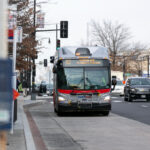
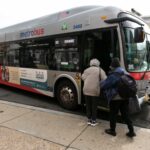
Original: The District is one step closer to free Metrobus service after the D.C. Council voted to advance a bill that would eliminate any cost to board buses in D.C. starting next July.
The Metro for D.C. bill was approved 13-0 in a vote by the Committee of the Whole on Tuesday afternoon and later passed easily during the council’s legislative session. The bill is still subject to one more vote before the full council before it’s passed.
“This is nothing short of transformational for our city,” said Councilmember Charles Allen (D-Ward 6), who first pitched a version of this bill three years ago. “Our ultimate goal, which is to have fare-free public transit, is achieved … It will show the District is leading across our entire region, it will show the District leading across our entire nation.”
The D.C. Council this year looked at several ways to make transit affordable and equitable and this was deemed the easiest and fastest with the highest impact for low-income riders.
As originally written three years ago, the bill would’ve given every D.C. resident $100 in SmarTrip credits every month. That idea is still in the works but would be added in October 2024 if funds are available.
For now, councilmembers landed on paying for all bus fares within D.C. borders.
The bill also creates overnight bus service on 12 popular routes and invests $10 million annually in more bus service, which Allen noted will be spent along corridors that are traditionally under-invested.
Councilmember Kenyan McDuffie (D-Ward 5) brought up concerns about Metro being a regional service and D.C. paying for free rides for non-District residents.
“The District is funding something that other jurisdictions who contribute to the system have not seen fit to invest in,” he said at the council breakfast meeting on Tuesday before the vote. “I would hope the conversations with other jurisdictions would be further along, so we’re not making this heavy lift on our own.”
Mayor Muriel Bowser brought up similar points last week, saying she was unsure how she felt about the bill.
“Sure, free transit sounds great, but Metro is part of the compact, and we are a one-third payer,” she said during a press conference. “If we’re going to be paying, Maryland and Virginia need to be paying. This is a [Metro governing document] issue.”
Councilmember Brianne Nadeau (D-Ward 1) pointed out that free Metro bus boarding in D.C. would benefit everyone by getting more cars off the road and encouraging people to take transit.
It’s unclear how or whether Metro’s board will have to vote on the idea or incorporate it into its budget. The transit agency released its proposed budget on Tuesday, which included a region-wide low-income program. It would give half-price fares to those eligible for SNAP benefits. Metro’s General Manager Randy Clarke says he is in favor of jurisdictions funding more transit, but would like to see a more regional approach.
Read more about the bill in our previous coverage.
Sarah Y. Kim contributed reporting to this story.