Amanda Michelle Gomez
D.C. will stop housing homeless and medically vulnerable residents in hotel rooms, the city’s Department of Human Services announced Friday.
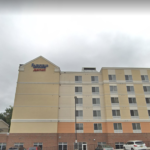
The city launched the “Pandemic Emergency Program for Medically Vulnerable Residents” in April 2020, hoping to protect individuals who are at the highest risk of severe illness from COVID-19. Some residents who moved into hotel rooms called the program “a dream come true” and their advocates have credited the program for contributing to the 2021 drop in deaths among people experiencing homelessness.
A Department of Human Services spokesperson tells DCist/WAMU that D.C. will no longer receive new referrals, as a means of phasing out the program “over the next year.” The spokesperson says the current 532 residents enrolled in the so-called PEP-V program will continue to receive case management services, so they can access housing and other support through the city’s Continuum of Care programs like permanent supportive housing.
The spokesperson declined to specify whether the city will continue to house each individual in a hotel room until they get a housing voucher, so they do not return to homeless shelters or live on the streets. The medical director for Unity Health Care’s emergency response sites, which includes PEP-V, Dr. Catherine Crosland, says the hope is to move all residents of the program into housing, whether that’s through rapid rehousing, permanent supportive housing, or a nursing home by the end of September.
“We’ve had folks moving out every single weekend into permanent housing,” Crosland tells DCist/WAMU. “There has been incredible strides in getting folks into housing.”
Street Sense first reported this news, which comes as a new COVID-19 variant takes hold and could potentially drive another wave of infections.
DHS Director Laura Zeilinger told DCist/WAMU last year that the PEP-V program “was never intended to exist in the long run.” Zeilinger estimated that housing one resident through the PEP-V program for a month’s time costs roughly $12,800, in part due to staffing, medical care, and other wrap-around services. At one point, most funding for the hotels came from the federal CARES Act, while the D.C. government covered a quarter of the associated costs. The federal government made new funding available, with the Biden Administration covering 100% of the hotel costs via reimbursement, but only temporarily.
At-Large Councilmember Robert White, who chairs the housing committee, further clarified in his own statement to the press that D.C. opted to end the PEP-V program due to a lapse in federal funding. “The challenge of protecting medically vulnerable unhoused residents from COVID-19 and other health risks is not going anywhere, and congregate settings are not appropriate or safe for everyone” he says in the statement. “I’ll be conducting close oversight of this process to ensure that the city meets the needs of unhoused residents who should not be in congregate settings.”
PEP-V residents may not have access to the city’s homeless shelters if they exit the program without other housing accommodations. Wes Heppler, a staff attorney at the Washington Legal Clinic for the Homeless, says all the city’s traditional low-barrier shelters for men and women have been at capacity for the last several months. The only shelters that have capacity are the temporary ones opened in recreational centers during hypothermia season, which aren’t open 24/7 like the traditional shelters.
Heppler says a majority of PEP-V residents have been matched with a voucher, but moving them into housing could take longer than a year. He also doesn’t know D.C.’s plan for connecting the remaining residents without housing vouchers. Heppler is calling on local officials to continue the hotel shelter program for not only the benefit of residents already enrolled but for the countless residents who hope to access PEP-V or who will become medically frail. (Hundreds had been on the waitlist for PEP-V in March 2021.)
“PEP-V has absolutely been a success, not just in curbing the COVID issues, but in acting as an interim step towards permanent housing,” Heppler tells DCist/WAMU. “It gives people the space, the dignity, the privacy to organize their lives and get themselves in a position where they can be successful in getting their own housing.”
He continued: “It’s been a success and we need to continue it, whether that’s through federal funding or through local funding.”
Crosland has been recommending something like PEP-V even before the pandemic hit. While her team is still collecting research to determine specific health improvements, Crosland says PEP-V has clearly helped residents more regularly connect to their primary care or mental health provider, or access Suboxone if they struggled with drug addiction.
“The city really is taking to heart some of the lessons learned from the PEP-V program and is looking to figure out how to meet the needs of this population moving forward,” says Crosland. “So it won’t be PEP-V per say, in its current form, but we’re definitely taking those lessons.”
She also credited the District for extending the hotel shelter program for as long as officials did because other places across the country hadn’t.
DHS told service providers in an email Friday that their priorities as the program winds down is to ensure all residents across the three hotels have access to COVID-19 vaccines and boosters, and to connect them to programs and services within the city’s Continuum of Care. Of the 2,200 people who have resided at a PEP-V site, DHS said 60% received a COVID-19 vaccine or booster and have connected to community-based health centers. Nearly half of all PEP-V residents have exited into permanent housing, DHS added.
Two councilmembers — Brianne Nadeau (Ward 1) and Kenyan McDuffie (At-Large) — have said they want the city to purchase hotels in order to convert them into permanent supportive or affordable housing.
The city is also housing migrants who are bused from the Southwest border to D.C. in hotel rooms. The DHS spokesperson says the changes to PEP-V will not impact the city’s temporary hotel accommodations for migrants.
This post has been updated to include comments from Dr. Catherine Crosland of Unity Health Care.