 Jordan Pascale
Councilmember Brooke Pinto and six of her council colleagues want to encourage D.C. residents to adopt greener and safer transportation options. A new bill being submitted this month would create 3,000 rebates for residents to buy an electric bike, lowering the barrier for those that can’t afford the pricier bikes.
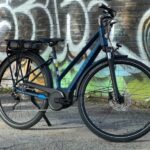
Electric bikes use batteries to help assist riders either through pedaling or a throttle, making it easier to get up hills and making commutes less sweaty during hot days. They can go up to 30 mph. Many people in D.C. have adopted electric bikes as their main form of transportation, and families are using cargo e-bikes to take kids to school and move groceries and other goods from stores to home. It’s allowed some people to go without cars or to have just one car in a household. The vehicles can run anywhere from $1,000 to $4,000 and even up to $10,000 for fancier cargo models.
The legislation is crafted to provide more assistance to low-income residents. Half of the rebates are reserved for people that make less than 80% of the District’s median family income, $93,547. They would be eligible for a rebate of up to $1,200, or 75% of the price of the electric bicycle, whichever is lower. They’d also be eligible for an additional $500 for cargo electric bicycle models.
Those that make above that threshold would be eligible for $400 or 30% of the purchase price of the electric bicycle, whichever is lower, as well as the additional $500 for cargo e-bikes.
Residents would have to submit proof of residency and proof of household income. The program would be designed for one rebate per person and no more than two rebates per household.
The bike also must be purchased from a brick-and-mortar bike shop in D.C. to get the rebate. Some shops have had trouble keeping the popular models in stock and many models are sold directly to consumers.
Pinto says the program would help reduce traffic congestion and pollution.
“The E-BIKE Act is aimed at reducing cost-barriers that prevent residents from purchasing an electric bike, while supporting small business owners here in D.C.,” Pinto said in a release. “As we continue to invest in our protected bike lane network, this legislation is crucial to ensuring as many residents as possible can benefit from this expanded infrastructure.”
About a sixth of the rebates would be set aside for businesses to purchase cargo bikes. Businesses would have to show how the electric cargo bikes would reduce vehicle miles traveled. They would get $200 or 30% of the price, whichever is lower.
Pinto’s office said they don’t have a raw number of how much the program would cost, but said it would be figured out during the bill’s markup.
The program is similar to a $9 million rebate program introduced by Denver in 2022 which was quickly tapped out. The program is returning in 2023. Denver’s Chief Climate Officer Grace Troccolo Rink recently told NPR that participants say they replace 3.4 car trips for an average of 21.6 miles of replaced car trips per week.
“I think that’s a pretty good result,” she told NPR.
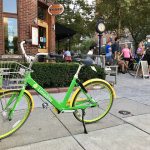
E-bikes have become more popular in recent years as battery technology has gotten better. E-bikes have been introduced as rentable options through private companies like Lime and also by the District’s Capital Bikeshare program.
Cycling advocates have long called for a national e-bike rebate instead of or in addition to the announced $7,500 tax credit for electric cars, SUVs, and trucks.
Council members Charles Allen, Brianne Nadeau, Robert White, Janeese Lewis George, Matthew Frumin, and Vincent Gray co-introduced the bill.