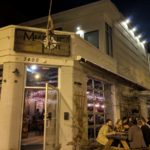
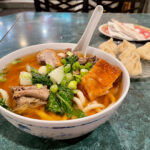
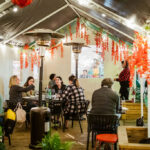
At Makan in Columbia Heights, chef/owner James Wozniuk’s contemporary reinterpretation of Malaysian food has won him a perennially packed dining room. Walk into a dinner service and you’ll see a buzzing dining room and piping hot plates of wok fried noodles and bowls of chicken curry rushing out of the kitchen.
Since opening in the Columbia Heights neighborhood right at the start of the pandemic, Makan has received customer praise as well as critical acclaim–the Michelin Guide even awarded Makan a Bib Gourmand in 2021, a designation for lower cost restaurants of exceptional quality.
But what Wozniuk is perhaps most proud of is that Makan has become a favorite of the staff at the Malaysian Embassy — something that might be surprising given that the chef, who is white, is not Malaysian nor did he encounter the cuisine until a few years ago.
“When we first opened, we invited the Malaysian ambassador in and were lucky enough to have him eat at Makan,” Wozniuk says. “After tasting the food, he said he was shocked that it wasn’t a Malaysian person cooking in the kitchen. He really enjoyed it.”
Since then, Wozniuk has developed a friendship with embassy staff members as they’ve become his regulars. He often asks them and other Malaysian clients to “taste my new dishes first and give me honest feedback,” he says.
“Makan offers so many varieties of Malaysian food, ranging from food we have regularly as well as special dishes,” says Raja Intan Nor Zareen, counselor at the Embassy of Malaysia in D.C. “Chef James knows what Malaysians like.”
That reputation allowed Wozniuk to add another feather in his cap last year when then-Malaysian Prime Minister Dato’ Sri Ismail Sabri bin Yaakob was in town for an official visit. The trip, which coincided with the end of Ramadan, marked the special occasion of Eid Al-Fitr, or Hari Raya as it is known in Malaysia. The day, which translates to “day of celebration,” marks the end of the month of Muslim fasting and is celebrated with friends and family.
The embassy invited the chef to cook for the prime minister and more than 100 guests at a dinner featuring traditional dishes typically consumed to celebrate the festival.

“Chef James really focuses on Malaysian food. It’s a great strength. We always invite our colleagues from the State Department and other federal agencies to try Makan for a taste of our cuisine,” says Zareen. “So when the prime minister was going to be in town, it was an easy decision to have him cook a special dish for the celebration.”
While a typical Hari Raya celebration includes many delicacies such as rendang (a dry curried beef dish) and satay (skewered meats), Wozniuk was tasked with the biryani, a meat and rice dish traditionally eaten for the holiday. Though he doesn’t offer it on the Makan menu, it was a dish that Wozniuk was prepared to make because of his experience preparing it for friends and family.
So how did he get here? It all started with a layover in Malaysia.
“I was traveling to Hanoi for a research trip, and had a 15-hour layover in Kuala Lumpur,” Wozniuk says. “I got out to the city and ate everything I could find. The food truly blew my mind.”
Wozniuk is a seasoned chef with deep roots exploring a variety of East Asian cuisines — he’s traveled to Cambodia, Vietnam, Japan, Thailand, Laos, and Taiwan, amongst others, to take a deep dive into Asian food and culture during his more than 15-year career. In D.C., he previously worked at Maketto, Erik Bruner-Yang’s Taiwanese/Cambodian cafe, and was part of the opening team at the (now closed) Spoken English, Bruner-Yang’s pan-Asian lobby restaurant at The Line hotel.
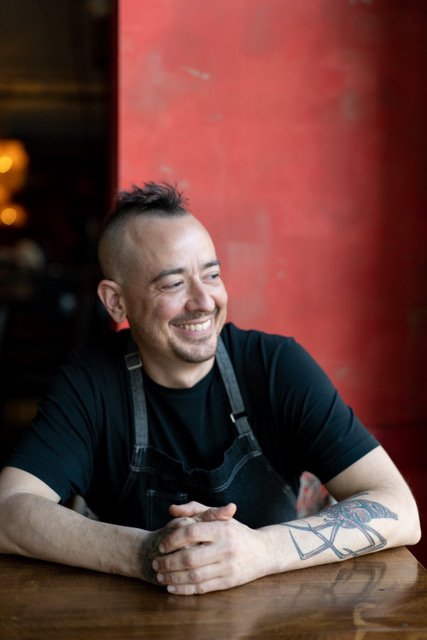
But that first stopover in Kuala Lumpur led to three subsequent trips with Malaysia as the destination. Each trip was a two- or three-month stay, and he spent his days learning all about the food.
“I came with a camera and notebooks. I watched the hawker stands and observed what order things go into the wok,” Wozniuk says. “I looked at the mise en place and talked to as many people as I could. I spent two to three months during each trip eating, taking notes of what I tasted, and studying.”
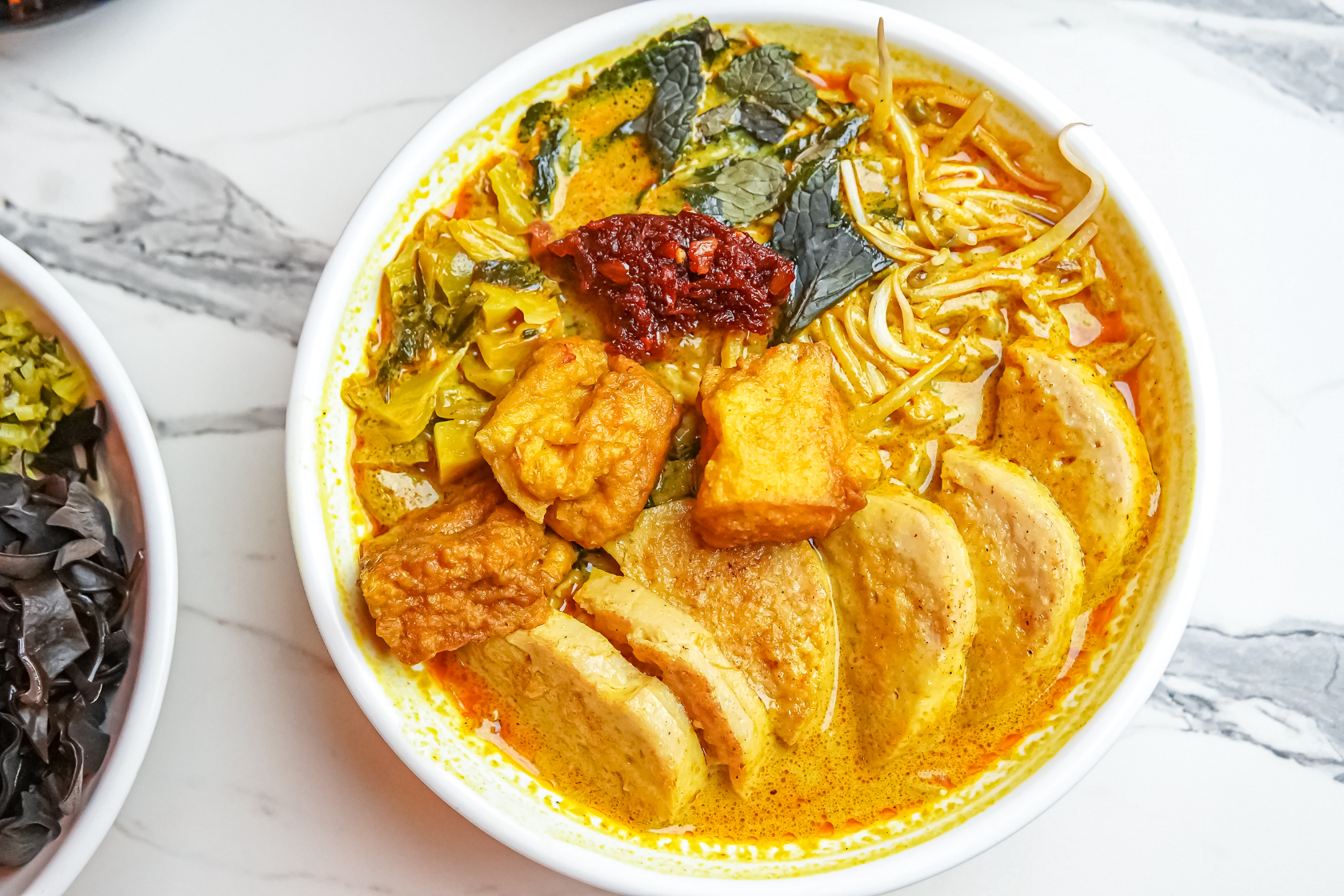
Makan — which means “to eat” in Malay — is the result of those trips. The restaurant showcases the diversity and variety of flavors in Malaysian food, including street food favorites such as char kway teow, hearty bowls of wok fried noodles jazzed up with Chinese sausage, bean sprouts, and egg in a flavorful sauce.
Other offerings include a selection of nasi campur, or “with rice,” dishes at Makan which come with options such as beef rendang, pajeri nenas (pineapple curry), ayam goreng (fried chicken with salted duck yolk and curry leaf), and eggplant in sambal. Each dish is rounded out with traditional accompaniments such as sambals (chili sauces) and acar (Malaysian pickled vegetables).
Wozniuk also embraces influences from other East Asian cuisines at Thirsty Crow, the casual sports bar below Makan. At the basement spot, the menu features Dan Dan noodles — a dish from the Sichuan region of China — char siu wings, and Northern Thai sausages (sai krok isaan), a favorite which Wozniuk first tasted on a visit to Bangkok 12 years ago. He makes them in-house at Thirsty Crow, stuffing the sour sausages with ground pork, sweet rice, garlic, and lemongrass in a labor of love that takes hours to prepare.
While he has not been able to travel to Asia since the start of the pandemic, he is still constantly trying to learn and keep up via cookbooks and social media. “I try to research cities and regions and the dishes found in each region, and really keep going deeper and deeper,” he says.
Of course, as a white chef cooking East Asian food, he is aware of the criticism and skepticism of cooking another culture’s cuisine. To that, he says he does “think about it deeply and have committed myself to learning and respecting all aspects of it. My food is born out of passion. This is something that I love and respect and I’m not going to stop doing it.”
So how do Malaysian people respond to seeing a white chef in the kitchen at Makan? “There’s definitely been reactions of surprise and curiosity but no one has really had anything bad to say,” Wozniuk says. “Especially not after they eat the food and realize that I’m not diluting the flavors in any way.”
It seems that the feeling is mutual. “We are very proud to tell Malaysians the stories of an American who fell in love with Malaysia and opened a restaurant in D.C.,” Zareen says.