

Just before dinner service on a recent Friday evening, Bronze’s Owner Keem Hughley, dressed in head-to-toe black, stands alongside his small, sharply dressed staff as they hear the night’s rundown from a manager.
When she wraps up, Hughley turns to address the group. It’s okay if guests have a lot of questions about the nascent restaurant’s Afrofuturism theme, he says. He wants the staff to act as guides, and ensure patrons enjoy their experience.
“We are sold out today, Saturday and Sunday and that’s great — but that’s not going to last,” he says, “What will last is how people feel about us when they leave.”
Bronze occupies the former Smith Commons space on H Street NE. The three-level, 150-seat restaurant serves creative, African-influenced international fare. It’s an ambitious project centered on a science fiction story of Hughley’s own imagination, that of African-born Alonzo Bronze, who travels around the world searching, trading and bringing the best elements of other cultures to his people.

Hughley’s background is in events marketing; he joined Foreign National as an events coordinator seven years ago where he worked at Maketto and former Line Hotel restaurants Brothers and Sisters and Spoken English on his way up to partner with the restaurant group led by Chef Erik Bruner-Yang.
Bronze is, in part, a product of COVID-19. Hughley always knew that he would eventually open up his own restaurant, but the attractive prices for retail space at the height of the pandemic expedited his timeline, he says.
While Hughley was ready to take the risk of opening a new restaurant business, he felt offering something that went beyond a regular eatery might have a better chance of survival.
“We realized that the dining seats can be taken away from us — whether we don’t make it or another pandemic shuts everything down,” Hughley says. “We had to create a concept that can be story-led. Because then we can vertically integrate the story into forms outside the restaurant.” (For example, he’d love to see an Alonzo Bronze graphic novel someday.)
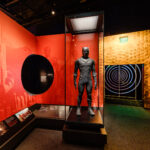
The design of the restaurant aims to take diners on Alonzo’s journeys. The first floor, which contains the main bar along with some dining tables, is themed “pre-earth;” it’s dark and dim; with little outside light; wooden floors and furniture; and shades of black and deep browns. The second floor’s theme, “earth,” is where light spills into the dining area across marble tables, and hues of blue and gray on the walls, chairs and floors. Illustrations on the walls depict characters in Bronze’s story.
Patrons will notice a lack of corners on tables, windows, and even booths throughout Bronze. “I wanted this space to feel endless,” Hughley says. The vision was executed by D.C. Black-owned design firm Drummond Projects.
The third floor isn’t open yet, but it will be known as The Crane Room at Bronze. Named after the West African crane, which represents ascension, The Crane Room will feature a small bar, several smaller tables and patio access. It will serve a different drink and food menu from the other two floors.
Hughley, a D.C. native, says creating the existence of Alonzo Bronze and the Bronze people is a culmination of finally feeling like he could be himself. “I grew up in D.C. doing gogos. Growing up in that time, in terms of survival mode, I wasn’t really able to be creatively who I was,” he says. Falling in love and being able to be his whole self in his marriage helped him start thinking outside his box. During the pandemic, he discovered Afrofuturism: The World of Black Sci-Fi and Fantasy Culture, a 2013 primer to the genre by Ytasha L. Womack.
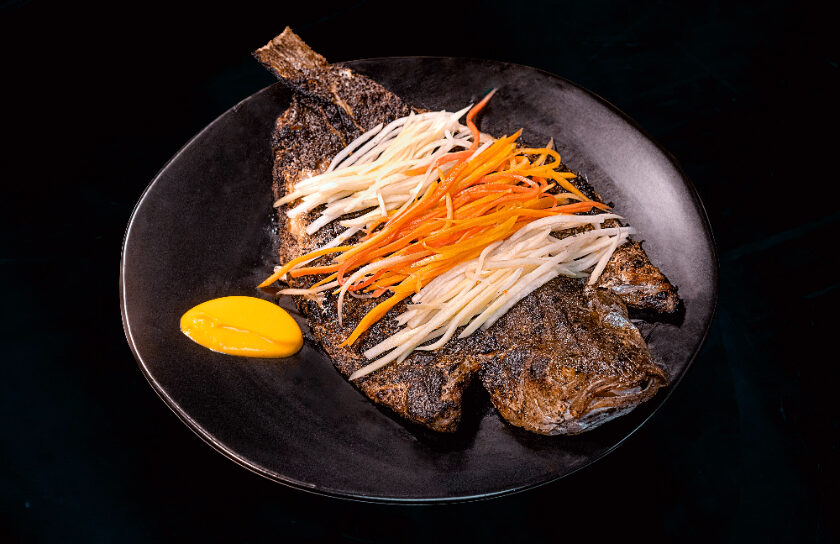

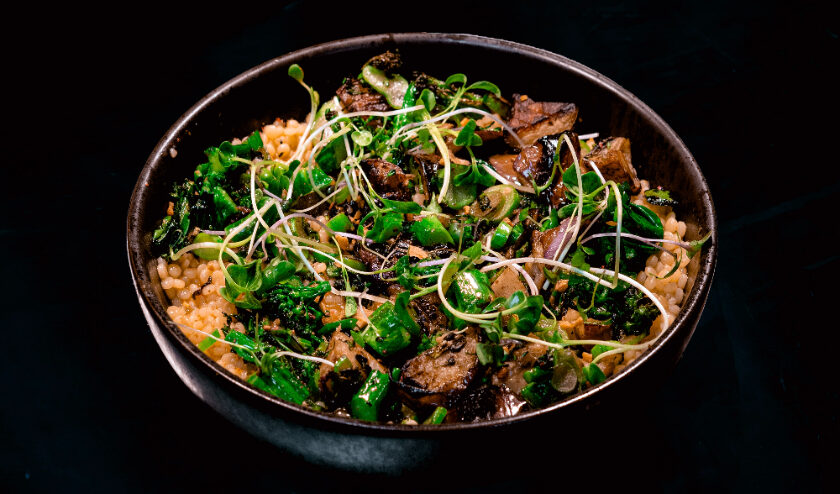
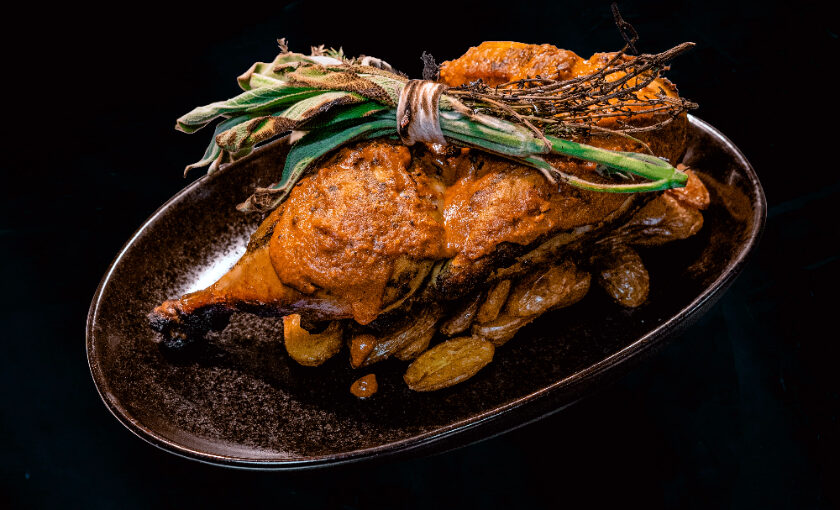
As for the food, the menu of small plates and entrees certainly draws from African and Caribbean cuisines, but Hughley didn’t want it to be confined to that. Bronze’s executive chef, Toya Henry, began her career under the mentorship of Bruner-Yang and also owns a reservation-only private dining experience, Pimento, in Brooklyn, New York.
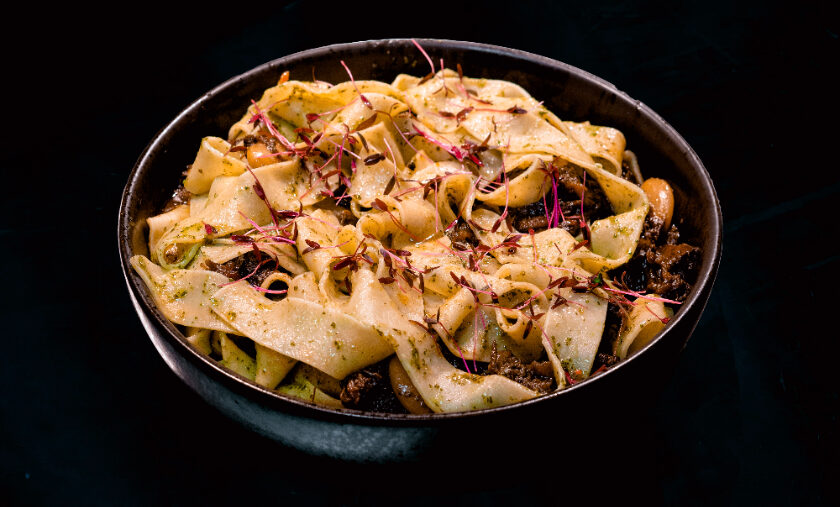
Henry incorporated components and cooking techniques from other parts of the world, such as in the kanpachi crudo small plate and the oxtail entree, which is braised and served over pappardelle pasta with butter and lima beans in nods to both Italian and American Southern cooking. Many of the dishes feature seafood or are vegetarian. Prices range from $12 for desserts and small plates up to $78 for entrees.
“The torched oysters have flying fish roe, sliced cucumber and a little bit of scotch bonnet for a bit of heat. It’s been one of our hit dishes,” says Hughley, “And the two most popular items are the oxtail pappardelle pasta and the grilled sea bass.” His sleeper favorite is a vegan dish of heirloom carrots and charred cabbage topped with a collard pesto. “Some people look at the heavier items and they miss that one,” he says.
As for drinks, the wine list was assembled by sommelier and longtime D.C. wine expert Nadine Brown, and cocktails come from bar manager Al Thompson. The beverage offerings pair cocktails made with global ingredients such as yuzu and berbere mitmita honey alongside wines a mix of New- and Old-World wines by the glass and in the bottle. The list does include a standout local wine by the bottle, the “Pepper” cabernet franc-Blaufränkisch from Old Westminster Winery in Maryland.
Bronze is located at 1245 H St NE and is open Monday – Saturday from 5 p.m. to midnight and Sundays from 5 p.m. to 10 p.m.
This post has been updated to remove a reference to the Foreign National restaurant group, of which Bronze is not a member.