 Jordan Pascale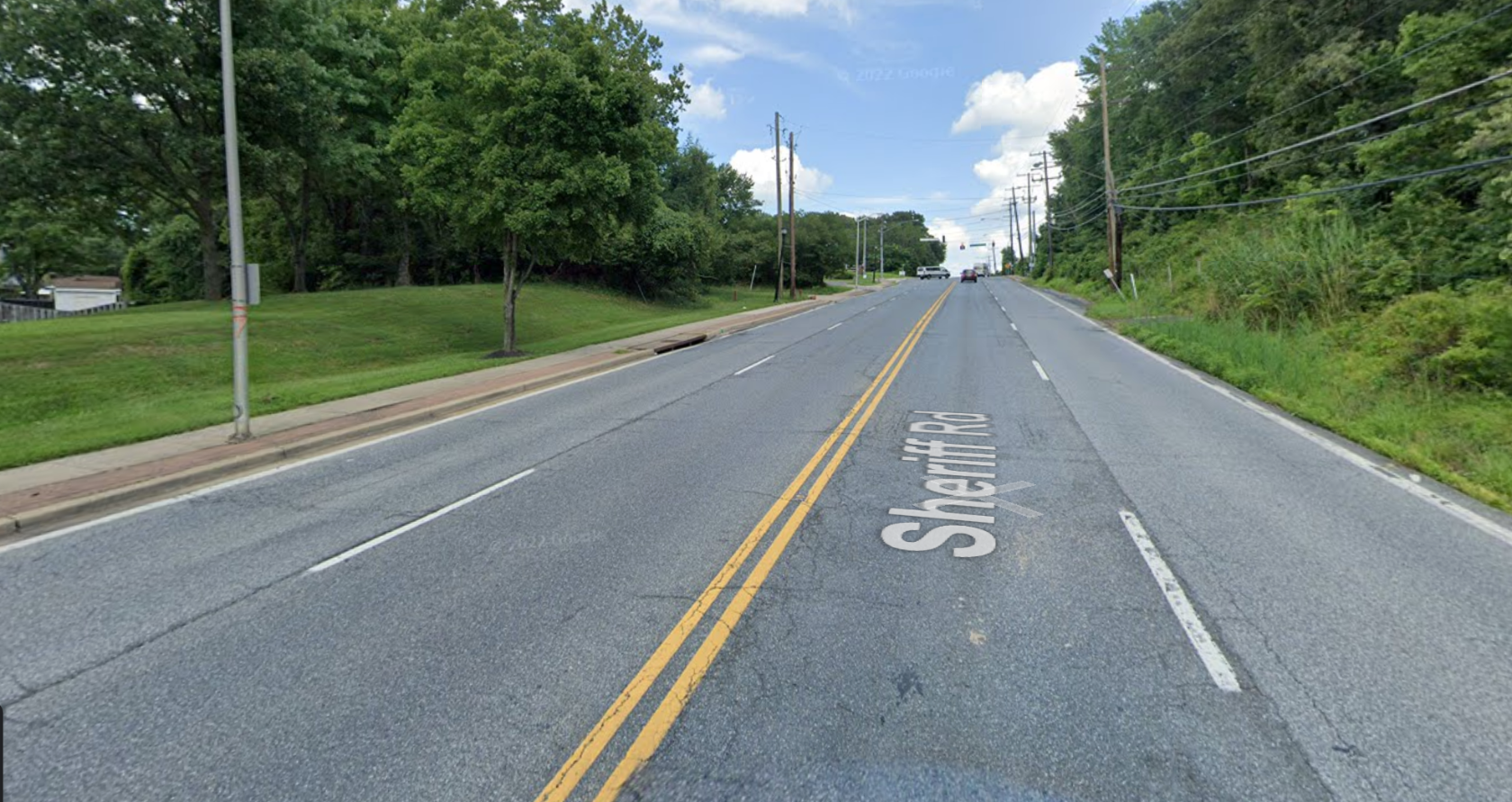
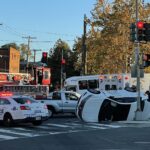
More than 100 people a year have died on Prince George’s County roads in each of the past five years. The county has long been the region’s leader in traffic deaths. Meanwhile, 43,000 people died on American roads in 2021, a 16-year-high.
The U.S. Department of Transportation calls it a crisis. A year ago, the department created the National Roadway Safety Strategy putting a renewed focus on safety and aiming to encourage responsible driving, safer roadway designs, safer vehicles, appropriate speed limits, and improved post-crash care. On Wednesday, officials sent out $800 million in grants from the Bipartisan Infrastructure Law to localities across the country, including in the D.C. region.
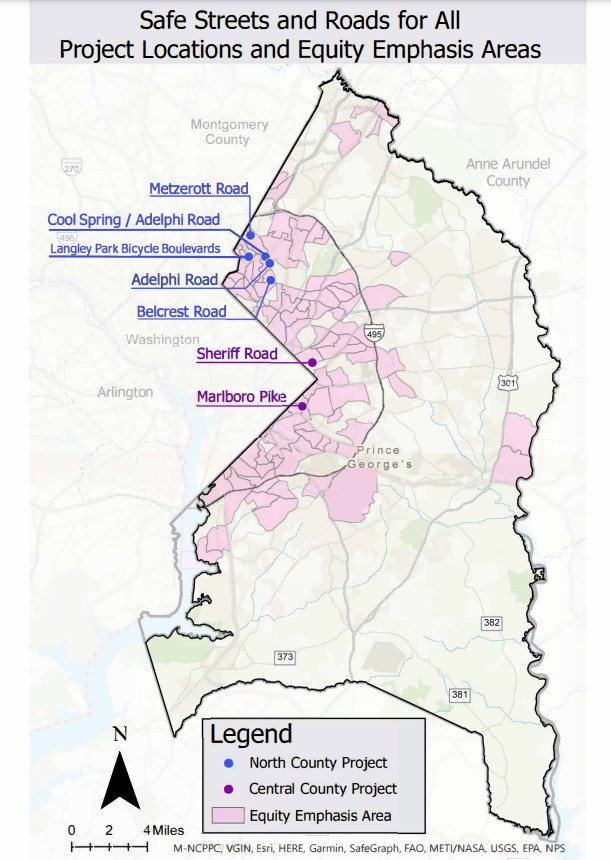
Prince George’s County is getting $21 million to fix seven of its most dangerous stretches of road. The one-mile segments have the greatest severity of bike and pedestrian crashes and are located within Equity Emphasis Areas. The projects will include reducing lane widths and street crossing distances, installing ADA-compliant curbs and high-visibility crosswalks, and new sidewalks and bike lanes. The roads addressed include Metzerott Road, Cool Spring/Adelphi Road, Adelphi Road, Belcrest Road, Sheriff Road, and Marlboro Pike.
“This grant win allows us to right the wrongs of past roadway designs that make it easier for vehicular speeding and crashes to occur,” County Public Works & Transportation Deputy Director Oluseyi Olugbenle said on Twitter. “These funds prioritize investments in underserved communities and will help reduce the tragic trends we are seeing in the County.”
The Maryland National Capital Park and Planning Commission is getting $7.5 million to make trails accessible and safer, improve trail crossings, and create educational safety programs for pedestrians and cyclists.
In Virginia, Prince William County received $1 million, Alexandria received $800,000, and Loudoun County received $500,000 to create plans for safer roads. Prince William and Loudoun counties are creating comprehensive roadway safety plans. Alexandria will study ways to make 10 of their most dangerous intersections safer. They’ll be selected based on the number of fatal and severe crashes, equity emphasis areas, and relationship to ongoing projects.
Localities can apply for the next round of the five-year Safe Streets and Roads for All program in April. The money goes directly to cities, counties, and tribal lands instead of being funneled through state departments of transportation.
The grants target high-crash areas and focus on areas that may have been underinvested in the past. Prince George’s County says the worst crashes are happening in urban areas with higher concentrations of
low-income and minority populations. U.S. Transportation Secretary Pete Buttigieg spoke to WAMU/DCist about the problems.
“Like so many areas of American life, traffic safety and roadway deaths are one where we see enormous racial disparities and that’s clearly connected to the built environment and the resources that have often not been invested in, particularly in majority Black neighborhoods,” Buttigieg said. “That’s part of what we’re trying to get at with these funds.
“We need to lower the total number of deaths and move toward zero. And as we’re doing that, we have to attack these racial disparities that leave some communities more vulnerable than others.”
Buttigieg says Prince George’s County put together a “very compelling vision” that was data-driven to address its most dangerous areas. Some of the projects reduce lane widths, which encourages safer vehicle speeds and lessens the distance pedestrians have to cross the road. Other items include bike lanes, high visibility crosswalks, new sidewalks, and making curb ramps that are ADA accessible.
“This is targeted towards specific places where they have seen a lot of injuries and fatalities and that kind of data-driven work is what we’re trying to support with our funding,” Buttigieg said.
Sen. Chris Van Hollen (D-Maryland), said Prince George’s County residents should be able to walk, bike, or otherwise get where they need to go without putting their safety at risk.
“With this major federal investment from the infrastructure modernization law, Prince George’s can make safety and accessibility upgrades along roadways and transit stops that benefit everyone traveling in the area – whether they are walking, biking, riding, or driving,” he said in a statement. “These investments are critical to ensuring that residents have a wide range of safe transportation options that can reduce traffic congestion.”
Safety advocates in the county welcome the news but hope the changes are enough to fix many of the wide, fast roads in the county.
Halima Ali, rides her bike from Largo, Maryland, to D.C. for work. She often uses Sheriff Road, which she says is terrible for cyclists, despite it being a main connector.
“You have to ride on the sidewalk (for safety) but you’re also sharing this really small, narrow space with people walking to the bus or waiting at a stop,” she said. “There is a lot of speeding and pedestrian infrastructure is an afterthought.
“You’re connected if you’re in a car and you can get from point A to point B pretty easily.”
The Sheriff Road project will add a bike lane (though it’s unclear if it is a protected lane or just paint), install high visibility crosswalks, pedestrian warning beacons, and more. Ali said she hopes they also lower the speed limit there.
Alaina Pitt, a Prince George’s resident, and safe streets advocate said she would have liked to see protected bike lanes.
“The county doesn’t seem to mention or say they are going to update these roads to meet their Urban Street Design standards,” she said. “In fact, DPWT (Department of Public Works & Transportation) has been roundly ignoring their own standards, including lowering speed limits.
“The county has a history of adding unprotected bike lanes, especially on highway-like roads. It doesn’t seem they’ll be doing protected bike lanes in this project (aside from a separated multi-use path on Metzerott).”
Buttigieg noted the variety of roads through the D.C. region, including the safer, slower urban environments and those four and six-lane suburban highways.
“We have to find a way to make all of that safe,” he said, noting places that have had zero traffic deaths like Hoboken, New Jersey, and Evanston, Illinois. “If they can do it, I think it can happen anywhere in America with the right level of intention.
“But that does mean making choices about everything from the design of our roadways to how drivers are being alerted to the hazards around them and the high standards that we’re holding vehicles — it’s not something that any one level of government can do alone, but it’s absolutely something we can do to get together.”