Colleen Grablick
 Sarah Y. Kim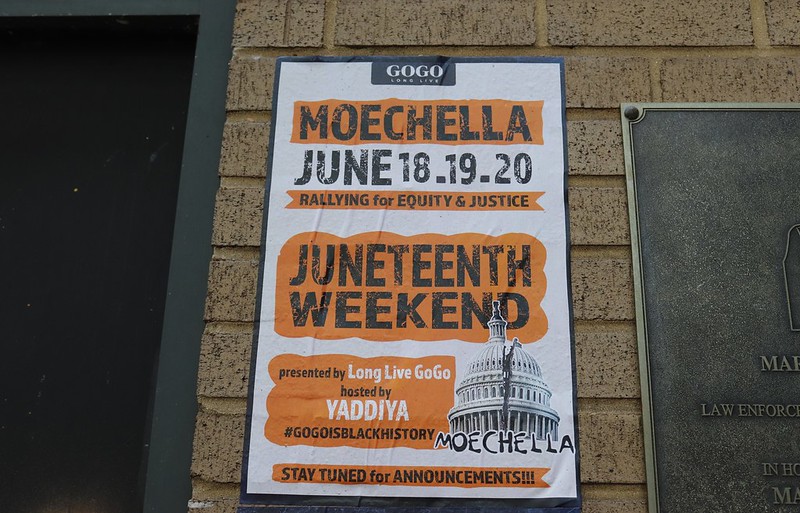
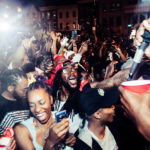
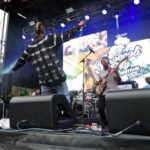
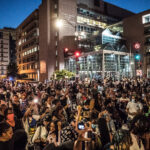
The musical festival Coachella is suing the two local artists behind the creation of Moechella — D.C.’s go-go music protest on 14th and U Streets — over alleged trademark infringement.
The lawsuit, filed on Wednesday, says Moechella’s organizer, Justin “Yaddiya” Johnson, and Kelsye Adams, the executive director of LongLiveGoGo D.C., are “intentionally trading on the goodwill” of the Coachella trademark due to their use of the name Moechella, as well as the way the Moechella logo is stylized.
It’s an escalation by Coachella’s lawyers, who blocked Johnson’s trademark application for Moechella last year. Johnson had applied for the trademark in April 2021, but after Coachella moved to opposed the application, Johnson withdrew it in August, and the Trademark Trial and Appeals Board terminated the case on Aug. 2.
At the time, Johnson told DCist/WAMU that the failure to secure a trademark would have little impact on the mission of Moechella — which is not about monetizing a name but uplifting Black music and culture and resisting gentrification.
“I don’t think that me owning that name has anything to do with me utilizing it as a free symbol of protest,” he said in August. “I don’t see how those things are conflicting.”
On Friday, Johnson told DCist/WAMU that he only learned of the lawsuit earlier this week through Twitter, and it came as a surprise to him.
“I felt we were all in the clear,” he said. According to Johnson, in his last dialogue with Coachella’s lawyers, he had agreed to refrain from using the Moechella logo on merchandise.
The name originally came from organic chatter he saw online, and makes use of the word “moe,” a local slang term for another person. Johnson saw it fit to give the people what they wanted, because the event is about community, people and protest. Since it has grown, he said the mission of the event has been “misconstrued” as being a festival, but at its core still exists to serve the community.
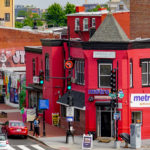
Moechella, which features local acts performing near the intersection of 14th and U streets NW, began in 2019 as a way to protest gentrification and celebrate Black culture after the owner of a Shaw MetroPCS store was forced to shut off the go-go music he’d played at the corner of 7th Street and Florida Ave. for 24 years.
While the lawsuit clarifies that Coachella has “no objection” to the production of live music and sale of merchandise involved with Johnson and Adams’ activities, the California company says that the locals’ use of the Moechella is “infringing and confusing” — apparently suggesting someone might confuse the star-studded festival hosted in the California desert with a locally organized and produced event on U Street.
To Johnson, the lawsuit exemplifies a broader attack on Black culture.
“What we’re looking at is a lawsuit between a billion dollar production company who throws Coachella, [and] a non-profit organization whose activation is Mochella,” he said. “It’s just so crazy to me that that this is not being taken into account on their side, especially saying that they say they want to uplift Black and cultural arts … I feel like it is a perfect opportunity to uplift us, not look to eliminate us.”
Coachella’s lawyers also reference the fatal shooting of 15-year-old Chase Poole during the Moechella event in June, saying in the suit the tragedy could result in “reputational harm” to the Coachella festival. A 15-year-old was later charged with first degree murder while armed in Poole’s death. (At the time D.C. Police Chief Robert Contee appeared to also blame Moechella’s organizers for the incident.)
Mayor Muriel Bowser’s remarks after the shooting — in which she described Moechella as “an event that did not have any proper planning for the number of people who were here and with guns involved” — are cited in Coachella’s lawsuit, despite the fact that the event has been co-sponsored by city agencies in the past. Her own chief of staff and deputy mayor for planning and economic development John Falcicchio even appeared on Fox 5 promoting the event days earlier.
To local musicians, Contee and Bowser’s words served as another example of the way the police and Mayor Muriel Bowser have criminalized Black music.
Coachella is seeking a temporary restraining order, preliminary injunction, and permanent injunction against any promotional or marketing activity using the current Moechella name and marks, and any future attempts to trademark the name.
They’re also asking for various monetary reliefs, including “all profits resulting from Defendant’s infringement of Plaintiff’s rights.” On that front, it isn’t immediately clear what Coachella could reasonably get — Johnson has repeatedly said that Moechella’s goal is not profit, but protest (the U Street festival was free), and a recent fundraising effort launched to fund upcoming events has so far raised $700 of a $100,000 goal.
Johnson wants the public help in picking a new name for the protest, just as he relied on their voice in its original branding. In the meantime, he said they’ll be focused on more programming like the School of Go-Go, which next month will become a co-working and event space for a music mentoring program. He said they’re also establishing a monthly event at high schools in D.C. to connect kids to music.
“Youth engagement is paramount to us right now, not just by mobilizing in the middle of the street, but actually establishing these relationships — by having a place and a space for them, and also going out to them,” he said. “We know that we need to utilize our energy to make an impact on the future, which is the youth.”
Previously:
Teen Killed, Three Injured During Shooting At Moechella Musical Celebration At 14th And U Streets
Moechella Organizers Lose Trademark Dispute, But Go-Go Lives On