 Jordan Pascale
Metro began a new era of service Tuesday — adding more trains during rush hours but only on Tuesdays, Wednesdays, and Thursdays to meet the peak demand. Those days have been 10-20% busier than Mondays and Fridays, which are popular work-from-home days.
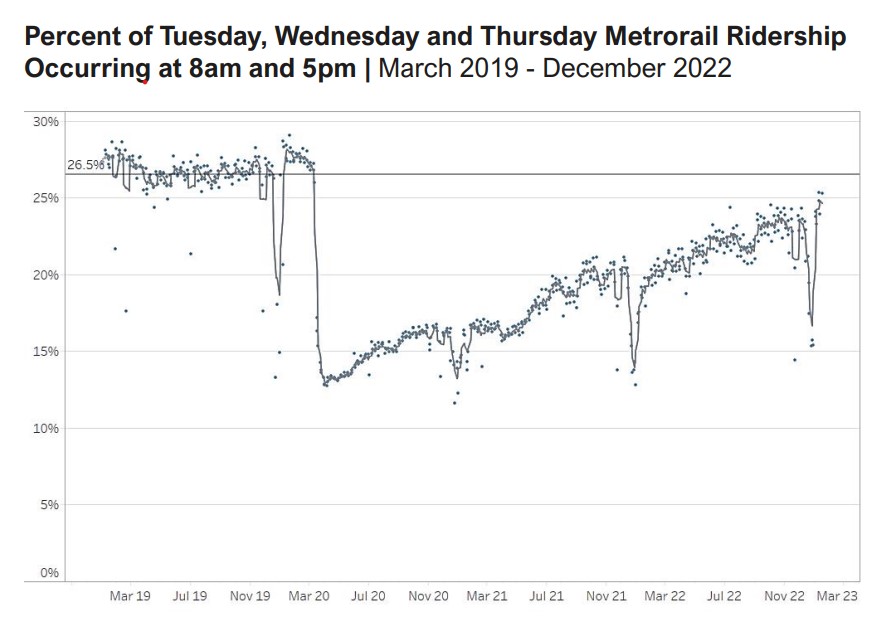
Metro says trips on Tuesdays through Thursdays are nearly back to pre-pandemic levels, while the system overall hovers around 45% ridership compared to 2019.
Metro is boosting the Blue and Orange lines with trains every 12 minutes instead of 15 minutes from 6-9 a.m. and 3-6 p.m. on Tuesdays, Wednesdays, and Thursdays. In the downtown core between Rosslyn and Stadium-Armory, where all three lines converge, trains will show up every four minutes.
Metro says 70% of all mid-week rush hour trips will have a train every eight minutes or less, meaning less waiting and less crowding.
Starting Feb. 21, Metro will ramp up service at those same times and days on the Red Line with trains coming every six minutes instead of every eight.
WMATA had previously just segmented its service by weekdays, weekends, rush hours, and late-night service. Metro General Manager Randy Clarke said he doesn’t think the addition of new segments on certain weekdays will be confusing for riders.
“In a perfect state, (we don’t have to do this) but the reality is, I think most people will take more trains for where they’re trying to get to and are willing to dissect the communication.”
Metro aims to bring back more service late this spring.
- Rush hours: Every 5 minutes on the Red Line and every 10 minutes on other lines.
- Non-rush hours: Every 6 minutes on the Red Line and every 12 minutes on other lines.
- After 9:30 p.m. Every 10 minutes on the Red Line and every 15 minutes on other lines.
“We’re cautiously optimistic,” Clarke said.
The transit agency has gotten permission to inspect the 7000-series train wheels less frequently, every seven days instead of every four, which will mean more trains will be available daily. Metro is also trying to hire and train more rail operators. The transit agency had a shortage created during the pandemic.
Here’s Metro’s new map trying to explain the new service changes.
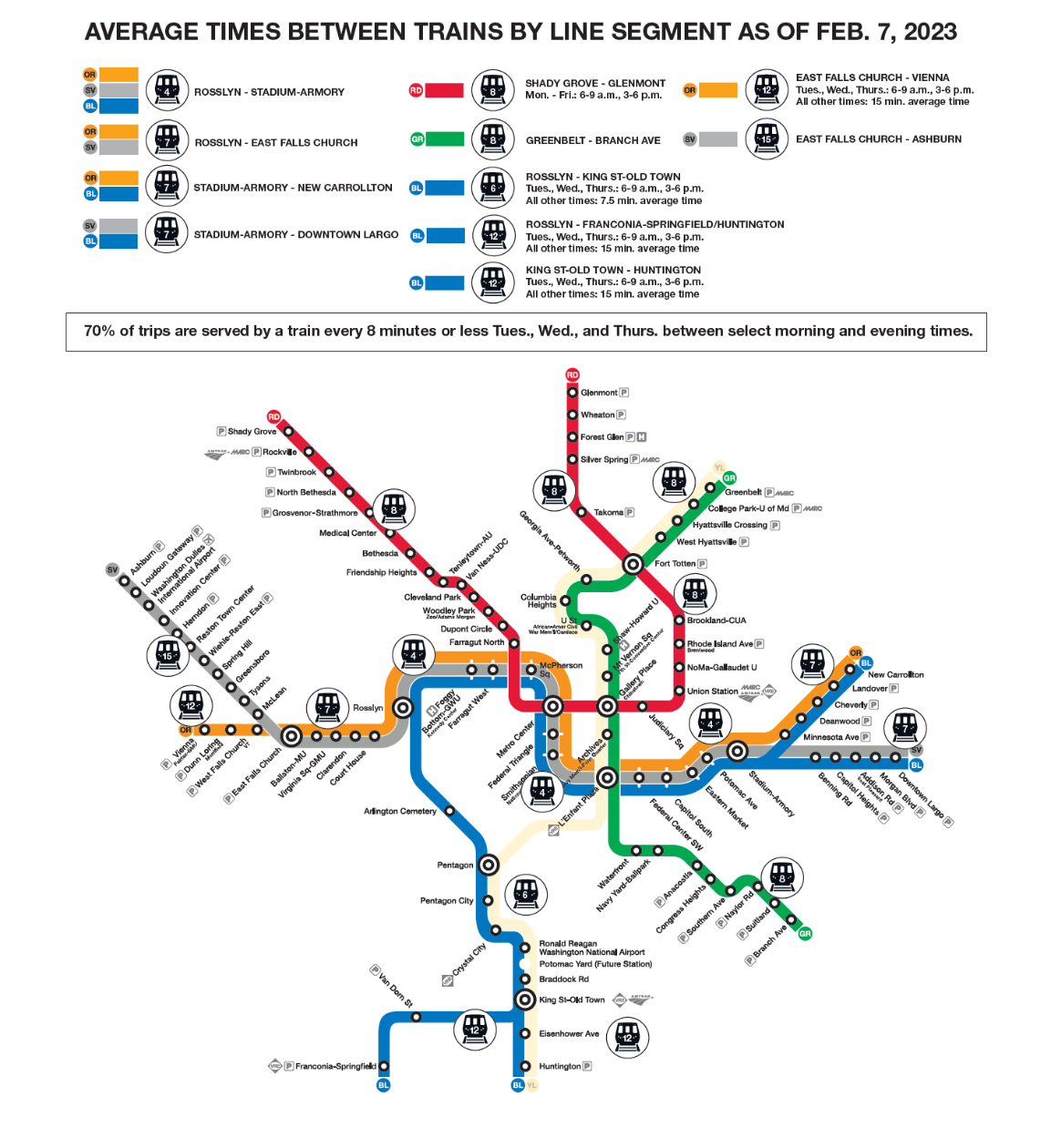
This story was updated to correct the rush hour frequency on the Silver Line, which remains at 15 minutes.