Jacob Fenston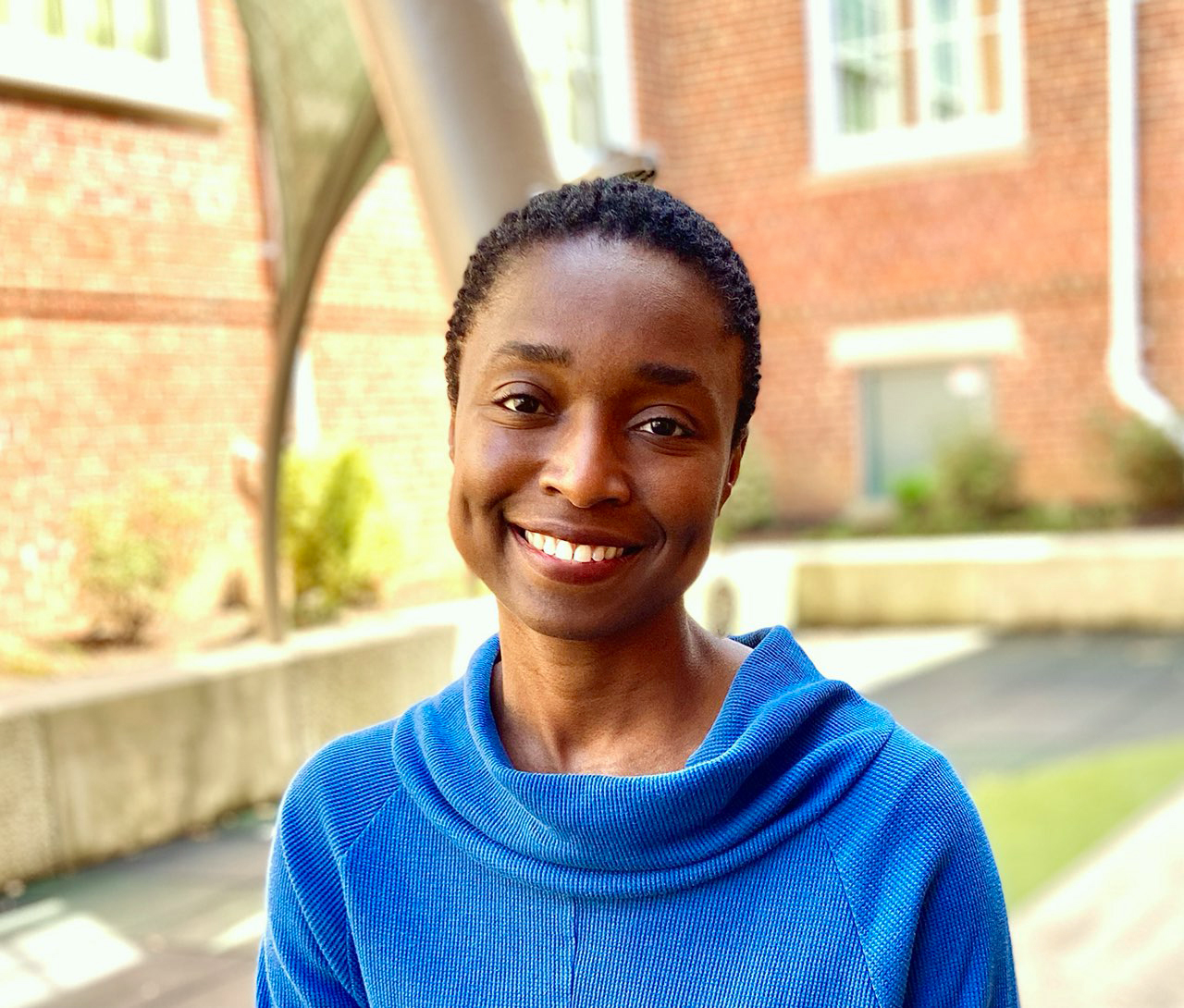
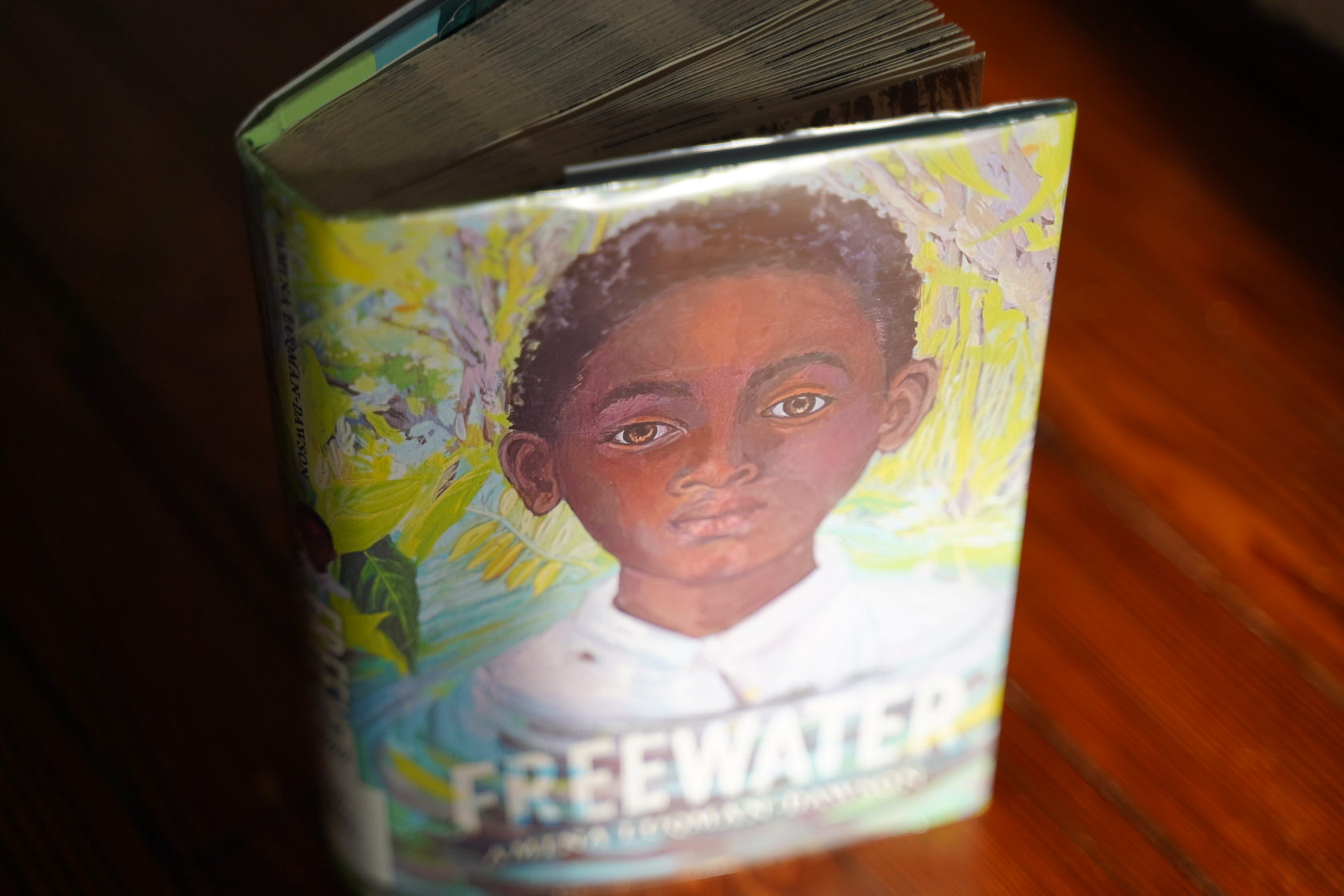
Arlington resident Amina Luqman-Dawson has spent decades moonlighting as a writer, publishing op-eds, magazine articles, and book reviews, all the while pursuing a career in public policy. In 2002, she had an idea for young adult novel: two kids escape enslavement and find freedom in a secret community hidden in a Virginia swamp. It took her 20 years to finish and get it published, but the work paid off: That book, Freewater, was just honored with the most prestigious award in children’s literature — the John Newbery Medal — as well as the Coretta Scott King Award.
The work of historical fiction is set in the early 1800s, and based loosely on maroon communities that existed in Virginia and elsewhere — places where people who had escaped enslavement created their own societies. Luqman-Dawson’s fast-paced book imagines such a community in the Great Dismal Swamp in southeast Virginia. The place is thriving, free, dangerous, and imbued with a bit of magic.
“I feel so truly honored, and just totally humbled by the tradition of all the wonderful award-winning authors who have come before me,” Luqman-Dawson says.
The Newbery especially called to Luqman-Dawson’s mind Mildred Taylor, whose Roll of Thunder, Hear My Cry served as an inspiration for Freewater, and who was the last African American woman to be awarded the prize — in 1977.
“And the Coretta Scott King Award, I spent a good deal of my life using that seal as a marker for great African American literature,” she adds. “So, yes, I feel beyond honored to be in this position, and also just feel plain overjoyed as well.”
DCist spoke with Luqman-Dawson about her book. The interview was edited for length.
Tell me a little bit about where the idea for the for the book “Freewater” came from.
The idea for this particular book came from being inspired by the concept of maroons, the people who escaped enslavement and managed to find ways to live free, clandestine lives in the wilderness. It just felt like a new way to access this old, hard history of slavery in this country. Many people tend to shy away from the topic or kind of fear the history a bit. And it came to me that a wonderfully fantastic story could kind of help break down some of those walls.
The book takes place before the Civil War, in the South. But it seems like it’s about freedom much more than enslavement. Why did you want to approach this really dark period of American history in that way?
I think particularly for children, they speak the language of humor and adventure — and if you should have them learn things along the way, then all the better. I looked at the books that my son was reading or that we were reading to him, and I knew that this feel of great humanity in the midst of terrible tragedy is absolutely possible, and if anything, the best way to learn about this hard history.
There are some really heavy parts in the book. It opens with a scene of two young kids running from dogs and an overseer from a plantation — that’s one of the more terrifying things I can imagine as a kid.
For me, it all begins and ends with the characters. As soon as [kids] connect with those characters, as soon as they care about or feel invested in those characters and what might happen to them … then any amount of danger or any harm that might come to them, it quickly becomes understood by kids.
So in the book, yes, it starts out a little scary. I always thought of it as the concept of a bullet train. Like it shoots out of the station and takes you for a ride that you just hold on because you can’t let go. However, in the end, I’d say there’s actually less in the way of actual physical harm or physical violence that takes place within the book. But the moments that it does, you’re so invested in those characters, that even the little harm to come to one of the child characters, I think leaves a big impact and the kids understand the message then.
This is a work of fiction, of course, but it’s based on history. What did you learn about maroon communities while writing this book?
There were well-established maroon communities in Jamaica and Brazil and really throughout the Americas. Learning about the presence of them here in the United States was really a fascinating thing. I was lucky enough to learn about the great Dismal Swamp. That swamp, which happens to be here in Virginia, had a long history of being a refuge for enslaved people. Some went there and were quickly caught, others went there as a stop on an underground railroad. But then there were others who managed to find ways to live free for years within the swamp.
Now, imagine: the swamp at its heyday and in its height was over 1,500 square miles, and it was a very arduous place to live. And so managing to do that, managing to survive, managing to remain quiet and live clandestinely, was extraordinary to me.
You portray the Great Dismal Swamp, so vividly it’s almost like a character in the book. Did you spend much time visiting there?
Well, to be clear, the Great Dismal Swamp was an inspiration for the story. But I never wanted to feel completely tied to it being based there because in the story, I had a number of slightly magical elements — like there’s a SkyBridge to get to Freewater. [That’s] me using these bits of imagination to allow kids to go on a really extraordinary journey.
But in learning about the Great Dismal Swamp, one of the greatest experts right now on finding remnants of those of the maroons that were there is Dr. Daniel Sayers, and I’m lucky he’s right here at American University, so meeting with him was great. Then, of course, visiting the Great Dismal Swamp — getting a sense of the smell, getting a sense of the foliage, getting a sense of the the climate — all of it helped to create a rich story environment for me as I sat down to tell my tale.
The publication of your book and the Newbery Medal comes at a time when children’s books, school libraries, and the way we talk about history, the way we teach history, particularly history of Black Americans, is very much wrapped up in politics and in culture wars. I wondered your thoughts about that, and if there have been any bannings of your book or if you’ve heard any talk of that.
Well, my book is quite new, so I haven’t heard any talk of banning of it. But I would differ from what you said a little bit. Instead of calling it a cultural war, I see this as an assault, I see this as an attack on real history and important history, be it African American history or the experiences of LGBTQIA folk. That is, to me, us trying to survive within an assault.
I feel that part of why there’s been this push to ban these books is because there has an energy out there to know this history. Because of that, a book like Freewater, although it may be attacked, I do think that there so many more families and teachers and communities out there that are thirsty and wanting this material that it will it will find a place, it will find a home. Hopefully it will be used as a wonderful tool to help us, ironically, find ways to better engage this history, no matter how, as you say, dark or hard it was.
Do you have another project on the horizon?
I am working on another project and it I think is going to be connected a bit to Freewater, but more taking the experience of one character and following one character from the book and hopefully introducing another fascinating bit of history.