 Jordan Pascale
 Colleen Grablick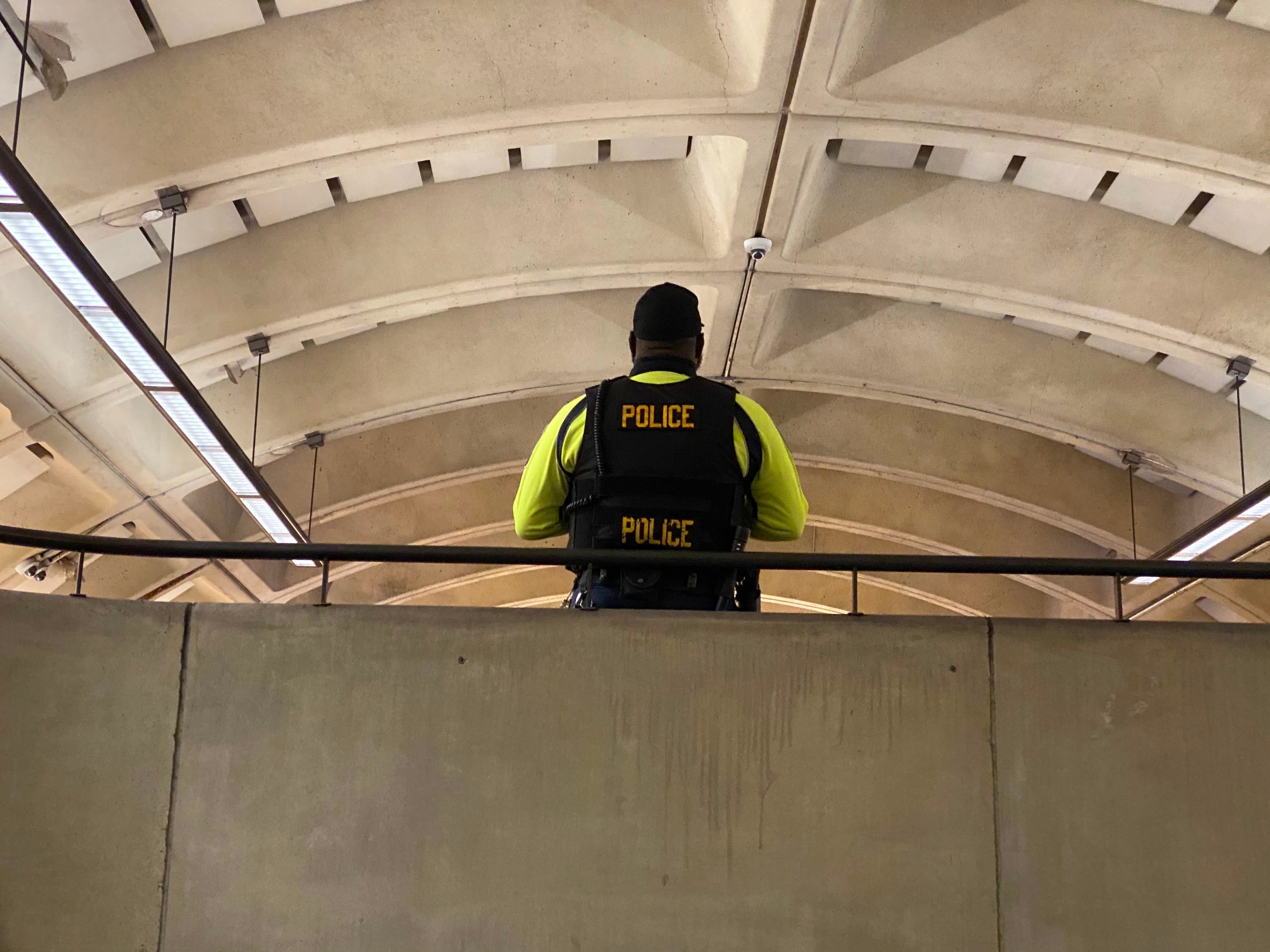
Metro will pay D.C. police officers overtime to beef up patrols in five rail stations during rush hours.
The initiative is aimed at making Metro safer — or making riders feel safer — after three high profile shootings in Metro Center, on the 54 bus, and in the Potomac Avenue station. The last shooting killed Metro employee Robert Cunningham, who died trying to stop the shooter.
Starting next week and continuing through June, Metro Transit Police Department officers will partner with D.C. police to patrol five stations: Metro Center, Gallery Place, Union Station, Georgia Avenue-Petworth, and Congress Heights. Two officers per station will conduct joint patrols to increase “visibility and response times” particularly during rush hours — from 6 a.m. to 10 a.m. and 3 p.m. to 7 p.m., Monday through Friday. Each station will also have a supervising officer.
Metro General Manager Randy Clarke said the extra officers will help Transit Police be on more buses and trains.
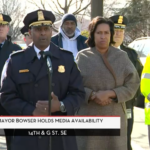
Clarke and D.C. Mayor Muriel Bowser made the announcement outside Metro Center on Wednesday afternoon, attempting to achieve a sense of calm and trust in the transit system after recent violent incidents. He said the addition of officers comes in response to recent violence, but also in an attempt to build rider confidence in the system’s safety.
“Every day we wake up knowing it is our job to do everything humanly possible to make the system safer,” he said Wednesday.
Officials are hoping that the physical presence of officers on platforms, buses, and trains, bolsters trust in the system and encourages more people to use it.
“We know that residents and visitors want to see a strong police presence in our community, and that’s what this partnership will allow us to provide,” said Mayor Bowser. “When police are in the community, people feel safer and our officers can respond faster. Hundreds of thousands of people use Metro every day to move around DC, and now, they can expect to see more MPD officers out during their commutes.”
Metro is tapping the extra resources as its transit police force is understaffed. MTPD is authorized for 468 sworn police officers, 140 security special police, and 101 civilian personnel, but only currently has 387 hired officers.
There are similar issues on the MPD side. MPD’s union questioned who was going to take on the added shifts, considering their force is also down to 3,386 officers. The department had nearly 4,000 officers about a decade ago, according to a graph provided by the union. In addition, the availability of current officers may be an issue; many officers already work overtime or at other security jobs in addition to their regular work, which at times has been a problem for MPD.
This comes after the Metro Transit Police Department launched its program to deter violent crime last April. Although crime had not spiked on the system at that point, MTPD increased its visibility in buses, trains, and at stations, and plainclothes and uniformed officers were added to “high crime areas.”
Statistics don’t reliably prove that an increased police presence on a subway or transit system deters crime. In New York City, for example, Mayor (and ex-police officer) Eric Adams added 1,000 more police officers to the city’s subway system to curb crime and give riders a sense of constant police presence. But the addition of officers did little to curb crime rates, according to Bloomberg. Murders and assaults increased, as have arrests for more low-level crimes like fare evasion, which disproportionately impact riders of color, according to the news report.
Clarke, for his part, has never fully endorsed putting police officers in every station. Last December, after an off-duty FBI agent, shot and killed a man in Metro Center and a 15-year-old was shot at the Benning Road station, Clarke insisted Metro was safe for passengers, and pushed back against the idea of putting an officer in every part of the system.
Speaking at the press conference on Wednesday, Clarke — as he has in the past — alluded to the broader issue of gun violence in America, but emphasized that he will continue to ride the system every day.
“We do believe Metro is safe,” Clarke said. “I just got off the escalator, I’m going back down to the train later today. I’m on the system every day. That does not mean that we believe our work is done.”
Some ANC commissioners have been asking for more officers and behavior health specialists at certain bus stops, like at 2300 Pennsylvania Ave. SE. Former commissioner Tiffany Brown said she asked the city, Metro, and police officials for regular patrols at the stop after several recent shootings. Brown said officials never responded.
Neighbors near the Potomac Avenue station have asked for a similar presence at the plaza near the Metro entrance, according to tweets from ANC Commissioner Matt LeFortune who represents the area. MTPD told the community in a meeting Wednesday night that Potomac Avenue has not been a hot spot for crime and “last week’s shooting alone doesn’t change that,” LaFortune wrote in a tweet.
In an interview with WAMU/DCist last week, he said residents are evaluating how they feel about taking Metro after the shooting
“It is a tragedy and an awful random act of violence, but it is going to shake the way feel folks feel about the system for a while,” he said. “And if we want people to take Metro, they have to feel they can do it safely.”