 Jordan Pascale
The public dispute between Metro and its safety oversight body has overflowed into public view so many times in recent months, that it has left elected officials on the D.C. Council with a big question: what is going on?!
Both WMATA and the Metrorail Safety Commission, a federal oversight body created six years ago by Congress, were in front of the D.C. Council on Friday as part of an annual oversight hearing. The new transportation committee chair, Councilmember Charles Allen (D-Ward 6), spent some of the time focusing on the spats.
The recent issues include:
- In October, when Metro wanted more trains in order to open the Silver Line and reduce overcrowding. The WMSC said WMATA didn’t create a data-driven plan that would allow that to happen.
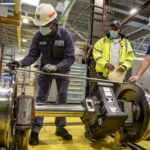
- How often and whether WMATA was following its own plans to measure the wheels on the 7000-series trains.
- In January, when Metro didn’t follow training procedures about how much and what type of training operators are getting, which could have led to service cuts if increased training was required.
- When Metrorail Safety Commissioner questioned Metro’s commitment to safety after an incident with a rail operator.
The WMSC was created as a third-party oversight body, which many transit agencies have. But the region needs the two to work together to make sure that service is safe and that the issues can be resolved quickly. Metro has often signaled that the Safety Commission can be overbearing and too public with minor issues. The WMSC has noted Metro’s previous history with a lack of safety culture and several re-occurring issues, highlighting problems at the Rail Operations Control Center, WMATA’s maintenance practices, and more. In the above instances, Metro has corrected issues after the WMSC prodded them.
Previously Virginia Sens. Tim Kaine and Mark Warner stepped in to mediate the Silver Line opening between the two. Last month, after a stalemate on training requirements, Metro board chair Paul Smedberg suggested the pair find third-party mediation.
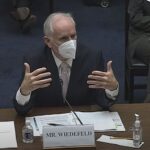
WMSC CEO David Mayer told the council, “In my judgment, especially given the very healthy conversation that took place between the general manager and me on Wednesday, I don’t think we’re at a point where we need facilitation.”
Mayer said that meeting was wide-ranging and candid.
“It won’t surprise you, we didn’t see eye to eye on anything,” he said before quickly correcting himself, “We didn’t see eye to eye on everything.”
“But there are many areas of commonality. And we’re both committed to driving safety in the right direction.”
Allen asked both sides how to fix the high-tension relationship; Mayer and WMATA General Manager Randy Clarke both agreed on the need for better and continuous communication.
Recent conversations have helped build trust and collaboration, Clarke said. He hopes for more proactive communication, fewer public spats, and more in-person meetings, saying that the virtual meeting world “dehumanizes interactions over time. The more we’re all together and out in the field leads to a much better outcome overall.”
Clarke said he benefits from good safety oversight, and affirmed his commitment to safety, saying “I would never hesitate to shut something down if I was presented with evidence that something was unsafe.”
However, the general manager noted that he wants a holistic safety management culture. The WMSC has been hyper-focused on the 2021 train derailment and 7000-series train wheel issues, but Clarke said the more focus on one issue, we could unintentionally create other gaps in safety.
Mayer said both organizations have had staff turnover and they want to sit down with both senior teams to make sure we all actually know each other and what makes each other tick and increase collaboration and trust between us.”
Allen told both men, who appeared separately, that people around the region were “concerned about the relationship.” He suggested enlisting the Metropolitan Washington Council of Governments, made up of local officials from across the region, as a place to help facilitate the work.
“Regionally, we all have a high stake in finding a path forward,” Allen said.
Mayer noted that while the tension has spilled out publicly, and they’re working on fixing that, they do have healthy relationships.
“We see safety issues and we work together and get them fixed,” he said.
As to the other issues at the hearing, WMATA says it is starting to get its first electric buses delivered and they should be on the streets soon. Clarke said procuring large numbers of vehicles from the limited number of manufacturers that meet the “buy American” clause of the infrastructure bill, paired with high demand around the country, is difficult.
Clarke told the committee WMATA has hired four crisis intervention specialists to assist people with mental health problems on the system. They hope to have eight to ten specialists in the coming months. The head of Metro also hopes to revert behavior on the system to previous norms and will be working with community groups and schools to focus on how to behave more civilly on Metro.
“We have a lot of individuals that are smoking in stations on trains or buses, acting in an inappropriate way — not criminal, but quality-of-life disruptive behavior that we wouldn’t accept from our kids or neighbors,” he said. He noted that a lot of bad behavior developed during the pandemic when fewer people were riding. Returning ridership could make for a safer and more orderly system, Clarke said.
Metro is working on adding more police to the system, improving video technology and monitoring, and modifying fare gates to make them harder to jump.
“But there’s only so much Metro can do,” Clarke says. “The number one complaint I hear from bus operators is that they wish people would be more civil and respective in society.
Clarke notes there’s a societal debate around whether there is too much, too little, or the wrong type of law enforcement, but at the end of the day “transit staff wants to feel safe on our system,” he said.
This story was updated to clarify issues between Metro and the WMSC and correct the spelling of the WMSC CEO’s last name.