Colleen Grablick
Alice was kicked out of her Buy Nothing group over a white noise machine.
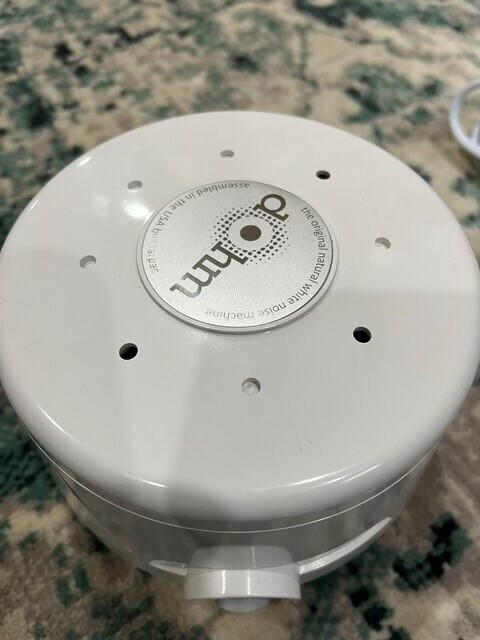
Last September, a woman posted in a Capitol Hill Buy Nothing Group – a hyperlocal Facebook community designed for giving away and receiving free stuff from your neighbors – looking for a white noise machine. Alice, who coincidentally was about to list a white noise machine her son no longer needed in a separate listserv for reselling children’s items, saw the post. No one had yet offered up a white noise machine.
“Hey, I don’t have one to give, but I do have one to sell in case you don’t find anything on here,” Alice, who asked DCist/WAMU to refer only by her first name to protect her privacy, recalls commenting on the post.
If you’re familiar with the commandments of Buy Nothing groups — the scroll of rules and guidelines meant to keep the groups functioning smoothly (and with “integrity”) — reading Alice’s comment (particularly, the word sell) might’ve induced a wince, like seeing a person milliseconds away from stepping in dog poop when you’re too far away to warn them.
Alice’s response was quickly deleted. Next, the original post was deleted. Then, when Alice tried to open the group again, she realized she’d been removed.
“I was like oh, okay, I guess that wasn’t allowed,” Alice tells DCist/WAMU. “It is a Buy Nothing group.”
If there’s a cardinal sin of Buy Nothing, Alice had committed it. The central Buy Nothing ethos is right in the name, after all. Started as an experiment nearly 10 years ago by two friends in Washington state, the network has grown to more than 7 million members in thousands of private Facebook groups across the U.S. At its core, the Buy Nothing mission is to reduce waste and build community through the hyperlocal exchange of free stuff. As the concept expanded, the founders adopted rules, both big and small, to uphold that mission.
First and foremost, don’t sell things. Swaps and trades are also prohibited, as is posting links or recommendations to outside places where items may be for sale. The rules are enforced — sometimes loosely, sometimes strictly — by volunteer administrators from the neighborhood.
The groups can be blessings for a variety of situations — new parents, or all parents really, people moving out, people moving in, people preparing dinner who need just one teaspoon of, say, mustard seeds, and people who for the love of god, need to get those cardboard boxes out of their house. Its popularity was a godsend for some during the pandemic, serving both as an antidote to isolation and an endless source of DIY project materials.
But as with any online space, as participation balloons, things can get ugly. Sometimes the rules meant to hold groups together ultimately become the agents that unravel them. When a tweet about the sometimes endearingly quotidian items gifted in Buy Nothing groups went viral last month, plenty of people chimed in with their own stories of scoring or gifting unused ketchup packets or leftover Popeyes chicken.
But the thread also turned up some D.C.-area residents, mostly those living in the whiter, more affluent parts of the city, who had stories of the gifting groups gone awry. Whether it’s heavy-handed admins sniping down posts that violate “BN” guidelines and banishing members over a single infraction, or participants that, in an admin’s eyes, don’t want to follow rules, the groups meant to foster community and neighborly-ness can end up doing the exact opposite — all over free stuff.
https://twitter.com/MusserRyan/status/1620493949495558144?s=20
Alice isn’t the only local from the Capitol Hill Buy Nothing page with a story of a punishment seemingly exceeding the crimes. Multiple former (and a few current) members of the group shared similar experiences of iron-fisted moderation.
For example, one person was allegedly removed from the group — permanently — after suggesting that someone who had listed a free breast pump (that no one else had commented on) donate the pump to Afghan refugees. (Listing any places for purchasing or donating is not allowed.)
In another instance, a member was searching for new puzzles. A second member suggested they swap puzzles with each other, and the latter member was suspended for three days for suggesting a trade.
In yet another instance, someone posted in search of fishing poles. Someone commented that the Department of Energy and the Environment had a fishing pole lending program, and the post was immediately removed. Others have been tripped up by a rule that acronyms, like ‘ISO’ meaning “in search of,” or FFPU “free for pick up” are also technically illegal. (The thinking goes they may be exclusionary for newcomers who don’t know what they mean.)
Trey Sherard, an expat of the Capitol Hill Buy Nothing group, sees such removals as going against the spirit of Buy Nothing, even if they are technically within the letter of the rules. “It’s one thing to put a general blanket reminder [of the rules] out every now and again, but to start knocking people out of the group, because they use acronyms how many times…” he says.
In the Capitol Hill group, there aren’t typically second chances or restorative justice mediations after a rule has been broken, members and ex-members we spoke to say. It’s a one-strike, you’re out system. In Alice’s case, she hoped at least for a direct message or comment for an admin before being excommunicated.
Alice reached out to both administrators of the group admitting her faults and asking for penance, but her efforts were fruitless, according to DCist/WAMU’s review of their fairly heated text conversation. (DCist/WAMU reached out to an administrator of the Capitol Hill group but did not hear back.)
“I feel like it’s a little crazy to be like, ‘I really wanted to get back into the community,’ because they weren’t people that I knew personally,” Alice told DCist and WAMU. “But it had been a community I had really appreciated.”
A former admin of the Capitol Hill group told DCist/WAMU that they were recently relieved of their volunteer position for pushing back against certain punishments — the final disagreement involved the removal of a post from someone gifting a bookshelf on behalf of a less tech-savvy neighbor. That former admin, who asked that their name be withheld to prevent backlash, says they were later removed from the group entirely. (One source who declined to be named out of fear of retribution said some people in the group refrained from speaking for this article for fear of being removed from their Buy Nothing page.)
After witnessing several removals, deletions, and ex-communications akin to Alice’s situation, members of the Capitol Hill page decided to branch off with their own more anarchist group, irreverently titled “Take My Shit.” There are few, if any rules, and unlike Buy Nothing pages, which are restricted to hyperlocal neighborhood boundaries, anyone in D.C. can join.
“We just wanted the main concept of the giving and taking of shit without all the rules,” says Take My Shit administrator Erika Anderson.
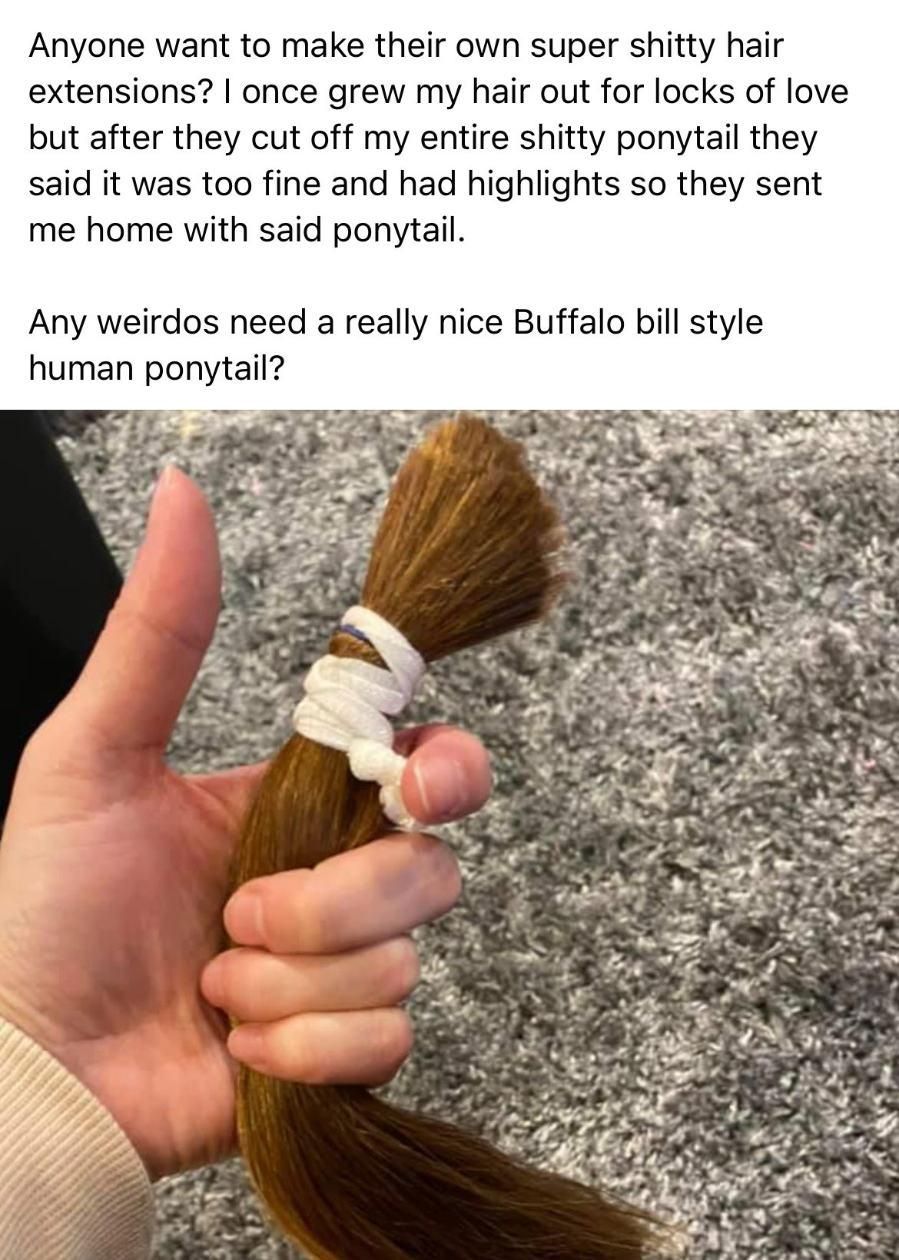
Started at the end of 2020 and now more than 2,000-members strong, Take My Shit, or “TMS” operates under the generic Facebook group guidelines of no bullying or hate speech, but otherwise is a lawless land. Recommendations — of a restaurant, a locksmith — are allowed, as are swaps and swear words (within reason.) Unlike Buy Nothing, the group takes pride in its irreverent tenor, describing itself as “a more aggressive Buy Nothing group for people with a sense of humor, [who] enjoy swapping booze and aren’t concerned about porn.”
Anderson and the original Take My Shit founder, weirdly also named Erica Anderson, rarely step in when there are disputes in the group, and they say the experiment with anarchy has largely worked out for the best. They’ve even organized happy hours and other IRL gatherings.
“Erica and I are sort of anti-moderators when it comes down to it, because we let people figure their own shit out,” she says. “Ultimately, what we’ve discovered is that when you let adults be adults, they do just that. Sometimes we’ll get private messages about conflicts or whatever, and just say, ‘okay, well, that sounds like a personal problem to me, you’re adults, you can figure it out.’”
Sherard, now a Take My Shit participant (some have referred to TMS as a home for “Buy Nothing refugees”), says he hasn’t noticed any scuffles — a result, he says, of the group attracting like-minded people who were tired of the Buy Nothing drama.
“It’s been a much less distracting experience, it’s been much more focused on what it’s for and any ancillary benefits have been funny,” he says. “People are having lots of fun with ridiculous explanations of their shit.”
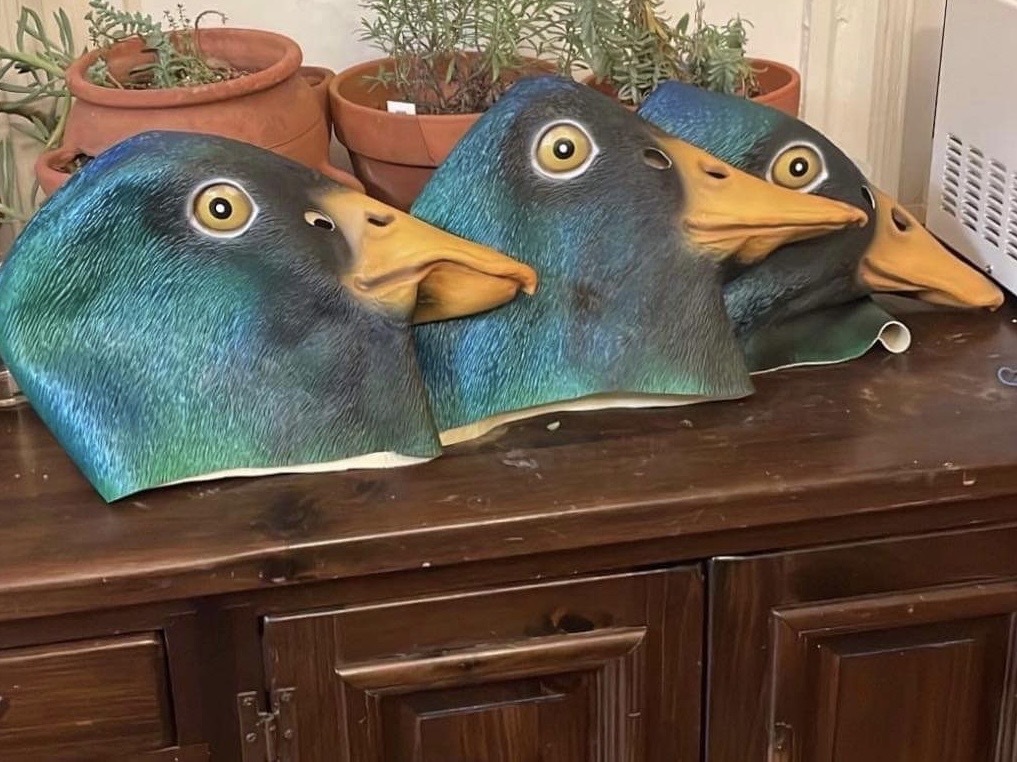
Someone has passed along three terrifying mallard masks. Another member offered up nipple tassels made of candy – and someone actually took them. Someone else gave away two large banana and cucumber suits (respectively), the kind that can cover an adult’s whole body, to a member who posed in them for their Christmas card. Often when it’s quirkier stuff being taken, members will post a follow-up — like where they decided to hang their creepy duck masks or the how the costumes turned out in a photoshoot — to thank the previous owners. (When DCist/WAMU posted a callout for members’ favorite listings, the stories didn’t stop coming.)
It’s also become a home for swapping advice and stories, like one person who panic-posted when a rat crawled up into their toilet.
The existence of the Take My Shit group, to Anderson at least, proves that the rules – and maybe moreso, the strict enforcement of those rules – aren’t necessary for a collection of people to function in harmony.
Some Buy Nothing moderators, however, see the rules as a necessary aspect of any large group of people organizing together, online or offline, especially when free stuff is involved.
“This is an organized society, this is how these things work. We have rules and laws for a reason,” says Erin, who used to be an administrator for an Eckington Buy Nothing group. She asked DCist/WAMU to use only her first name to protect her privacy. “Yeah, they’re going to seem unnecessary sometimes. But it’s like when I was in a hospital once, and they had a sign on the wall that said ‘please do not put your hand in the toilet, it will get stuck.’ And I’m like, ‘that seems stupid, why should you tell people not to put a hand in the toilet?’ Well, it’s because somebody has put their damn hand in the toilet, and they got it stuck.”
Erin quit being an admin for her group after about a year, tired of being called on to handle personal disputes (like one exchange, when someone gave away an item that wasn’t theirs and then called on her to help them get it back, despite not knowing who took it) or being on the receiving end of people’s ire over rule enforcement. A big violation she recalled having to mediate was when people posted free events or otherwise promoted a company or business — and then didn’t like when that content was removed.
“It’s such a great concept, but people ruin it,” Erin says, remarking that digging back through her Buy Nothing memories for this interview gave her “agita” to even think about.
She also had to join dozens of Buy Nothings across the city, to make sure people weren’t “double-dipping” or participating in two Buy Nothings at once. (Although DCist/WAMU couldn’t confirm this, multiple people reported being removed from the Capitol Hill Buy Nothing after joining Take My Shit, suggesting the existence of a BN mole.)
Eventually, Erin got fed up with the amount of petty arguments and disagreements she had to manage in what was an entirely volunteer-based position. She joined a new Buy Nothing when she moved to a new neighborhood, but got annoyed by the same issues even as a member, and now has sworn off the group entirely.
While Take My Shit defectors fault rules and moderators for the tension in the Buy Nothing dynamic, Erin says members are just as much a part of the problem when a group becomes contentious. Create an (albeit small) hierarchy of power, and then mix in the specific craze that accompanies free stuff (a zero dollar price tag can actually increase the value people place on an item, and the lengths they’re willing to go to get it) and you’re asking for conflict.
“People beget drama, and when you add free stuff, people get worse,” she says. “They get greedy, and really shitty, and self-righteous about it.”
Though there are plenty of people eager to point fingers, the original founder of the group, Rebecca Rockefeller, admits that the true problem might just be the structure of a Buy Nothing group itself.
“When you put a human being, or one or two people, as admins of a private group into the position where they have to make the call on whether people are allowed to join or not join, and they have to enforce the these rules, it’s an unequal power that they have over their neighbors,” Rockefeller says. “Anytime there’s an unequal power distribution that attracts different sorts of personalities, it has a whole host of impacts.”
Ironically enough, the idea for Buy Nothing came from the fact that Rockefeller and co-founder Liesl Clark were constantly getting kicked out of their Freecycle group (another large gifting network designed to reduce waste) for “offering things that weren’t really good enough” to be considered gifts, and “telling stories that were too long,” in Rockefeller’s words.
Buy Nothing, as it originated, was meant to be a social experiment of a gifting economy existing within certain geographic boundaries. But before long, word of the idea spread and Buy Nothings were popping up in towns outside of Rockefeller and Clark’s immediate neighborhood, and the pair found themselves setting up Facebook groups for volunteer admins in other states.
While D.C. locals have chafed against the admins, the geographic rules of Buy Nothing remain one of its most controversial points. When Erika Anderson, the founder of Take My Shit, moved across the Anacostia River, she was removed from the Capitol Hill Buy Nothing, because she no longer lived within the group’s borders. Whenever a group gets too large, the admins are supposed to facilitate a “sprout” — but this usually results in a group that exists within smaller, even more demographically homogeneous borders.
When the Buy Nothing concept began to grow, co-founders Rockefeller and Clark encouraged local admins to rethink the “give where you live” policy in order to avoid excluding parts of a town that may be lower-income from nabbing some of the best gifts. Due to redlining and the other racist policies upon which neighborhoods in the U.S. were delineated, inequity was de facto baked into the geographic underpinning of the group.
“Those rules tend to serve some communities really well, and at the same time in other communities, they can be used almost in a diametrically different way…to exclude people too,” Rockefeller says.
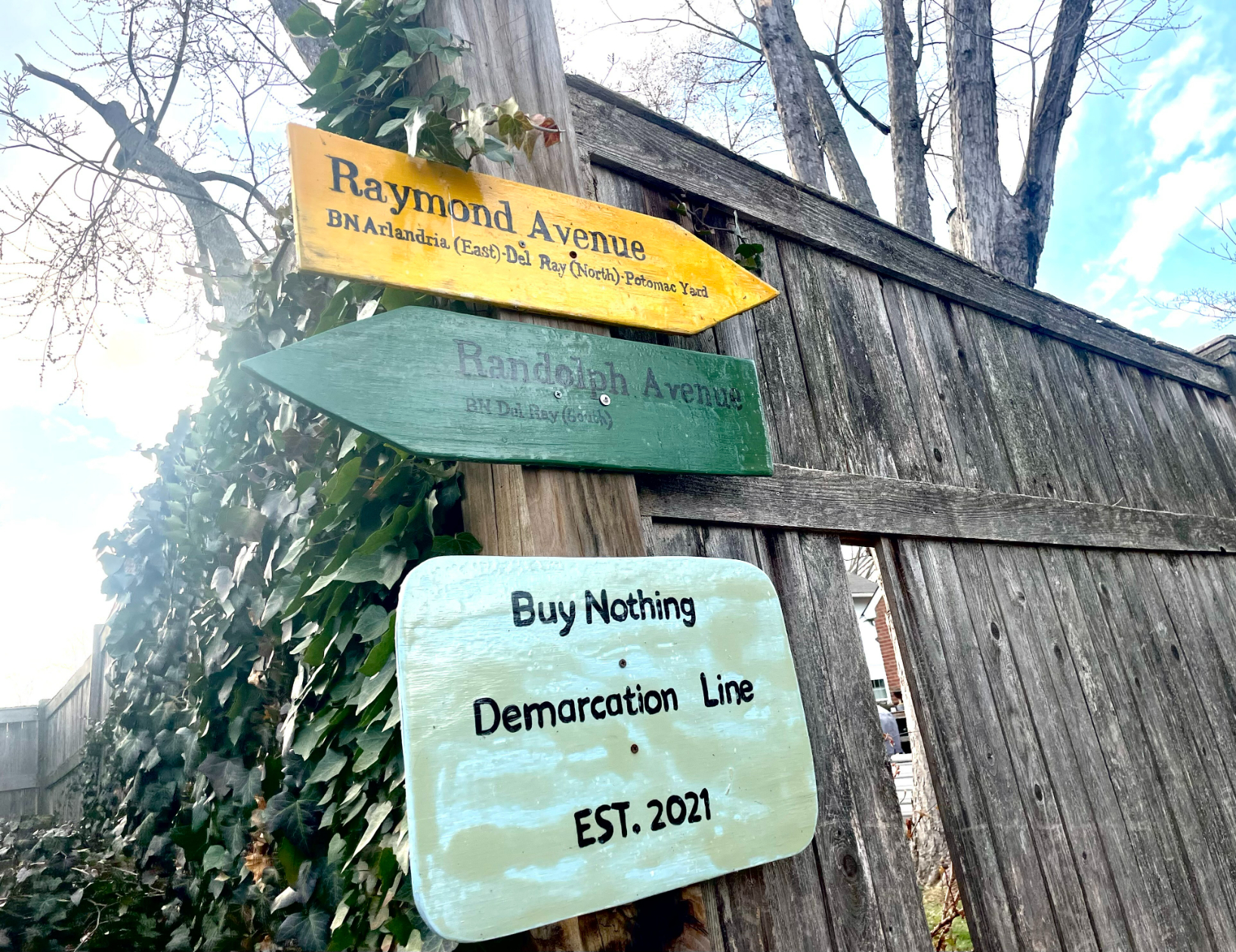
The sprouting of her Alexandria Buy Nothing is what brought Craige Moore to create an offshoot group to allow gifting between neighbors who were no longer in the same geographic groups, post-sprout. (In her words, the sprouting ultimately left all parties unhappy.) The “spin-off, spin-off,” or SOSO as it is lovingly called by some, requires individuals to be living in Alexandria generally and already participating in a Buy Nothing, so “that you understand the true premise of gifting,” Moore told DCist/WAMU.
But even this has its limitations. Now that the SOSO has grown to more than 2,300 people, Moore has turned on post approval, meaning anything members want to post must be reviewed by admins first. She described herself and her co-admin as “benevolent dictators,” — ruling more via the “Big Stick” than Capitol Hill admins’ iron fist, perhaps. While there have been some complaints about the new practice, Moore says turning on post approval was easier than sifting through several posts, several times a day, to look for violations.
The biggest infraction she sees is people not listing where they’re located, a requirement because one’s desire for an item is often directly proportional to how far they have to go to get it. (The geographic area of the SOSO is large enough that members could easily live a 20-minute drive away from one another.) Another is when people promote their businesses or items for sale outside of designated quarterly threads for those types of posts — something Moore instituted because the group was getting flooded with such posts.
“I feel like once ours got to about 1,000, that’s when we started to really be like, ‘okay, we need to figure out a little bit of a rule here, because otherwise we’re gonna go crazy,’” Moore says. “I wasn’t, like, trying to make rules just for the sake of being a hard ass.”
It may just be that different communities prefer different versions of a gifting scheme; a lawless, more anarchist group might work for a community that’s self-selected to participate in that forum, while a more rigid, austere group would not.
Ultimately, Alice joined the Take My Shit group, where she says she’s run into virtually no problems since her ejection from Buy Nothing. And yes, she ended up finding someone to buy her kid’s white noise machine.
This post has been corrected to reflect that Erika Anderson is an administrator of the Take My Shit Group, and Erica Anderson is the founder of the group.