Colleen Grablick
The National Zoo will reopen its nearly century old Bird House next month after a six-year renovation, with three new aviaries mimicking the migratory patterns of more than 50 bird species.
Originally constructed in 1928, the Bird House last underwent renovations in the 60s. By 2017, the structure was sorely due for an upgrade, according to Curator of Birds Sara Hallager. Most of the birds were housed in other parts of the zoo during the renovation, and moved into their renovated digs (along with some new additions) in 2022. And as of March 13 , it will be open to the public.
“It’s beautiful, I think,” Hallager told DCist/WAMU at a press preview of the Bird House on Wednesday. She’s been at the zoo since the 1980s when she began as a volunteer and “just immediately fell in love with birds and have not left…so yeah, birds are my life.”
If birds are not your thing, the new Bird House may not be for you, although keepers and researchers would encourage you to give it a try. If any attraction in D.C. can brand itself honestly as an “immersive experience,” it’s probably this one. The layout of the new building is meant to make visitors feel as though they’re following the migration path of different species, and “experiencing” the sights, sounds, and scents of those habitats.
Upon entering the first aviary, it’s a bit like stepping into the rain–with a touch of wet-dog and just-rained-worm smell. And in the last room, you’re wrapped in humidity for a more tropical feel. If you stand too close to the ducks in the waterfowl exhibit while they feed, you might get splashed, and be careful if you happen to be standing under a tree in the songbird aviary, for obvious reasons.
“We hope that it will generate a lot of appreciation for birds, and then gives us a way to to teach people simple actions that everyone can take to help save birds,” Dr. Autumn Lynn-Harrison told DCist/WAMU.
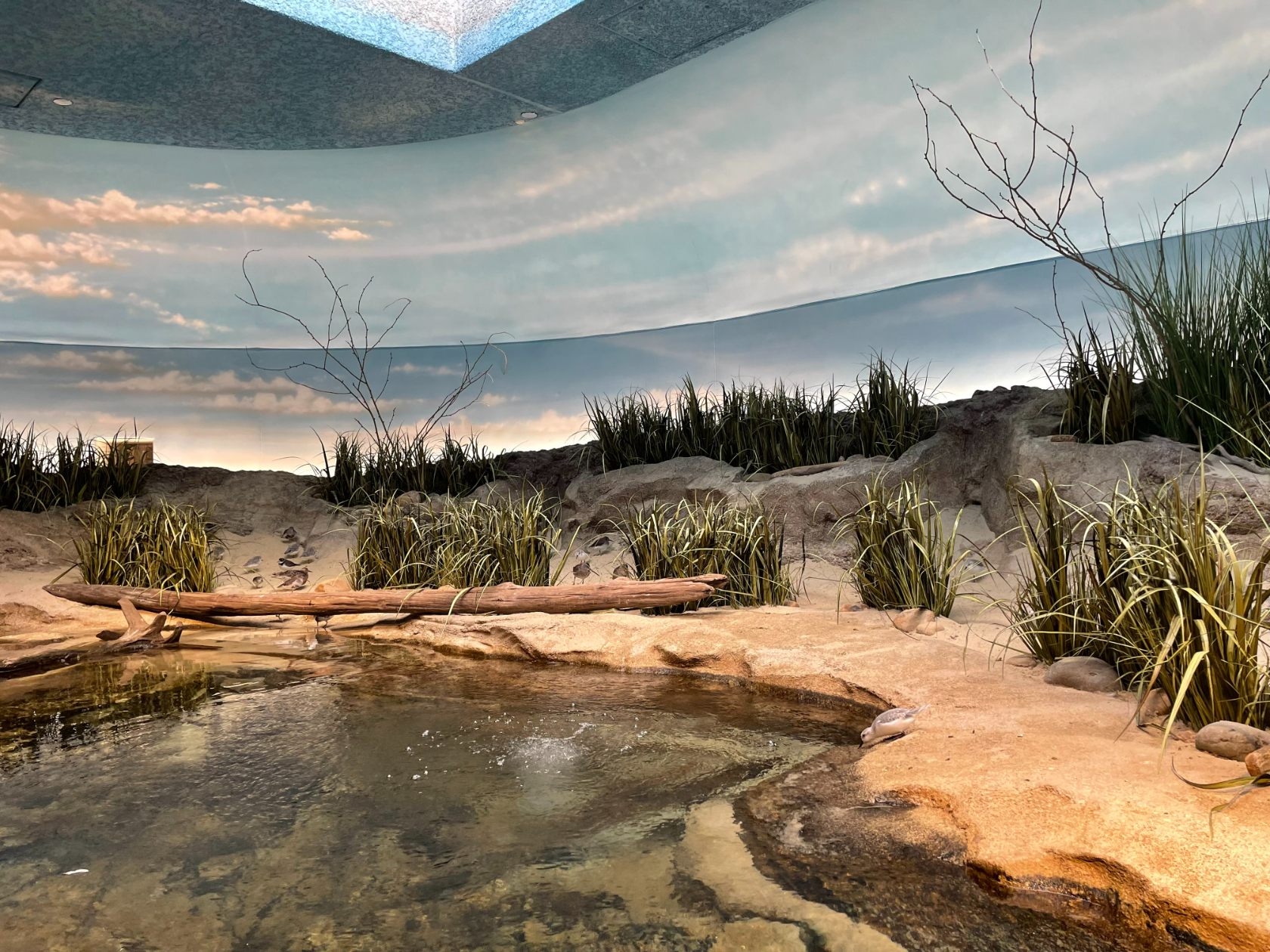
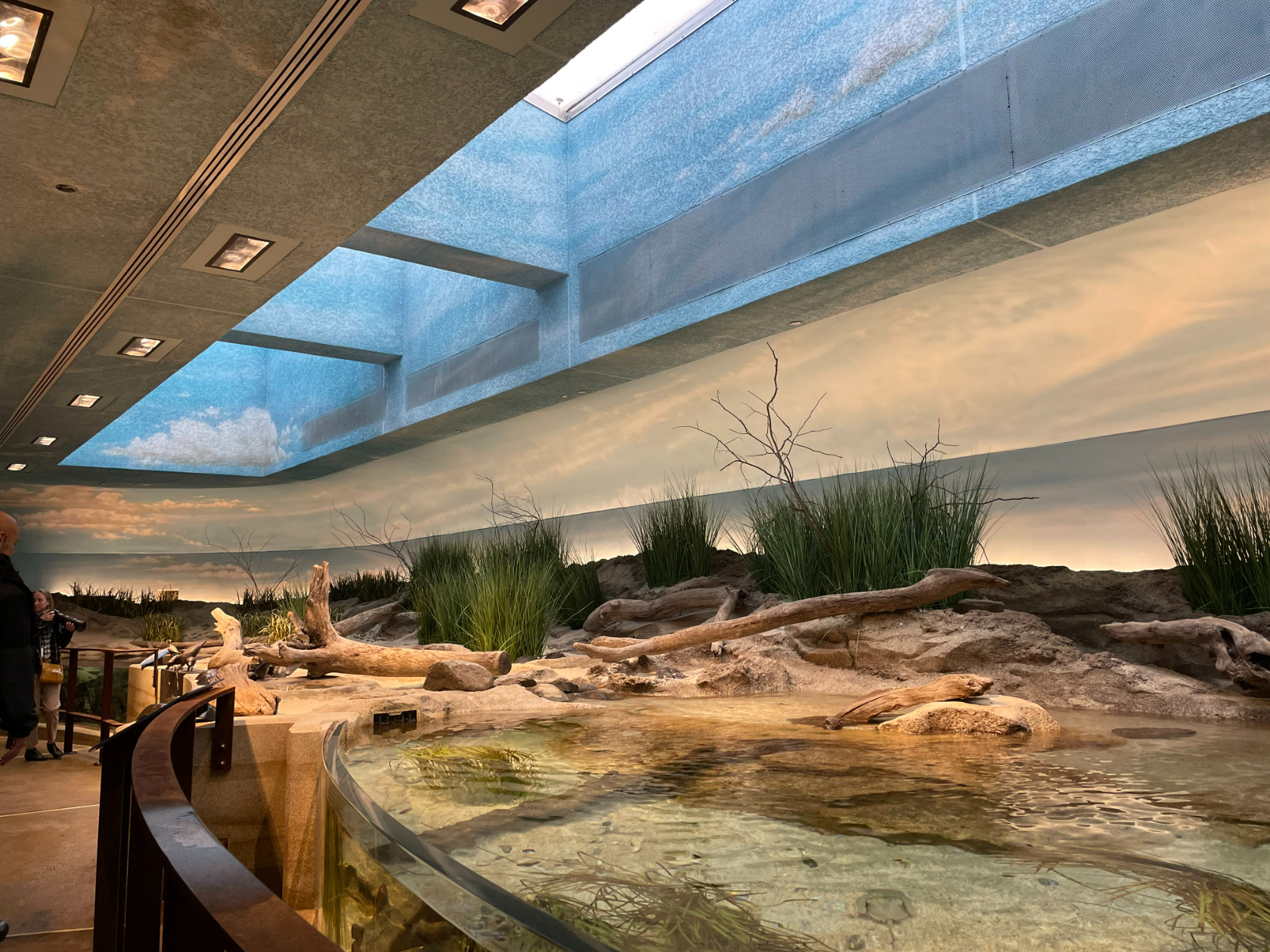
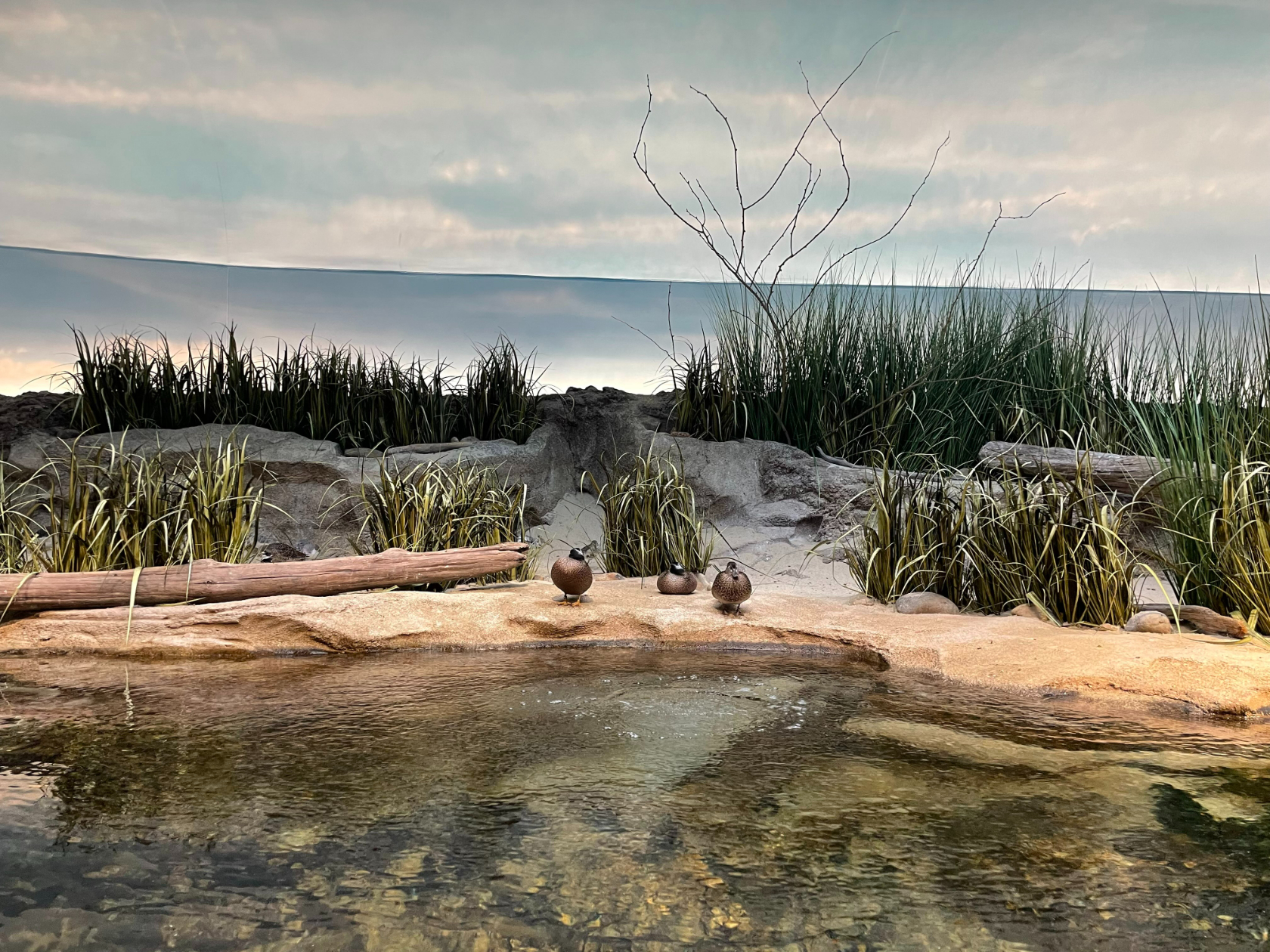
Walking into the first aviary, guests arrive on the beaches of the Delaware Bay, which is sort of the Wawa of shorebird migration; several species make a pitstop in the bay on their migration north and south. The space is lined with two saltwater and two freshwater pools, containing some tiny fish (mostly for decoration) and horseshoe crabs, whose eggs provide fuel for the birds on their intercontinental journey. Species in this aviary include song sparrows, who do a little “tweet tweet” trill every few minutes, and sanderlings, those tiny birds that scurry around on the beach, running to and from the tide. While some of the shorebirds were born in captivity, others in the aviary were rehabilitated or taken from the wild.

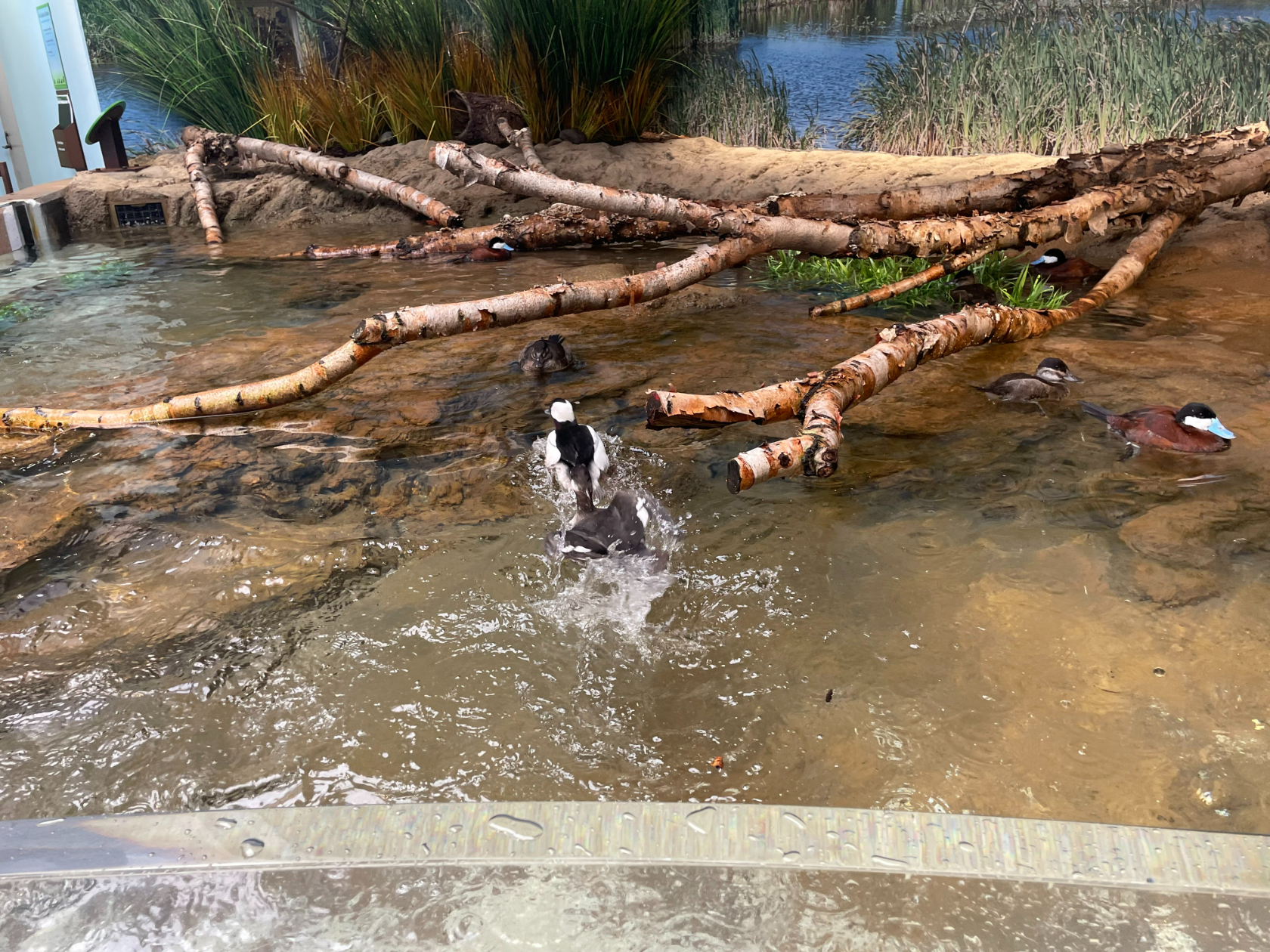
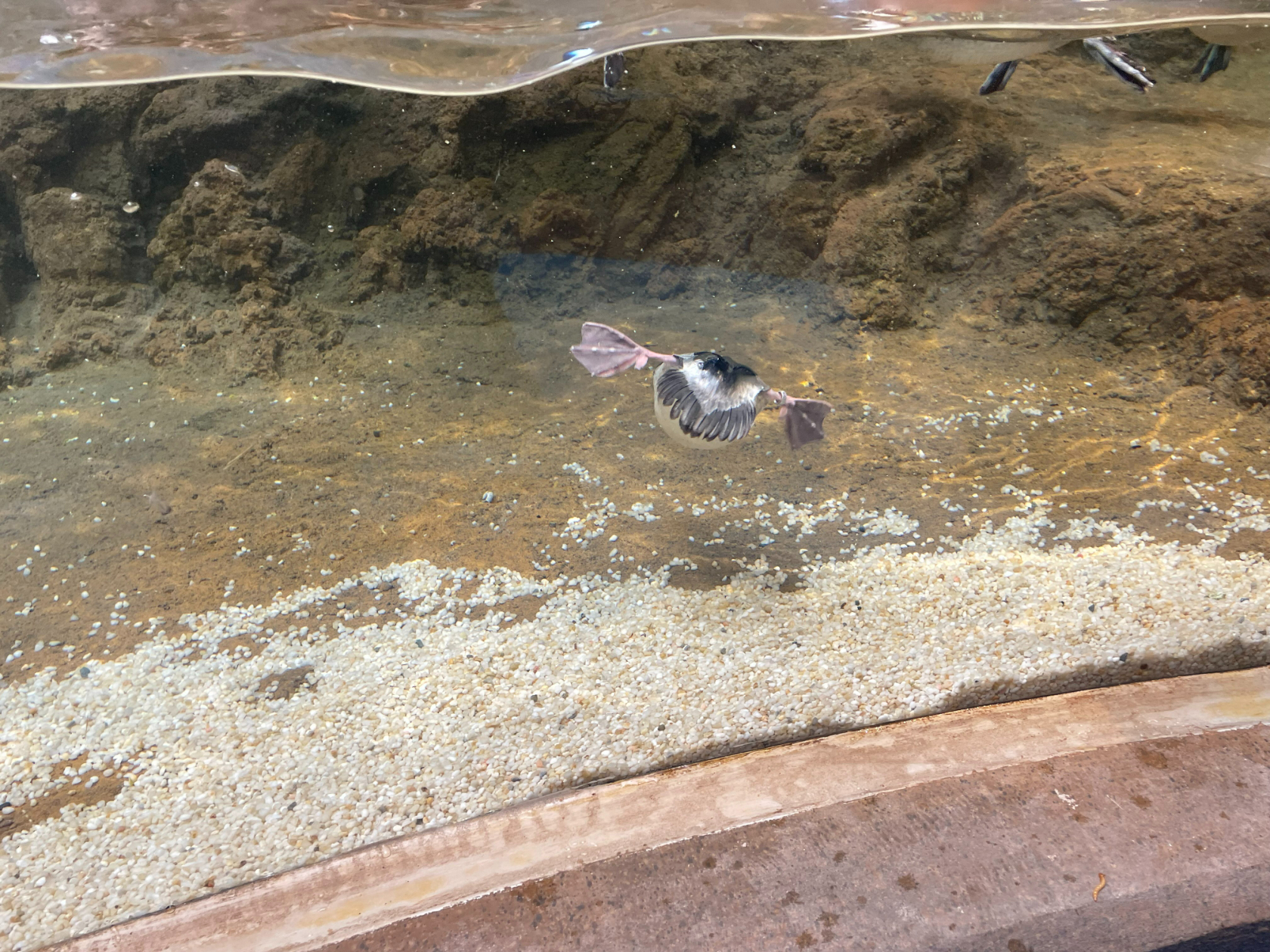
Guests leave the Delaware Bay and somehow end up in the northern Great Plains in the next aviary, or the “Duck Factory,” as the keepers call it. Meant to simulate the breeding habitat of Midwestern wetlands, the room is perhaps the most dramatic of the Bird House trio. After moving into the space late last year, keeper Jen Ferraro says the birds — all of which were bred in captivity — adapted quickly and immediately started showing natural breeding behaviors.
If you visit at the right time, as we did, you might witness some of the courtship firsthand. Fabio, a total dreamboat of a bufflehead duck, began to put on a show for Veronica, a female duck, by exhibiting his “displays.” (To DCist/WAMU it just looks like a lot of flapping around.) According to Ferraro, he’s been trying to impress Veronica with various dives, acrobatics, and vocalizations for some time. Meanwhile, Betty, another female duck, has been pining after Fabio, despite the fact that he has indicated he doesn’t see them as anything more than friends. Classic.
Only this week and after months of playing hard to get, Veronica began to soften to Fabio’s advances. (“She let me hit because I’m goofy,” etc.) On Wednesday, Veronica reciprocated Fabio’s affections with her own aquatic performance, working herself up to the point where DCist/WAMU felt like something was about to happen that we probably didn’t need to see.
“I joke around with my husband, I don’t need to watch TV, my ducks are the soap opera,” Ferraro told DCist/WAMU.
On the other side of the aisle in the waterfowl aviary, guests can meet Kevin, the redhead duck whose mother dumped him in a mallard nest in the zoo’s flamingo pond. An orphan, Kevin was raised by a mallard mom and 13 mallard siblings, all of whom look a bit different from him. Ferraro says it’s totally normal given his history, but so far in his first two breeding years Kevin has not paired off with a female redhead (like himself), only a canvasback duck.
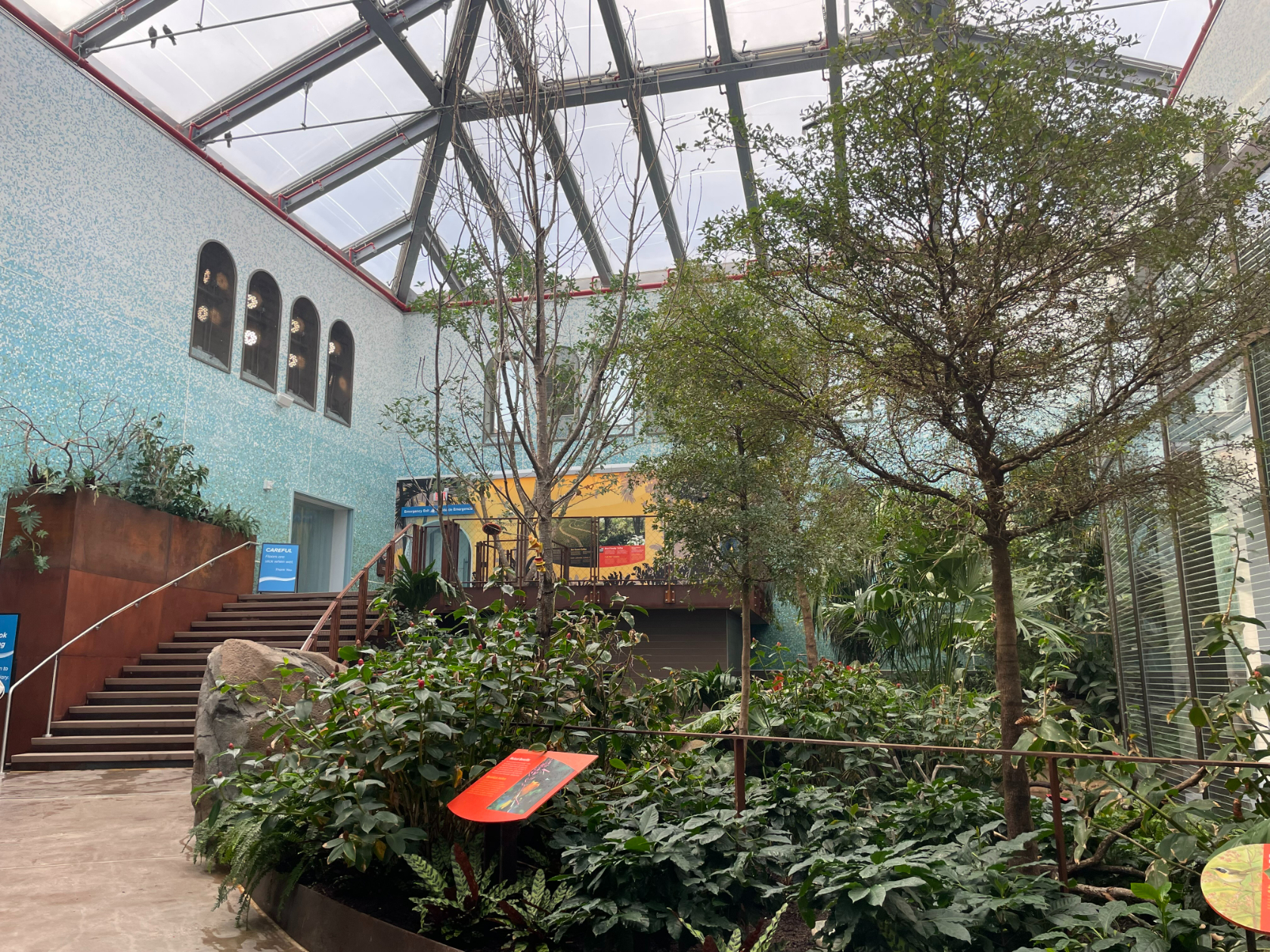

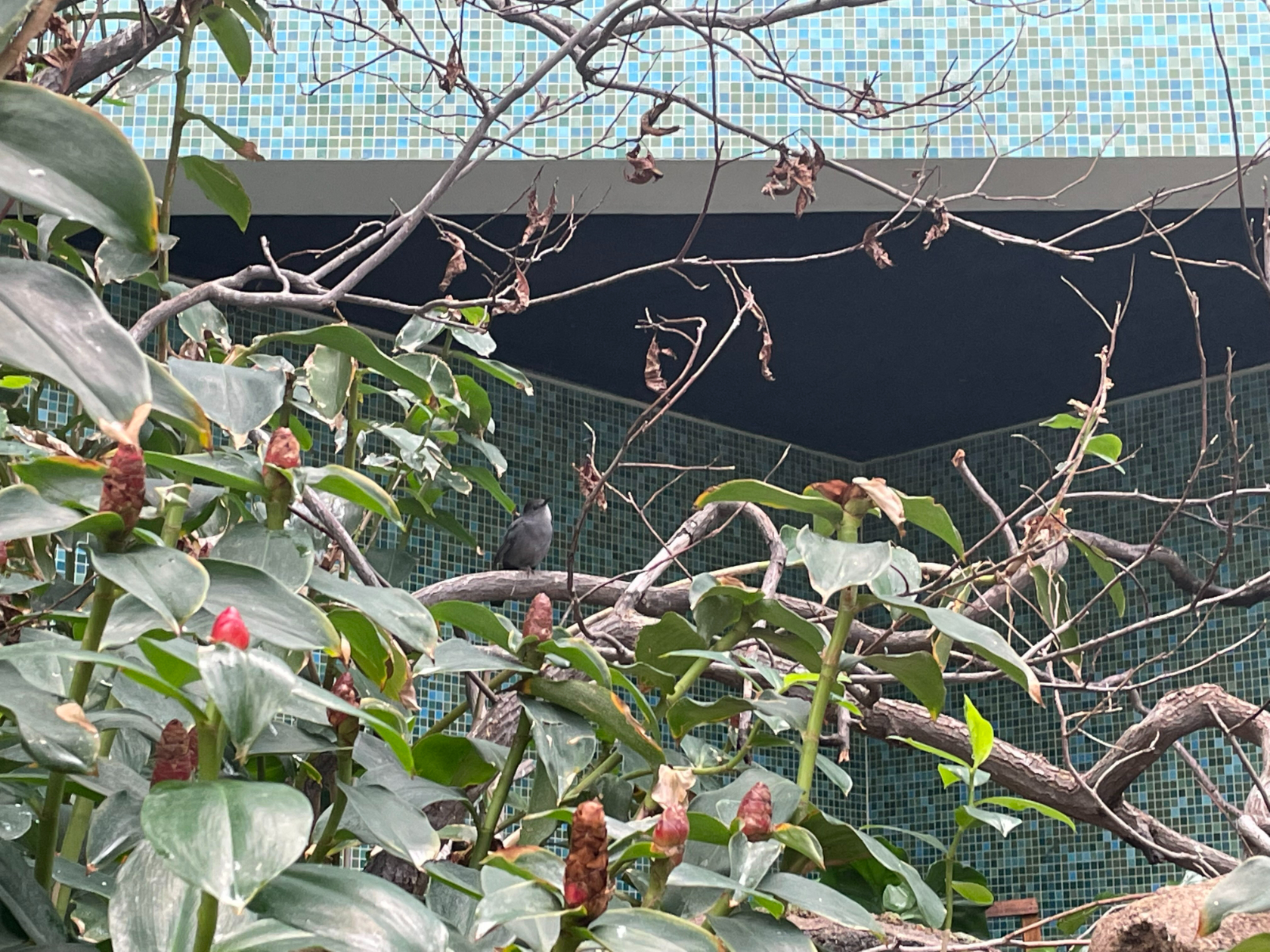
The last stop on the migration tour is the loudest, wettest, and hottest: the songbird aviary. The room resembles a shade-grown coffee farm in South America — an effort to teach visitors about the role agriculture and farming can play in preserving bird species. (Normally, coffee farms remove trees, destroying many birds’ winter breeding habitats.) Like the shorebirds, the songbirds are a mix of captive-born and wild-born creatures.
In this third and final exhibit, guests can hear Rocky, the aviary’s only blue ground dove, calling out like a gentle choo-choo train for attention from his “friends.” According to his keeper, Shelby Burns, Rocky is a little awkward and a bit of a close flyer. Like an annoying little brother, Rocky doesn’t really know when to leave. (He’s also taken a particular interest in a male quail dove and tends to be a bit overdramatic when he comes near.)
“They’re like, ‘okay, this is like, you’re just really in my face,” she says of Rocky’s energetic disposition. “But his heart is in the right place.”
Rocky is joined in his habitation by several warblers, and a local favorite — Baltimore orioles.
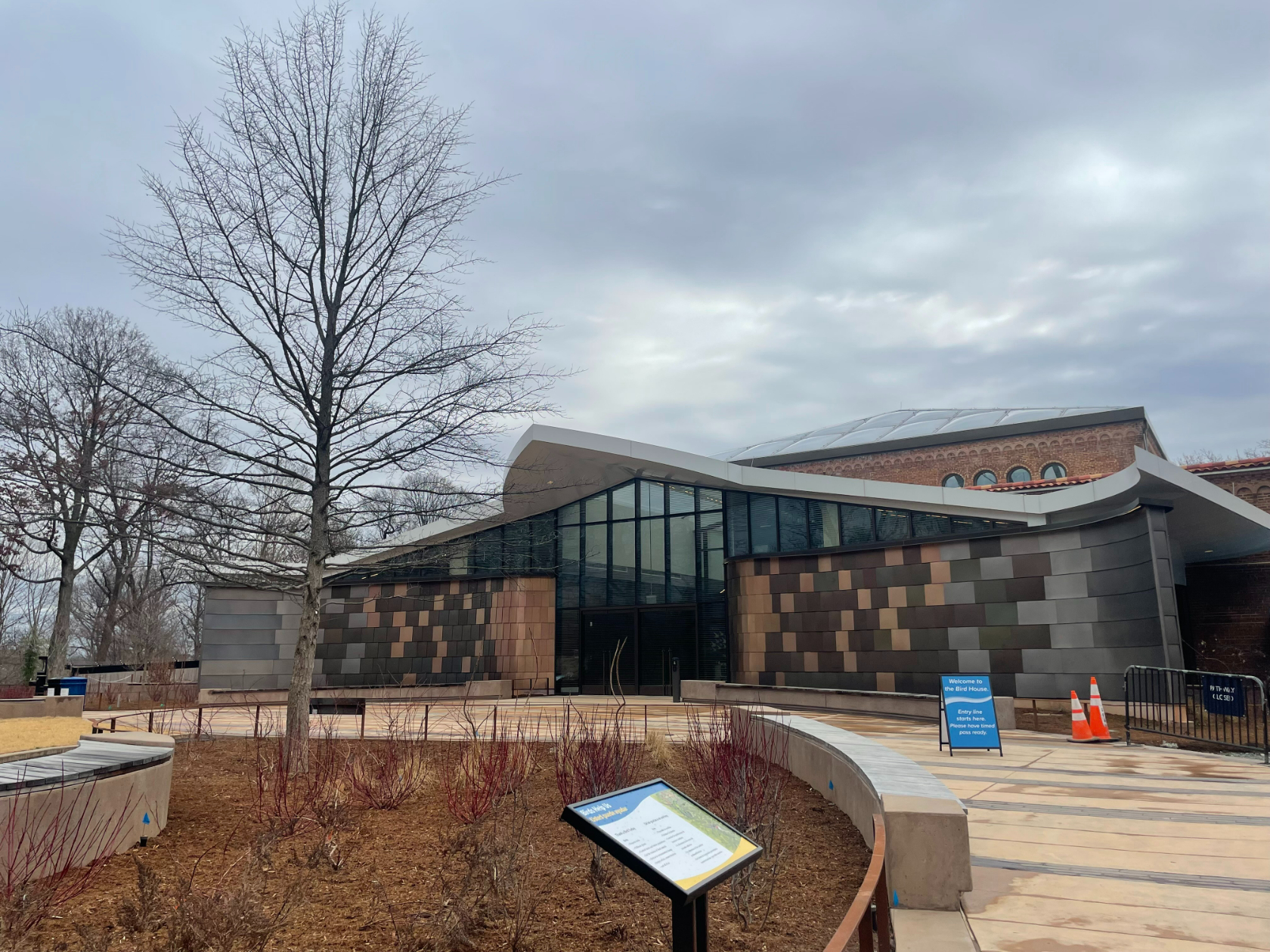
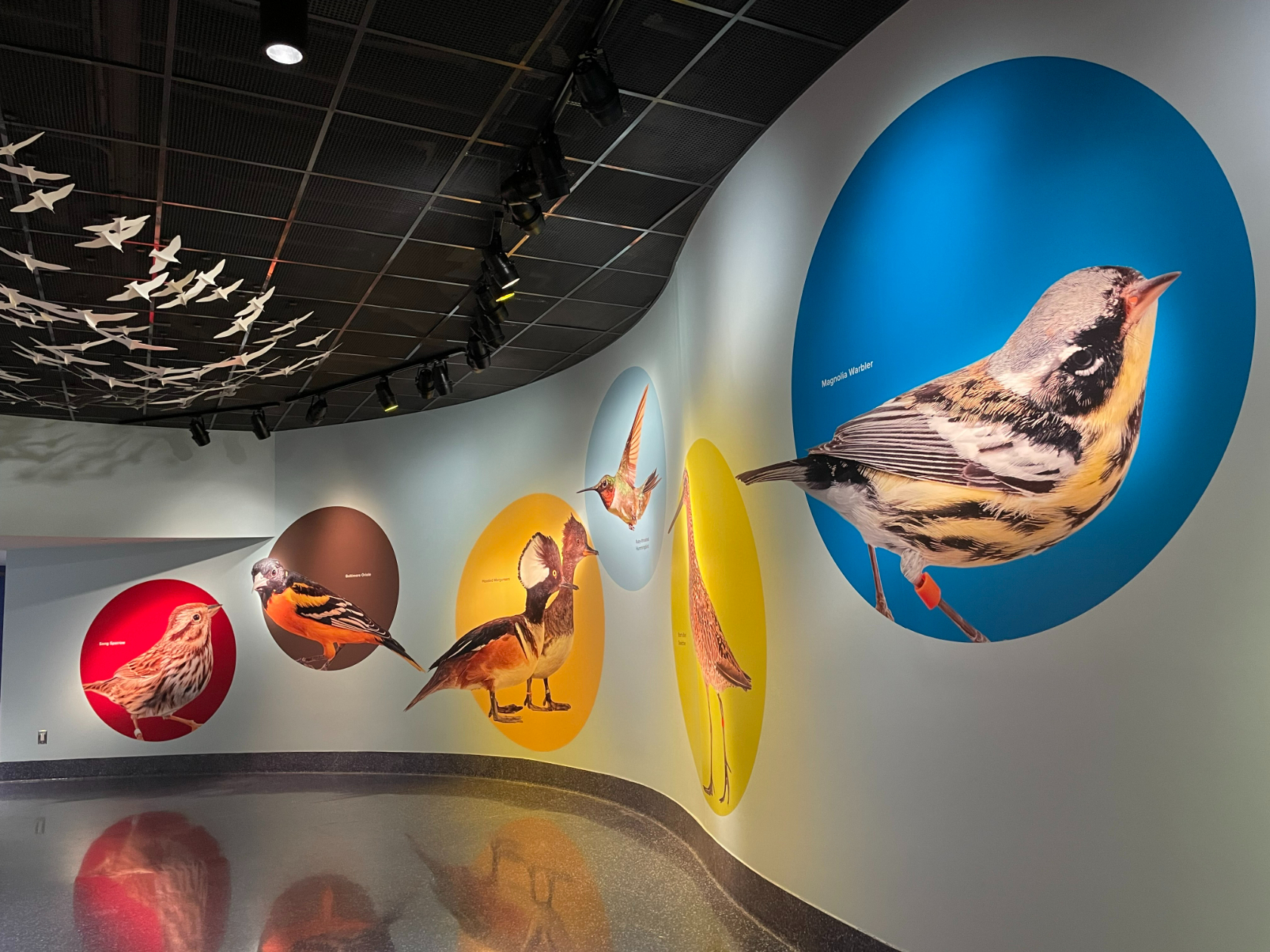
Outside of the Bird House, other avian exhibits include the flamingo, the barred owl and more. (Some of the outdoor bird exhibits will still be closed by the Bird House opening in mid-March.) The National Zoo’s Conservation Biology Institute will also run a banding station on the patio of the bird house, showing visitors how researchers capture wild birds on zoo grounds, band them, and release them back into the wild. Researchers demonstrated a bird-banding of a wren on Wednesday, weighing and tagging it, before setting it free in a very unceremonious release. The bird flew almost directly into a bush.
In the first few months of its new debut, the Bird House will require timed entry tickets, which will be available online the day of your visit.