 Jordan Pascale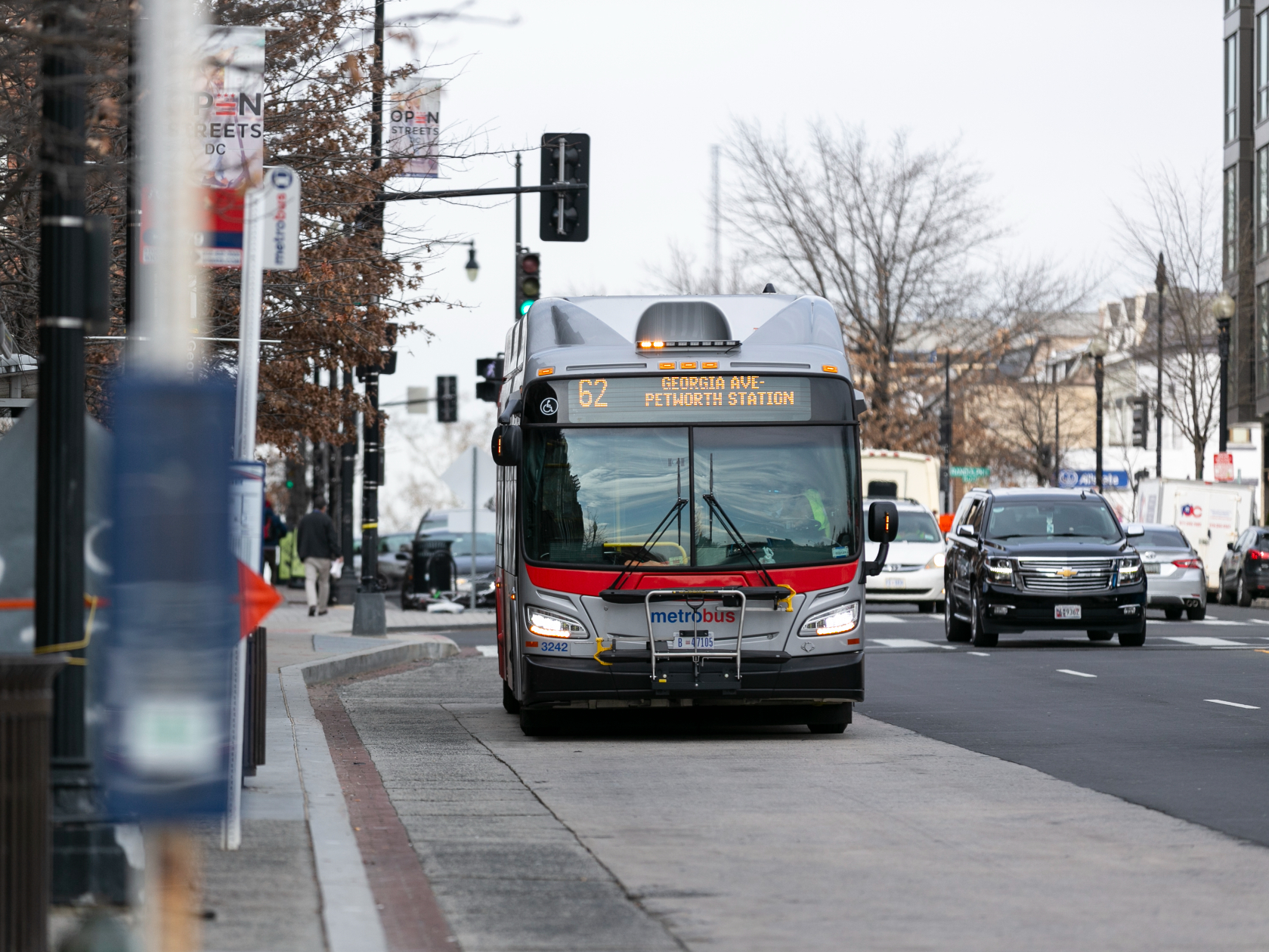
D.C.’s declining revenue projections for the coming years have put an upcoming popular program in jeopardy.
The District was on track to pay WMATA for all D.C. bus fares starting as soon as July, essentially making Metrobus free for riders who begin their journeys inside D.C.’s borders.
But the $2 fares were going to be paid for by revenue that was above projections. For years, D.C. has had surplus revenue, but the District’s Chief Financial Officer had negative outlooks for both December and February estimates. The prediction is based on a less robust real estate market, a workforce that has not returned downtown five days a week, and high interest rates.
Projections were revised downward by $81 million in fiscal year 2024, $183 million in 2025, and $200 million in 2026. Traditionally, the CFO’s office made conservative predictions and came out with a surplus, but now it seems the conditions that led to past rebounds aren’t around anymore.
Mayor Muriel Bowser said in a statement that the forecast is sobering and highlights the “seriousness of the moment we are facing.” She said D.C. is still on solid financial footing but has to budget within its means and “focus on necessary investment to energize D.C.’s comeback.”
In a press release, Councilmember Charles Allen says the District needs to make buses free this year.
The program, which also included adding late-night bus service and increasing service in underserved areas, would cost about $32 million a year. While the bill is not likely to be funded through surplus this year, the council could decide to fund it through its regular budgeting process.
“I’m very concerned that the Chief Financial Officer seems to be decertifying funds it had only just certified two months ago to begin fare-free Metro bus service this summer,” he said. “As with every other line item in our budget, it’s the Council’s job – not the CFO’s – to make policy decisions about how to spend our dollars.”
Council Chairman Phil Mendelson said he was briefed by the CFO on Tuesday, but was not told about the impact to the fare-free bus program.
“I together with Councilmember Allen, have asked the Council’s General Counsel and Budget Director to look at the legal basis for CFO’s actions in the revenue estimate.”
Allen said he is concerned about the CFO’s “pattern of vastly underestimating District revenues – by more than $800 million in FY22 and so far, updating their anticipated assumptions for revenue by $128 million for this year.”
The Metro for D.C. bill unanimously passed in December. Bowser did not sign the bill, but let it move on without her approval. The mayor was reluctant to pay free fares for non-D.C. residents. The bill is currently awaiting congressional review. The city and WMATA are also in the process of creating a memorandum of understanding setting up the structure of the program.
When the bill was announced in December, Mendelson called it a big deal.
“We’ll be the first major city in the United States to provide free bus service,” he said. “This will be a game changer for bus users – reliable schedules and faster boarding.
“There’s no question it will encourage more folks to use public transit, which means numerous benefits, from reducing congestion to improving the environment to stabilizing WMATA.”
This story has been updated with additional details.