Martin Austermuhle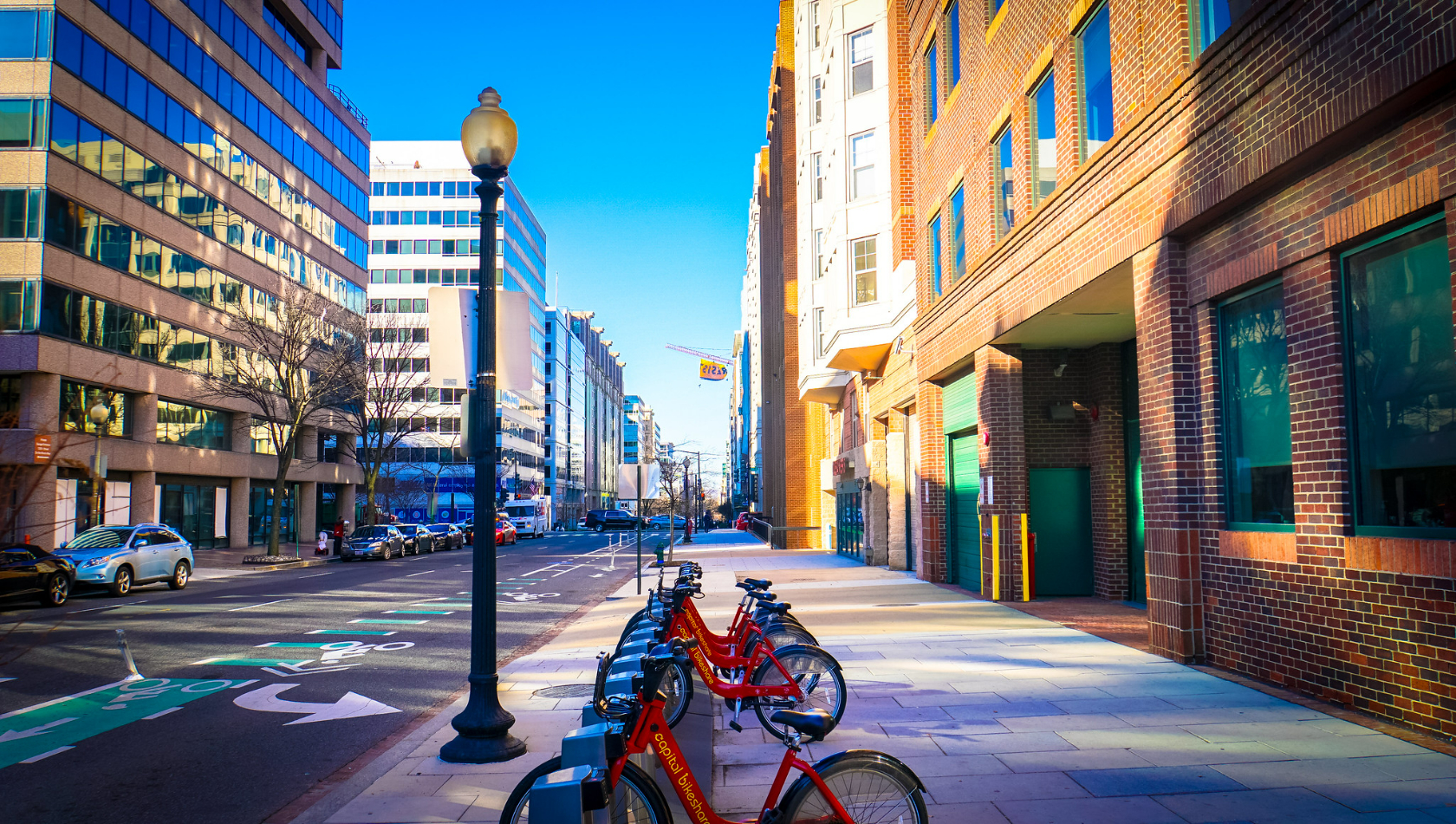
D.C. officials have been saying for months that the increased number of workers not coming into their offices would have implications for the city’s coffers, but only now is it becoming clear how big the hit will really be.
In a new revenue estimate issued Tuesday, D.C. CFO Glen Lee said that the city is likely to take in less revenue than originally expected in the coming years, largely because of a “deteriorating real property market.” The decline is fueled by losses in value of large office buildings in downtown D.C. that have seen decreases since remote work became more widespread in the wake of the COVID-19 pandemic.
“The expansion of remote work, coupled with higher interest rates, pose a serious long-term risk to the District’s economy and its tax base,” wrote Lee in the quarterly revenue estimate, which often serves as a critical indicator of D.C.’s economic health and guides the city’s elected leaders in formulating spending plans and ambitious legislative proposals. “Tax revenue from commercial properties in the District, particularly large office buildings valued over $50 million, significantly declined in the past fiscal year and was the main reason for the reduction in overall real property tax revenue [from Oct. 2021 to Sept. 2022].”
Office workers have slowly started returning to D.C. over the last year, though occupancy rates for many buildings in downtown remain just under half of pre-pandemic levels. According to Kastle Systems, which records card-access to many office buildings, office occupancy over the last year has hovered between 30% and 47%. While that’s an increase over spring 2020, when it hit 14%, it’s still a significant drop over where occupancy stood before the pandemic.
While remote work is seen by many traditional commuters as a valuable perk (and one that employers likely won’t abandon haphazardly due to the tight labor market), it’s considered something of an existential threat by D.C. officials who have long relied on the strength of the city’s commercial property values to help fund the government.
Mayor Muriel Bowser has been pushing — unsuccessfully thus far — for the federal government to force workers to return to their offices, while at the same time advancing plans to reimagine downtown D.C. as a more liveable and lively destination for residents. She’s even set a goal: 15,000 new residents in downtown over the next five years.
Though the estimate shows decreases in expected revenue ranging from $81 million to $199 million between 2024 and 2026 (out of some $10 billion in expected revenue all told), D.C. officials aren’t yet panicking. Even larger revenue shortfalls hit the city during the pandemic, but at the same time a recent budget surplus helped raise the city’s reserves to more than $1.6 billion, and other elements of the city’s economy look to be going in the right direction. (Lee wrote that tourism “has been a bright spot” for D.C. over the last quarter.)
Still, Bowser called the estimate “sobering,” and said it would prompt “even tougher choices” in the upcoming budget for 2024, which will be unveiled later this month. She also warned the D.C. Council against considering new taxes as they work their way through her spending plan.
“Over the past three years, our city has faced and overcome unprecedented economic challenges. With the ongoing impacts of telework and national political uncertainties, we face another significant test to our local economy. Given these challenges, it would be fiscally irresponsible to try to tax our way to sustainable, long-term growth. The District’s economy remains strong and rests on a solid financial footing. We must budget within our means and remain focused on the necessary investments to energize D.C.’s comeback,” she said in a statement.
In an interview with DCist/WAMU, D.C. Council Chairman Phil Mendelson called the revenue estimate “difficult, not horrible,” and said the upcoming budget would be “a little tight” compared to years past. Prior to the pandemic, the quarterly revenue estimates consistently showed the city taking in more money than expected, allowing Bowser and the council more leeway in spending on initiatives and programs.
In the estimate, Lee did warn that things could get eventually get worse depending on how remote work trends evolve and the ultimate impact on commercial property values.
“Overall, the pandemic and the shift towards remote work are likely to have far-reaching economic consequences for the District,” he wrote. “Policymakers will need to carefully monitor and respond to these changes. Although the baseline estimate for real property tax revenue included in this forecast is the most likely scenario, a more pessimistic alternative includes greater deterioration in the commercial office market that could result in additional revenue losses.”