Jacob Fenston
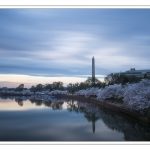
It’s time to wipe off your smartphone camera, get out your selfie stick, and join thousands of tourists and locals at the Tidal Basin: D.C.’s cherry blossoms are officially in peak bloom, according to the National Park Service.
Peak bloom happens when 70% of the Yoshino cherry blossoms around the Tidal Basin have opened, and it lasts just a few, fleeting days. In fact, peak bloom this year could be curtailed by rainy weather forecast for the weekend.
This year’s peak bloom is among the earliest on record, following a very warm winter: January and February were both the third-warmest ever recorded in the District. January was 7.7 degrees above normal, while February was 6.7 degrees above normal. This toasty winter weather led the trees to begin the blooming process, showing green buds, on Feb. 23 — the second earliest date in the past two decades.
Cooler March weather, though, slowed down the blooming process. The National Park Service predicted a peak bloom date of between March 22-25, and the actual date fell right in the middle of that range.

Historically, D.C.’s average peak bloom date was April 4. But in recent years the average bloom date has moved 7 days earlier due to climate change. The climate in D.C. is about 2 degrees warmer than it was when the first cherry trees were planted a century ago.
There are about 4,000 Yoshino cherry trees around the Tidal Basin. They were originally planted beginning in 1912, a gift from the people of Japan. Since then, they’ve become a rite of spring in the nation’s capital, and a staple of the city’s tourism industry. The National Cherry Blossom Festival attracts some 1.5 million people to the District each year. This year’s festival runs through April 16.
The pandemic disrupted this spring tradition. In 2020, the festival was canceled as the coronavirus swept across the world just as the cherry trees were blossoming. The Tidal Basin was roped off and guarded by police to prevent people from congregating near the trees. In 2021, most festival events were held virtually. Only in 2022 did crowds begin to return.
Peak bloom also means peak traffic: despite warnings from the National Park Service, thousands of drivers fill the tangle of roads around the Tidal Basin, vying with each other for views of flowers and break lights.
Here's a very #WashingtonDC pic – cherry blossoms & traffic. If you're coming down to the #NationalMall in the next few weeks, try biking or public transportation: https://t.co/fclGfanigG#CherryBlossom 🌸🚗🌸🚌🌸🚇🌸 pic.twitter.com/y5ZUPhalN3
— National Mall NPS (@NationalMallNPS) March 22, 2023
The cherry blossoms are now easier to get to by bike, after the installation last year of a new protected bike lane on 14th St., which provides a quick and safe route to the Tidal Basin from downtown. The Tidal Basin is also a short distance from multiple Metro stations, including Foggy Bottom, L’Enfant Plaza, Smithsonian, and Waterfront.
If crowds aren’t your thing, there are plenty of quieter places elsewhere in the region to see cherry blossoms. These include Hains Point and Oxon Run Park in D.C., Brookside Gardens in Montgomery County, and River Farm in Fairfax County.
If you’re more of a native plant aficionado, wait a few weeks for the explosion of color as eastern redbuds, dogwoods, and serviceberries begin to flower in neighborhoods, parks, and forests across the region.