Héctor Alejandro Arzate
 Tyrone Turner
Like many Salvadorans in the D.C. region, Reverend Evelio Menjivar-Ayala came to the United States in the wake of the civil war in his home country. He was about 20 years old when he made his way to the District with his brother in 1990.
Menjivar-Ayala was undocumented and in search of steady income so he took any job he could find. He recalls working in construction and with cleaning services.
“I am another immigrant,” says Menjivar-Ayala. “I did every type of job.”
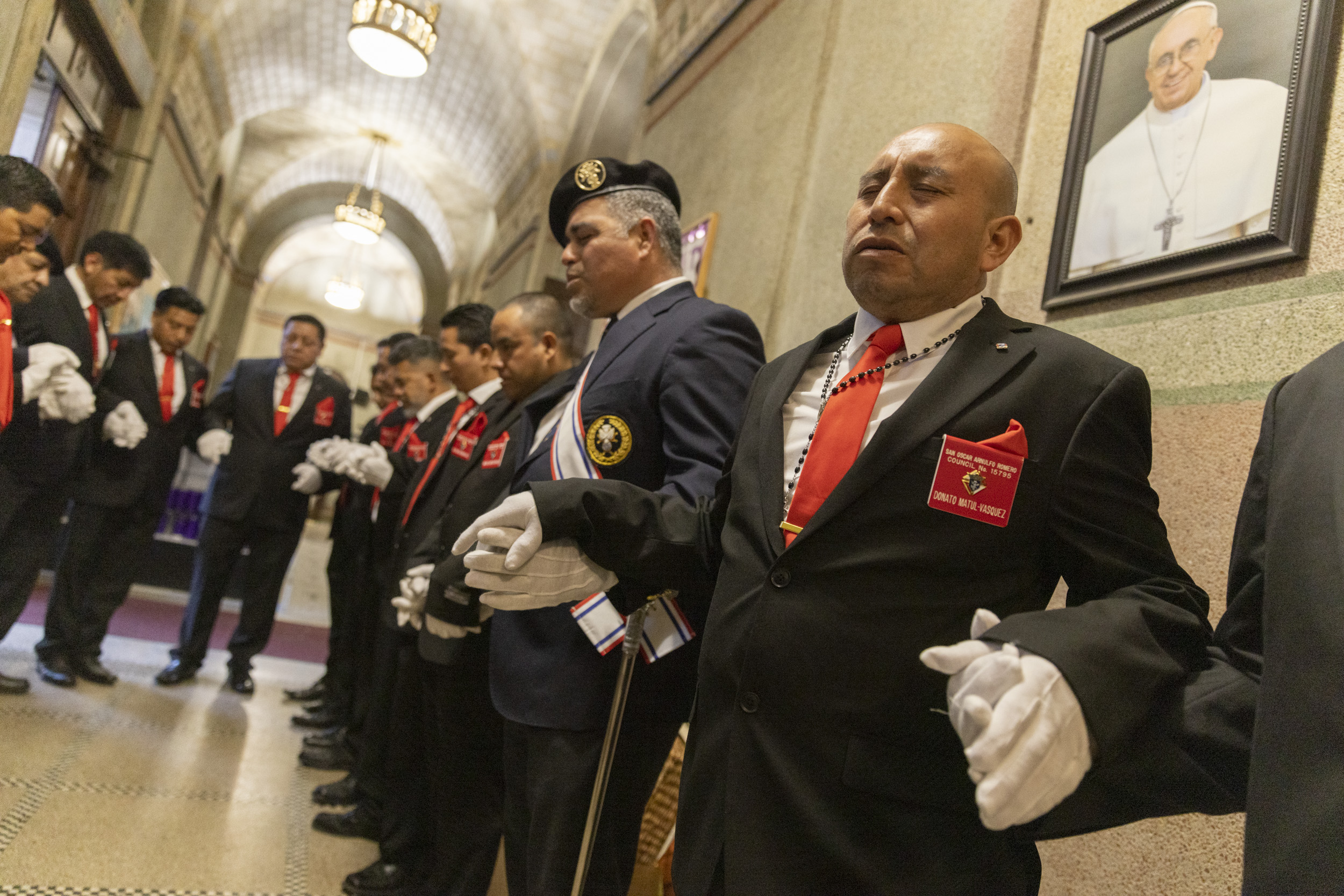
It wasn’t long before Menjivar-Ayala started connecting with his community through his Catholic faith. He joined a local parish, along with prayer and youth groups. It was those experiences, he says, that led him to attend seminary. He became a priest, and was ordained by the Roman Catholic Archdiocese of Washington, in 2004.
Since then, Menjivar-Ayala has worked at a handful of parishes throughout D.C., Montgomery County, and Prince George’s County – which are all home to a significant number of the region’s Salvadoran population. After years of serving the community, Menjivar-Ayala was elected as a new auxiliary bishop for the archdiocese by Pope Francis in Dec., 2022. He is believed to be the first El Salvadoran to serve as bishop in the United States.
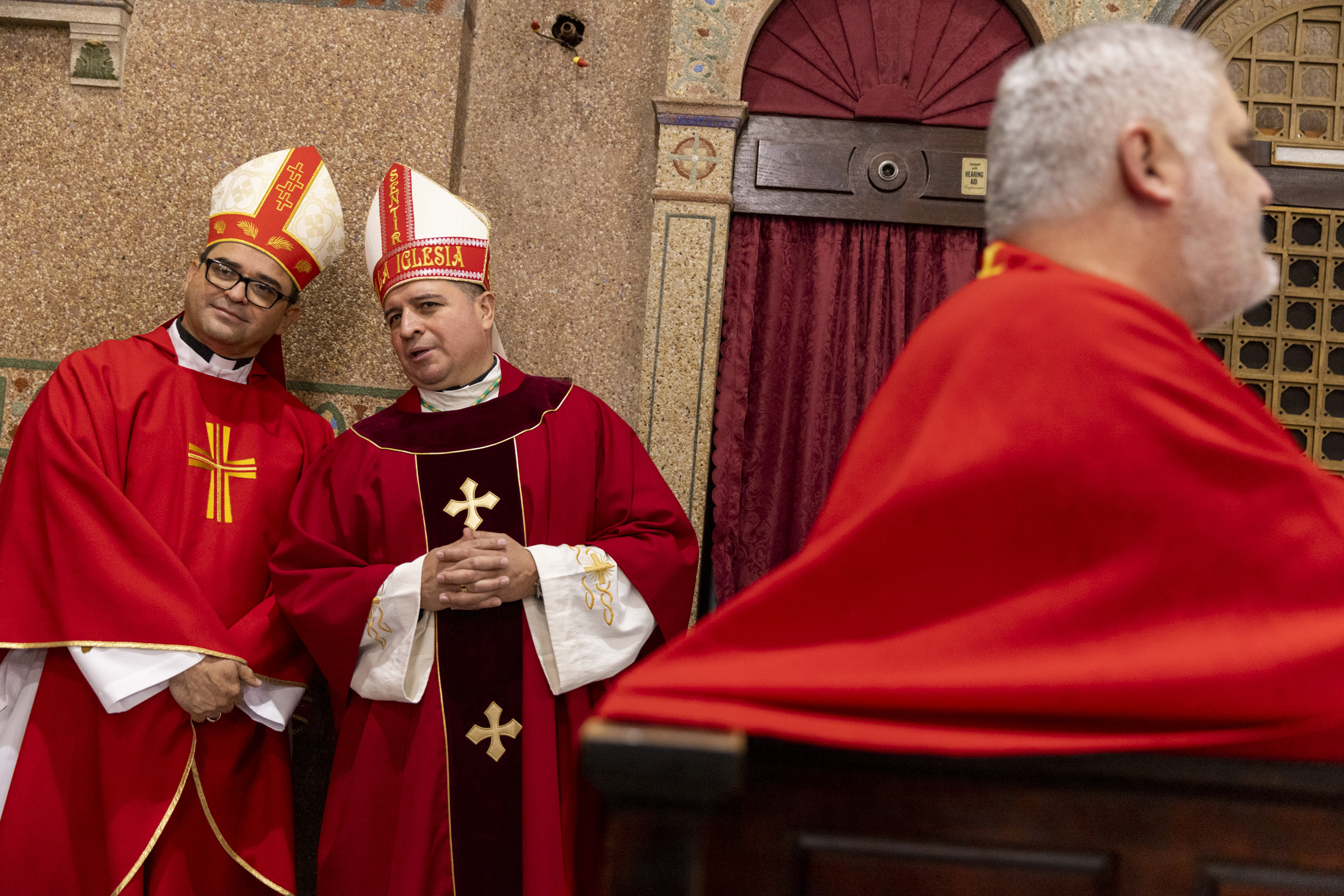
“It’s like an achievement for them too,” says Menjivar-Ayala. “It’s a recognition of everything that the people have done as well. There is recognition of the entire Hispanic community, which is growing and strong and contributing here in the diocese.”
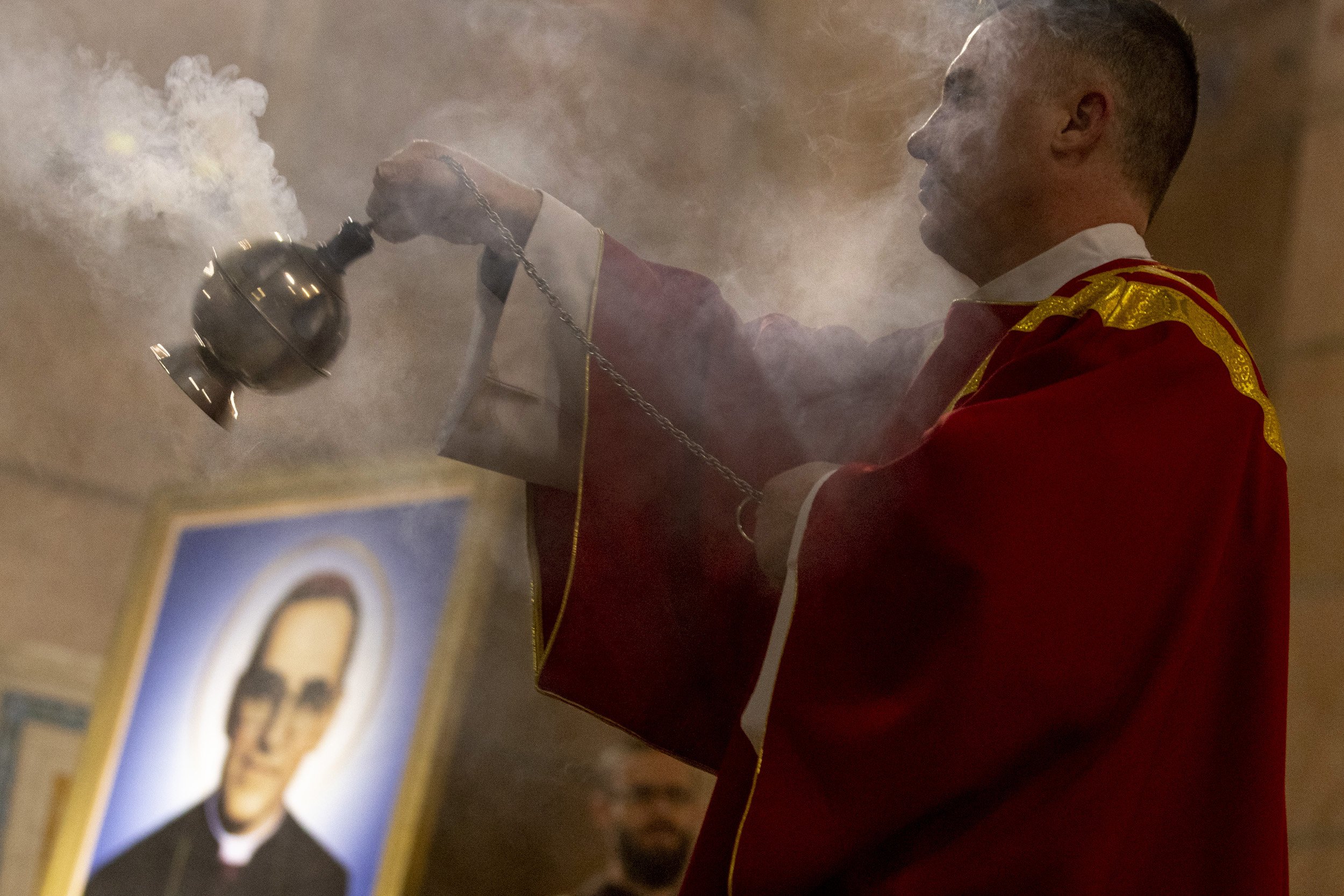
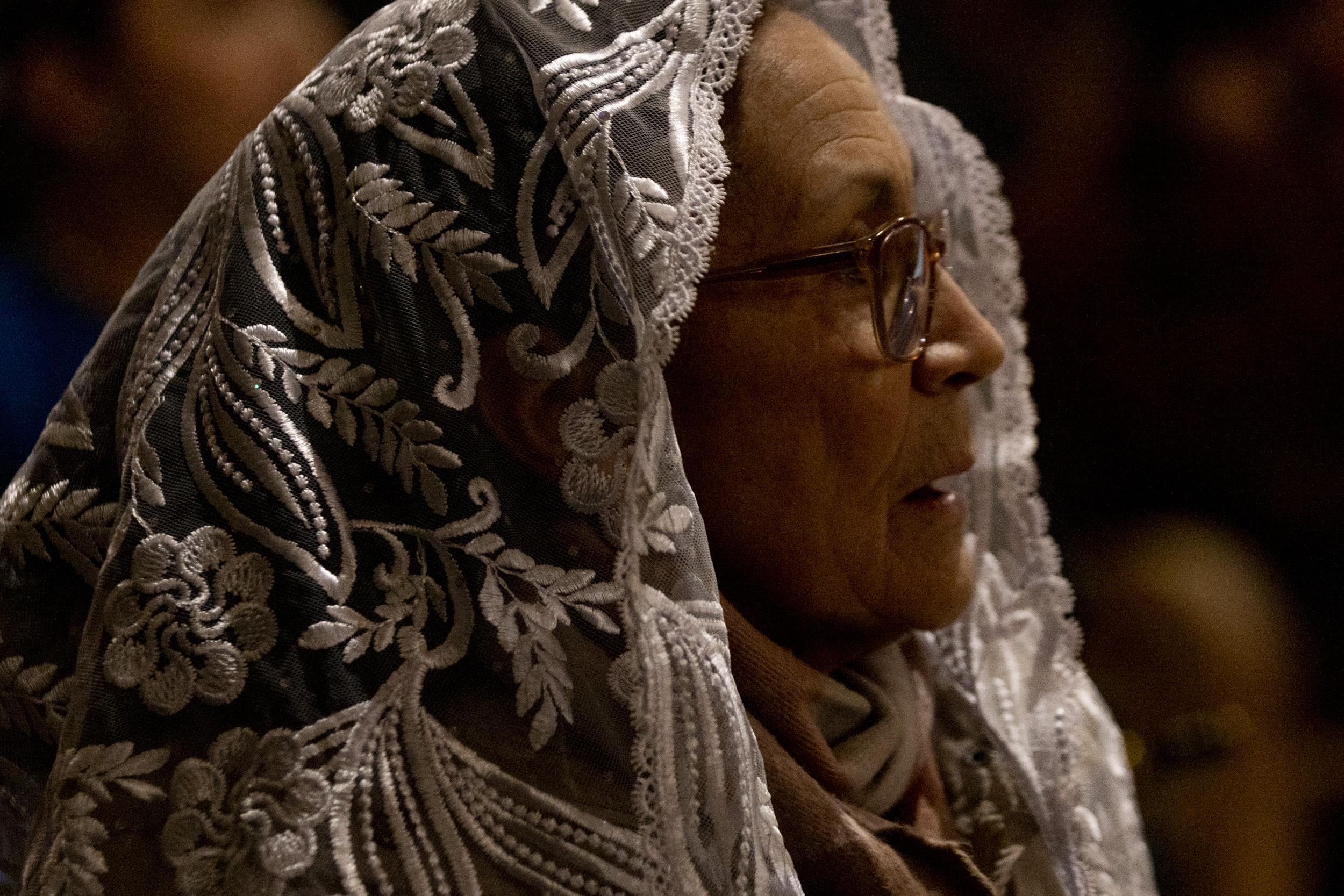
Last week, Menjivar-Ayala made one of his first appearances in the community as bishop by giving the homily during a mass at the Shrine of the Sacred Heart in D.C. The event marked a particularly significant commemoration for the Salvadoran diaspora – it was the feast of St. Oscar Romero, a celebration for an archbishop in El Salvador who was assassinated in 1980 for speaking out against the country’s right wing military. Romero is widely recognized as a martyr and was canonized as a saint by Pope Francis in 2018.
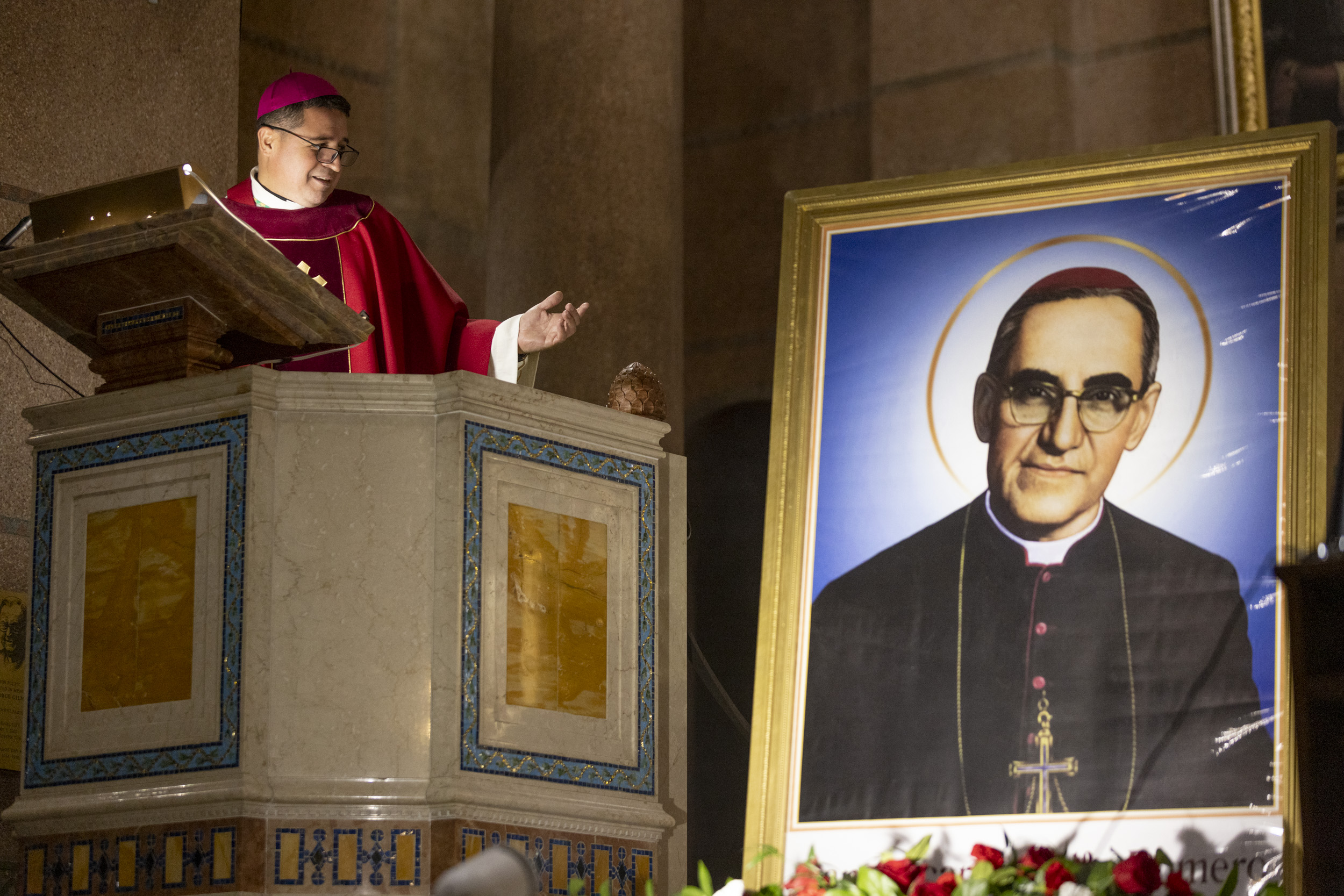
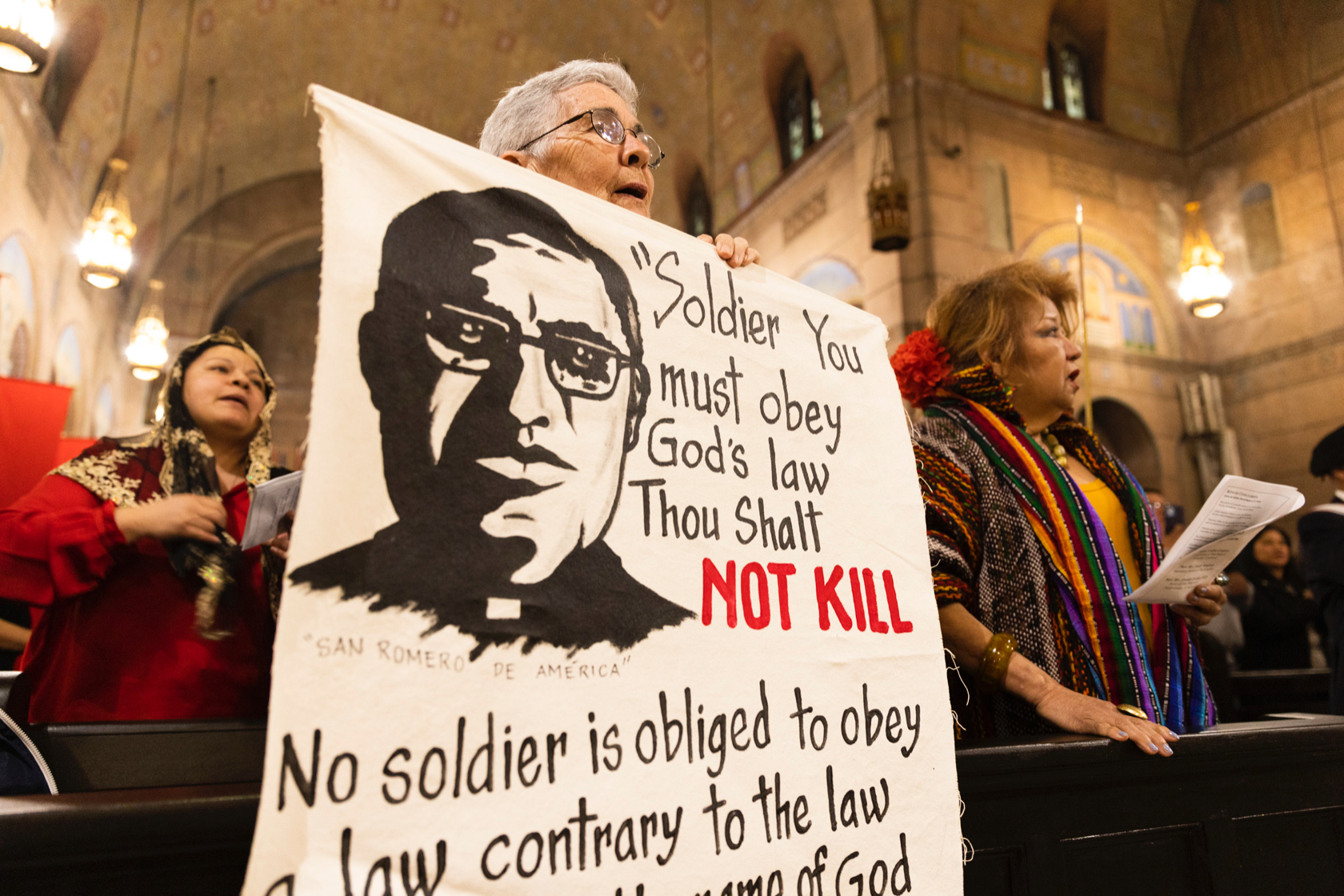
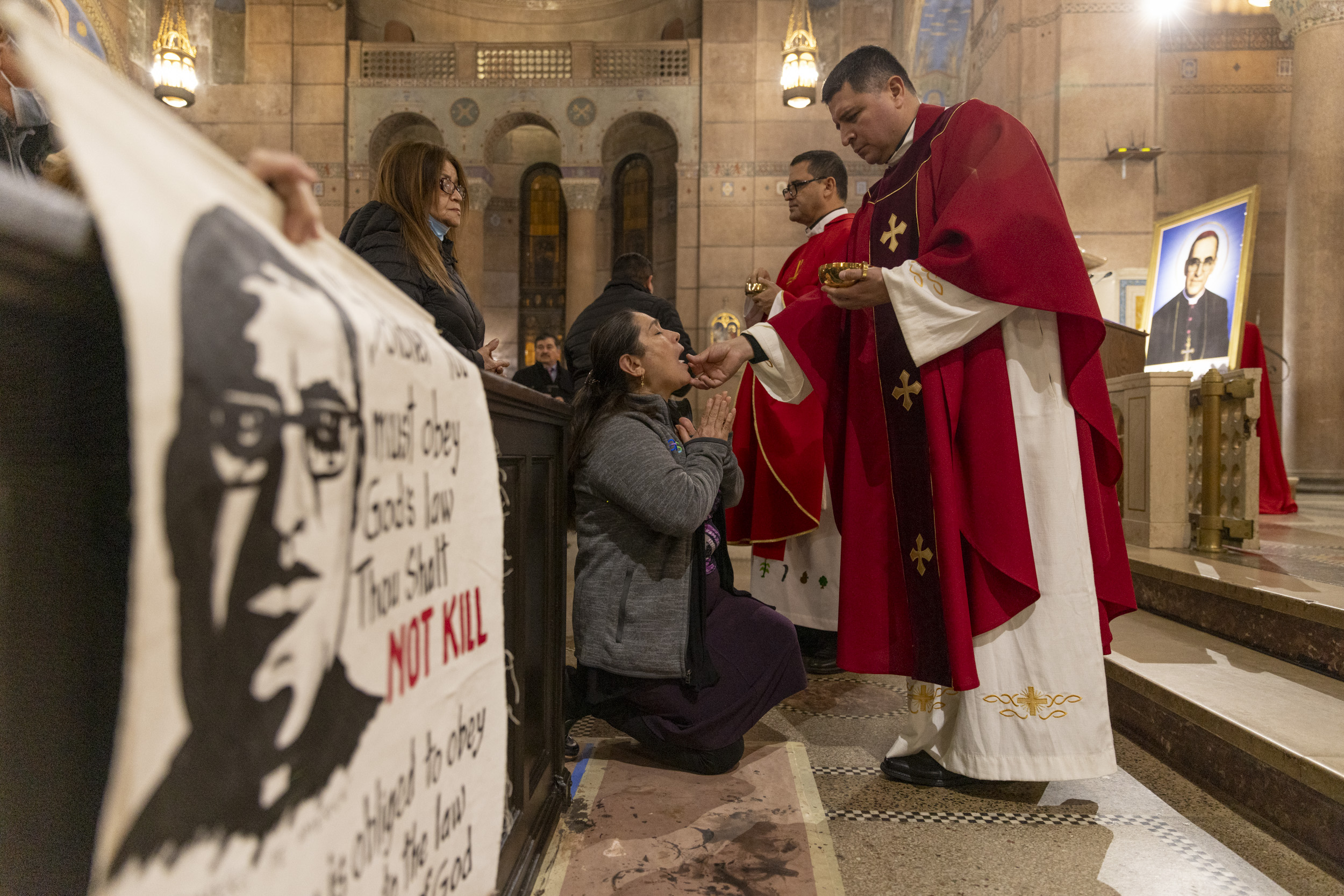
Wilson Hernandez was among the hundreds throughout the region in attendance at the mass. He left El Salvador nine years ago and has lived in D.C. with his wife and children since. As an immigrant, he says the simultaneous celebration of St. Oscar Romero and the welcoming of Menjivar-Ayala as bishop reminds him of the importance of having faith in God.
“God put him in that place,” says Hernandez. “May God bless him.”
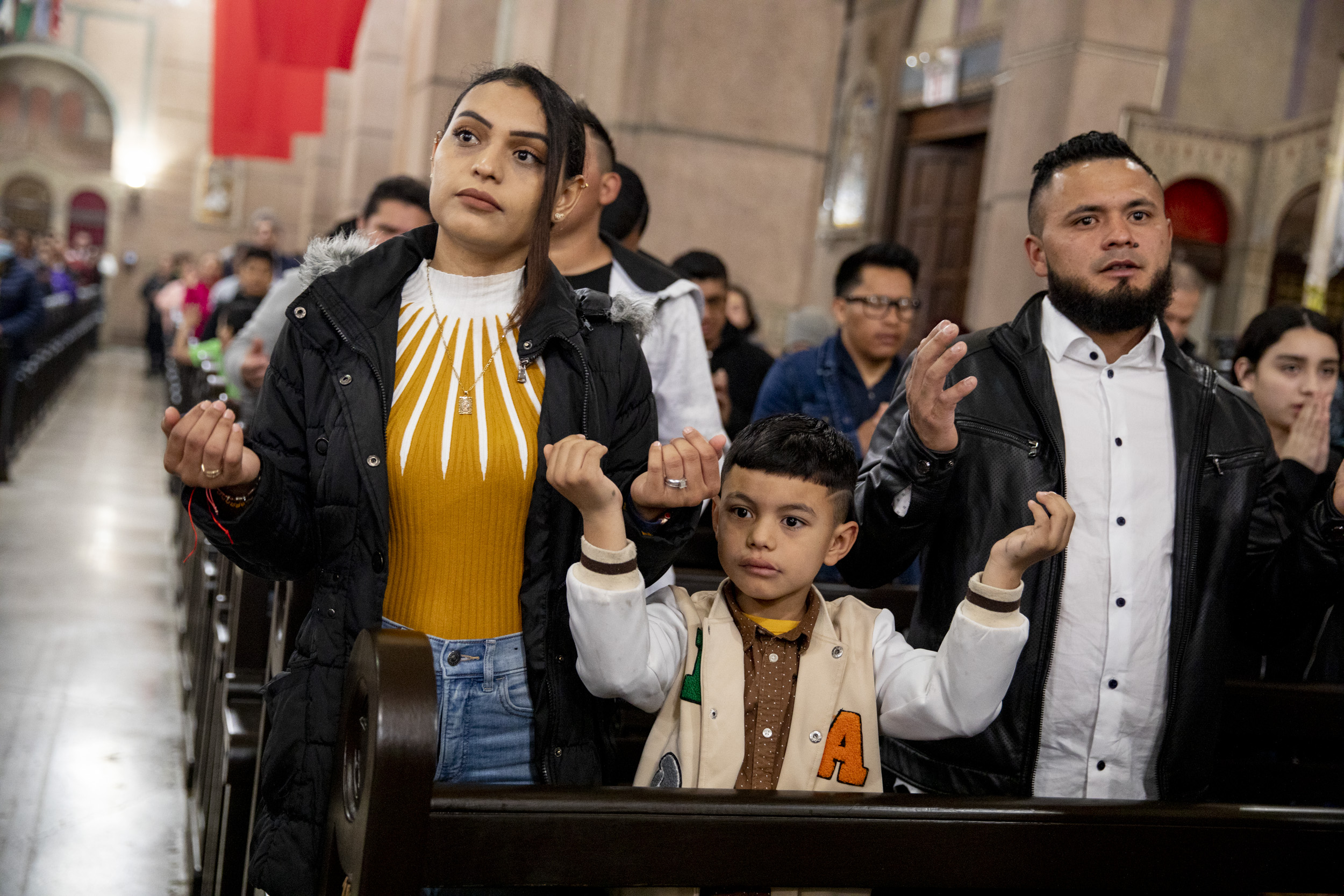
In addition to having worked at multiple parishes in the local area, Menjivar-Ayala has been an advocate for both laborers and immigrants. He’s also a dean for the Middle Prince George’s County Deanery and a member of the Archdiocesan Child Protection Advisory Board. For Menjivar-Ayala, the task of continuing to serve his own community while in his new role is daunting, but one that he is prepared to take on.
“There are many things to learn and a lot is expected of bishops. So it’s a big challenge. [I’m] very joyful but obviously, very aware of the responsibility of being a bishop,” says Menjivar-Ayala.
Rosa Villeda has lived in D.C. since leaving El Salvador 30 years ago. Like others, she says she’s built a life for herself, having raised three kids and becoming a grandmother to eight grandchildren. Villeda attends services every week at Our Lady Queen of the Americas Parish in D.C., where Menjivar-Ayala was onced assigned. She says it’s exciting that his familiar face will continue serving the community.
“He’s a very humble and fighting person,” says Villeda. “With the short time he was [at Our Lady Queen of the Americas], he was very helpful to the congregation.”
Since 2017, Menjivar-Ayala has served St. Mary’s parish in Landover Hills, Md. According to Wendi Williams, the executive director for the Office of Cultural Diversity and Outreach with the Roman Catholic Archdiocese of Washington, that parish and its school have thrived under his supervision . She says where the school was once vulnerable, it’s now grown in terms of enrollment and has more than 20 ethnicities represented in its students.
“Through his leadership and shepherdship, he brings communities together,” says Williams. “He is tireless in his energy and in his effort. He’s a faith-filled, pastoral leader.”
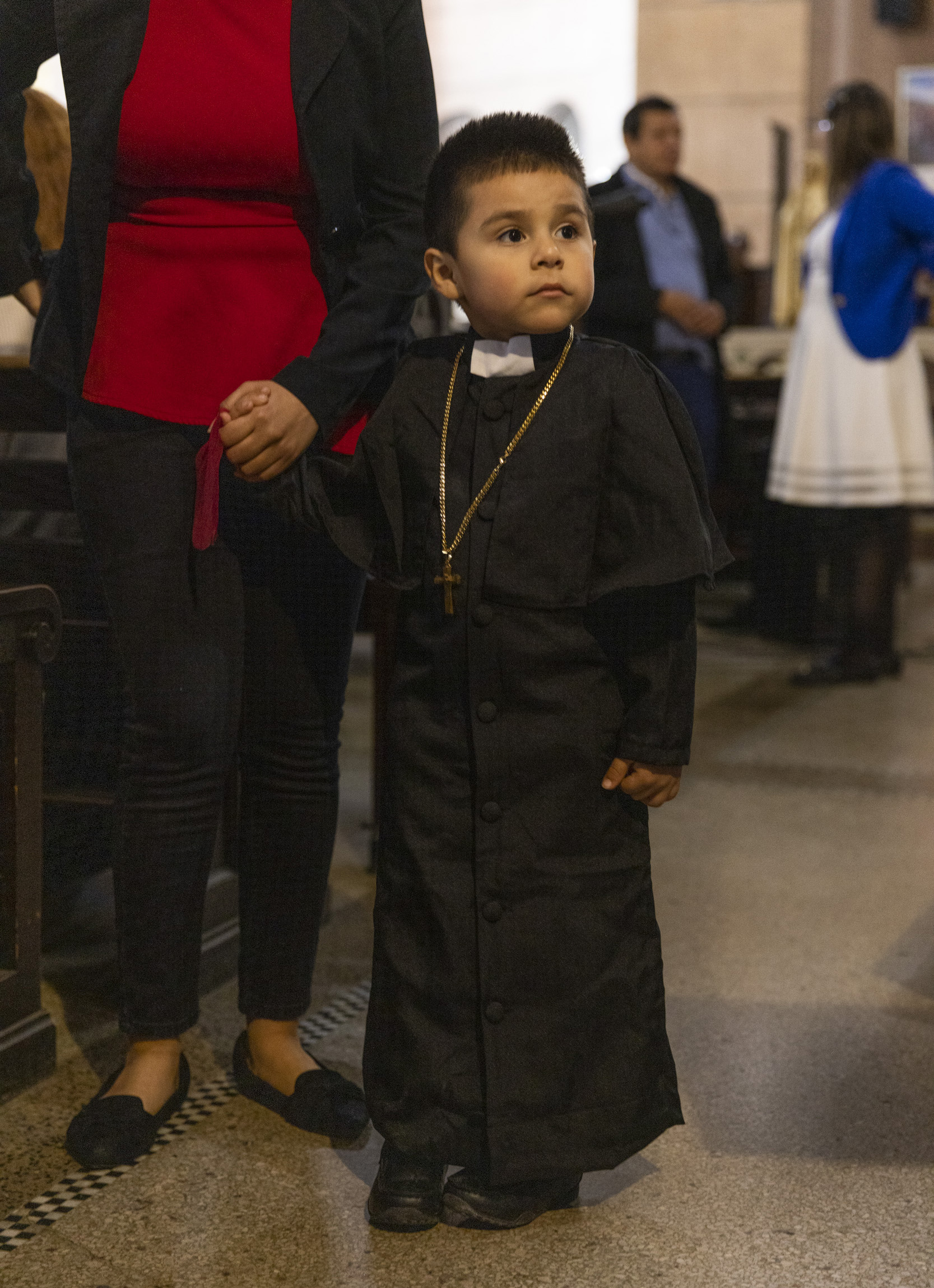
For the feast of St. Oscar Romero, Maria Teresa Marcilla dressed up her son as the late archbishop. Marcilla is another devout Salvadoran who has found community in her church. She says it’s a point of pride to see Menjivar-Ayala elevated to bishop.
“We are very happy because he’s also Salvadoran. [He’s] a very humble man and very dedicated to the people. And he is a great example to follow,” says Marcilla.
Father Orlando Reyes is also Salvadoran and works at the Shrine of the Sacred Heart. He says many in the congregation are immigrants themselves, so having representation in Menjivar-Ayala is a gift for the entire community.
“God willing, he can walk with us, our people. An immigrant people, a fighting people, a people who love the church and also work hard,” says Reyes.
In his new role as bishop, Menjivar-Ayala says he’s most looking forward to spending even more time with his community through events and everyday interactions. As an advocate for immigrants like himself, however, he says he knows it can be hard for his people to feel engaged. Still, he wants to encourage them to not lose their faith in a future with immigration reform, something he says is a concern for many.
“I think we have to keep praying. We have to keep fighting because it is a debt that the United States owes to the immigrants who have worked so much, who have given so much,” says Menjivar-Ayala. “So my message is that we don’t lose hope and that we are a united people. And that we contribute where we can to the well-being of all society, of all the American people.”