Amanda Michelle Gomez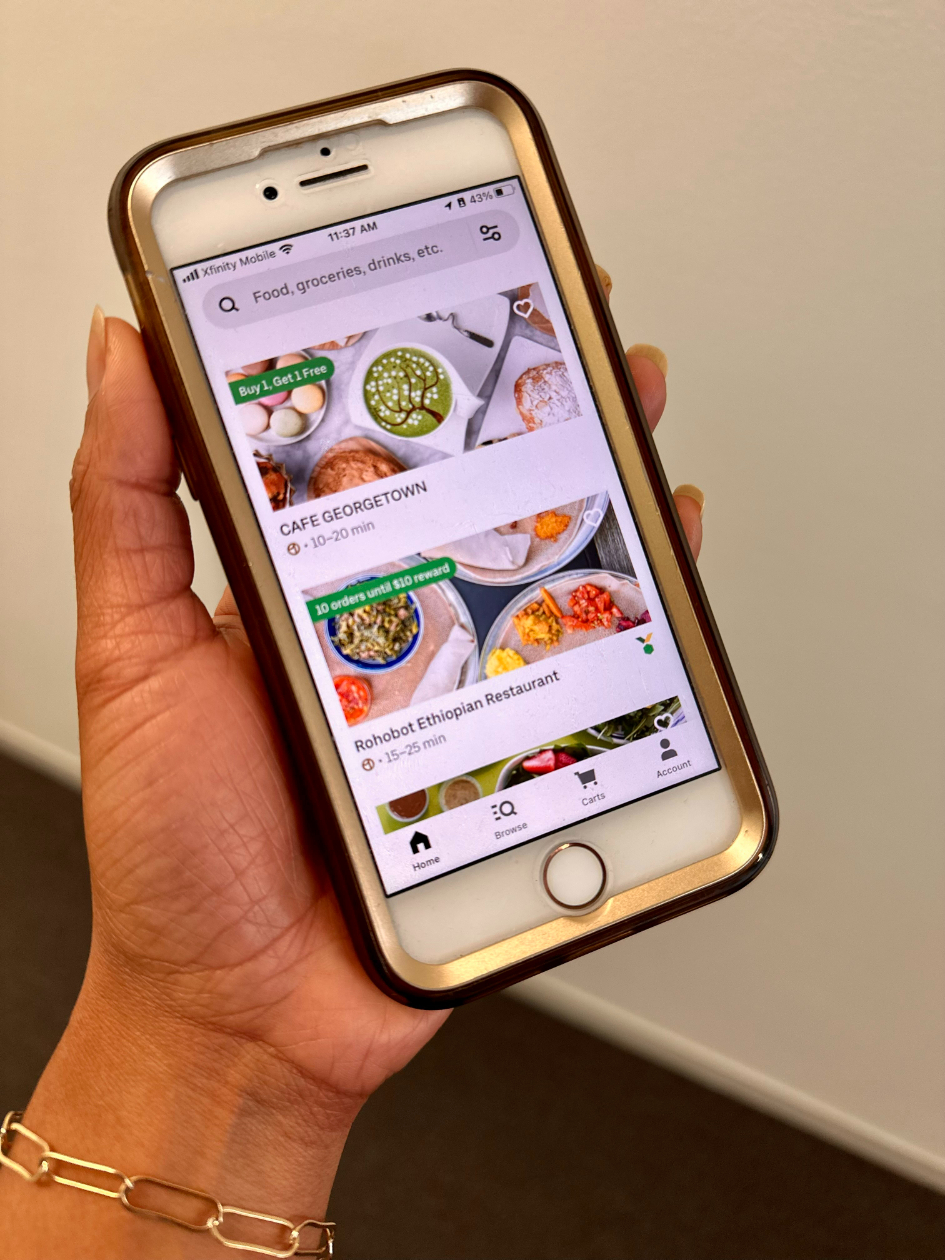
Update: After much spirited debate, the D.C. Council voted to delay consideration of emergency legislation that further regulates food delivery companies. The legislation, introduced by Ward 6 Councilmember Charles Allen, would prevent companies like DoorDash, Grubhub, and UberEats from downgrading restaurants on their platforms simply because owners are enrolled in the basic, lowest-cost delivery plan.
Allen brought the legislation to the council after hearing pleas from dozens of restaurant owners for relief, he says — but many of his colleagues were unsure the legislation fully addressed restaurant concerns. They also cited a lack of support from the Restaurant Association of Metropolitan Washington, which represents hundreds of restaurants.
“I would just urge us as a body to be more thoughtful about how we approach some of these issues,” said At-Large Councilmember Kenyan McDuffie.
Some restaurant owners, meanwhile, say they’re outraged by the lack of support for Allen’s bill.
“It looks like RAMW just sided with their sponsors. Not with their members,” says Doron Petersan, owner of the vegan bakery Sticky Fingers and RAMW member. Andrew Kline of RAMW disputes Petersan’s comments, saying their position is influenced by surveyed membership.
The council will consider the proposal again at its meeting on May 2.
Original:
D.C. Councilmember Charles Allen of Ward 6 introduced emergency legislation that further regulates delivery companies like DoorDash, Grubhub, and Uber Eats, after multiple local restaurant owners expressed outrage over increased commission fees to maintain their existing delivery services. The measure, titled “Food Delivery Fees Transparency Emergency Amendment Act of 2023,” is up for a vote during Tuesday’s legislative meeting and if it passes, it would provide relief just as some restaurants anticipate fee increases in mid-April.
Allen’s emergency legislation amends the current law, the Fair Meals Delivery Act, which he co-sponsored and helped pass last year. The council sought to limit a company’s commission fee for providing delivery services to 15% of an online order but allows it to charge a restaurant more for additional services. However, the law loosely defined what a company’s core delivery service has to be, simply saying a restaurant has to be “discoverable” on its platforms.
The law, which took effect March 10, left an opening for companies to begin offering higher-cost plan options to restaurants. The proposed legislation seeks to ensure the option that charges restaurants 15% is not a “sham offering,” per Allen.
Effective April 16, for example, UberEats will begin charging a restaurant 25% to 30% in commision fees to be visible on its platform’s feed unless the owner opts for a lesser plan. The Uber spokesperson previously told DCist/WAMU that the company charges businesses more due to the costs associated with additional marketing. Restaurants are told they’ll “gain exposure” and “get ahead of competitors” under these “plus” and “premium” plans. If a restaurant pays 15%, a customer would have to search for it directly by name to be discoverable.
Allen’s bill appears to ban UberEats and others from burying restaurants on its platform, saying that a delivery company cannot remove a restaurant “in any page, list, or search results… relative to other restaurants, based on the level or percentage of commissions paid.” The legislation makes exceptions for things like paid advertisements, a customer’s search, purchase history, or location.
“This emergency legislation is necessary to ensure that meal delivery services do not transform the lower 15% commission fee level into a sham offering, forcing restaurants to choose between withdrawing from the platforms or opting into a higher commission fee level,” says Allen in his request. “The impending commission fee level changes would significantly harm restaurants as they continue to recover post-pandemic and consumers as these dramatic increases in fees will certainly be passed onto them.”
At least one company, UberEats, has publicly disapproved of Allen’s legislation.
“At the end of 2022, UberEats worked with local restaurants and the D.C. Council on a law that gives the industry pricing flexibility and the ability to grow their customer base,” says an Uber spokesperson via email. “The proposed emergency legislation is a step too far and will do more harm than good to the restaurant industry by removing the ability for restaurants to invest in reaching their customers. We have been fully transparent with restaurants about our pricing at every step of this process, and will be in touch with our partners on how this emergency legislation may impact our offerings.”
A DoorDash spokesperson didn’t directly comment on the legislation, only saying restaurants enrolled in its lowest-cost plan are still featured in homepage carousels like “Fastest Near You” and “Most Popular Local Restaurants.” “We will continue to listen to our merchant partners and work with policymakers to ensure that restaurants are empowered to choose what’s right for their business,” the spokesperson says via email.
Restaurant owners who have been critical of high delivery fees, meanwhile, appreciate Allen’s efforts. “I know many restaurant owners join me in applauding Councilmember Allen for his leadership here — it’s great to see DC stand up for its local restaurants, many of which are still digging themselves out of a hole after the pandemic,” says Chris Svetlik of Hill East Burger and Republic Cantina.
He and several other restaurant owners tried to get the council to make a blunt 15% cap on delivery fees permanent, similar to New York City. However, the cuncil ultimately passed the Fair Meals Delivery Act, in an apparent compromise with delivery companies. The thinking was restaurants no longer exclusively rely on delivery and take-out as they did during the height of the pandemic. But some owners pushed back on that because the fees eat into their marginally-thin profit amid recovery.
Allen’s spokesperson, Erik Salmi, says they have so far not encountered any opposition from councilmembers on the emergency legislation. At Monday’s legislative meeting, Mendelson also said he doesn’t foresee any roadblocks with the bill.
Martin Austermuhle contributed reporting.