Amanda Michelle Gomez
Blood and business don’t mix — at least that’s a warning people tend to give about working with family.
But some of the D.C. region’s most beloved restaurants are family-owned and operated — and the owners credit their businesses’ resilience and longevity in part to their familial ties.
It’s not only that an owner will depend on their children, who may join the business, or at least make themselves available as problems arise. It’s also that the restaurant becomes another member of the family. After all, that family’s livelihood and legacy are wrapped up in the business, so the stakes feel especially high.
DCist/WAMU interviewed the families behind five local institutions — four full-service restaurants and a carryout. Owners and their kids shared what it’s like to work with one another, as well how they navigate planning for the future.
A family-owned restaurant can be easy to romanticize. But the operators we spoke with acknowledged the challenges of having to balance the personal and professional. An owner’s children, in particular, sometimes have to juggle their chosen career path and their obligation to the family business.
But they also talked at length about the rewards. The establishment itself can hold memories in the way that a photograph does. The restaurants also became hubs, not just for their own family but for their communities at large. Mama Ayesha’s, an Adams Morgan restaurant serving Middle Eastern food, has become the connective tissue for many in the Arab community, while A&J, a Rockville dim-sum restaurant, continues to provide a taste of home for Chinese immigrants and their own children.
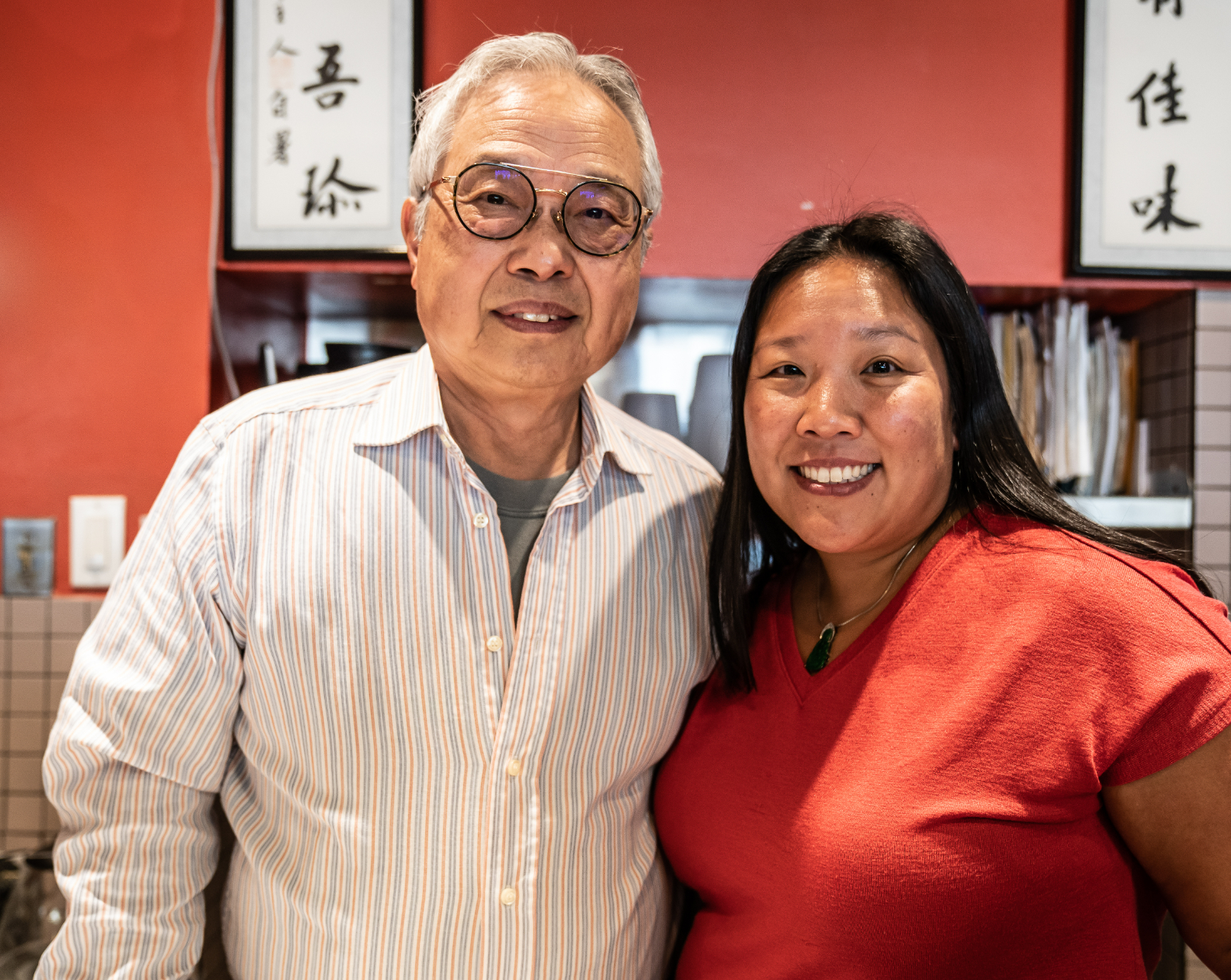
“I think that it’s because it is a family run business that we try to take care of people the way we take care of each other,” says Debbie Tang, whose parents run A&J.
A&J
Though she’s never been formally employed at her parents’ A&J restaurants in Rockville and Annandale, Debbie Tang says she’ll always be the general counsel — whether she wants to be or not. Her paid work is at an executive search firm, but she’s an attorney by training. So she will still look over a restaurant’s lease, for example, if asked by her parents, Elaine and Jye Tang.
“I didn’t really expect to work at the restaurant,” says Debbie.
Neither did her brother, Phillip, who was nonetheless influenced by the family business and became an accomplished chef. He lives in Massachusetts, where he previously owned his own restaurant serving contemporary Asian cuisine, until it closed in 2015. He still works as a chef, and does help the family business on occasion, including with some of the pandemic pivots, Debbie and her father say.
“We’re not going to force him,” says Jye. “We never thought about that… because we know him and we know he is not very interested.”
Jye accidently landed in the restaurant industry. He’s an architect, and was practicing in that field when his wife’s brother, Alex Chang, asked the couple to go into business with him. Alex had opened several A&J locations in California and was looking to expand his family’s Chinese-style dim sum chain to the East Coast. Dun-Min Chang, Elaine and Alex’s uncle, opened the original one in Taiwan during the 1970s.
“We [would] love to do that,” Jye recalls saying, “so the family can work together.”
When the first location this side of the country opened in Rockville, in 1996, Debbie had already entered college. She would travel back to school in Canada with dumplings and scallion pancakes in her suitcase, sometimes at the request of roommates. Debbie didn’t start helping her parents out with the restaurant until she was older.
For the most part, she still doesn’t usually have to come in. But Christmas Day 2020 was an anomaly. Debbie got called into the restaurant.
“We instituted online ordering,” she says. “That was a bad idea because Christmas is one of our most popular and busy days.”
The problem? They didn’t know how to turn off the new ordering system. “The kitchen joked that it was like a Christmas tree because the ticker tape kept on coming in,” Debbie says. “And so I was here as sort of crowd control and trying to give people some free dishes because they waited a long time.”
A&J is locally acclaimed for its dim sum — primarily small, shareable dishes of northern Chinese cooking. The unassuming chain is not only a regular spot for locals but an attraction for respected chefs, including Michel Richard, who once came in to order the pig ears, the family says.
While Jye has a longtime manager in mind who can take on more responsibilities when he retires, he cannot help but hope that his children will get more involved in the management side of the restaurants.
“I don’t expect either one of them will be here all the time,” says Jye. “Hopefully the tradition and the legacy –”
“My seven year old daughter says that she wants to be the boss,” Debbie interjects. Jye laughs and smiles at his daughter. “So maybe it’ll skip my generation and just go to her,” she adds.
Ben’s Chili Bowl
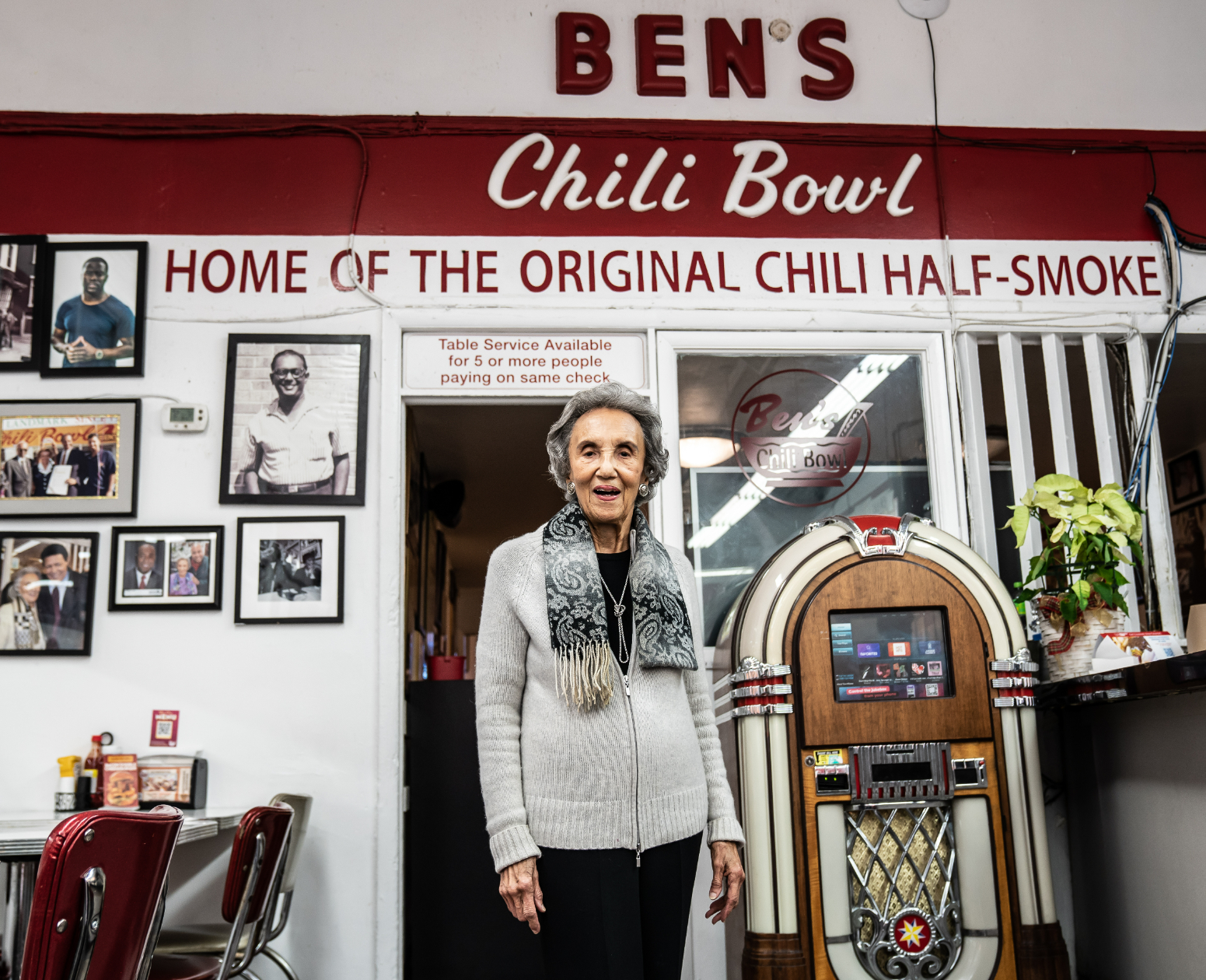
Virginia Ali, who’s turning 90 this year, rests easy knowing that her three sons and two daughters-in-law can run Ben’s Chili Bowl without her. The D.C. landmark, arguably responsible for popularizing the city’s signature half-smoke sausage, has had three generations work in the business over the years.
Virginia and her husband, Ben, opened the restaurant on U Street NW in 1958, when she was 24. Virginia says she’s “slowed down tremendously” nowadays, trusting her children to take care of the flagship restaurant, as well as the other locations and franchise business.
“My son used to say, ‘Oh, yeah, this is Mom. She’s my best employee,’” Virginia says, laughing.
Virginia says she still visits to greet guests – her favorite activity – but leaves most everything else to her kids. She has stopped regularly attending business meetings at the apartment above the restaurant on U Street. During these meetings on Fridays, the family will sometimes take a vote on any disagreements they have.
Virginia’s sons got a feel for the family business when they picked up shifts in grade school, she says, and all now work full time at Ben’s. Each son has their thing. The eldest, Sage, is the general manager for the H Street NE location, and oversees franchise locations at places like Nationals Park and the airports, plus future projects.
The middle child, Kamal, manages the original location and runs retail, while the youngest, Nizam, balances administrative, legal, and technology work for the company. (Nizam is the reason the restaurant moved to a digital financial process and away from paper checks.)
They all didn’t plan to work at Ben’s. Sage used to live in California with his family and only returned to D.C. when Ben Ali died in 2009. Sage’s wife, Vida, joined the business then too, and is now responsible for marketing and branding. The pair are also why Ben’s has vegetarian options. Kamal’s wife, Sonya, meanwhile, supervises Ben’s Chili Bowl catering as well as their e-commerce business.
Virginia is happy to let them run the business as they see fit; her only ask of her children is that they not change the appearance of her original restaurant, which has endured so much history.
“I’m grateful for my children, that they would want to do this,” says Virginia. “It’s a pleasure to be here working with my children and getting to see them every day.”
The next generation, Virginia’s grandchildren, have also worked at the Chili Bowl. But they don’t have to stay working there, she says, recalling what she told her granddaughter: “Forget about the legacy, you do what makes you happy.”
El Tamarindo
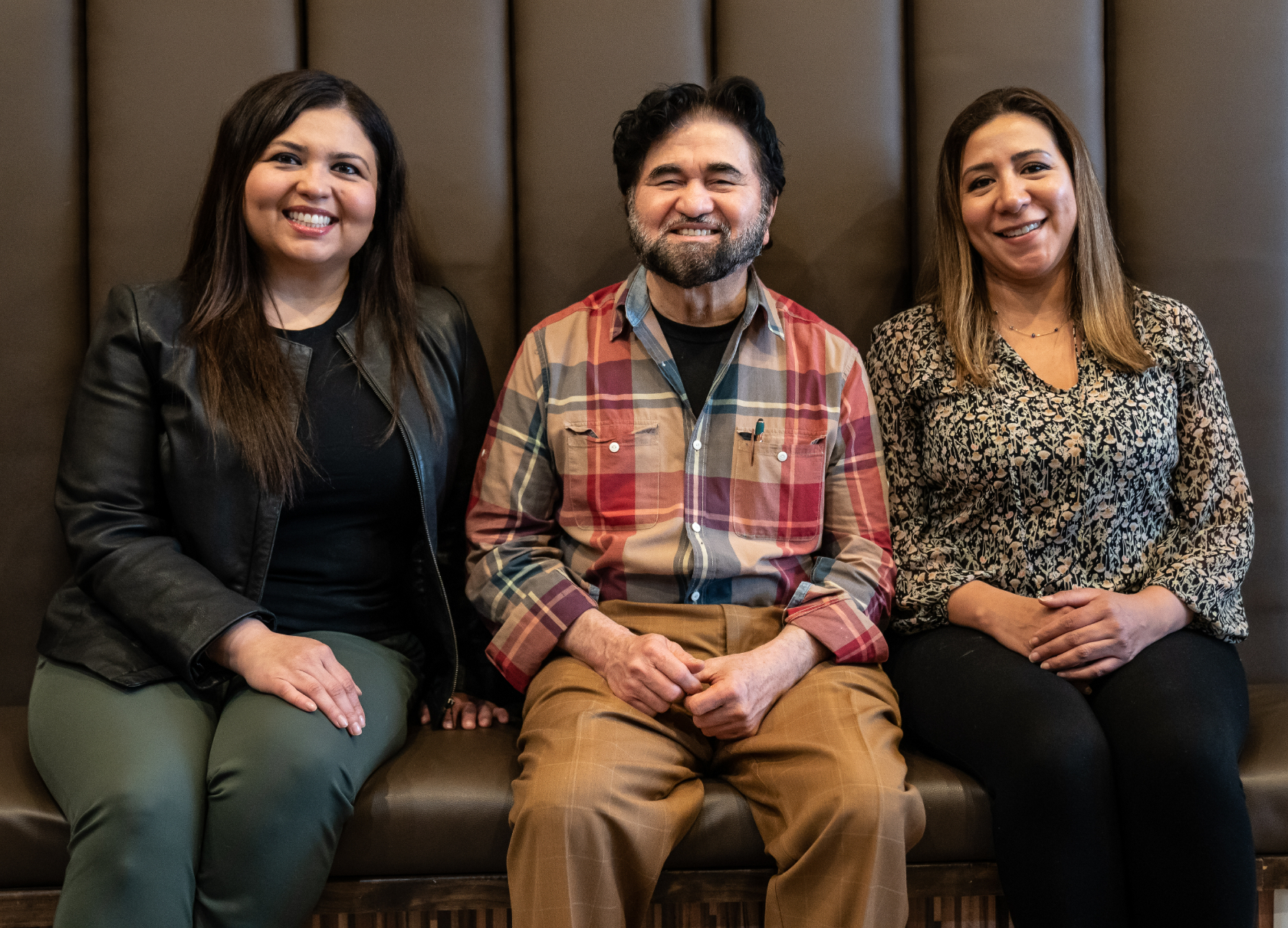
Ana Reyes says she was almost born at El Tamarindo, the Salvadorian and Mexican restaurant on Florida Ave NW her parents, Betty and Jose, opened more than 40 years ago. Her mother went into labor while working there, and they never made it to the hospital, says Ana. She was delivered in the car just outside the restaurant’s parking lot. Her four older siblings were there too, in the backseat of her parents’ car.
Ana’s birth story foreshadowed her life story. Her parents opened the restaurant in 1982, nearly a decade after they emigrated from El Salvador. Their kids grew up at El Tamarindo, spending more time there than at their house in nearby Columbia Heights; they did their homework and chores at the restaurant, Ana says.
As they grew up, some of the siblings started working there too. Ana returned full time after college at the encouragement of her brother, who was managing the business at that time. When she came back, he moved to Los Angeles and she took up the reins with her parents.
“Once I came back in, it felt very natural,” says Ana. “It never felt like a wrong decision. I think the only thing that … made it challenging in the past was figuring out family dynamics in a business. I think once you learn about healthy boundaries, things change for the better.”
Pupusas are what El Tamarindo are known for. Betty learned how to make the stuffed corn dish on the job because that’s what the customers wanted. One of the restaurant’s first employees, who is also from El Salvador, taught Betty the recipe. The restaurant’s significance in the local Salvadoran community is part of what motivates Ana to work there.
Ana’s sister, Evelyn Andrade, wasn’t so sure. Before the pandemic, she was focused on her children and her own salon business, and only really assisted at El Tamarindo when needed. She was hesitant to work with her family full time, she admits.
“We get along so well,” says Evelyn. “As much as I love the restaurant industry and love working here…I was afraid to trade that in.”
But Evelyn eventually decided to join the family business during the pandemic because they proved to get along well, even in extraordinary times, she says.
“We all knew our strengths. We all supported each other through the pandemic,” says Evelyn.
The parents and their two daughters each do a little bit of everything at the restaurant. Evelyn says Ana is the one who keeps a “bird’s eye view” of the restaurant, as the director of operations. She handles all the finances but will work front or back of house if she has to.
Jose is still ultimately the one in charge, as the owner and CEO of El Tamarindo. He visits the restaurant every single day to make sure things are running to his liking.
Ana declined to talk about her father’s retirement. “We don’t say that word [retirement] in this family,” she says, half joking. Jose, meanwhile, is simply thankful for his kids’ involvement in a restaurant he loves so deeply.
“When a small business starts to do a business,” says Jose, “definitely, we need the kids’ help. because we can’t handle another way. I’m so happy to have my good team working with me.”
Mama Ayesha’s
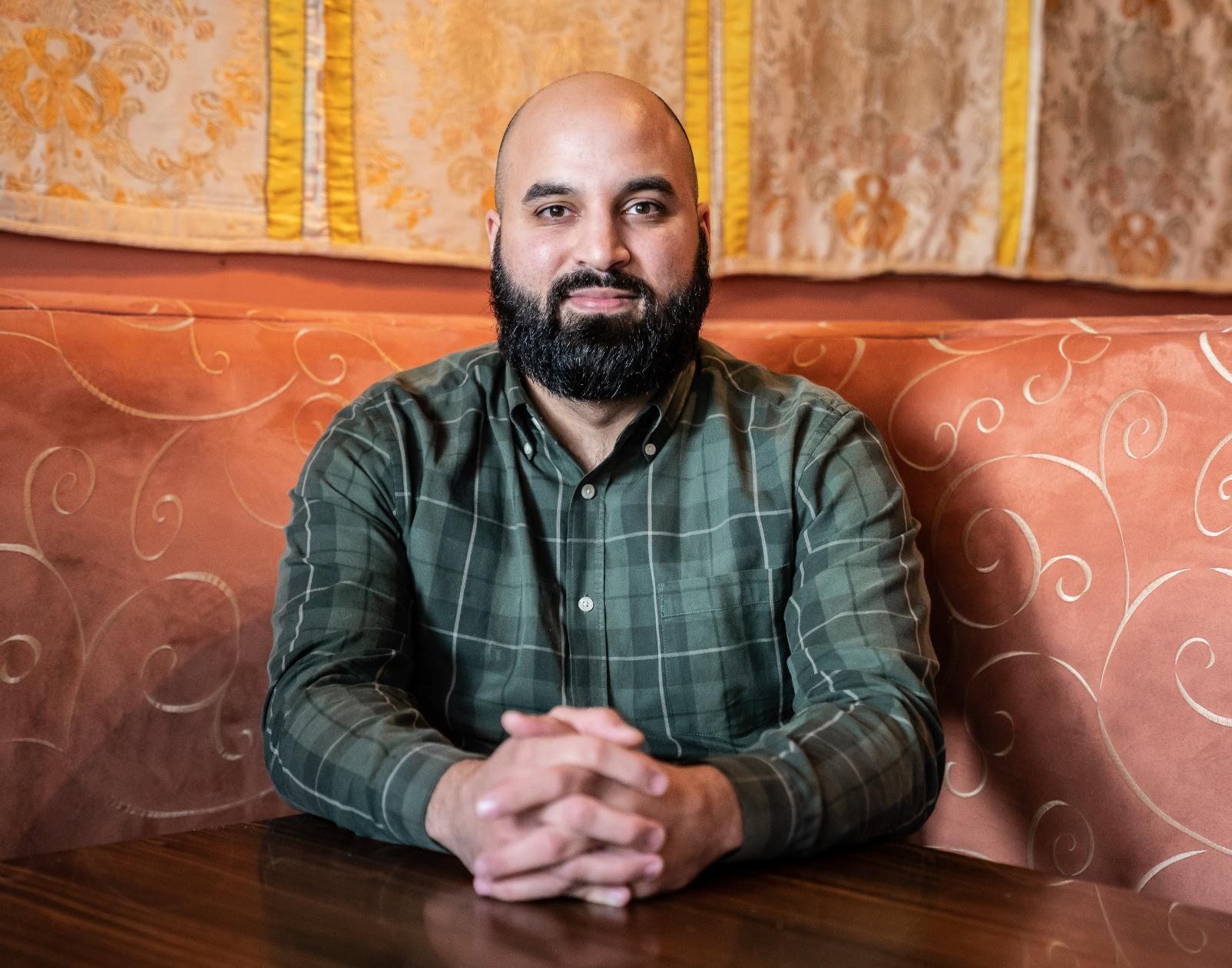
Ayesha Abraham moved to the D.C. area from Jerusalem in the 1940s, eventually opening Calvert Cafe on Calvert Street NW in Adams Morgan. When she died in 1993, she left it to her nephews, Samir and Abdullah Abu-El-Hawa, because she didn’t have any children of her own, according to Samir’s son Amir Abu-El-Hawa. They’re the ones who renamed it in her memory, he says.
“The plan was always for it to continue as a restaurant. I don’t think there was any other option,” says Amir. “Mama worked here til her last day. This was everything for her.”
The Middle Eastern restaurant also means everything to his dad, says Amir. Samir is still the executive chef at Mama Ayesha’s. When Amir was growing up, Samir would juggle cooking there and driving taxis to support the family. So Amir says he started working at the restaurant to spend time with his dad.
“I’ve done pretty much every job here from a very young age,” says Amir. “Working for your family can be tough. Family doesn’t hold back. They don’t hold their tongue. But I wouldn’t trade it for the world.”
Amir ultimately took a step back and now works in local government, but his brother Mohammed still works at the restaurant, serving as general manager. Amir is still on call if his dad and brother need help, he says; and he brings his family in for dinner often so his kids can appreciate and understand their heritage.
His family is always sure to order the mouzat, which comes with slow roasted spiced lamb shank, green beans, and vermicelli rice. While the establishment has been remodeled over the decades, most of the menu, based on Ayesha’s recipes, has stayed the same. Samir will prepare the food – such as the hummus and baba ghanouj – as Ayesha did.
Whether those dinners will translate into the next generation taking over Mama Ayesha’s is still to be determined — but Amir is pretty confident it will stay in the family.
“Who knows who takes it on from here,” says Amir. “All I can promise is that it will always be family, whether it’s my uncle’s kids, my brother. There will always be somebody. It will never, never be anyone else. And my father, just like Mama, will be here til he’s no longer here.”
Mangialardo’s
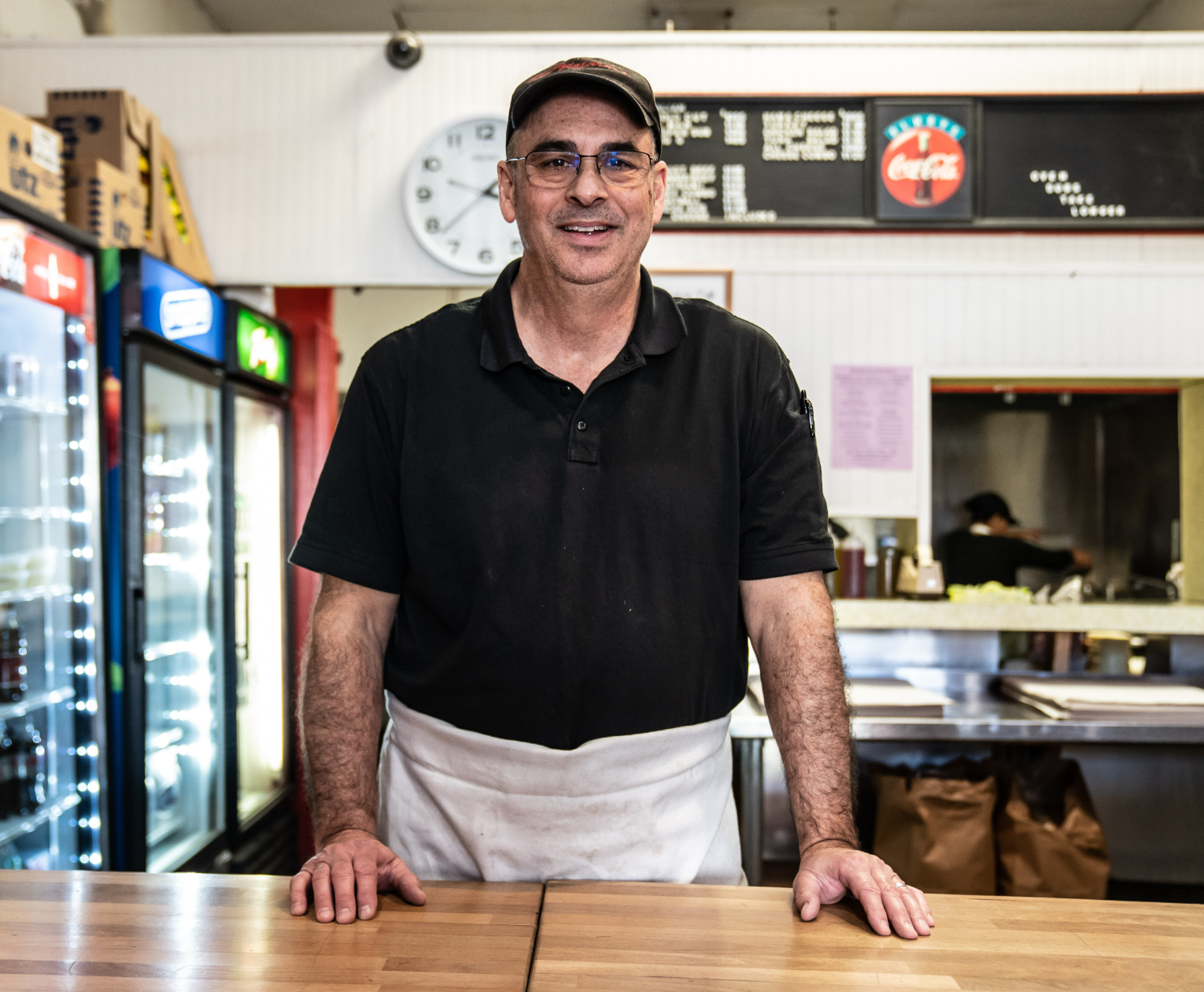
Tony Mangialardo’s grandparents, Antonio and Anna, opened the predecessor to what’s now a local favorite Italian sandwich shop on Pennsylvania Ave SE in 1953. Antonio, who emigrated from Italy, had been selling fruits and vegetables from a cart. He upgraded his business to a brick-and-mortar grocery store when Tony’s dad, Joe, was 18.
“It was mainly for my father, to give him a business, ” Tony says of his grandfather’s motivation for opening Mangialardo’s. “So they were [working] together for years.”
They started making subs in the ‘60s when patrons at the market asked for it with the deli meat they sold, Tony says. The subs took off — but the market faltered. By the late 1990s, they were solely a sandwich shop.
“My brother and I started working here when we could see over the counter,” says Tony. “We used to work Saturdays, summers and holidays, and I just kind of just kept doing it … I have been working in this one building for over 42 years.”
The storefront’s sign still says “Mangialardo and sons.” Though Tony’s brother moved to South Carolina, Tony continued to help his dad, who worked at the shop until the day he died nearly two decades ago. They never had a formal conversation about him taking over the family business, Tony says. He simply never thought about doing anything else.
Tony eats a sandwich pretty much every day, usually a classic cold-cut sub, with vinegar, mild peppers, ham, salami, mortadella and provolone cheese. On weekends, he’ll treat himself to their most popular sub, the “G” Man, which punctuates the classic with pepperoni and fontina cheese. Tony is very content.
“It’s just my life. I’ve always done it. And I don’t know how to really say it,” says Tony. “This is just what I do. I get up, go to work when I’m supposed to.”
Tony, who turned 60 in October, says he doesn’t expect to retire because it’s hard for small business owners to do so. He doesn’t have a set plan for who’s taking over the shop in his absence — though he feels like he has options.
“What I always say is I have six children,” he says, as his 18-year-old son worked alongside him behind the counter. “I’m thinking probably a group effort later on. They’ve all worked through here. They’ve been here off and on for years … But hopefully I still have a good so many years left so that I can be hanging out.”