 Jordan Pascale
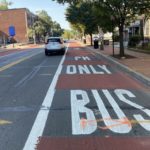
Get out of those red bus lanes, and away from bus stops! That’s the message the D.C. government will send drivers this summer and fall when they launch automated camera ticketing for vehicles blocking bus lanes and bus stops in the District.
Enforcement of the bus lanes is a vital part of the puzzle to make buses run more efficiently, Metro officials say. Last year, General Manager Randy Clarke said improving bus service would be one of his top priorities, saying the incremental change will happen over time.
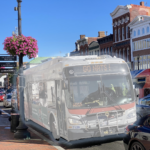
Now Metro and the District Department of Transportation are partnering to launch the first 140 bus-mounted cameras later this year. Metro board officials are set to approve the partnership at Friday’s meeting. DDOT will send warning tickets during a soft launch of the program this summer. Real $200 tickets will be sent starting this fall.
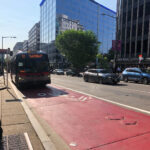
The camera-equipped buses will first be rolled out on 31 routes that travel through bus lane areas like H and I streets NW in downtown, 14th Street in Columbia Heights, 16th Street NW, M Street SE, Martin Luther King Avenue SE, Pennsylvania Avenue S.E., and Minnesota Avenue S.E.
Metro and DDOT will also be the first in the country to use automated cameras for capturing bus stop blockers. If a bus stop is blocked, buses often can’t approach the curb as closely as they need to. Buses have to get to the curb to allow riders to easily step on and people with wheelchairs or strollers to roll on. Bus stop enforcement will happen at nearly 1,400 bus stops across the District.
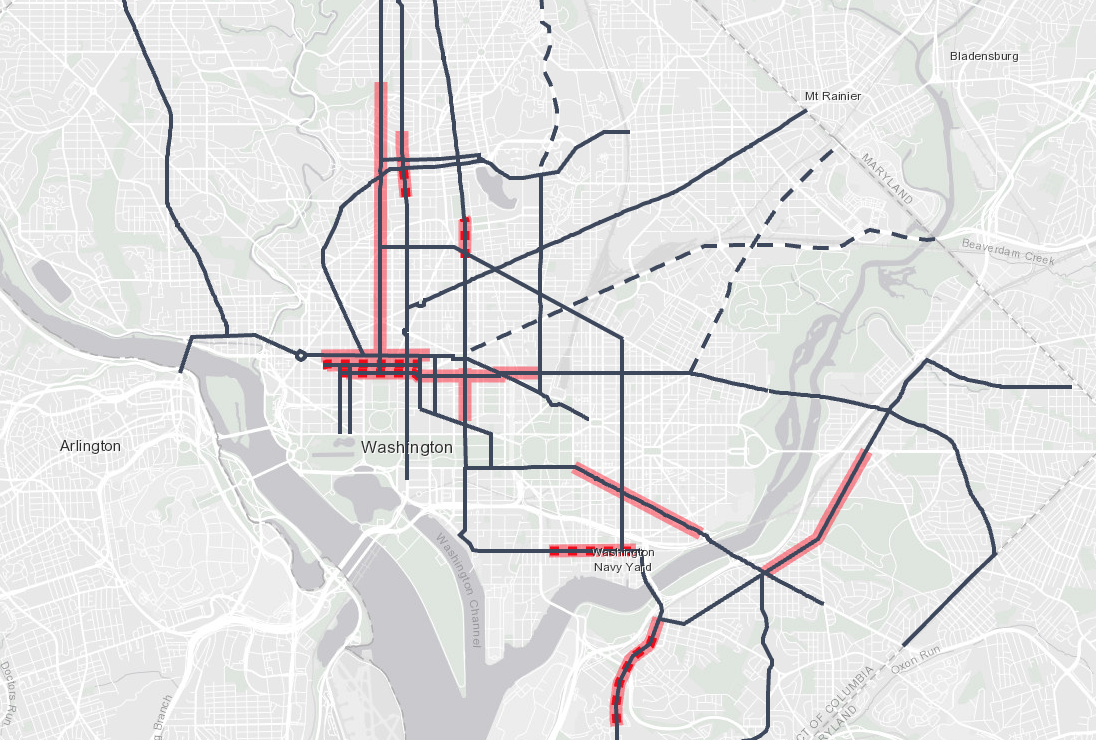
The goal is to reduce trip times, decrease operator stress, increase schedule adherence and reliability and improve bus stop accessibility. Metro says 64% of D.C. bus riders would see better service because of the bus lane enforcement.
“Dedicated bus lanes are helpful, but they only work when they’re enforced,” says Metro’s director of bus lane priority, Raka Choudhury.
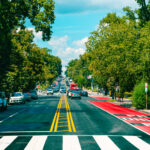
Bowser’s administration has promised to build 25 miles of bus lanes by 2025 and eventually get to 70 miles of the red-painted lanes.
During a test run of the technology, Metro put cameras on four X2 buses, which run from the Minnesota Avenue Metro station to McPherson Square. Each bus captured 60 violations a day, including vehicles blocking the bus priority lanes along the H and I street corridor and blocking bus stops.
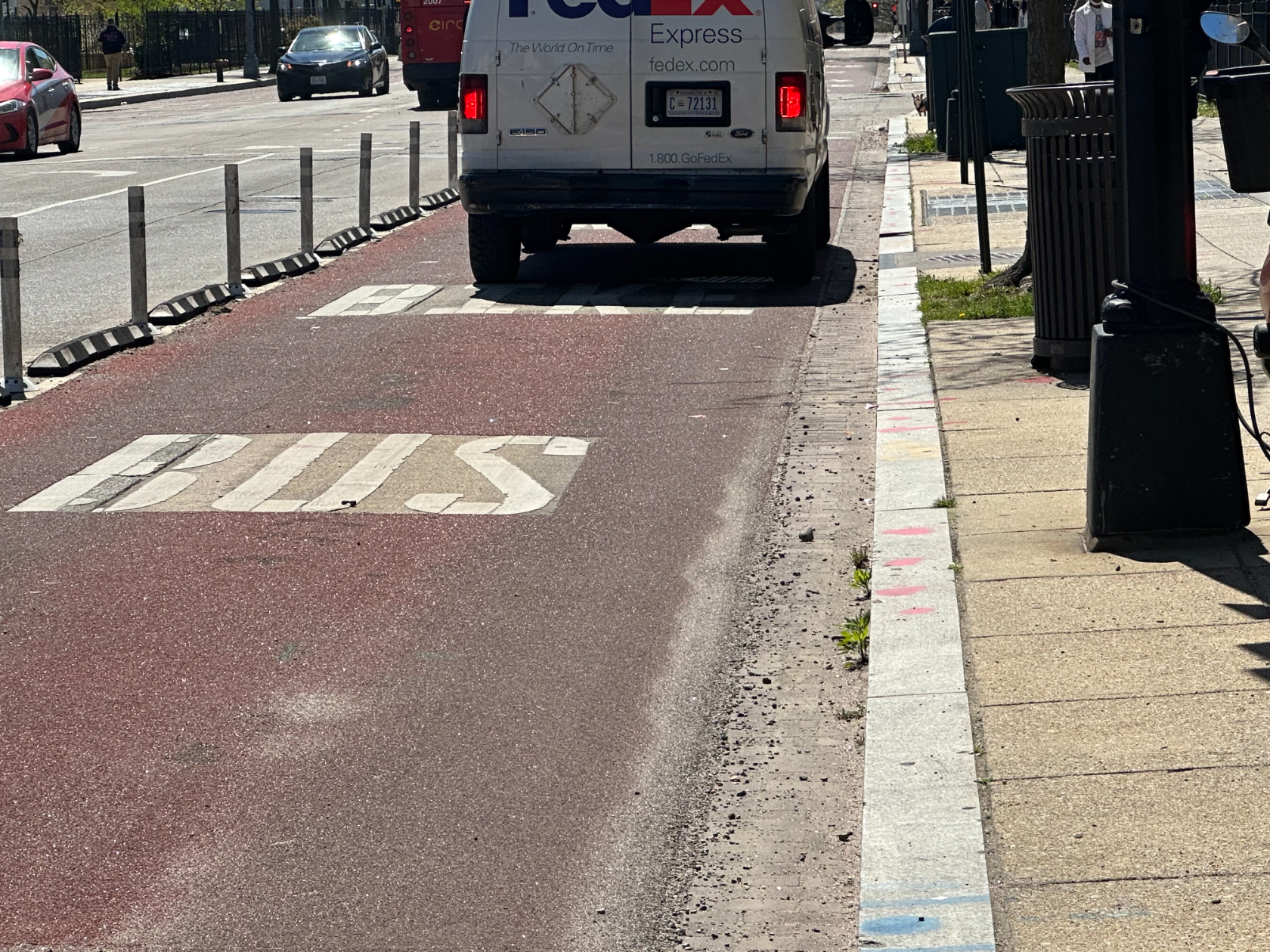
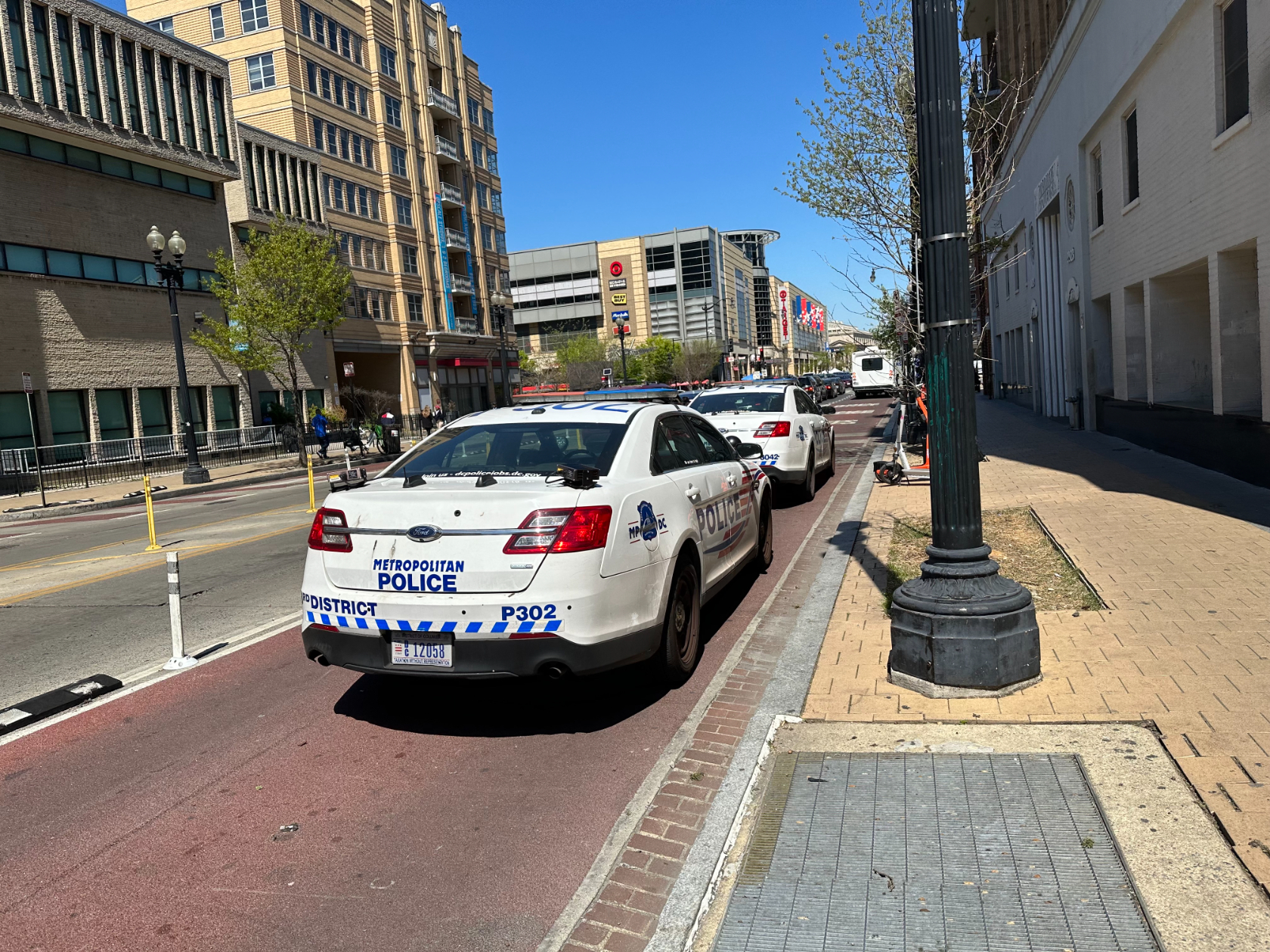
Choudhury says bus lane violations happen so often, you can usually observe a lane for a few minutes and find one. Indeed, within the span of five minutes, this reporter saw an idling sedan, a FedEx truck, and two D.C. police vehicles in the 14th Street lanes Monday afternoon.

While WMATA will have the cameras installed on their buses, it will be the District Department of Transportation that will do all the administrative work of reviewing footage, ticketing drivers, and sending out the fines. The bus lane and bus stop cameras will operate similarly to speed, stop sign, and red light cameras: video will run continuously and automatically capture a violation and the vehicle license plate. Officials will review the footage to verify there was a violation and send out a ticket to the vehicle’s registered address in the following days or weeks.
Tickets for blocking the bus lane or bus stops run $200, according to D.C.’s code. The D.C. government currently uses camera fines to pay for road safety projects, but Mayor Muriel Bowser wants to redirect those dollars to the city’s general fund to help fill an upcoming budget gap.
D.C.’s automated ticket enforcement program has shown benefits with most people getting tickets and not re-offending, D.C. officials say. But the system does have some flaws. More and more drivers are using fake license plates, reflective covers, or temporary tags to avoid citations. D.C. Police say they’ve arrested about 1,200 drivers in the past two years for such offenses. Meanwhile, major delivery businesses like FedEx and UPS build tickets into their cost of doing business. Some people just don’t pay the tickets and face little repercussions other than the chance of getting their car booted.
Adding some complications, different bus lanes are enforced at different times of the day. For instance, the H and I street bus lanes downtown run Monday through Saturday from 7 a.m. to 7 p.m. Meanwhile, the newer 16th Street bus lanes are only limited to buses at peak times: southbound lanes are in effect during the A.M. rush hour, and northbound in the P.M. rush hour. The 14th Street lanes in Columbia Heights are in effect at all times.
Metro officials say other cities have found it takes about three months of enforcement to see improvement in fewer cars blocking the lanes.
Bus riders say frequency followed by reliability are the two most important factors for them, according to surveys.
In the District, buses average just under 10 mph because of traffic and blocked bus stops. Getting cars out of bus lane could increase their speeds to 20 mph on average. New York has seen its bus speeds increase up to 31% because of bus lane enforcement.
WMATA and DDOT also are looking at the option of increasing to 600 cameras over the next decade. Maryland lawmakers have submitted a bill in its legislature to authorize bus lane cameras and Virginia lawmakers are being urged to do the same next year.
The initial contract for the $140 cameras will cost $8 million and be split between WMATA and DDOT.