 Jordan Pascale
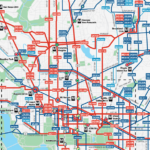
Metrobus planners are unveiling five years of work on Monday — a redesigned “visionary” bus network map for the entire region, something that hasn’t been done in 50 years.
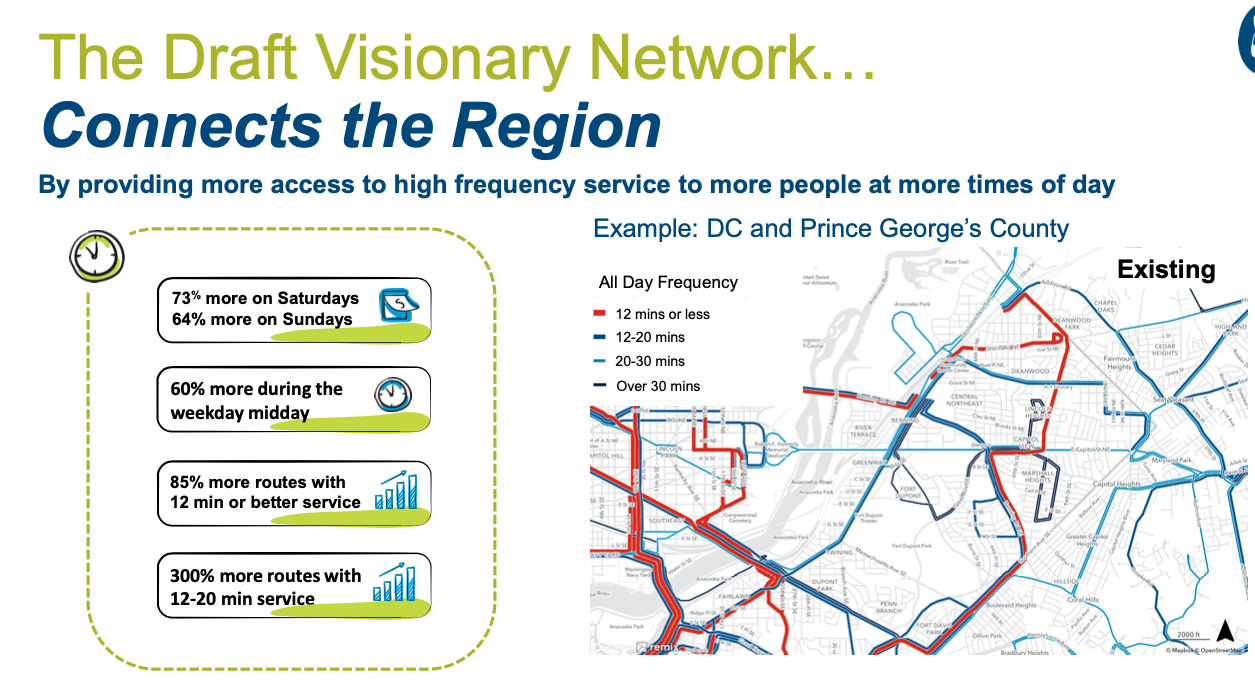
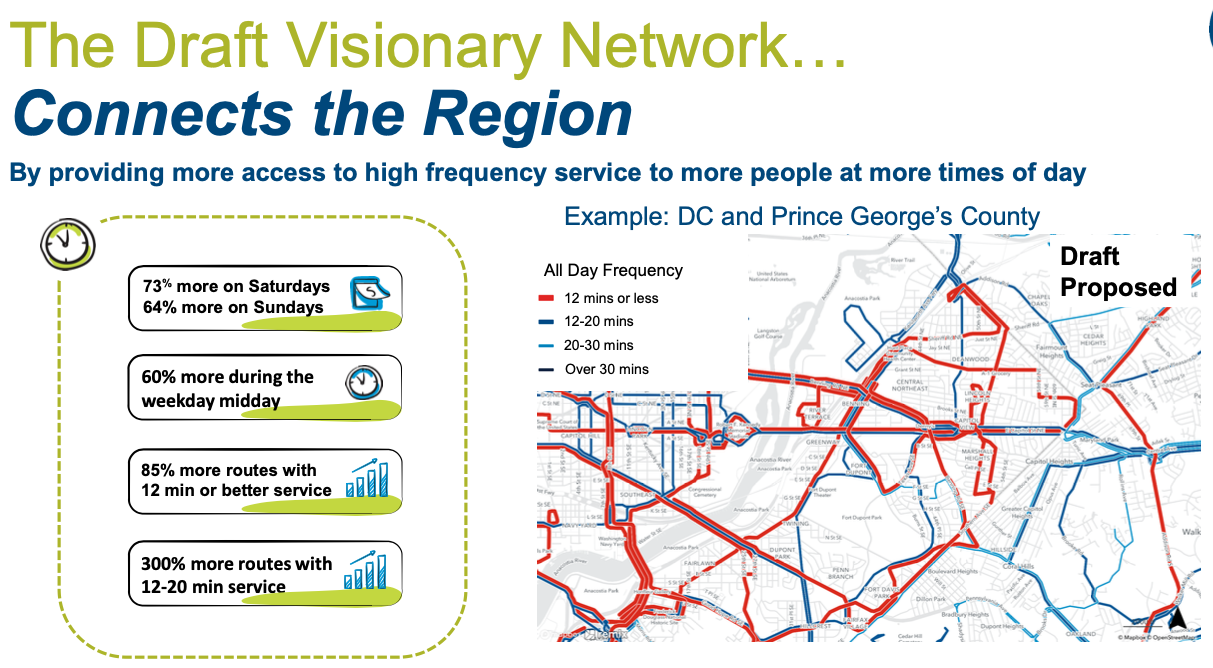
The map includes 100 bus routes with 20-minute frequency or better (many have 12-minute frequencies), a 24/7 bus network, and simpler, more direct routes. Metro wants to make the entire bus network fast, reliable, and direct seven days a week, but it costs 35% more than current service levels across the region.
It aims to connect existing and future rail lines together like New Carrollton’s transit hub with the upcoming Purple Line, to places like Addison Road and the Suitland Metro stations. It will also aim to connect missing links, like east-west routes between northern Red Line stations, helping riders avoid having to ride all the way downtown and back up.
The plan calls for connecting to more hospitals, schools, and employment centers, like a new hospital in Alexandria and National Harbor. Increasing cross-state service is also a priority, with planners noting there is no service between places Chevy Chase D.C., and Chevy Chase, Maryland, despite their proximity. Other lines could be extended like the Georgetown to Arlington service riding all the way to the Seven Corners transit center. Meanwhile, areas like Southeast D.C. and Prince George’s County could see more service between them.
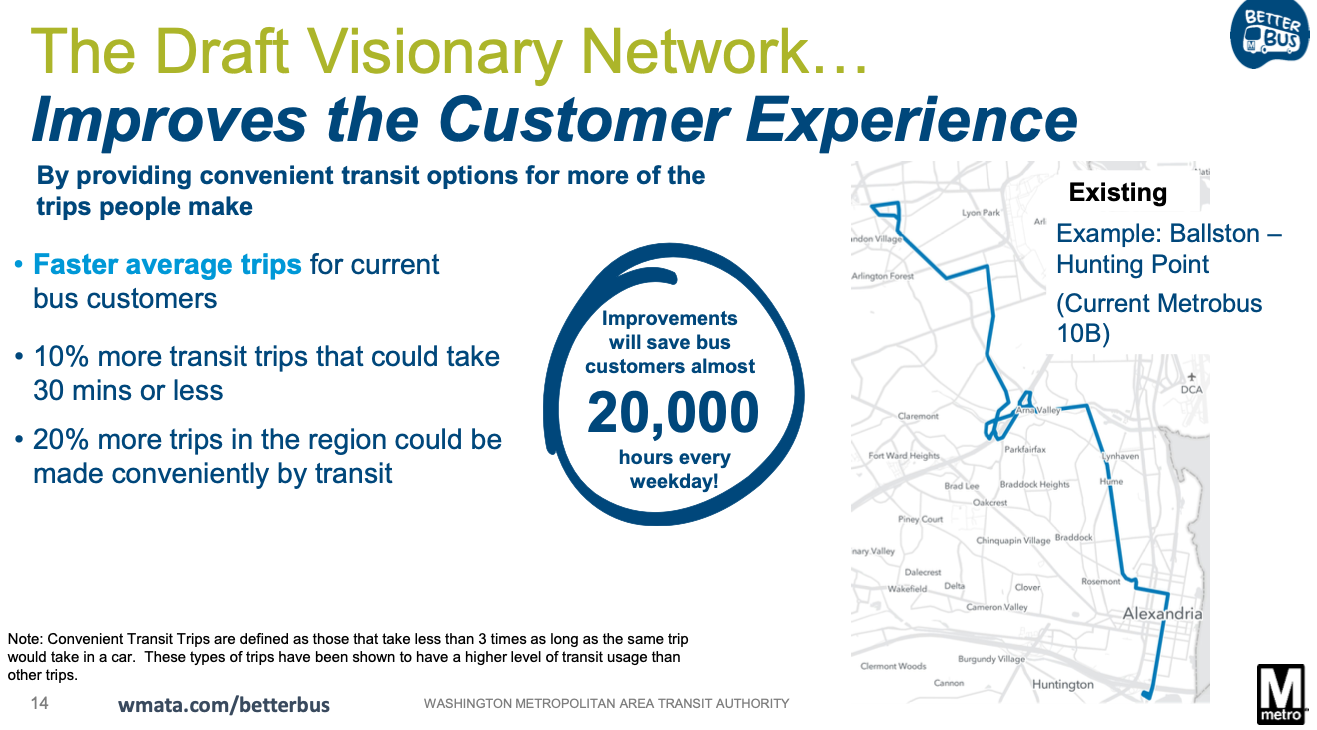
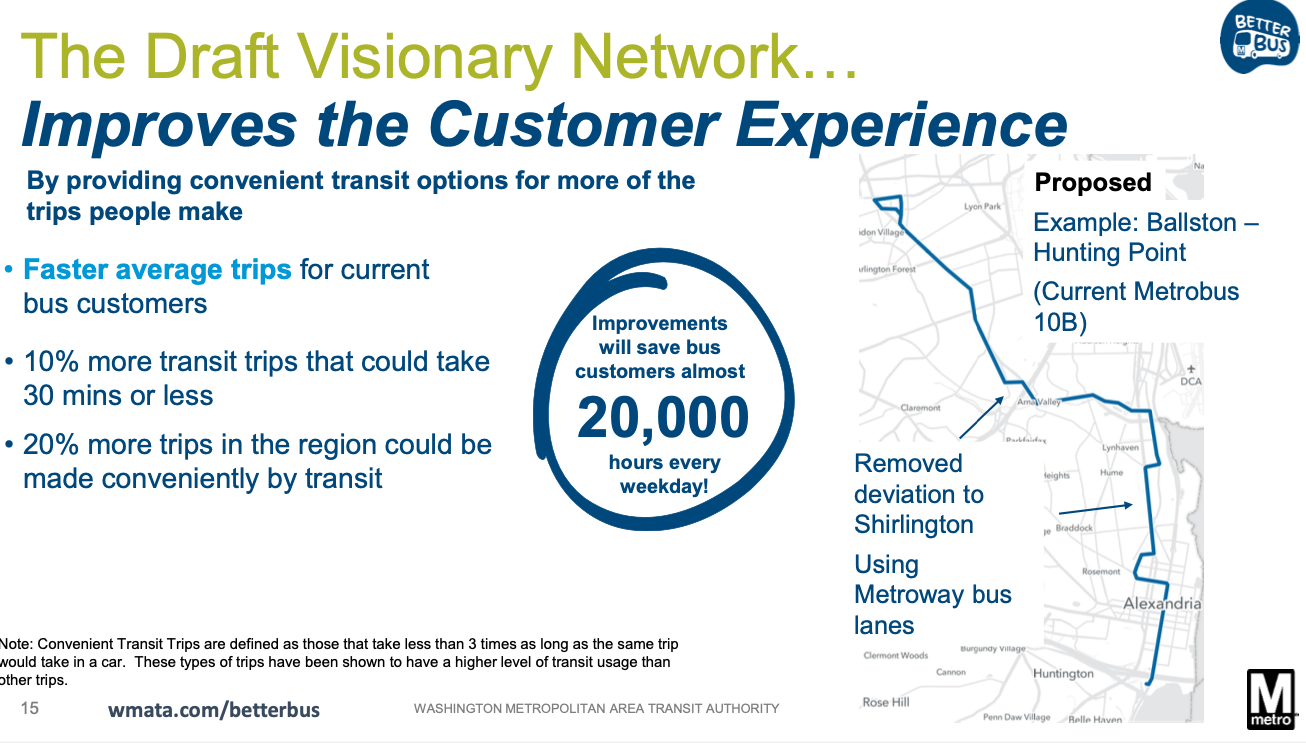
Other routes would be simplified, like the 10B which would move to the Metroway corridor in Crystal City and skipping the Shirlington Transit Center, a decision that would shave 15 minutes of travel time. Metro wants to run more bus service on all days through the region’s growing bus lane network. Planners say they need to provide enough service to make sure they’re using the infrastructure to its fullest capability.
The map will also temporarily rename routes for ease of understanding. The routes would be designated with two-letter state designations followed by three numbers for the route like MD100 or DC200.
Metro says the redesign creates 20% more trips that are competitive with driving and 10% more trips that take 30 minutes or less. Metro says the improvements could attract 40,000-45,000 new weekday riders – 40 million annually – and get people out of cars and into transit, avoiding 15,000 metric tons of greenhouse gases each year. The changes, planners say, will benefit those who need it most: Nearly six in ten Metrobus riders don’t own a car, half make under $30,000, and 84% are people of color.
The plan details and map will be released Monday at WMATA.com/betterbus. Riders will be able to compare and contrast their current routes with the proposed plan and leave feedback.
Planners say this is the level of bus service that the Capital Region deserves. But is it what we’ll get? Unlikely.
Metro says it doesn’t have the equipment, garage space, drivers, or money to run this level of service at the moment, but they say it’s important to start with lofty goals. The transit agency is also facing a $750 million budget crunch for the upcoming year as federal COVID relief funding runs out and only about half of Metro’s pre-pandemic ridership has returned. WMATA plans to host 50 events in 50 days to gather public input and start to narrow down what is achievable and most needed. There will also be surveys and other online inputs. The changes will be rolled out at some point in 2024.
Metro and local advocates started this process in 2018 when groups made recommendations for bus service changes in the Bus Transformation Project. Metro currently runs 130 routes with 1,100 buses on the road at peak times. The redesign not only looked at WMATA’s bus routes but also the Fairfax CUE, and Prince George’s County’s The Bus. The plan makes no mention of who should operate what service in those jurisdictions. Montgomery County’s RideOn bus service is also doing its own network redesign. Alexandria’s DASH recently completed a redesign and saw record ridership growth.
Metro took over several regional operators 50 years ago and some bus route numbers even date back to the streetcar days. Metro has changed bus routes periodically, like when the Red Line service opened on Connecticut Avenue. They’ve also made changes in Virginia and Maryland, but this is the first time WMATA has looked at the entirety of the system.
Planners say they have cell phone data from the region that shows where people are going and when, which means they can maximize efficiency.
This story was updated to reflect DASH completing its network redesign.