Martin Austermuhle
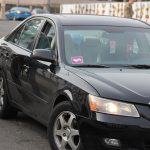
Trips on Uber and Lyft in and out of downtown D.C. could soon be a little more expensive.
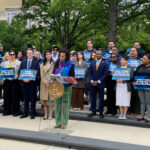
As part of the ongoing deliberations over the city’s 2024 budget, D.C. Councilmember Brianne Nadeau (D-Ward 1) has added a provision that would impose a $2 fee on rideshare trips in and out of downtown D.C. for much of the week. On Wednesday afternoon, Nadeau’s council committee approved the proposal.
The charge would apply to digital dispatch services like Uber and Lyft entering an area matching the Central Business District and stretching down towards a portion of Southwest D.C., including The Wharf, from 7 a.m. to 12 p.m. or exiting that same area between 12 p.m. and 7 p.m. Nadeau’s office says the area where the fee would be charged includes the city’s “highest-activity census tracts with major congestion issues.” Wheelchair-accessible vehicles and traditional taxicabs would be exempted from the $2 fee.
Nadeau says that the new “congestion charge,” which is similar to one Chicago imposed in early 2020, would help address longstanding traffic woes in downtown D.C., which have all but returned to pre-pandemic levels. And she says the expected revenue — estimated at more than $45 million over four years — would help pay for a portion of a council bill that would make Metrobus free within city limits and run designated lines 24 hours a day.
“What we’ve seen is that post-pandemic vehicular traffic has come back and even surpassed the level that it was pre-pandemic, whereas ridership on transit has gone down. And so this measure is meant to help us restore some vibrancy to downtown D.C. by eliminating all of that gridlock and reducing the congestion, while also helping fund an incredibly important program,” said Nadeau in an interview with DCist/WAMU.
The expected revenue would also help pay for more wheelchair-accessible taxicabs and rideshare vehicles; advocates say access to such vehicles for residents with disabilities remains limited.
In an emailed statement, Uber expressed its opposition to the proposed $2 charge. (Lyft did not respond to a request for comment.)
“Last year D.C. riders, as part of the District’s 6% tax on all rideshare trips, paid the city over $26 million – and today’s vote adds an additional, unnecessary fee to their trips. Uber is supportive of congestion pricing but under circumstances where there is actual engagement with those impacted by the pricing and that lead to policies where cities truly see a reduction in traffic congestion. A fee that only applies to one industry will not decrease congestion in the city’s downtown corridors. It will only serve to make transportation more expensive for those who need a ride when other alternatives are unavailable to them,” said the ridesharing company.
Nadeau’s proposal comes as lawmakers unveil the changes they want to make to Bowser’s proposed budget for the 2024 fiscal year, which kicks off on Oct. 1. While some of those changes involve altering or undoing Bowser’s program and staffing proposals, others are wholesale new policy initiatives. And in Nadeau’s case, it’s one that’s expected to raise money, which is in shorter supply this year than in years past.
It was partly that shortage of money that prompted Bowser to defund the council’s free Metrobus plan, forcing lawmakers to scramble to find the funds to pay for it. A significant portion of the revenue from Nadeau’s proposed congestion charge — $10 million a year — would cover the cost of running 12 of the system’s highest-ridership routes 24 hours a day, which Nadeau says is “critical to our workers and residents.” Other lawmakers are still looking to find money to pay for the portion of the initiative that would do away with fares for Metrobuses within city limits. All told, the program is expected to cost $50 million a year.
In a report justifying the new charge, Nadeau’s office also said that addressing longstanding traffic issues in downtown D.C. is necessary as part of a broader city plan to entice more people to move there. Bowser has said she wants 15,000 new residents in downtown over the next five years, and has proposed new tax breaks to encourage owners of underutilized office buildings to convert them to housing.
“[We are] mindful of the concerns about downtown office vacancies and the resulting drop in commercial property tax valuations — so mindful, in fact, that we are concerned that attempts to restimulate downtown into a thriving, mixed use, economically viable neighborhood could be dampened by traffic congestion, which is both a quality-of-life issue and a financial drain,” said the report.
But during a brief debate on Wednesday afternoon, Councilmember Brooke Pinto (D-Ward 2), who represents almost all of downtown D.C., said she was was worried that the new charge would disproportionately impact existing downtown residents and potentially limit efforts to revitalize the area.
“I’m worried that this has a disproportionate impact on residents who live downtown. While the companies can absorb these costs, the reality is they will probably pass them on to the consumer. They will have to pay a premium just to leave their home or return home,” she said. “We’ve been talking about how we can most effectively reimagine our spaces downtown. I worry something like this could disincentivize those efforts to bring more people downtown.”
Nadeau responded that most downtown residents would likely avoid the charge since they’d be traveling out of the area during the morning rush (when the charge would be imposed on those coming in) and vice versa during the afternoon. And she said that existing traffic issues could hamper efforts to improve downtown D.C., so the congestion charge could help reduce traffic.
This isn’t the first time the council has explored the idea of imposing a congestion charge, which has been used in cities like London and is expected to be implemented in New York this year. It was four years ago that lawmakers paid for the city to conduct a study on a congestion charge for downtown D.C., but the results of the study have yet to be released. Earlier this year city officials said the study had largely been completed, but that it was being adjusted to factor in traffic changes during the COVID-19 pandemic.
One criticism of Nadeau’s proposal is that it’s too limited.
“I support raising revenue for transit but it doesn’t make a whole lot of sense to impose a narrowly targeted congestion fee on ride hails to an area of the city that has struggled, uniquely, to rebound from the pandemic. Just increase the tax on ride hails across the board,” tweeted Patrick Kennedy, a former candidate for the Ward 2 seat on the council.
Nadeau tells DCist/WAMU that she supports a broader congestion charge on all drivers, but that she was working within the limits of her oversight responsibilities of ridesharing vehicles.
“I think we should be moving towards a full congestion charge,” she said. “And I feel confident then when we get that report [on congestion charges], it’s going to show the benefits of that. But in the meantime, I’m doing what I can facilitate in my committee with oversight of ridesharing and for-hire vehicles.”
The proposed congestion charge heads next to the full council, which will have to approve it as part of the full 2024 budget in mid-May. If it’s approved, it would take effect in October.