 Athiyah Azeem
This story was produced by Street Sense Media.
A wooded area behind a row of single-family homes in Ward 7’s Deanwood neighborhood provided ample shade to a 13- to 15-person tent community for over a year. But earlier this month, D.C.’s Office of the Deputy Mayor for Health and Human Services (DMHHS) closed it down due to fire hazard concerns.
Sarita Forrest, a lifelong Deanwood resident, came up with the idea to camp in this wooded alleyway with two other people about a year ago. She had grown tired of couch surfing and wanted to find a way to stay in the neighborhood. She set up camp.
Slowly, other people facing similar predicaments began to learn about the community she had started and joined. Encampment residents on scene on the date of the removal said that outreach workers and housed neighbors helped to provide tents and food. For Forrest, the encampment was a dream: a safe, peaceful place where people lived together as a tent community.
“We would sit around a campfire and talk, have meetings and stuff,” she said.

They endured the winter together. The tent community pitched in cash to buy a grill and housed neighbors helped them buy propane tanks, Forrest said.
Then a month ago, Forrest’s tent caught on fire. Soon after, on March 21, DMHHS posted a sign at the encampment that said they would be removing it a few weeks later because it presented a risk as a “high level fire hazard in a residential/wooded area.”
On April 13, multiple people living at the site cried when DMHHS officials ordered them to vacate the premises by 9:55 a.m. Some packed their belongings into trash bags and sat in a nearby parking lot, unsure of where they were going to go next.
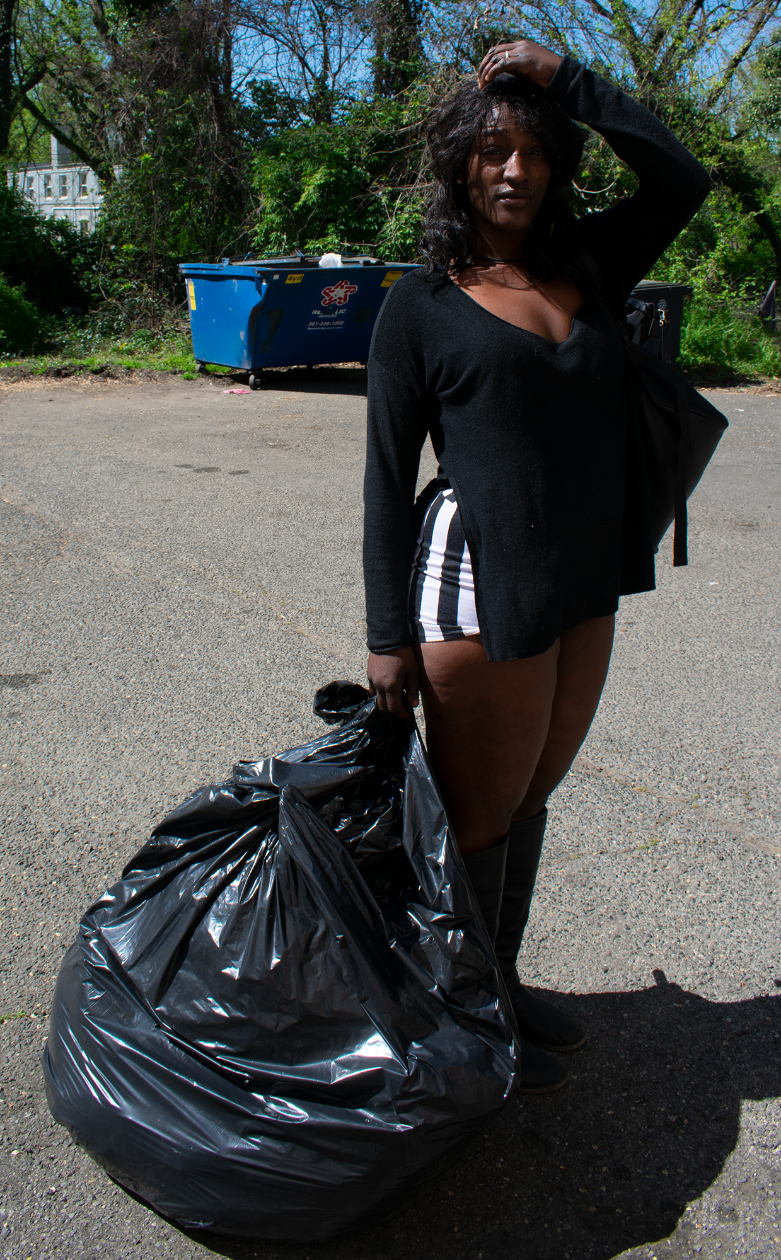
left the encampment. Athiyah Azeem / Street Sense Media
“I got nowhere to go and I’ve got nobody. The shelters are full and my family turned my back on me and I’ve got no friends I can count on,” Tavonvia Alderman, an encampment resident, told Street Sense Media. “This is the only safe haven I get and they’re taking it away.”
Officers from the Metropolitan Police Department and officials from DMHHS and Department of Public Works were on site during the encampment removal. DPW workers guided multiple garbage trucks and a front-end loader in and around the fenced encampment to dismantle tents and ferry furniture out of the area. According to DPW representative Nancee Lyons, a boom truck — a vehicle with a crane attachment — was used to lift tents without damaging the privately owned fence that separated the encampment from surrounding houses.
The people who lived at the encampment credited their housed neighbors for helping to improve and maintain their outdoor living conditions. However, some housed neighbors said they had long wanted the people living outside in their neighborhood gone. Carrie Gibson, a homeowner who has lived on Quarles Street. Northeast for six years, says she has been asking the city to remove the encampment for months.
“I don’t want people to be knocked out of their homes, I want people to have a safe place to live,” Gibson said. “It just adds to all of the issues.”
Gibson and her neighbor, Anthony, say they encounter rats in and around their homes everyday, which they attribute to waste produced by the people who lived at the encampment. DMHHS included a rodent abatement as part of the encampment closure. Gibson claimed to have seen encampment residents take cinder blocks from her backyard.
While many encampments are located in city and federal parks that are open for public use, this encampment was hidden from public view, behind a row of houses. It is unclear if this strip of land is owned privately or by the city.
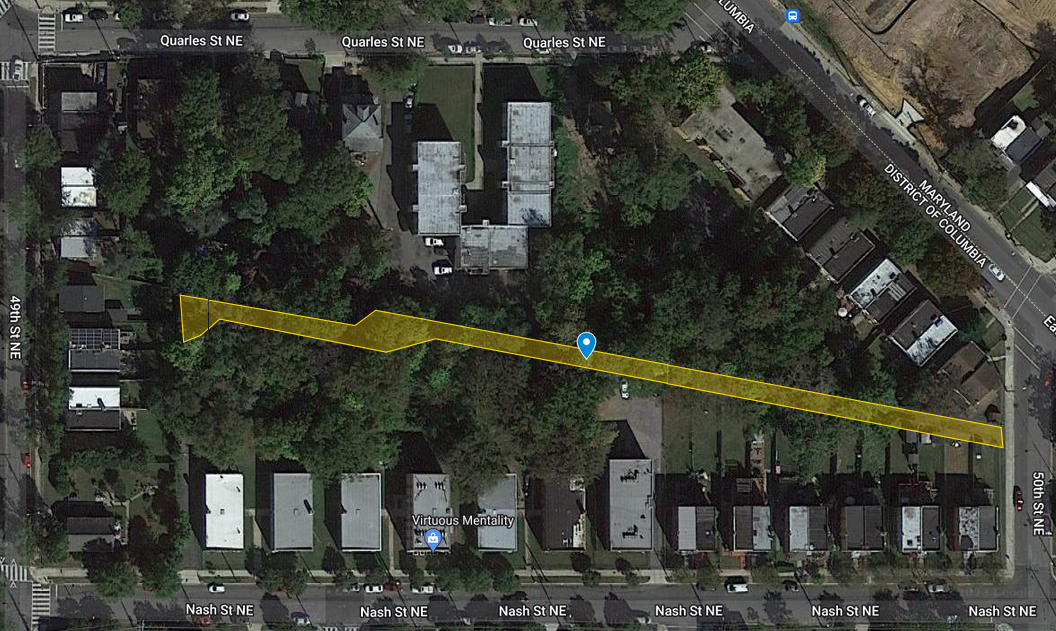
DMHHS accessed the encampment by driving through private property — an abandoned house now owned by United General Contractors Inc, a construction company. The company intends to replace the house with a 36-unit apartment complex, and create a parking space behind the building.
Gibson calls this strip of land a paper alley, where the city outlines a street on a city map — or on “paper” — but does not build it. She has been trying to get the city to turn the land into an actual alleyway to create safer parking for the neighborhood and prevent future encampments, she said.
By 11:30 a.m., most residents had left the area with outreach workers, who declined to say which organization they were from. According to the Department of Human Services, this area is usually serviced by Community Connections.
“We struggled out here together,” Tiffany, one of the encampment residents, said as she walked out. “And they’re just coming to take it away from us and that’s not fair.”