Héctor Alejandro Arzate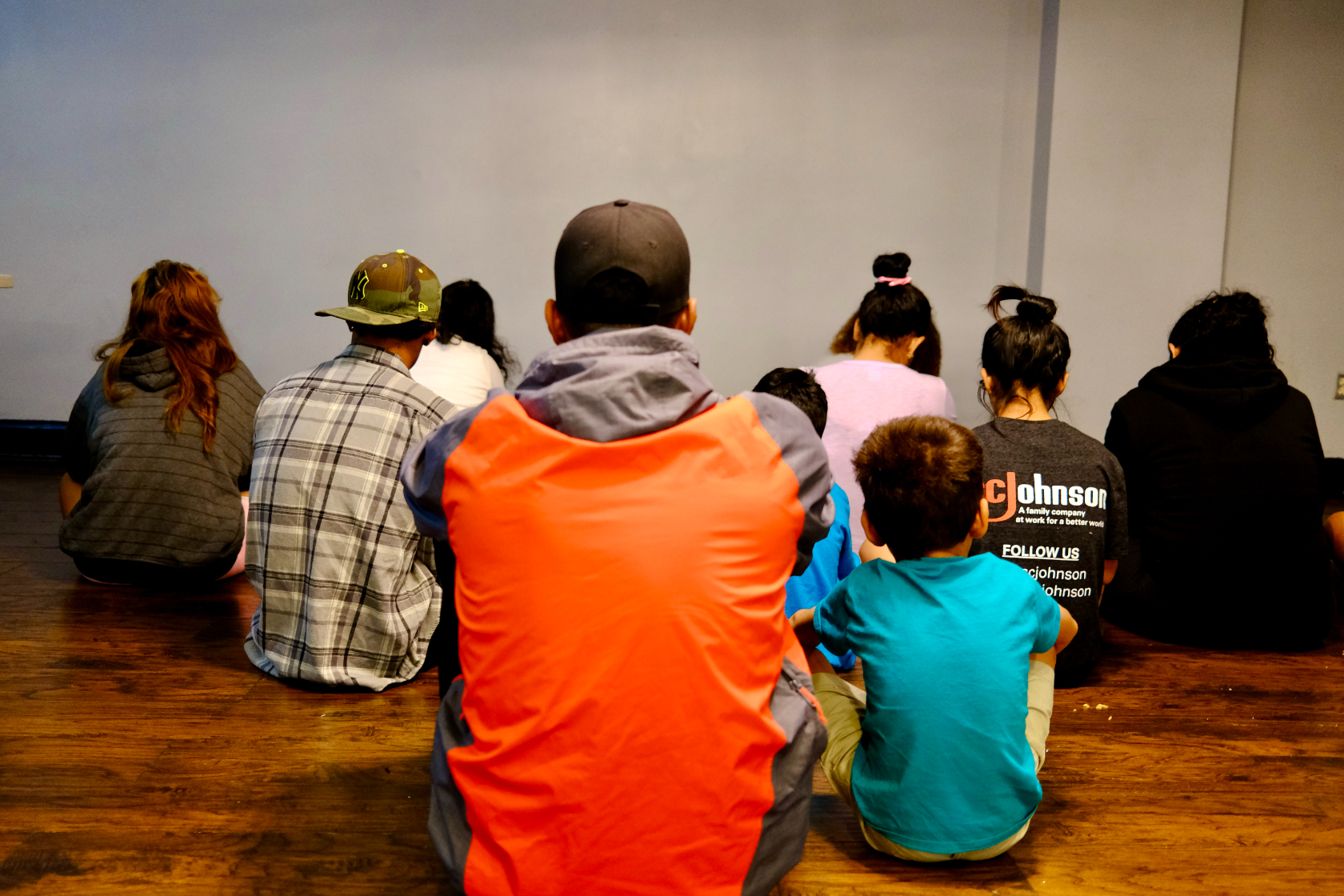
D.C. officials say hotels meant to provide migrant families who have been bused to the region with temporary housing have been filled to capacity.
According to a Department of Human Services statement, the Office of Migrant Services stopped taking in new arrivals last week with about 1,249 people from 370 families spread across three D.C. hotels.
“New intakes are temporarily paused at this time while we continue our work helping families identify pathways for long-term sustainability and self-sufficiency based on their needs, both inside and outside the region,” said the spokesperson in a statement.
Since then, immigrant advocates have asked the D.C. Council to call on Mayor Muriel Bowser to increase contingency funds so that additional migrants can receive hotel housing. They say many of the arriving migrants need the shelter as they try to find stable work and resettle in the D.C. region. Advocates have also warned that with the upcoming end of Title 42, which empowered U.S. immigration officials to turn away asylum seekers at the border, D.C. could soon face a humanitarian crisis as more migrant families may arrive with no place to stay.
“Families will be sleeping on the streets,” says Bianca Vazquez, an organizer with the Migrant Solidarity Mutual Aid Network. “I think we would be looking at 10 to 20 families on the street per week if we don’t figure out a more sustainable system.”
More than 7,000 migrants were bused to D.C. from the southern U.S. border in the last year at the behest of Texas Gov. Greg Abbott in a move that was called a stunt by some, meant to defy the Biden administration’s immigration policy. In response, local volunteers formed the Migrant Solidarity Mutual Aid Network to provide those arriving – often at night or in the early morning – with hot meals, shelter, and clothing as they were dropped off at Union Station or at Vice President’s Kamala Harris’ residence at the Naval Observatory.
At the time, immigrant advocates lambasted both the federal government’s response and the efforts made by Mayor Muriel Bowser to address the situation – including calls to activate the National Guard to assist with the migrants, which were twice denied. It wasn’t until September of 2022 that the D.C. Council passed emergency legislation to directly address the situation. That bill, which was drafted by the Bowser administration, created the Office of Migrant Services to provide D.C.’s own services for arriving migrants – including temporary hotel housing. That move, however, was further criticized by some lawmakers and immigrant advocates for making only migrants with children eligible.
This week, the D.C. Council voted unanimously to pass the Migrant Services Eligibility Clarification Temporary Amendment Act of 2023, which would make more migrants eligible to access District resources. But the amendment comes just a week after about a dozen migrants with children arrived at D.C.’s welcome center only to be told that there was no space for them. Estefani Martinez says she and her 12 year-old son were given the option to take a ticket to another city.
“When I got to the church, I was automatically told that the aid was exhausted and that there was no solution for us,” says Martinez, 34, a migrant from Venezuela.
SAMU First Response, which helps to operate welcome centers in D.C., says that it is not currently denying services or turning away migrants. In a statement to DCist/WAMU, the organization shared that it is providing an average of “two nights and three days” of shelter at their respite center in Montgomery County for those without a next destination or who cannot travel right away.
“We also refer these families to the District of Columbia and Montgomery County authorities for any additional services required once they leave our care,” said the statement.
When word got out that there was no immediate housing in D.C. for newly arrived migrants, volunteers with the Migrant Solidarity Mutual Aid Network set out instead to provide each one of them with rooms at local hotels in the region. According to organizer Madhvi Venkatraman, the average cost is about $120 per night. Still, they say that assistance will quickly become unsustainable unless the D.C. government steps in with long-term solutions.
“This problem has been created also in part due to DHS’ unwillingness to actually invest in resettlement and acknowledge that people are choosing to stay here,” says Venkatraman.
Earlier this week, D.C. Council Chairman Phil Mendelson acknowledged the concerns from immigrant advocates and shared that Mayor Bowser’s administration is the one with access to the additional contingency funds that advocates are asking for.
“There’s a very legitimate concern,” says Mendelson. “There’s not a quantified solution, or need, or request at this point. And we need that in order to be able to act on it.”
At-Large Council member Robert C. White, Jr. told DCist/WAMU that the request for additional contingency funds is a fair one, as the District is already using them to provide migrants with hotel housing. He argues, however, that there needs to be reform to make it easier for people to find stable work to support themselves and make space for incoming migrants.
“Spending more money without any changes to the system or support from other states and localities or the federal government would just put us right back here in a few weeks,” says White.
The Mayor’s office did not immediately respond to a request for comment on how D.C. is responding to this issue.
As a single mother of a two year-old boy, Anyeli Valbuena, 20, says she is asking for just that: to work hard and achieve her version of the American dream. Like other migrants, she and her son trekked through la selva, or the jungles of Central America, before traveling through Mexico by train and bus to reach the U.S. border. From there, they eventually made their way to D.C. – a place that Valbuena says could help her provide a better future for her boy.
“My dream has always been to continue my studies. Study and give my baby a good life… If it’s possible for me to make a life here, I’m going to do it for him,” says Valbuena.
Earlier this week, Valbuena and other recently arrived migrants made their way to the John Wilson Building in hopes of speaking to Mayor Bowser and other officials to plead for housing until they can find a steady job. While they were unable to meet with the Mayor, Valbuena says she’s honored to have stood inside the halls and chambers so soon after arriving in the District. For now, she hopes that she and others can prove that they only need a little help to kick start their dream.
“We want to get ahead… and show this country that we can,” says Valbuena.