 Jordan Pascale
“May the force be with you,” the iconic line from Star Wars spun off one of the film fans’ biggest holidays: May 4th.
Star Wars Day. May the Fourth be with you. Get it?
Thanks to D.C.’s role as the federal enclave, and a hub for arts and tourism, we are blessed with lots of Star Wars artifacts and events around us. Some even surprised this reporter, a Star Wars fanatic for 26 years.
The inspiration for this story begins in a small town in West Virginia where I attended a festival that had a pop-up thrift sale. Covered in dust, was a box filled with Star Wars magazines and memorabilia from the 1970s, 80s, 90s, and 2000s. In it, an old fan newsletter from 1980 with the headline that screamed: WASHINGTON PREMIERE.
I know more random Star Wars trivia than I probably should let on, but how did I not know one of my favorite movies of all time debuted right here in my backyard?
This led me to ponder all the Star Wars connections to the D.C. region, and there was even more than I had guessed.
We’ll go from the top of the National Cathedral to the depths of a chilly government film storage vault in Virginia and a few magical places in between. Be sure to listen to the radio version of this story at WAMU.org.
Happy Star Wars Day, D.C.!
The Empire Strikes Back Premiered At The Kennedy Center


The Uptown Theater in Cleveland Park was one of the first theaters to get “A New Hope” in 1977, causing “an invasion” of fans in Cleveland Park who clogged up the streets and sidewalks at all hours of the day, according to neighbors.
But D.C. also got an even bigger event: the American premiere of “Empire Strikes Back.” It is the most critically-acclaimed and popular entry in the saga. And among the first group of people in the U.S. to find out the major plot twist (“No, I am your father!”) were 600 kids and Special Olympic athletes at D.C.’s Kennedy Center on May 17, 1980.
The fact isn’t super well-known (even to some of the spokespeople from the Kennedy Center itself), but luckily we have lots of archival material from that day.

Tony Kornheiser (yes, the D.C. sports reporter turned ESPN Pardon the Interruption host) wrote an incredibly entertaining recap of the event.
“The Washington tour for the kids of Charlestown, W.Va., was supposed to include a stop at the Kennedy Center. But it was to be brief, and it certainly wasn’t to be this eventful,” Kornheiser wrote.
“Forget the monuments or the Capitol — this’ll be the highlight of their tour,” a chaperone said.
“Is Chewbacca coming?”
“Is R2-D2 coming?”
“Darth Vader? Gee, will he let me take his picture, or will he smash my camera?”
When the stars showed up:
“One young girl, her eyes glazed and her lips silently mouthing, ‘Mark Hamill, Mark Hamill,’ as if it were a mantra, ran to him and kissed him… At this moment, though the rest of the kids are back in Charlestown, that girl is on Mars.”
Movie stars and sports icons like Mitch Kupchak, Wes Unseld, Roy Jefferson, and Arnold Schwarzenegger mingled with the crowd for three hours before the film. President Carter’s daughter, Amy, and his press secretary Jody Powell attended. Eunice Kennedy Shriver, founder of the Special Olympics, and her sister-in-law Ethel Kennedy were there.
Harrison Ford signed autographs, “Force Yourself — Harrison Ford.”
Check out the TV news report from the NBC Nightly News hosted by Jane Pauley.
Did you attend the screening that day? We’d love to hear your memories! Email jpascale@wamu.org or tweet at @JWPascale.
C3P0 and R2-D2 at the National Museum of American History

Late last year, one of the most iconic movie duos of all time went on display together for the first time in a long time.
C-3PO and R2-D2 have been in the Smithsonian collection since the 1990s when they were put on loan from Lucasfilm to be included in a robotics exhibit. They’ve been on and off display for decades, sometimes alone, sometimes together. But they are the first thing you see at the National Museum of American History’s new Entertainment Nation exhibit, which opened in December. It’s the first permanent exhibit exploring how music, sports, and entertainment have shaped American history.
Kids and adults alike run up to the display and examine it with glee. Ryan Lintelman, the entertainment curator, says the exhibit shows how movies can unite Americans.
“The entire American experience… not everybody serves in the military. Not everybody runs for office or even votes in elections, but everybody participates in popular culture,” Lintelman said. “They watch movies, they watch sports. Many more Americans have something of themselves wrapped up in popular culture than they do anything else in this museum.
“So it really has this power to affect the way that we see ourselves, see the world, understand what’s happening day to day and throughout our history. (Entertainment and pop culture) is just as important as anything else that happens in our history.”
Movie props are usually made durable enough to get through a movie shoot. But Lintelman says the Smithsonian is in the “forever business” when it comes to preservation, saying “this is the nation’s cultural heritage and we are pledged to care for it no matter how brittle or ephemeral it was meant to be.”
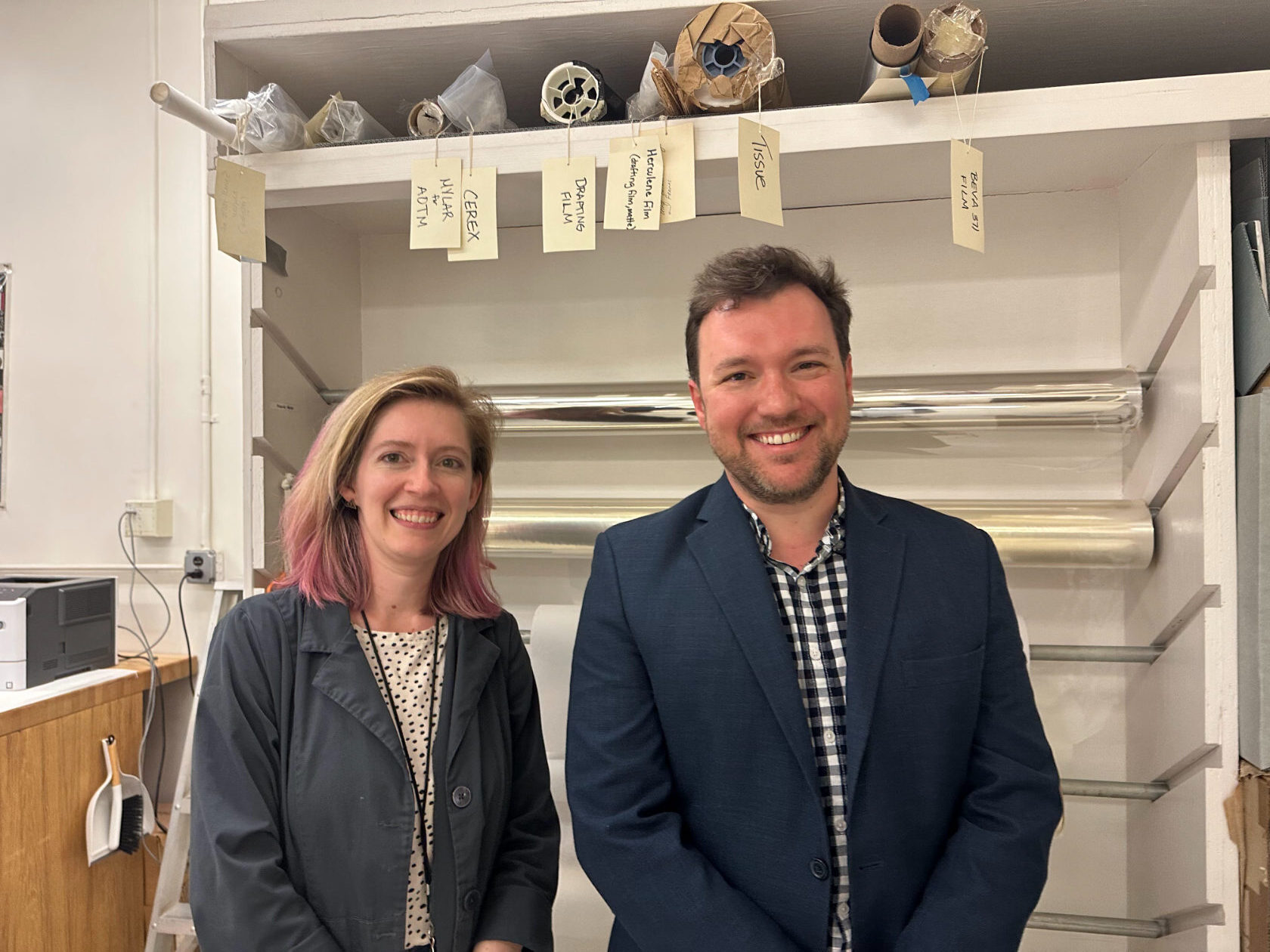
It’s people like object conservator Dawn Wallace that make sure these creations last as long as they can. Wallace has worked on the droids multiple times.
“The costume itself is just as sassy as R2-D2 is in the film,” Wallace said, describing the prop costume’s fussiness. Kenny Baker performed R2 from within the metal shell. He had a seat in the base and would poke out an electric shocker or computer access tools. “You open up one of his little doors and another door just kind of closes or like you fix one little screw and then suddenly there’s another loose screw.
“He really wants to make himself heard, but he was a lot of fun to work with.”
Wallace said there is a sense of pressure in preserving artifacts like these and other historic objects, but she has lots of experience in cleaning objects, repairing wood and plastics, and painting. Plus, she has an art history background. One challenge was working with old, brittle rubber on C-3PO’s stomach. A mannequin was built to fit the way the material had molded itself.
The work to get the droids ready for the display case took two to three years of surveys, repair, building a mannequin to support the C-3PO shell, and lastly posing them in the case.
“They’re positioned toward each other,” Wallace notes, “They’re friends.”
X-Wing At The National Air and Space Museum

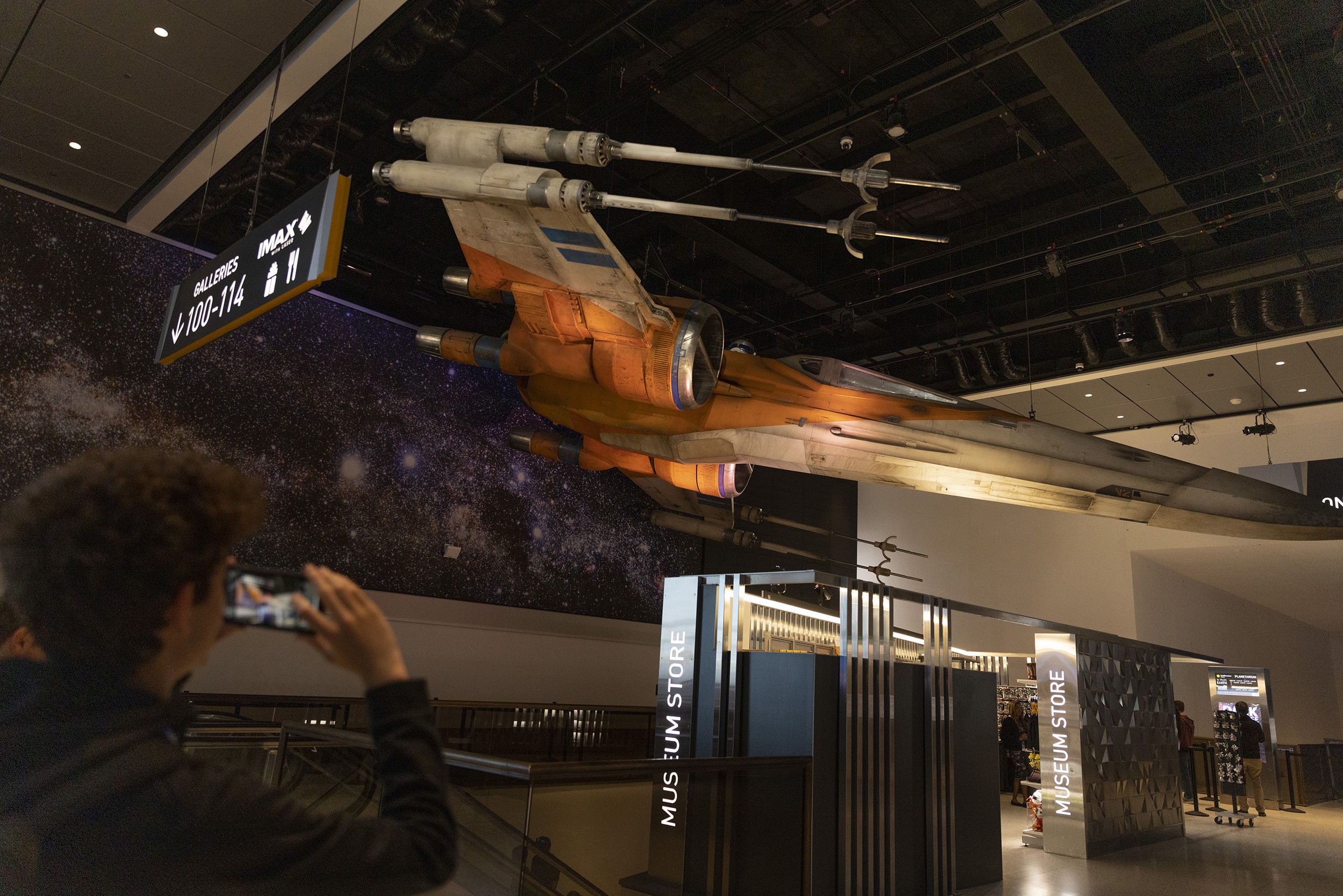
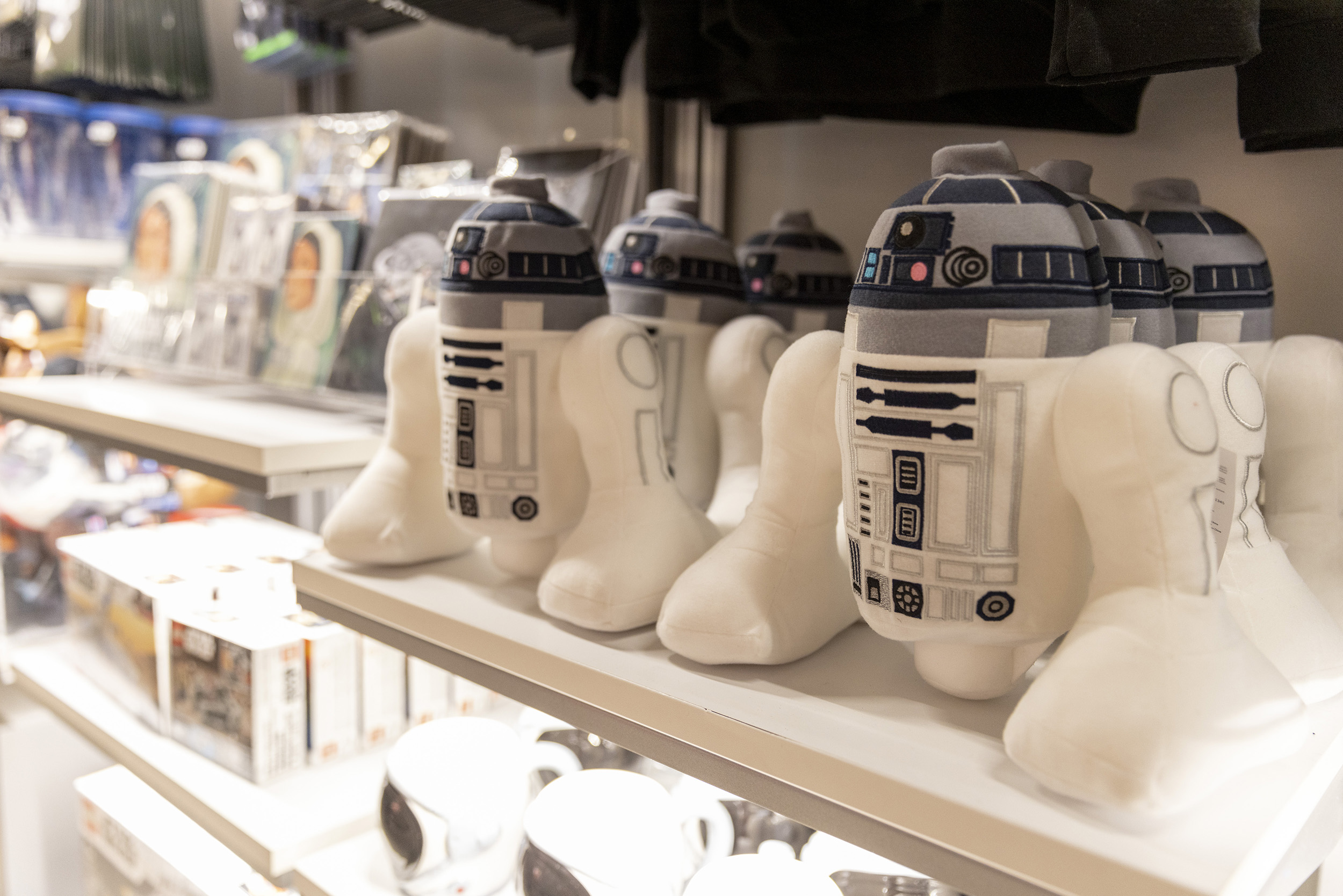
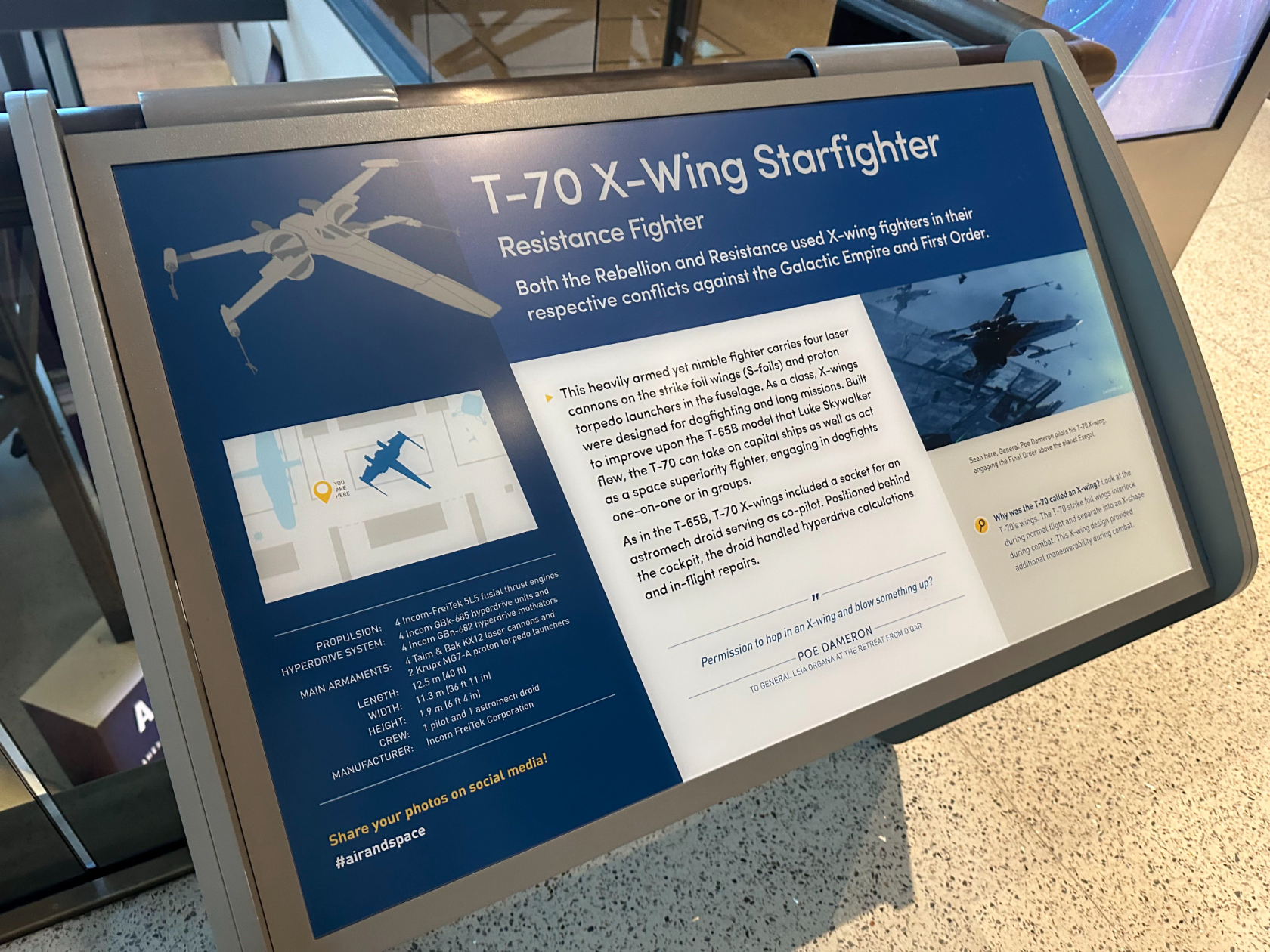
In 2019, staff at the National Air and Space Museum had just finished watching “The Rise of Skywalker”. At the same time, they were preparing for their upcoming renovations at the museum and had an idea: what if we got an X-Wing, one of the most recognizable ships from the galaxy far, far away?
Ideas progressed to talks with Lucasfilm and Disney for a long-term loan, and years later, Poe Dameron’s T-70 X-Wing arrived in crates at the museum’s Udvar-Hazy Center for work.
Margaret Weitekamp, who curates the National Air and Space Museum’s social and cultural history of spaceflight collection, recalls the incredible details of the ship when it arrived.
“If you’ve ever had anything in storage in your garage, it might have gotten a little rubbed up, a little nicked up, a little scratch, something like that,” she said. “One of the things that a curator is looking for is, is there any shipping damage? And I thought that I saw a spot where very obviously the paint had rubbed against the crate and we had a little bit of what we call ‘hangar rash.’
“The restoration staff were delighted because that of course was painted on hangar rash. That is a part of the vehicle itself intended to make it look weathered, intended to add to the sense of the reality of the artifact. And they loved that.”
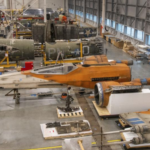
Visitors could get a peek at the X-Wing while conservators worked on it at the Udvar-Hazy Center. Last year, it was moved to the renovated galleries at the Air and Space museum on the National Mall and it was first displayed in October. As visitors ride the escalator inside the entrance, the orange behemoth floats above.
The 37-foot-wide craft was filmed on the ground, so staff had to figure out how to hang it from the ceiling without breaking it. It’s mostly made of fiberglass, so staff built a reinforced skeleton inside to make sure it would hold up its own weight while hanging.
At the museum, two plaques describe the X-Wing: one as a movie prop, the other as an in-universe reality.
The Air and Space Museum has had real planes and spaceships sit alongside pop culture artifacts since the 1970s, Weitekamp said. They include the Starship Enterprise from “Star Trek”, action figures from Buck Rogers and Flash Gordon, and more.
“These are objects that were representing those imaginations about space,” she said. “That power of imagination and inspiration plays out in the real engineering process (of aircraft).
“We know that people who are working in the Air Force, in the airlines, in the space program… many of them grew up as Star Wars fans.”
In the late 1990s, the museum also hosted the Star Wars Magic of the Myth exhibit.
The original website is still accessible on the Air and Space Museum’s website and you can watch camcorder footage of that exhibit on YouTube above.
Darth Vader Peers Down From The National Cathedral

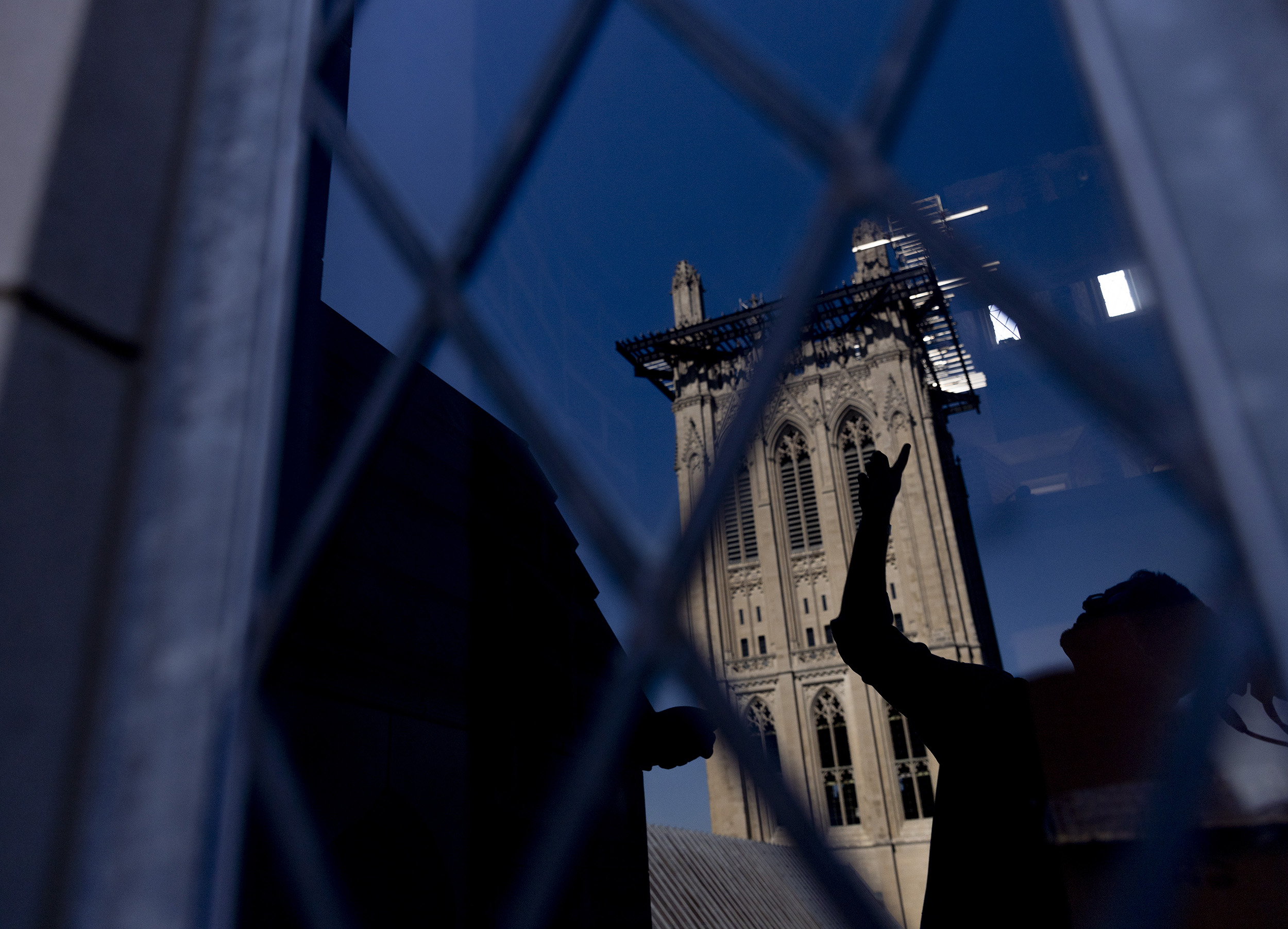
Nearly 120 feet above the National Cathedral grounds, a Dark Lord of the Sith stares down at people peering up trying to spot the one and only Darth Vader.
Vader… on a world-renowned religious institution that held everything from presidential funerals to weekly church services? Why?
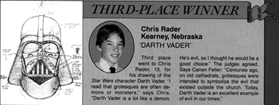
“Go back to 1986, which is the time that these towers were being constructed,” Cathedral spokesperson Kevin Eckstrom told us while we were at the top of the tower. “We had a competition with National Geographic Kids magazine, where kids around the country could design gargoyles.”
Gargoyles and grotesques help guide rainwater away from the building to preserve the masonry. Christopher Rader, a 13-year-old from Kearney, Nebraska, submitted an intricately-detailed drawing to the magazine showing exactly how Vader should look.
“And he was one of the top winners,” Eckstrom said. He actually came in fourth, behind a beast holding an umbrella, a raccoon, and a kid with big ol’ braces. You can see them in the video below.
But Darth Vader is the most popular carving in the whole building, he says, pointing down to a group staring up at us and Vader.
“Every eighth grader who comes in here (on a visit to D.C.) wants to see Darth Vader,” Eckstrom laughed. “That’s actually the only thing they really want to see.”
The Cathedral gets a lot of mileage out of the peculiar carving. It’s so popular, you can buy a bust of the carving at the Cathedral gift shop. Eckstrom also donned the costume for a silly video back in 2015.
It’s hard to see the actual carving of Darth Vader. He’s way, way up there, so bring binoculars, head to this spot, and look up. A nearby sign will help you spot him atop the shadowed “dark side” of the northwest tower. You can also get closer to Vader on the regularly-scheduled Angels and Monsters tower climb tours.
An Original Film Copy Of Star Wars Is Preserved At The Library of Congress
Hardcore Star Wars fans have strong opinions on the 1997 Special Edition re-releases of the films.
While they introduced a new generation of kids to the franchise — including this reporter — it added some derided special effects that in some cases added to the film (the new ending and song in Return of the Jedi) and detracted from it (the Jabba the Hutt scene from “A New Hope”).
Star Wars creator George Lucas was so insistent that the 1997 versions fit his vision, that you can’t commercially watch the original released version of the films pretty much anywhere.
Except at the Library of Congress. If you’re a researcher… and you’re ok with watching it digitally… on a computer screen… in a fluorescent-lit room. The staff has created a digital scan of the original trilogy films the Library acquired through the 1970s and 80s as part of its role in copyrighting.
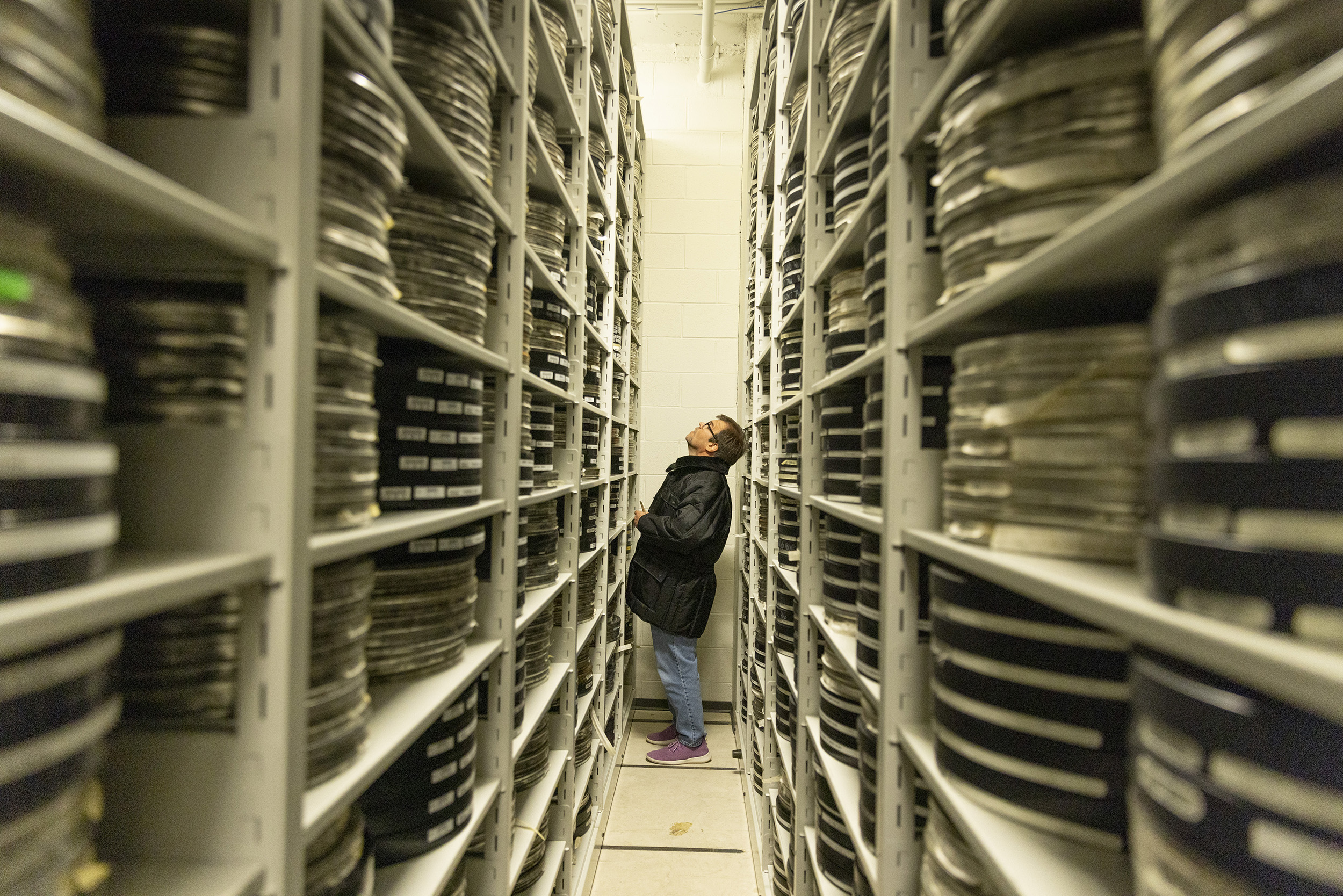
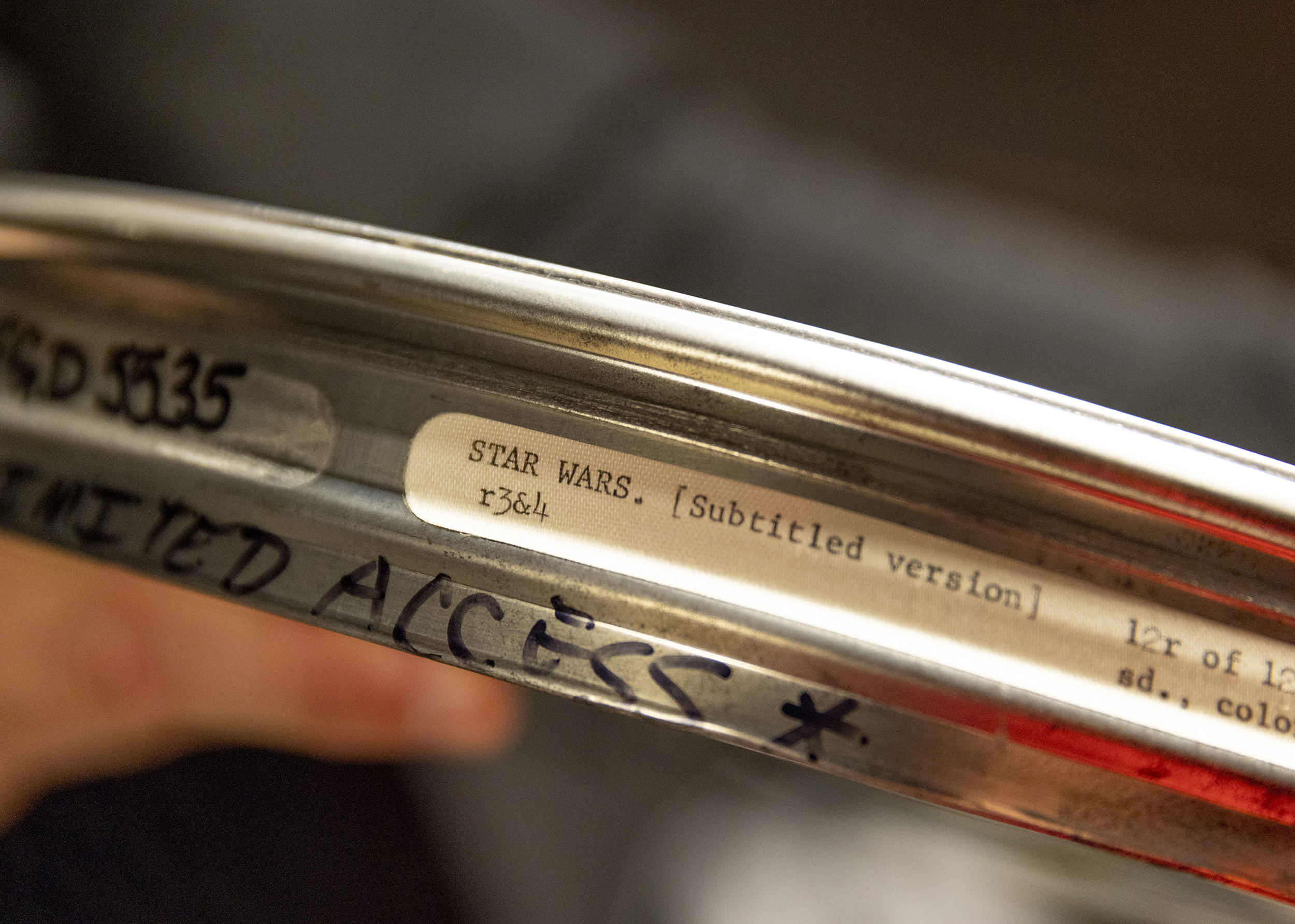
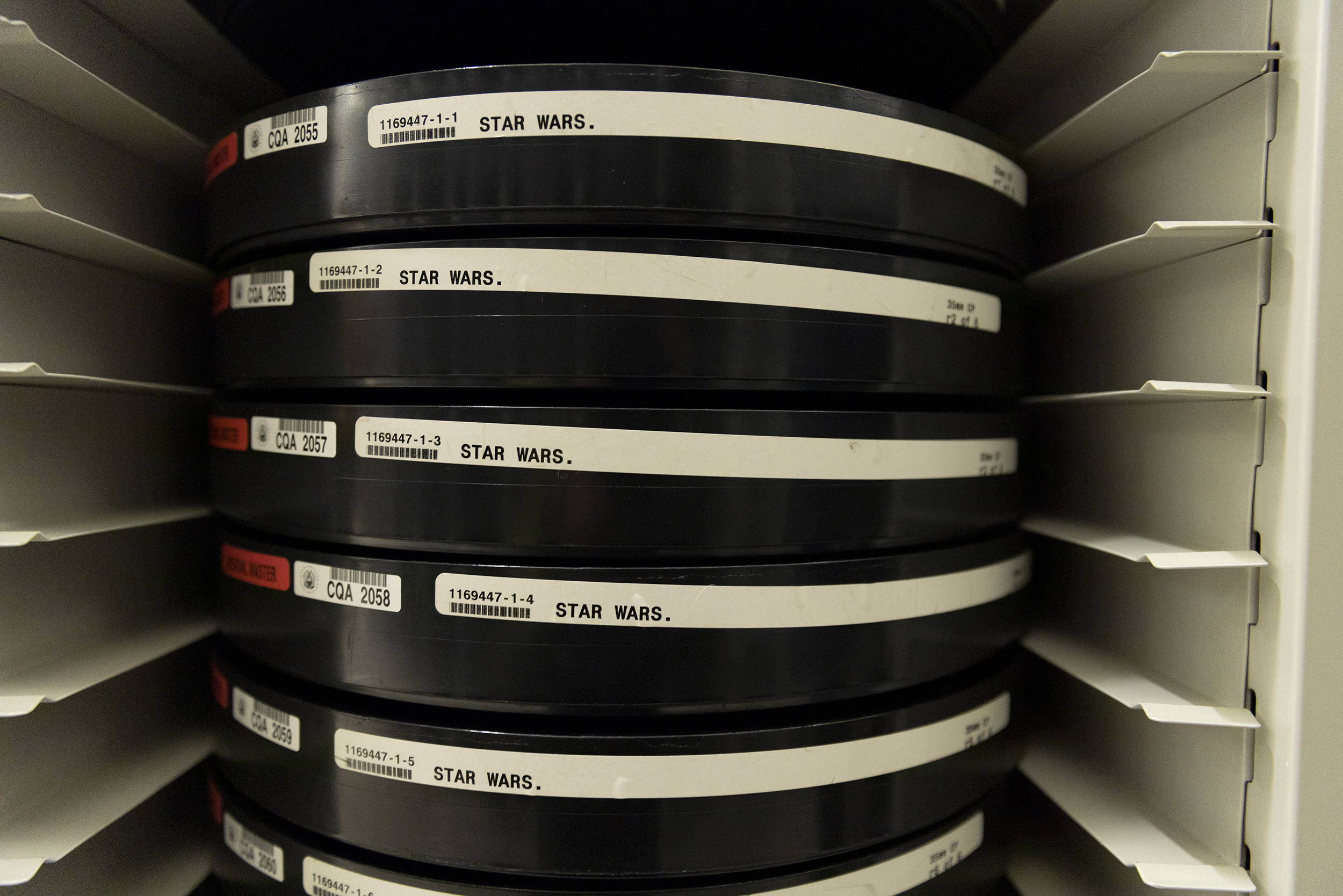
The holy grail – the six reels of “A New Hope”, the 1977 film that was originally called just “Star Wars” – aren’t kept in Washington D.C. They’re on a 12-foot-high shelf in a temperature-controlled room in the Audio and Visual Conservation facility in Culpeper, Virginia.
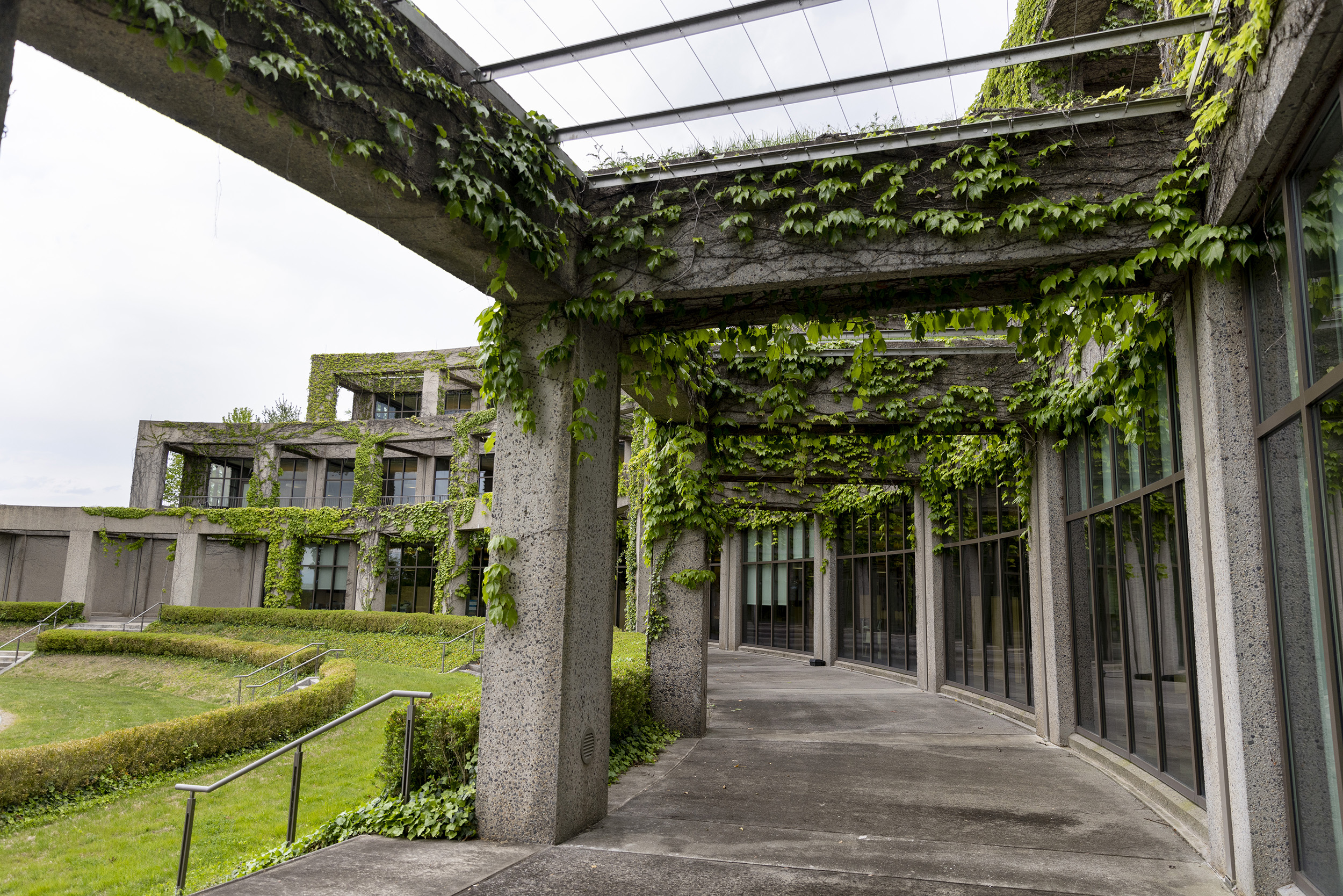
The building, concrete and ivy-covered, looks like it could be a Rebel Alliance base itself. You can even see historic films screened for free regularly at the Packard Campus, as it’s called. Pre-pandemic, they also hosted a once-a-year open house.
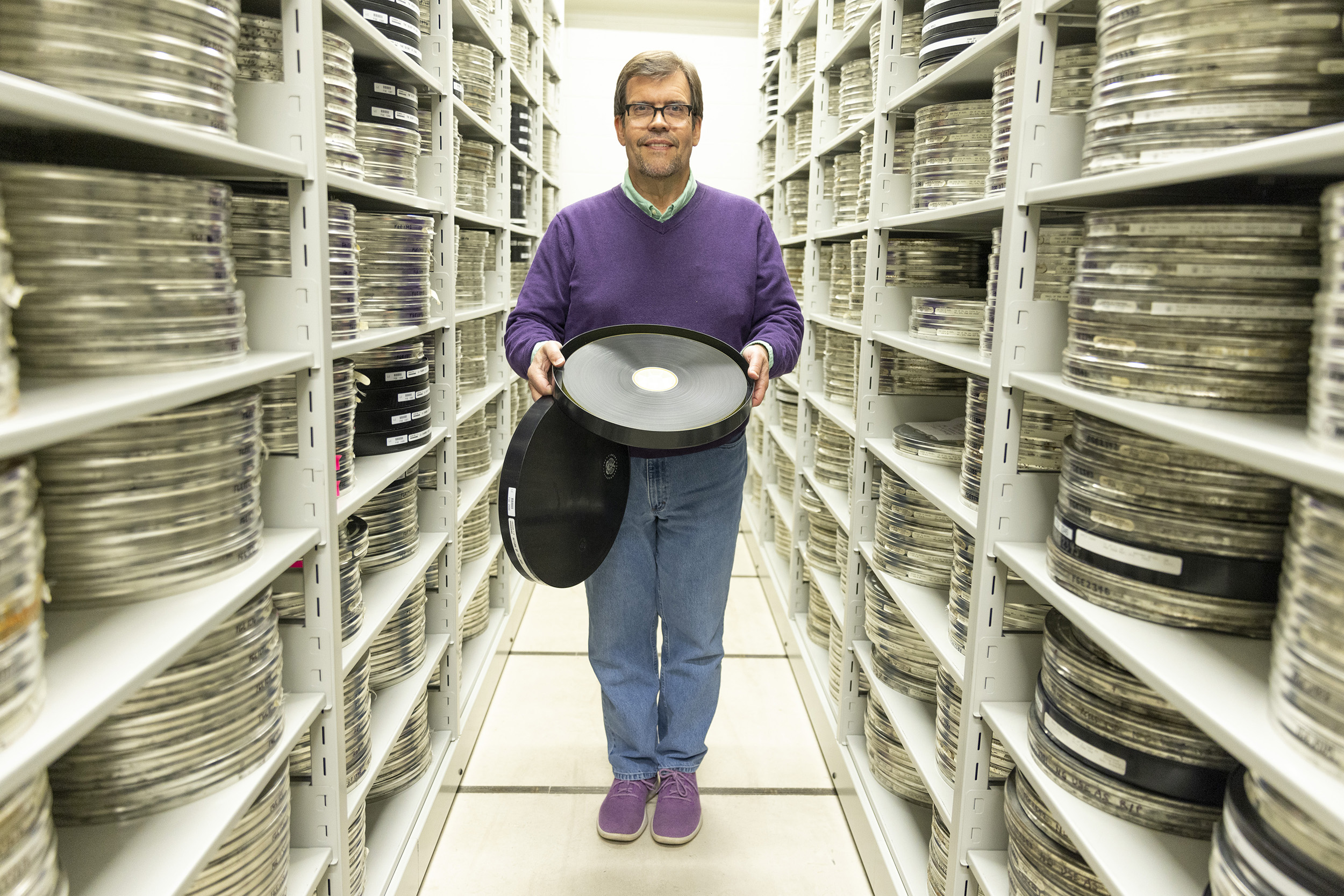
These reels of “A New Hope” were likely shown hundreds of times in theatres before being sent to the Library for preservation, says Mike Mashon, head of the moving picture section at the Culpeper facility. They don’t show these reels anymore so they don’t get damaged.
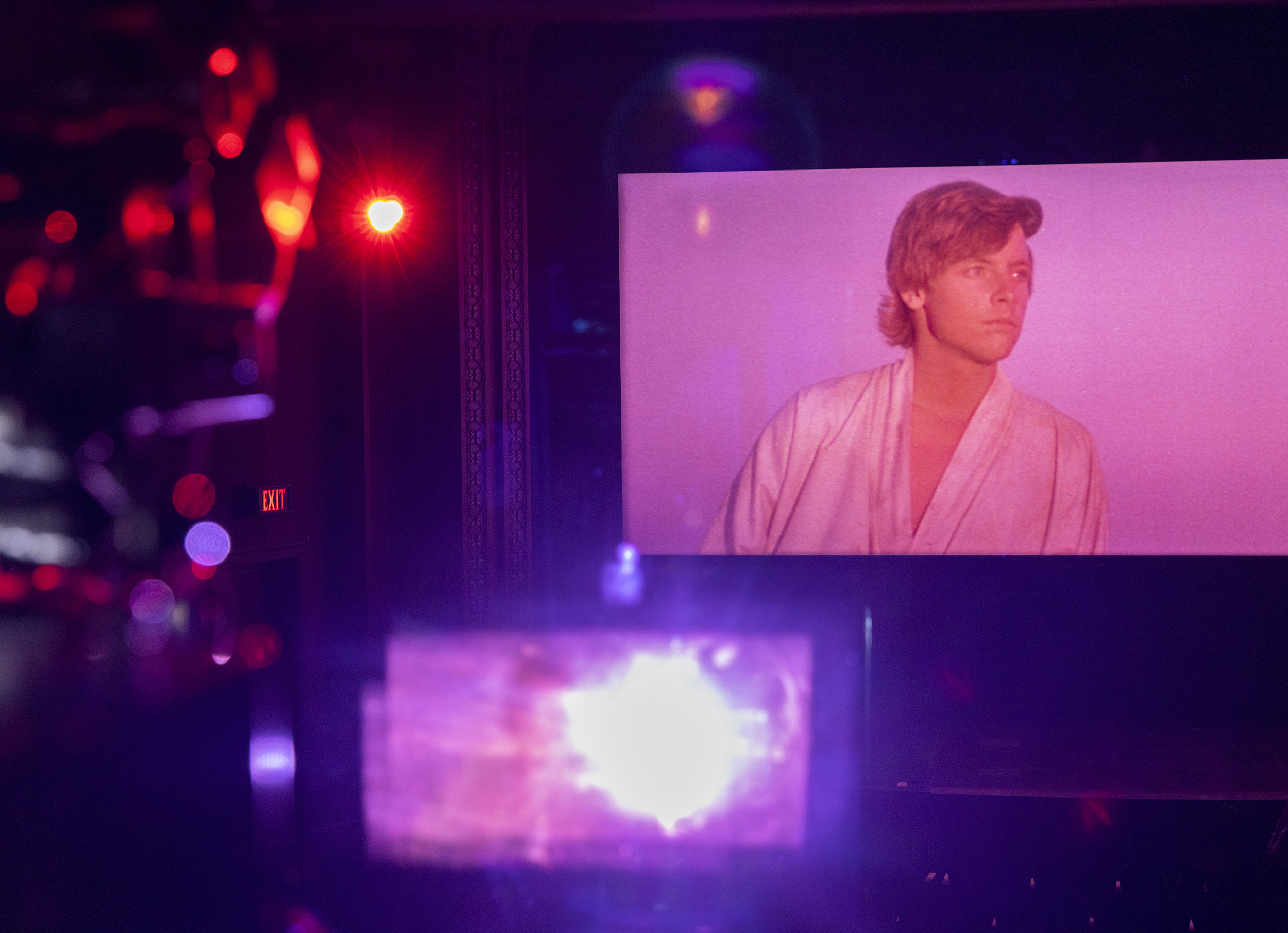
Film does not get better with age. Mashon did show us the closed-caption film from the 1970s on the big screen, but it has noticeable fading.
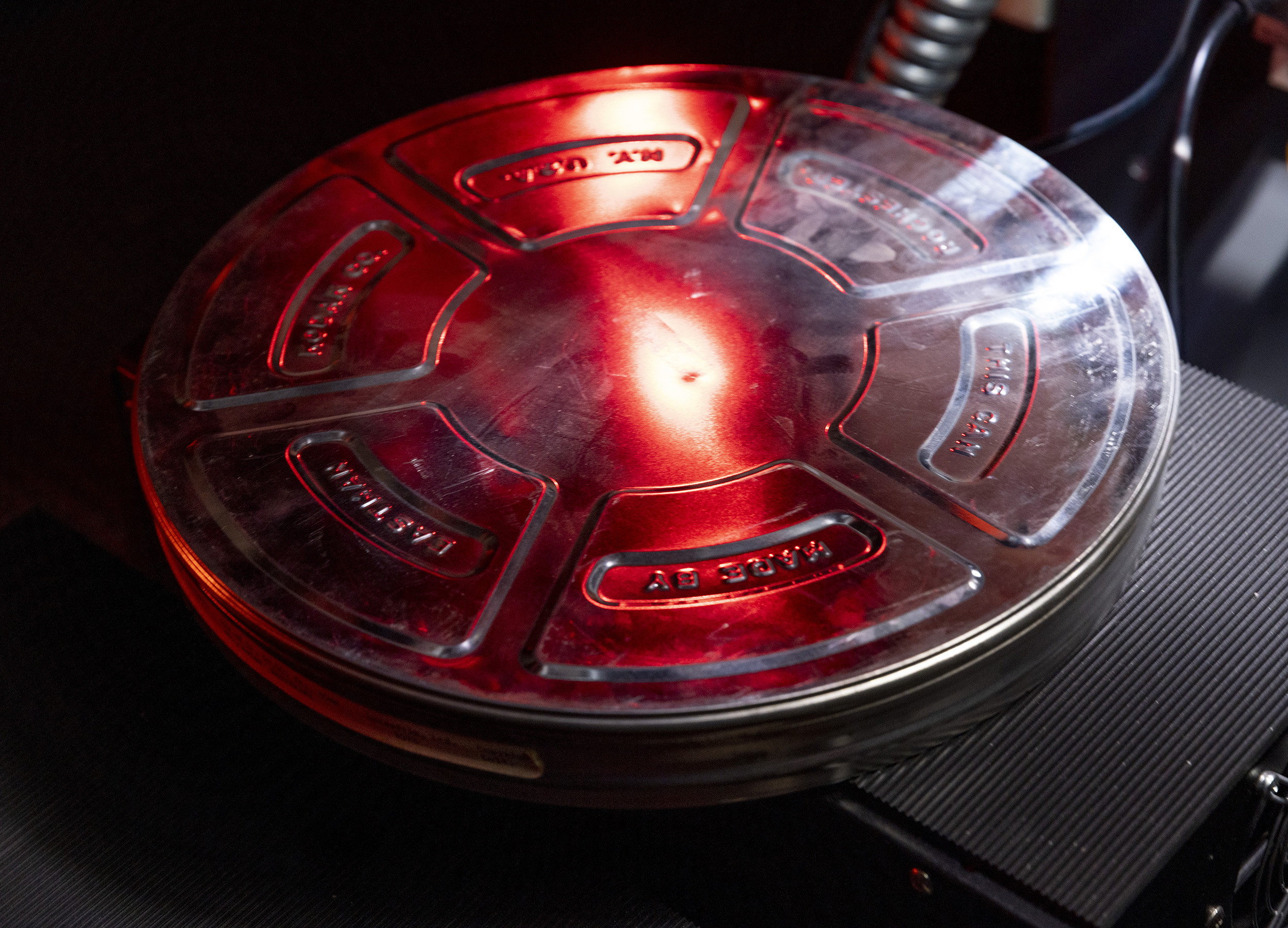
“The film, this print, this faded, is printed on Eastman Color stock, and over time we’ve just noticed that the dye in the print tends to fade away,” Mashon said. “So what you see here is a little pinkish and doesn’t have quite the vibrancy that it used to.
“We can correct that digitally, but we can’t really do anything with that photochemical.”
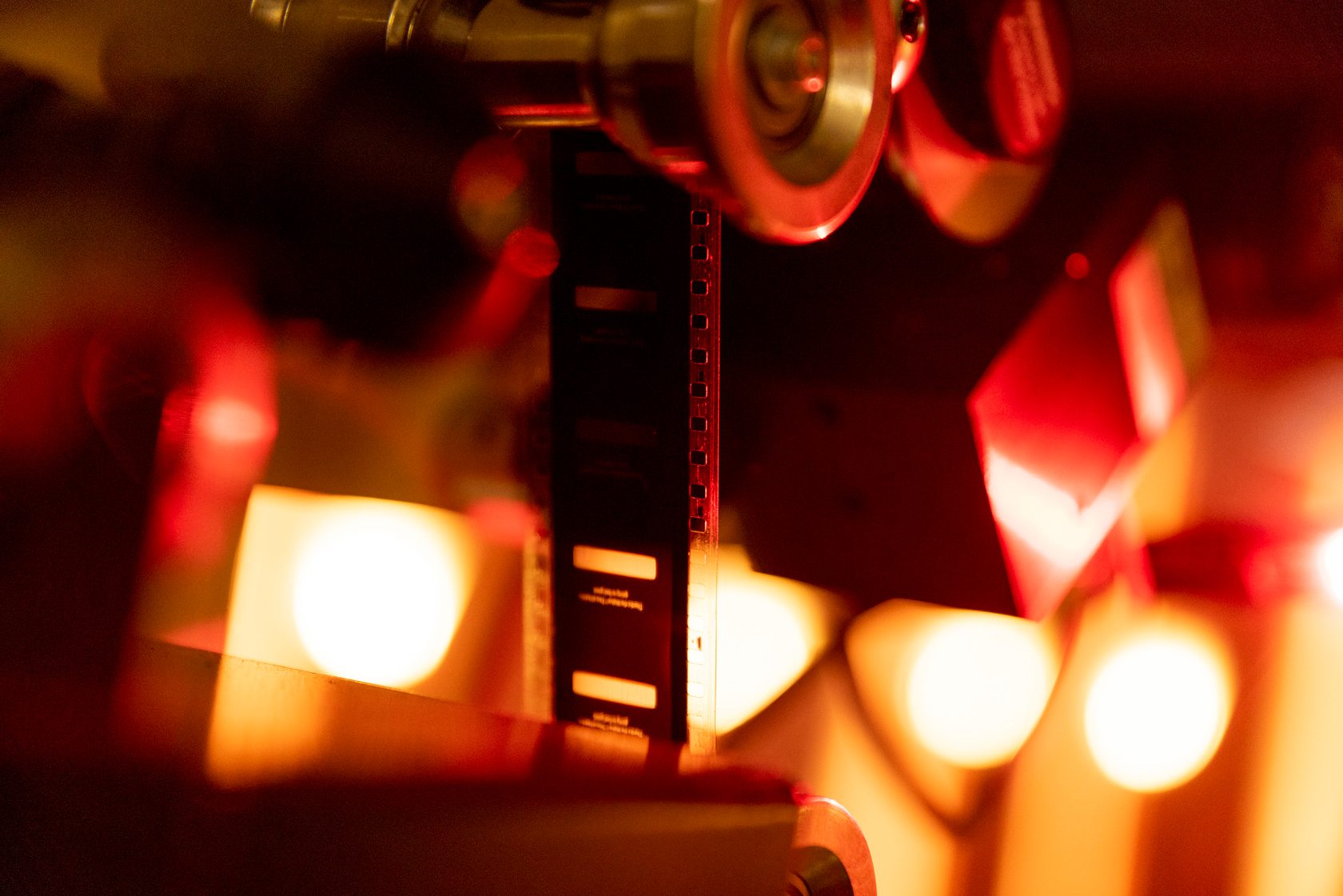
Still, it is incredible to be in the projection booth watching the film roll through the projector, images of Luke Skywalker and Princess Leia flickering through the lens.
Mashon and a team of preservationists make it their mission to preserve what they can, store films in the right temperature and humidity, and scan and digitize the immense archive of 1.8 million films and audio tapes.
“It is the mission of the Library of Congress to preserve this material for future generations,” Mashon says. “We always say our remit is infinity plus a day.
“But all of the things that we’re dealing with they’re transient… film in particular. If you don’t treat it right… if you don’t store it in cold and dry conditions, it can shrink and it can fade. It can crumble to dust in less than a lifetime.”
Properly stored, though, film can last hundreds of years. That’s why Star Wars, and thousands of other films (Mary-Kate and Ashley Olsen’s “New York Minute” sits just slots away from “Empire Strikes Back”) are in what looks like a walk-in freezer you’d see in a restaurant or grocery store.
It is 35 degrees… cold, but not colder than Hoth (that can get to -76 degrees at night, according to canon).
Mahson says this 35mm reel of Star Wars doesn’t list “Episode IV” or “A New Hope” in the opening crawl because, at that point, it was uncertain whether more films were going to be made. This version just sits on the shelf.
“We have other digital copies of Star Wars to show, and this is our only 35 mm print,” Mashon says.
The films stored here are part of copyright. Others are part of the National Film Registry, a Library program that selects 25 films each year “showcasing the range and diversity of American film heritage to increase awareness for its preservation.” All three of the original trilogy are on that list.
The facility has 90 miles of shelving for its collection, and specially-built vaults for the highly flammable nitrate films of the 1930s and earlier.
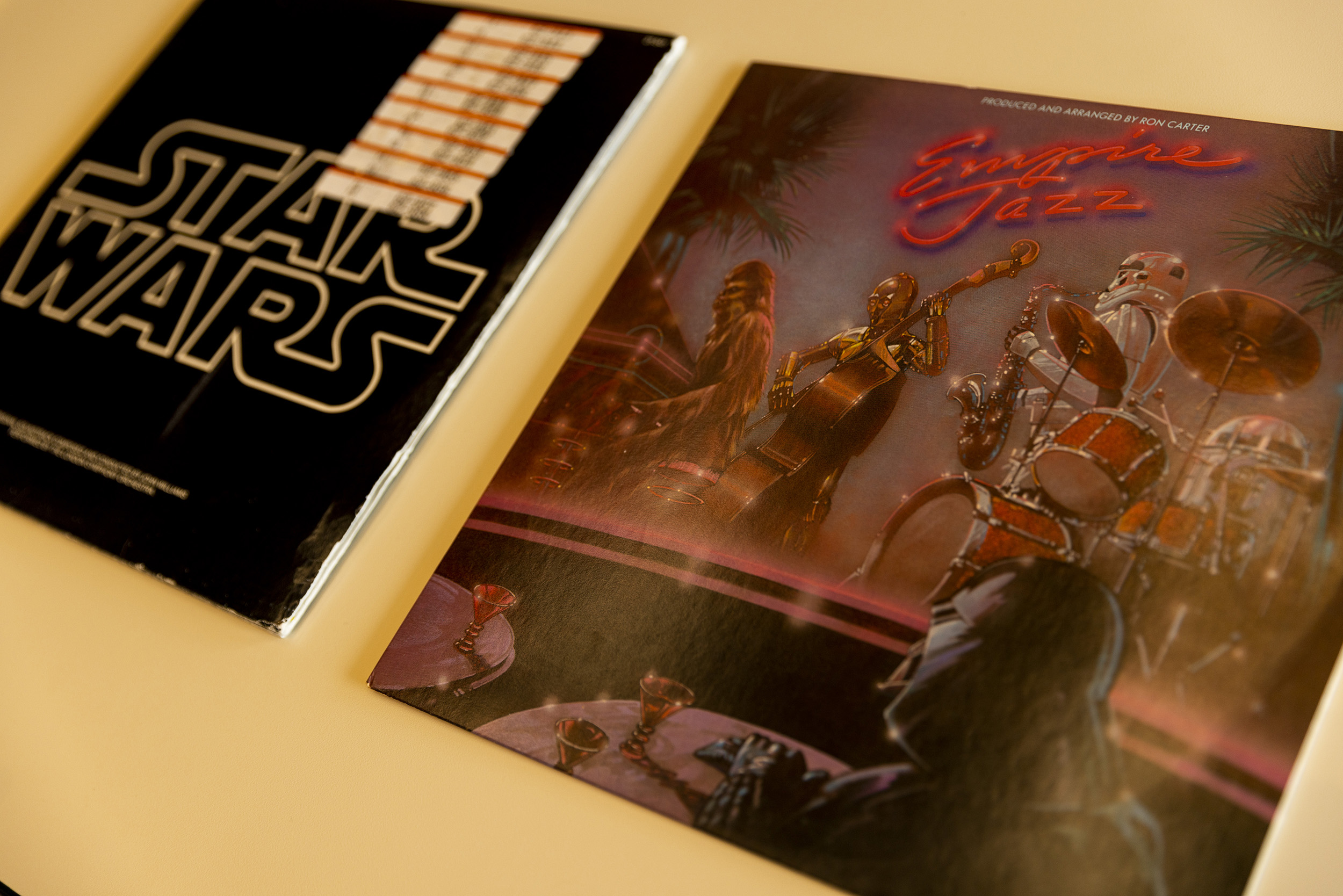
The Library of Congress also preserves music, like the soundtrack LP and a record called “Empire Jazz.” It even has copies of old video games on floppy disks from the 90s and 2000s, including the Fighter computer games and one called “Jar Jar’s Journey” — Mashon’s favorite Star Wars collection item.
“Who would not want to go on a journey with Jar Jar?” he asks.
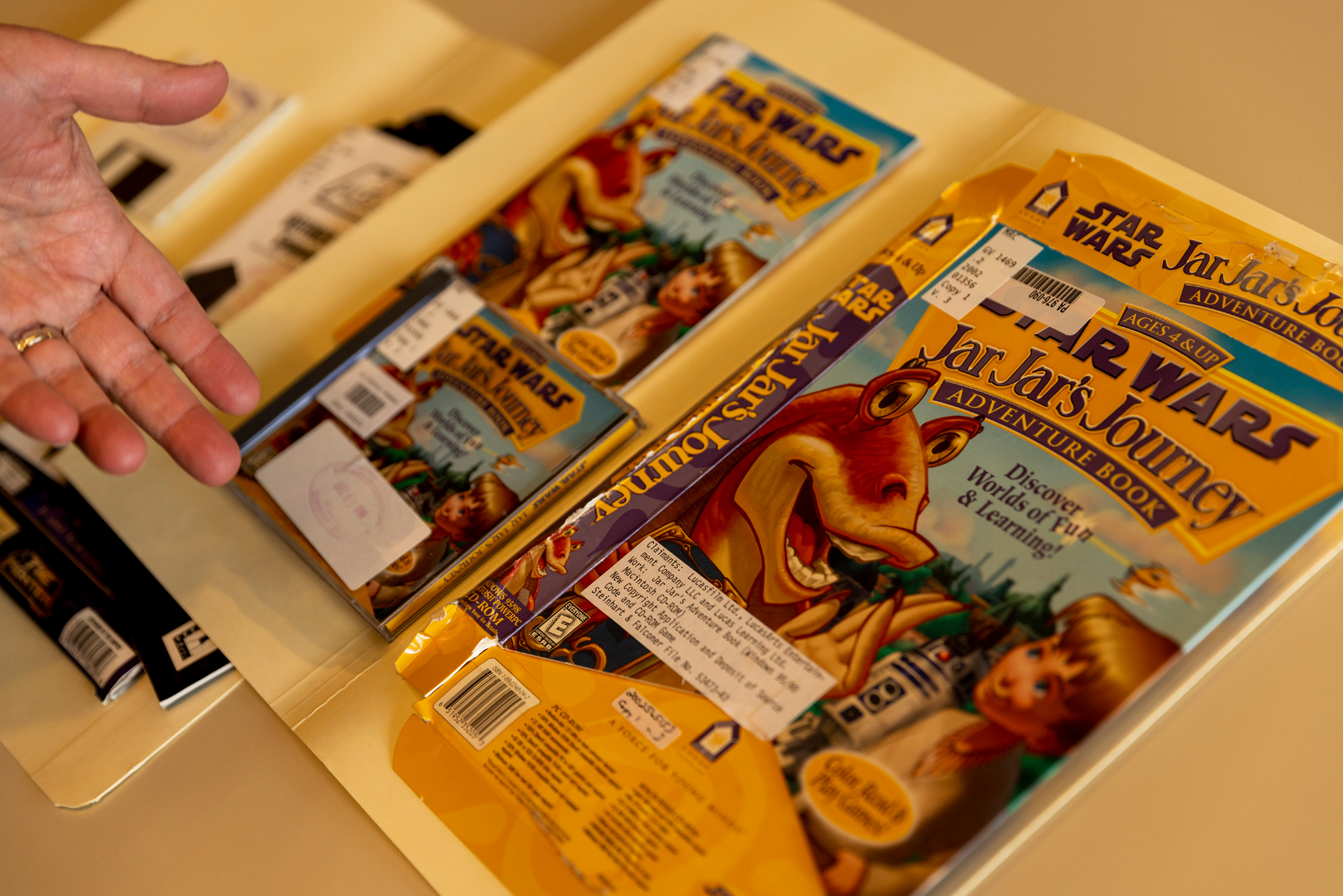
Before we leave, Mashon has to show us one more room. The 24-hour tape digitizing robot room. It was here in 2009 that the team did the first digitization in the new facility: a copy of the much-derided Star Wars Holiday Special.
“Something had to go first, so I thought, why not the Star Wars Holiday Special?” Mashon said. “Given how much George Lucas loves that show.”
(Sidenote, dear reader, George Lucas does not love that absolutely bizarre flop of a TV special and has tried to wipe it off the face of the planet. You can still see it on YouTube though).
Shortly after, Mashon presented five minutes of the Holiday Special at an archivist conference.
“That’s really about all you can take of that show,” he says. “So I play through the opening credits… audience goes nuts. Everybody’s having a great time.
“And then this guy from Lucasfilm comes running up to me afterward, and I’m thinking he’s about to issue a verbal takedown notice on me right now. But instead, he said, ‘That’s really awesome. Don’t tell George.’”
Luke Skywalker Worked At An Annandale McDonald’s
Mark Hamill, the actor who played the most famous Jedi of all, Luke Skywalker, grew up all over the place because of his military family. But he spent some of his high school years in the region. Mark Hamill lived on Killebrew Drive in Annandale, Virginia, and worked at a local McDonald’s when he was 16.
If you don't count paperboy, the time I was hired to play Santa's helper in a department store or the countless backyard puppet/magic/ventriloquist shows I did… My 1st real job WAS at McDonald's in Annandale Virginia when I was 16. #MinimumWageMemories #TheFriesOfSkywalker 🍟 pic.twitter.com/m7UQfvxYNG
— Mark Hamill (@MarkHamill) April 23, 2019
Hamill also attended Annandale High School.
NPR audio play
Lastly, with WAMU/DCist being an NPR member station, we couldn’t end this without mentioning the 1980s Star Wars radio play, partly conceived by the minds of NPR folks in D.C. and people at Lucasfilm.
“We were all walking way out on a plank, I think, keeping our fingers crossed,” a producer said at the time. But it was an overwhelming success. The sleepy little network received 50,000 letters and phone calls in a single week, and there was a 40 percent jump in audience, according to NPR’s history of the play.
You can read about the history of that here.