Jacob Fenston
Update:
D.C. Congresswoman Eleanor Holmes Norton is introducing legislation in Congress that would expand the mission of the National Park Service, aiming to better serve urban residents.
“At the moment, the mission of the National Park Service is limited to simply preserving the land where the parks are, as it currently exists,” Norton tells DCist.
While that’s a noble goal, Norton says, it is not a good fit for many national parks in urban settings. The legislation comes after a report from George Washington University that found national parks in the District don’t serve the needs of many residents: many NPS neighborhood parks in the city have no amenities at all, not even a park bench.
Norton wants to prioritize “active use” of NPS lands in urban areas, meaning more playgrounds, sports facilities, and bike and pedestrian infrastructure. The mission change would only apply in areas designated as urban in the most recent census, and would not impact wilderness areas.
Original:
D.C. is famous for its parks: some of them, like the grassy, manicured National Mall, draw tourists from around the globe. In fact, the District has been ranked number 1 for urban parks in the U.S. by the Trust For Public Land for three out of the past four years.
But in many District neighborhoods, parks aren’t living up to that postcard-perfect image, according to a new report from George Washington University. While D.C. has a lot of park acreage, and lots of money flowing into those parks, the park system is highly unequal and not serving the needs of many residents, the report argues, particularly in less well-off neighborhoods.
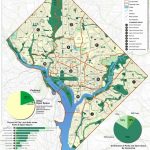
At the root of the problem, according to the report, is the fact the the federal government owns and operates the vast majority of D.C. park land: about 90% of park acreage in the city is owned by the National Park Service, while the remaining 10% is under local control. NPS parks include hundreds of parcels scattered across the city — from the rambling forests around Rock Creek to tiny triangle parks nestled among row houses.
Rachel Clark, the report’s lead author, says there’s a mismatch between the mission of NPS and the needs of city dwellers.
“The NPS mission is really on preservation. It’s about, you know, preserving these massive wilderness reserves, mostly in the western United States, and then historic sites. So they have a lot of regulations that are aligned with that mission, and they really don’t fit well for a lively urban park system,” says Clark, who is policy director at the Redstone Global Center for Prevention and Wellness at GW’s Milken Institute School of Public Health.
Federal ownership of D.C.’s neighborhood parks creates major problems in terms of access, equity, and accountability, according to the report, meaning that while the city’s park system looks great on paper, the reality experienced by residents who want somewhere to play with their kids, go for a hike, walk their dog, or just sit on a bench, is often less than ideal.
NPS spokesperson Katie Liming pushed back against the idea that NPS doesn’t know how to do urban parks.
“While the NPS is famous for wide-open Western landscapes, which the report emphasizes, about two-thirds of national parks are places of historical or cultural importance or recreation-focused parks, many of them in or near cities,” Liming said in an email.
The report “offers sound ideas to consider, and an interesting, but incomplete, perspective on park management in the District of Columbia,” Liming said.
The report recommends transferring much of the park land in the city to the local District government, which is more accountable to residents. Kelly Whittier, another of the report’s authors at GW, says this isn’t meant to put the blame on NPS officials.
“The National Park Service isn’t a bad actor in this circumstance. It’s almost as though everyone is a victim of the system and structure that is in place,” Whittier says.
Inequitable Funding
In the Trust for Public Land park rankings, D.C. gets high scores across the board, but in particular, the city gets high marks for investment in parks, scoring 100 out of 100.
Clark says that score, which averages spending per resident across the city, overlooks an important nuance: funding among the six national park divisions — or superintendencies — in D.C. is highly unequal. The National Mall superintendency, which includes 156 park parcels downtown and in nearby neighborhoods, has a budget of $109,685 per acre. That’s more than 80 times the funding per acre of parks east of the Anacostia River, in predominantly Black neighborhoods.
The Rock Creek Park superintendency, while less well-funded than the National Mall, is budgeted at four times the amount, per acre, as parks east of the Anacostia River. Parks in Northeast and Southeast receive $1,326 per acre, compared to $5,956 per acre in Northwest, where Rock Creek is located.
“When you look at the funding across the entire District, it looks pretty good. But really most of that investment is going to the National Mall, which perhaps isn’t surprising, but it definitely skews our our ranking,” says Clark.
And while it may appear that NPS is lavishing cash on the National Mall, in fact, the entire agency is strapped for money: in the District alone, NPS has a maintenance backlog of $1.9 billion, according to a Department of Interior estimate. Until last year, NPS had not received a funding increase from Congress in a decade.
To fill the funding gap, NPS partners with outside nonprofits. Unsurprisingly, these groups tend to be better-funded in wealthier parts of the city, like Northwest, where Rock Creek Park is located. This exacerbates the already unequal park funding.
Nathan Harrington, executive director of the nonprofit Ward 8 Woods Conservancy, which works to improve forested parks east of the Anacostia River, says part of the reason for the unevenly distributed money is that NPS funding is linked to visitor numbers.
“It becomes sort of a self-fulfilling prophecy. If a park doesn’t have any amenities or facilities, people don’t use it. And then that leads to it not getting resources, which prevents the establishment of amenities that would allow people to use it,” Harrington says.
Ward 8 Woods has been lobbying NPS, so far unsuccessfully, to build more unpaved trails in the forests east of the river.
Who You Gonna Call? Not 311
Santiago Lakatos is an advisory neighborhood commissioner in the U St. corridor. As a local elected official, he hears from his constituents about neighborhood issues ranging from trash collection to broken park benches or fountains.
“There was a fountain that was overflowing — it didn’t drain — and so there was like kind of polluted mosquito-y water there,” he recalls of one recent concern in the neighborhood. It was at Malcolm X / Meridian Hill Park, where the cascading fountain has been malfunctioning off and on for years. Even though it’s a neighborhood park, in the middle of one of the most densely populated areas of the city, it’s owned and operated by the National Park Service. You can’t just call 311 to report a problem, like you could with a District-owned park. It requires navigating a federal bureaucracy.
To get in touch with NPS, you have to first know which superintendency the park is part of. D.C. national parks are broken up into six superintendencies, including one — the C&O Canal — that’s headquartered more than 70 miles away in Maryland.

Lakatos emailed a photo of the mosquito-y fountain to someone at NPS, but didn’t hear back. “I think I sent it to the wrong person because I was kind of just spitballing there.”
When Lakatos tweeted about the mosquito-y fountain someone else from NPS finally reached out.
“The point I’m trying to get to is, that’s not an efficient way to run a public service,” says Lakatos.
If you know where to look, there is an interactive map of D.C. area national parks, which will tell you which superintendency your local park is part of and whom to contact. But many of these parks, especially the smaller ones, don’t have signs. Many residents may assume their local triangle park is owned by the local government, and try to use the local 311 system to get problems resolved.
“If you put in a request for NPS land, it will be closed as outside of the District’s jurisdiction,” says Clark. “At the same time, NPS doesn’t have a system at all. You can kind of email if you find an email address on their website, but it’s pretty inconsistent of whether anyone gets back to you.”
One of the recommendations in the report is to integrate NPS into the District’s 311 system, so complaints could easily be routed to the correct agency.
Dog Parks Are Nowhere and Everywhere
Because the mission of NPS focuses on preservation, the agency is often at odds with District residents who want to use their parks now, not in future generations, the report argues. One of the best examples of this dynamic: dog parks.
At Lincoln Park on Capitol Hill, there has been long-simmering conflict over the issue. NPS does not allow off-leash pets in the 7-acre square, and at the same time refuses to build a designated dog park. With no official area for dogs, the entire park becomes an unsanctioned dog park, leaving large dusty patches in the lawn.
“The dog parks are an example of where NPS’s mission and commitment to preservation actually undercuts preservation,” Clark says.
It’s not an ideal solution for dog owners, or for people who want to enjoy the park without having Fido crash their picnic. Years ago, the Lincoln Park dog kerfuffle made the news when the husband of a White House spokesperson ended up in jail after flouting the leash law.
Peter McMahon was issued a $25 fine by a park police officer in 2007. McMahon is married to Dana Perino, who was at the time deputy press secretary for President George W. Bush. When he mailed his payment to the wrong park police address, a warrant was issued for his arrest.
In 2010, On April Fools Day, the Hill Is Home website spoofed the ongoing ado about dogs, writing that NPS was planning to convert the whole square into “the District’s largest dog park.”
The parody cited President Abraham Lincoln’s famous quote about avoiding conflict: “… better to give your path to a dog than be bitten by him in contesting for the right.”
Blame L’Enfant
D.C.’s strange pattern of park management is a vestige of the time before Home Rule, when the federal government was the local government, and residents had no vote at all in how their city was run.
Nowadays, D.C. residents can elect their local lawmakers and mayor, but laws are still subject to approval by Congress — which recently overturned a D.C. bill for the first time in decades.
“The District isn’t seen as a place where people actually live and residents do not have full citizenship because of that,” Clark says.
Federal park ownership is just one more way District residents are disenfranchised, she says. It’s something that wouldn’t necessarily be solved by D.C. statehood, Clark says, but it couldn’t hurt to have a voting member of Congress.
The current shape of the District’s park system can be traced back even further, to the the city’s very beginnings, when Pierre L’Enfant drew up the first plans for the new capital city. L’Enfant’s diagonal avenues, terminating in circles, created numerous small triangular parks throughout the city.
In the 20th century, park planners at agencies including the U.S. Commission of Fine Arts and the National Capital Planning Commission have prioritized aesthetics over activity, according to the report, favoring “a sort of stately vacancy, with large empty spaces devoid of people and best viewed from long distances.”
The report includes numerous recommendations for how to improve the situation, such as better coordination between NPS and the local Department of Parks and Recreation. In addition, the report says much of land outside the National Mall could be better managed under local control. This could be accomplished without congressional action, report authors say, through a transfer of jurisdiction.
While local park ownership would present a new set of challenges, especially at a time when the D.C. budget is tight, it would also open up some new avenues of funding that are not available to federal parks, Clark says.
Nathan Harrington, with Ward 8 Wood agrees that local control would improve D.C.’s park system.
“I think D.C. government is naturally more responsive to the concerns and desires of residents,” Harrington says.