Martin Austermuhle
The D.C. Council on Tuesday gave initial approval to a $19.7 billion budget for 2024 crafted under challenging financial conditions for the city, with lawmakers touting increases in funding for key housing programs while also enacting measures they say will help revitalize the struggling downtown.
But there was also debate on how to strike the right balance between supporting owners of downtown office buildings that have seen rapidly declining property values as remote work has remained stubbornly high and what advocates say are pressing needs for low-income residents, from increasing the value of food benefits to fighting the high cost of housing.
Ultimately, a majority of lawmakers came out against a proposal to extend a high tax rate on big land deals and direct resulting revenue toward anti-poverty programs, arguing that as the city faces economic headwinds it needs to remain sensitive to the needs of struggling businesses and property owners.
Tuesday’s vote capped off a two-month-long budget season that started in late March, when Mayor Muriel Bowser unveiled her proposed spending plan for the 2024 fiscal year, which kicks off Oct. 1. Faced with expiring federal COVID-19 aid and a drop in expected revenue caused in large part by decreases in commercial property values, Bowser said the budget would be one of the tightest in the last decade. She proposed cuts to numerous agencies and programs, as well as the elimination of thousands of vacant positions across the government, while also floating increased tax breaks for downtown property owners converting office buildings to residential.
But lawmakers were quick to recoil at Bowser’s proposed budget, criticizing her cuts to social services and housing programs. Nowhere was that criticism more evident than on the city’s Emergency Rental Assistance Program, or ERAP, which the mayor proposed funding at $8 million — an 80% decrease from the current year’s funding of $43 million. Bowser insisted that the need had decreased with the city’s economy recovering and unemployment rates going down. But multiple lawmakers responded that rents remained high and that the current year’s funding was completely spent down within six months.
After weeks of work, the council was able to restore ERAP’s funding to $43 million, as well as add 230 new housing vouchers for people experiencing homelessness (Bowser had not funded any). They also reversed the mayor’s proposed cuts to a program that offers free legal assistance to people in landlord-tenant court, and found money to restore funding the Baby Bonds program, which Bowser had zeroed out. They also increased funding for dozens of individual schools across the city, added funding to increase pay for charter school teachers, restored funding for organizations that work with victims of domestic violence, and saved three Circulator bus routes Bowser proposed cutting.
“In March we were confronted with a budget that decimated funding for [social services],” said Councilmember Janeese Lewis George (D-Ward 4) on Bowser’s proposed budget, during Tuesday’s debate. “Every week my office fields dozens of calls from people facing eviction, calling for safer streets, fully funding schools, and government services that work well. So many of these priorities were put at risk.”
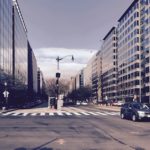
A significant point of contention that arose during budget deliberations revolved around downtown D.C., specifically Bowser’s plan for a new K Street Transitway that included dedicated bus lanes. The council pulled the $115 million she set aside for the project in favor of a plan to make Metrobus free within city limits, prompting aggressive pushback from Bowser and some in the business community. She also raised objections to a council proposal for a $2 “congestion charge” on Uber and Lyft rides in and out of downtown during rush hour, with the revenue set to pay for 24-hour service on 13 Metrobus routes.
The fare-free Metrobus fell apart amidst concerns from the Metro board, and the council ultimately settled instead on a 25-cent surcharge on all rideshare trips throughout the city to help fund the late-night Metrobus service. But Bowser’s K Street Transitway plan was left on the shelf, with the council directing more money towards creating what lawmakers said was a new and better design for the roadway.
“I am committed to making sure we see a K Street Transitway for the downtown for our future,” said Councilmember Charles Allen (D-Ward 6) on Tuesday, arguing that the design favored cars over other modes of transportation and had been pulled together before the pandemic hit. “But it is critical that we think of the K Street we need for the future, not the past.”
The debate over the fate of downtown — and how much help the city should give property owners to revitalize the area — continued on Tuesday, when Councilmember Zachary Parker (D-Ward 5) proposed an amendment that would have extended a high tax rate on big land deals for four more years and directed the revenue to a number of anti-poverty programs, including increasing food benefits and creating a new child tax credit for middle-income families.
“I have asked a question: Who is the District’s comeback for? It is not by happenstance we see concentrated poverty generation after generation,” he said, arguing that downtown building owners could forego some money to benefit government programs for low-income residents. “I reject the premise we don’t have enough money. I reject the premise that certain communities have to do without.”
But Parker’s proposal drew concern from a half-dozen of his colleagues, who worried that making a last-minute tax change could hurt building owners and investors, thus further delaying the revitalization of downtown and creating a downward spiral of decreasing commercial property values and tax revenue for the city.
“I believe it’s tempting to make decisions to serve these immediate needs, but we cannot ignore the long-term effects of these decisions,” said Councilmember Brooke Pinto (D-Ward 2). “We’re charting a path that will lead to even more significant [budget] cuts.”
Faced with growing opposition from his colleagues, Parker ultimately withdrew his amendment.
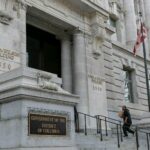
Another note of concern came from Councilmember Trayon White (D-Ward 8), who held a press conference outside the Wilson Building ahead of the budget vote to decry what he said was unequal funding for projects east of the Anacostia River. He proposed an amendment to increase funding for a number of school and recreation center renovations in wards 7 and 8, but later withdrew it when he was asked to hold off until later this month to better clarify his intentions.
“This is a moral document, and we have to ensure that we are inclusive and equitable in our budget decisions,” he said during the council debate, ultimately voting “present” while the rest of his colleagues voted in favor of the amended budget.
A second and final vote on the 2024 budget is scheduled for May 30.