Amanda Michelle Gomez
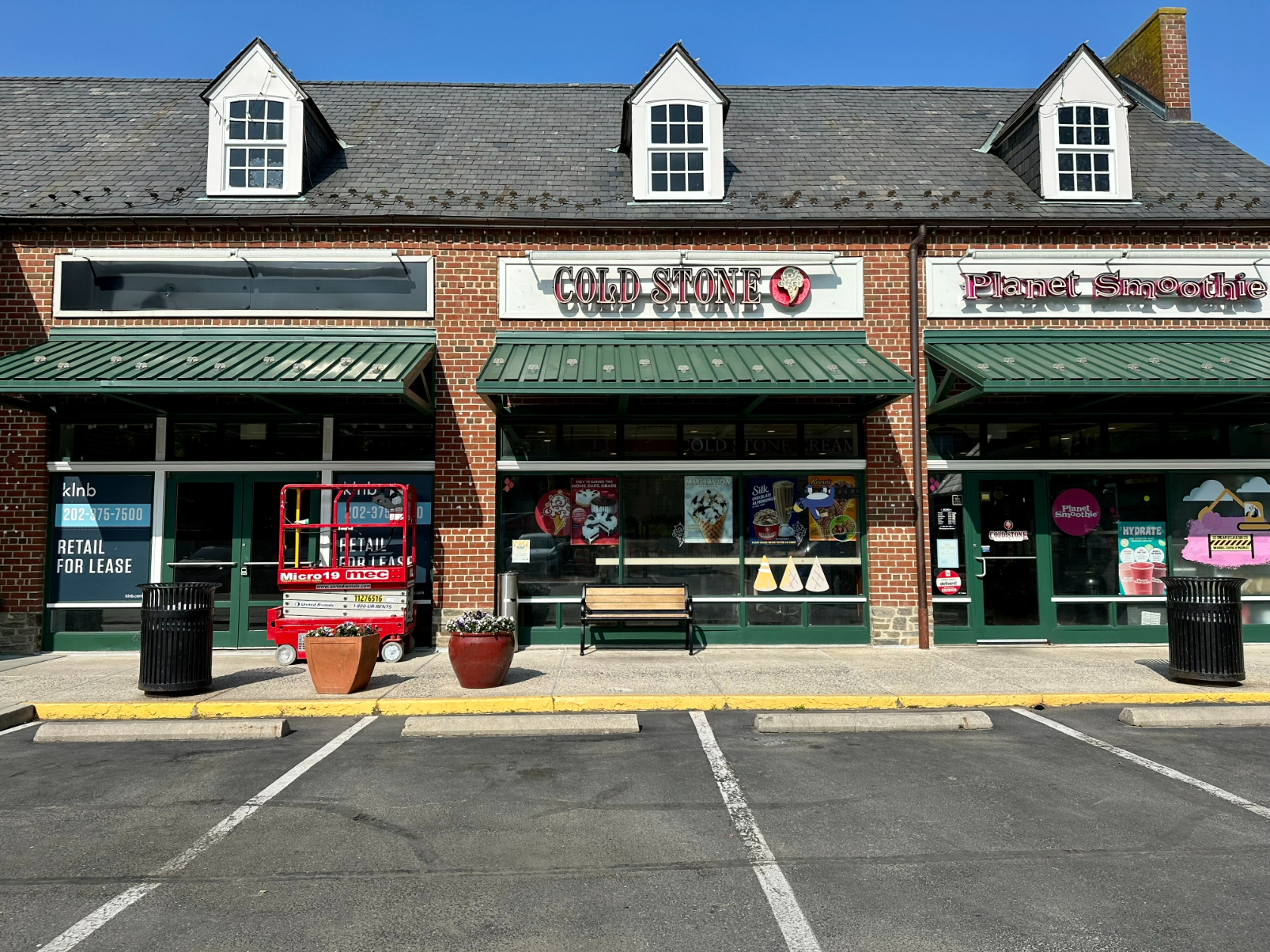
For three decades, Cleveland Park and Woodley Park have set limits on how many bars and restaurants can operate in the Northwest D.C. neighborhoods. Now, for the first time, there’s a movement to change those rules.
There’s growing interest among residents to ease the restaurant cap, or even remove the zoning restriction entirely. A key government agency is listening — the D.C. Office of Planning released a draft report in early May calling for a “reexamination” of the cap, which says no more than 25% of the linear street frontage within a particular zone can be occupied by bars and restaurants.
“The intent behind that restriction was to encourage a variety of businesses in the zone beyond just eating and drinking establishments,” says Planning Director Anita Cozart. “When we began working with residents and businesses in June 2022, they let us know they had concerns about the requirement. … That it, over time, had become a restriction on business growth and redevelopment potential.”
Cozart’s office has been meeting with neighbors as part of a greater effort to implement the city’s new Comprehensive Plan, which enables more development, particularly in neighborhoods near the Metro.
The neighborhoods have historically excluded multifamily buildings and minimized commercial uses, leading to low population growth and high household incomes as compared to the rest of the city, according to the planning office’s draft report. Planners’ proposal for new development guidelines, which include the reexamination of the restaurant cap, aim to sustain and grow the existing commercial corridors along Connecticut Avenue as well as support more residential housing at various income levels.
“They are really supporting Mayor Bowser’s housing goals of 36,000 housing units by 2025,” Cozart says of her office’s newly released development guidelines. “In particular, they are demonstrating how thoughtful design and development can build on the neighborhoods’ historic character.”
Options on the table include increasing the percentage of retail space that can be devoted to bars and restaurants, from 25% to 50% or 75%, or removing the cap entirely. Because the neighborhoods are also historic districts, the Office Of Planning will have to get input from the Historic Preservation Review Board before releasing a final proposal. The public can also weigh in. A final recommendation then goes to the Zoning Commission, an independent body that votes on whether to implement the change.
Cozart predicts a change in the zoning regulation pertaining to these neighborhoods could happen in under a year.
Public discussion on the topic has already begun, however. Even before the Office Of Planning published its draft guidelines, the Advisory Neighborhood Commission for Cleveland Park and Woodley Park voted in March to remove the restaurant cap. During a contentious two-hour-long meeting, all but one hyper-locally elected official voted in favor of the resolution because they think the zoning restriction has not adapted to changing circumstances.
E-commerce has decimated brick-and-mortar retail, leading to vacant storefronts, the resolution says. Bars and restaurants could move into shuttered retail stores, the resolution continues, helping to liven up the neighborhood while also attracting people from outside the neighborhood. It cites Uptown Theater, which closed in March 2020 and remains empty.
Commissioner Rick Nash voted no and tried to table the resolution because he did not think neighbors were given enough notice to offer feedback. “I’ve heard from a number of community members that this feels like a very rushed process,” he said during the meeting. “That includes those who want to see no change, those who are open to some adjustment of the caps, and even several who might support the lifting of the cap, but only after a robust public process that considers alternatives.”
ANC3C Chair Janell Pagats pushed back at the time, saying they published notice of the vote and the resolution itself a week in advance and received several dozen emails from community members. She said a majority supported removing the restaurant cap.
ANC3C Vice Chair Hayden Gise supported the resolution because she wants her neighborhood to open more locally-owned restaurants, particularly after D.C. voted to phase out tipped minimum wage for many bartenders and servers.
“Specifically in light of Initiative 82 being passed, I think we have a real chance right now to make restaurant jobs living-wage jobs. And I would love to see living-wage jobs coming to Woodley Park,” Gise tells DCist/WAMU. She also advocates for building more affordable housing, so people have the opportunity to live where they work.
Pro-development advocacy group Cleveland Park Smart Growth has been one of the main champions of lifting the restaurant cap. The group’s chair, Bob Ward, says the zoning restriction discourages bars and restaurants from joining the neighborhoods.
“There are a lot of places where restaurateurs can open up business in D.C. That wasn’t the case 35 years ago. There were a lot fewer,” he says. “Now, there’s such competition. Why would we add this extra hurdle for a business to open up in a place where they want to come?”
Ward says bars and restaurants add to the vibrancy of a neighborhood. He was drawn to live in the Cleveland Park neighborhood roughly 20 years ago, he says, by the now closed Palena restaurant — and being within walking distance of both that restaurant’s renowned burger and Rock Creek Park. But the beloved haunt also had to negotiate with the neighborhood’s zoning restriction. When it expanded to the neighboring vacant property in 2010, it bumped up against the cap — so Palena opened a market in the adjacent storefront and added more restaurant seating behind it, attached to the original space, to adhere to the street frontage regulation. (Palena closed in 2014.)
Ward says the neighborhood’s restaurant limits were also the reason that now-shuttered Ripple opened its adjacent bakery.
“Jumping through hoops to accommodate these rules was just a little cuckoo,” Ward says.
Ward estimates that Cleveland Park is currently just under the cap, with roughly 943 feet out of the neighborhood’s 3,773 feet of commercial street frontage, or 24.99%, occupied by bars and restaurants.
“Someone’s doing that math. And it’s literally a spreadsheet,” says Ward.
Some neighborhood restaurant owners also support lifting the cap, including Mark Bucher, who opened Medium Rare on Connecticut Avenue in Cleveland Park 11 years ago. He says he didn’t face problems with the cap because Medium Rare took over an existing restaurant space. But he wants to encourage more bar and restaurant openings, particularly during a challenging time for the industry.
“The more restaurants in an area, it means the tide rises for all. It’s more active. There’s other things to do. If one restaurant has a wait, someone will go to someone else’s bar and wait till they get their seat, and vice versa,” Bucher tells DCist/WAMU. “It’s more of a dining destination or a dining block, which is what Cleveland Park used to be, by the way. But that is good for everyone. Being a lone island is not great. You always want people around you.”
Restaurateur Ashok Bajaj agrees with Bucher. He owns two restaurants in Cleveland Park. He doesn’t know if lifting the cap means more restaurants will actually open, because there are other considerations, such as the high cost of rent in the area. But he doesn’t think the change in zoning will hurt.
“Let more restaurants come in. I think it only helps everybody in the neighborhood,” he tells DCist/WAMU. “[It] becomes more of a thriving and livable neighborhood.”
Few neighborhoods in D.C. have a similar zoning restriction; Cathedral Heights and Takoma are the only others, according to the planning director. The city has never considered changing the zoning restrictions on bars and restaurants until now, says Cozart. Other neighborhoods have made it easier for bars and restaurants to open, including nearby Adams Morgan, where the Advisory Neighborhood Commission voted to remove the liquor license cap on restaurants in 2014 and ease the liquor license cap on taverns just over a week ago.
The Office Of Planning is asking for community feedback on the restaurant cap in Cleveland Park and Woodley Park, as well as the other development guidelines, until May 26.