Elliot C. Williams
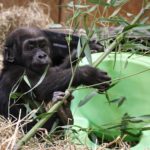
It’s not every day the Smithsonian’s National Zoo and Conservation Biology Institute welcomes a baby gorilla. In fact, it’s been five years since the zoo staff got to celebrate a newborn western lowland gorilla — a critically endangered species.
That all changed early Saturday morning, between midnight and 6:15 a.m., when 20-year-old mother Calaya and 31-year-old father Baraka gave birth to their second infant, who is yet to be named.
“Animal care staff have observed Calaya nursing the infant who has been clinging closely to its mother, and they are cautiously optimistic that the newborn will thrive,” National Zoo staff said in a statement.
The staff is currently letting Calaya bond with her baby without interruption, so they haven’t determined the baby gorilla’s sex. Videos released by the zoo show Calaya cradling the newborn in the Great Ape House, which is closed until May 30 to provide privacy for the family.
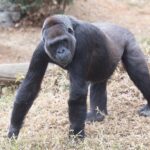
The gorillas have access to private areas that are separate from the main exhibit, so visitors may not see the newborn at all times. If Calaya and her child are out of view, the zoo says the rest of its gorilla troop — Baraka, Mandara, Kibibi, and Moke — may be in the Great Ape House main space. The zoo also hosts a “Meet a gorilla keeper” live session at 11:30 a.m. daily.
The Association of Zoos and Aquariums recommended Calaya and Baraka breed last September, according to their Species Survival Plan. This is their second offspring — Moke, the newborn’s brother and Baraka and Calaya’s first offspring, celebrated his fifth birthday on April 15.

Poaching and extraction of the metallic mineral coltan from areas in the Democratic Republic of the Congo have dramatically decreased the gorilla population in Africa — scientists estimate that in the last quarter century, the wild western lowland gorilla population has dwindled by roughly 60%.
“Recycling electronics that contain tantalum — including cell phones, computers, tablets, cameras, gaming consoles, hearing aids and GPS navigation systems — can help protect gorilla habitat by greatly reducing the demand for more expansive coltan mining,” the National Zoo said in a statement.