Héctor Alejandro Arzate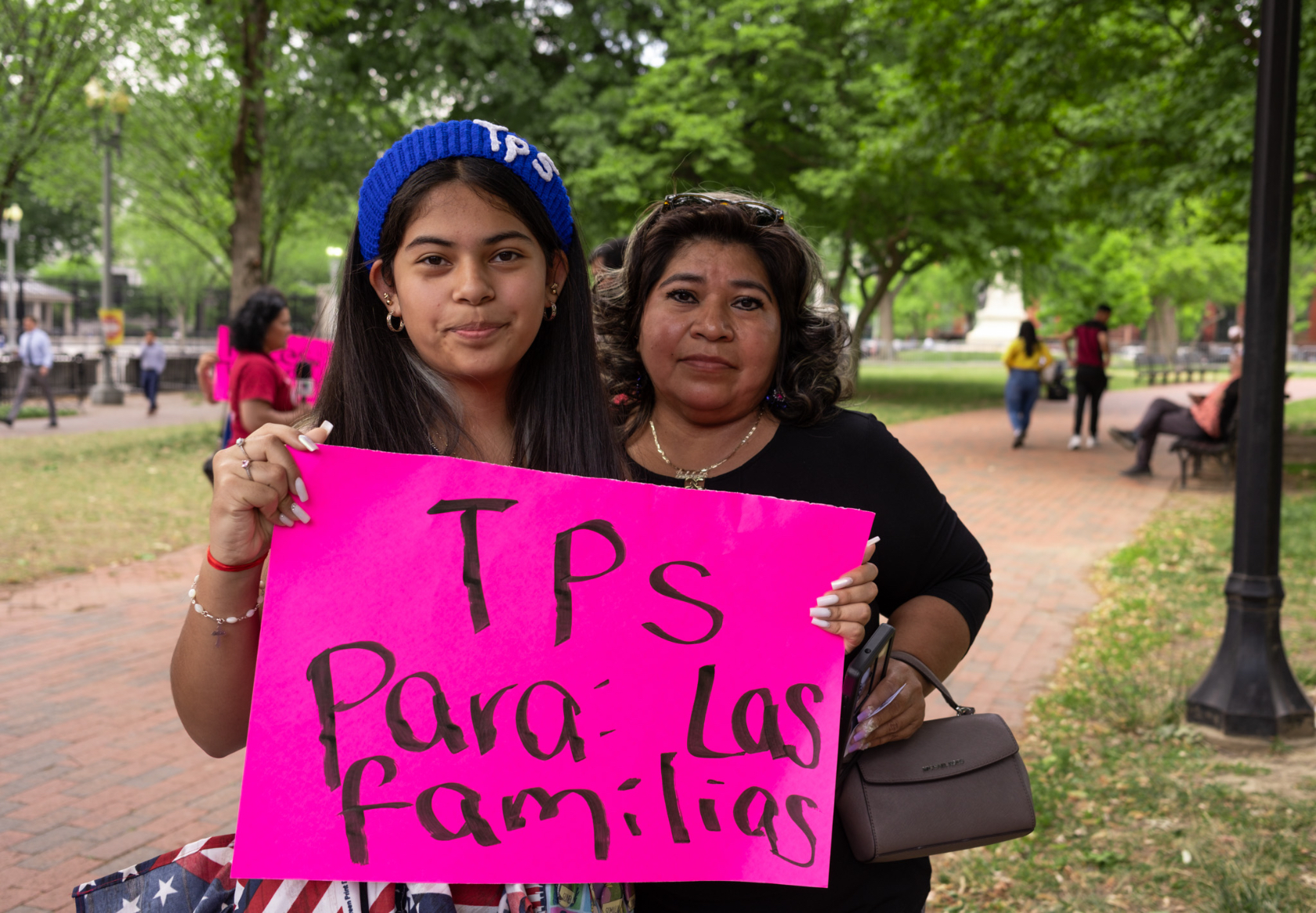
Marilyn Miranda says she has a lot of the same hobbies as other 13 year-old girls. She enjoys baile folklórico – a traditional style of dance known throughout Latin America, including her mother Soledad’s birth country of El Salvador. She also sews her own dresses and clothing, another skill that she picked up from her mom.
But most of all, Miranda says she likes school and studies hard so that she can one day become a lawyer. She says she wants to help immigrants like her mother, who have sacrificed so much so their families can have better opportunities in the U.S.
“She is my number one fan,” says Miranda, who was raised in the Columbia Heights neighborhood of D.C. “She always motivates me to do everything and achieve my goals.”
But Miranda also worries about the future and whether or not her mother will be present on the day her dreams are realized. Soledad is a recipient of Temporary Protected Status, a federal immigration policy that provides deportation relief and work authorization to people from countries that have been affected by humanitarian crises like war and natural disasters. Despite that benefit, Miranda says her mother’s immigration status is often on shaky ground and rests on an ever-changing attitude on federal policy with each presidential administration.
“I’m still scared for her to go out anywhere,” says Miranda. “They could just decide whenever, like she could be deported anywhere or like, any time.”
Through the policy, Soledad maintains a steady income by working in custodial services for government buildings. That has supported her family – including a 29 year-old daughter who is now a nurse. Soledad also was able to pursue a degree in cosmetology, which she hopes will help her to one day open her own business. She says without TPS, she can’t help her 13 year-old or herself.
“Her dreams of becoming a lawyer are here, because my country is not prepared to receive so many people, or provide jobs, or so she can achieve her future,” says Soledad.
TPS has existed since 1990 and is currently designated for numerous countries like El Salvador, Nepal, Nicaragua, and Honduras. The Trump administration sought to cut back on many forms of immigration into the United States, including nearly all TPS programs. However, a federal immigration court prevented this, leaving families like Miranda’s on edge.
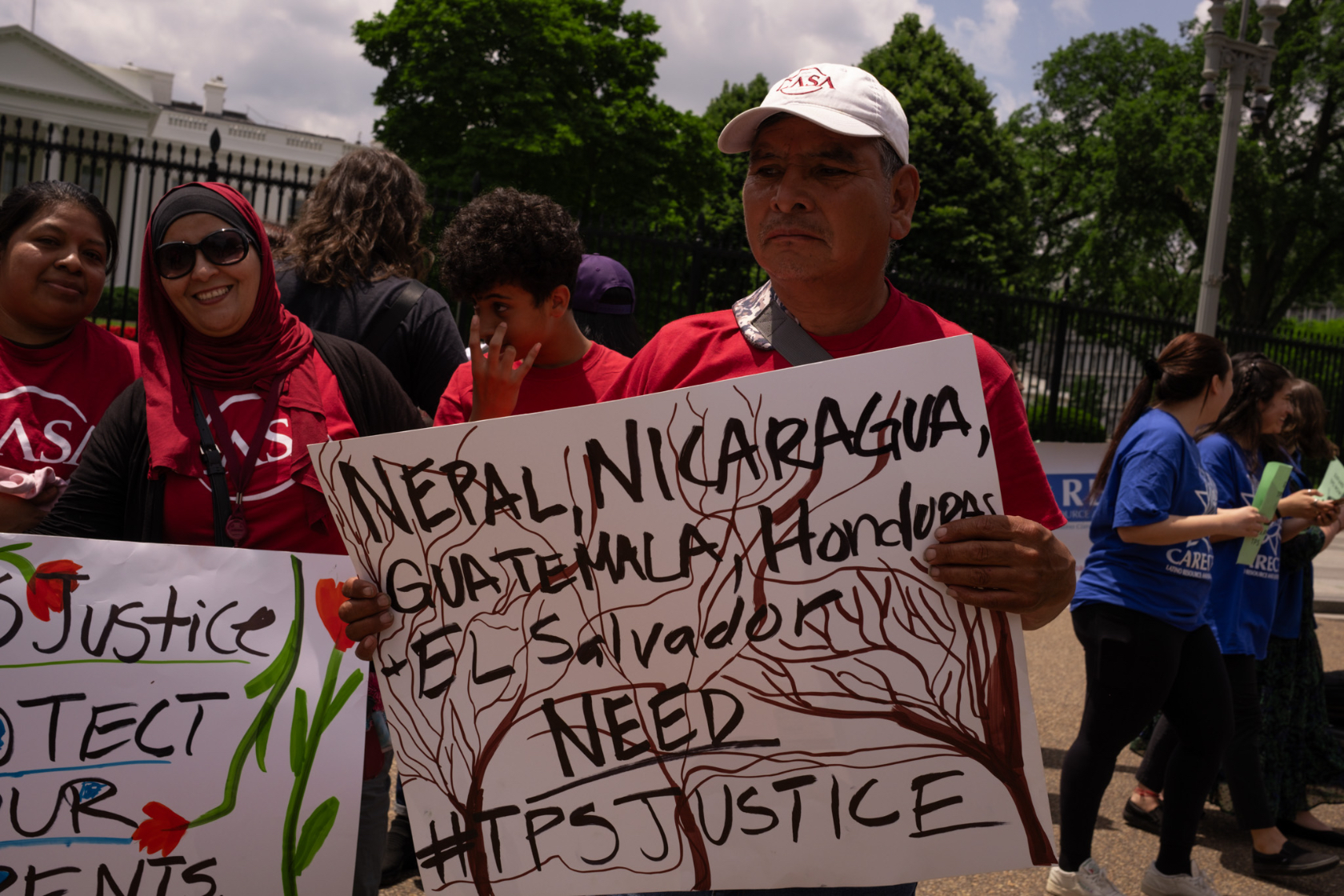
“It’s really necessary for many families – and for mine especially – to have a permanent protection,” says Miranda.
On Tuesday, just ahead of a planned court hearing later this month, the Biden administration announced that it will be extending the policy for more than 300,000 immigrants around the U.S.
Dozens of families from around the country, including the D.C. region, rallied at the White House to make their voices heard. While many of them supported the move by Biden, they also argued that the next step for TPS should be to re-designate it to include more countries, providing relief for an estimated 1.7 million other people. Gustavo Torres, the executive director of the Maryland-based advocacy group CASA, shared that the D.C. region – which is home to diverse immigrant communities – would benefit from that kind of change.
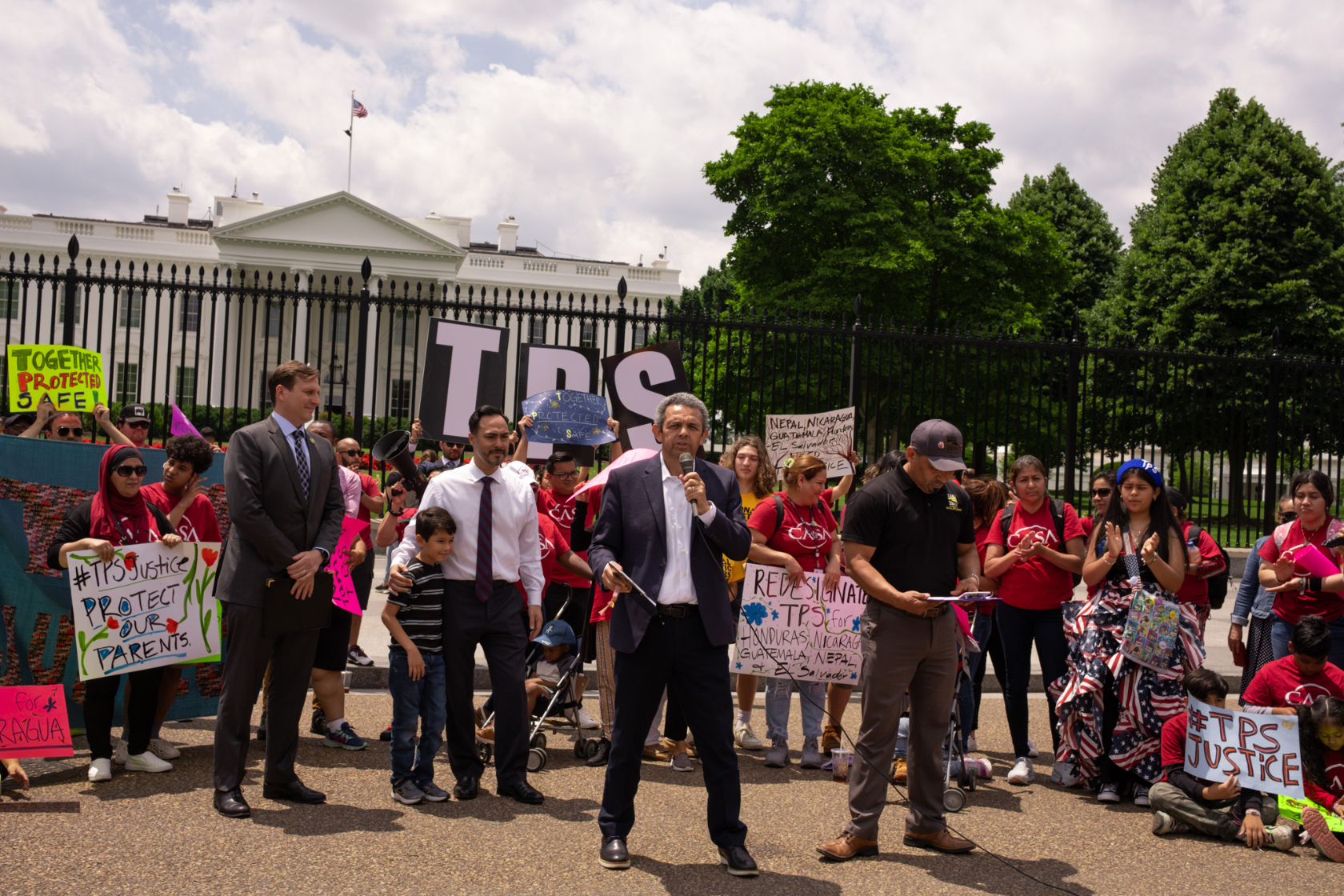
“There are people who are making extraordinary contributions to the region. People who work in the medical field, people who work in construction, people work in all places around. Thousands and thousands of families,” says Torres.
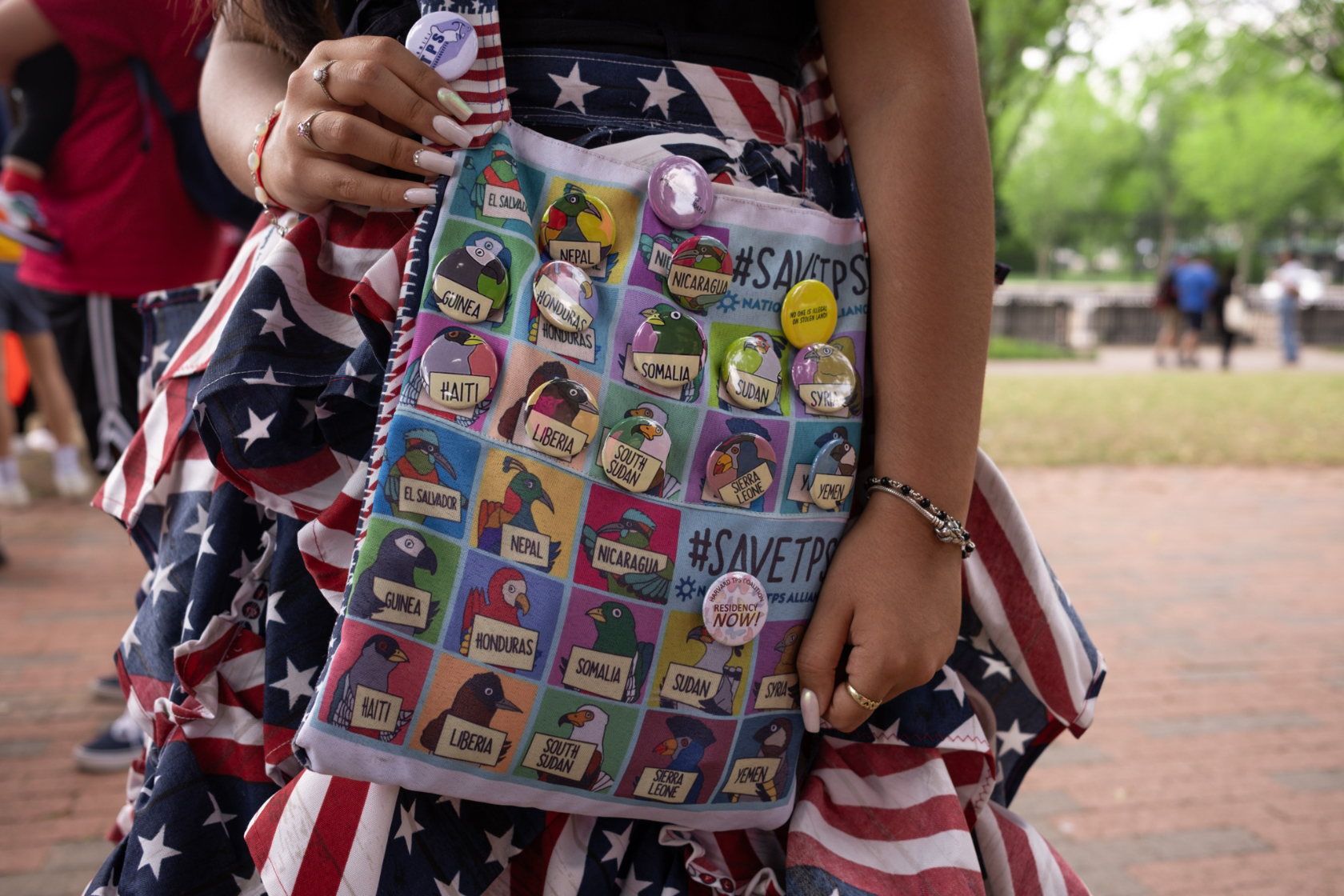
Although Miranda is happy that TPS is currently in place for people like her mother, she says there’s still more work to be done moving forward. In a display of support, Miranda wore an outfit – an American flag dress, a blue TPS headband, and a tote bag with more countries that she says need the relief – to proudly display the skills she’s learned from her mother.
“I’m hoping that the president is able to re-designate TPS for many other people that don’t have TPS,” says Miranda. “They help this country grow.”