Martin Austermuhle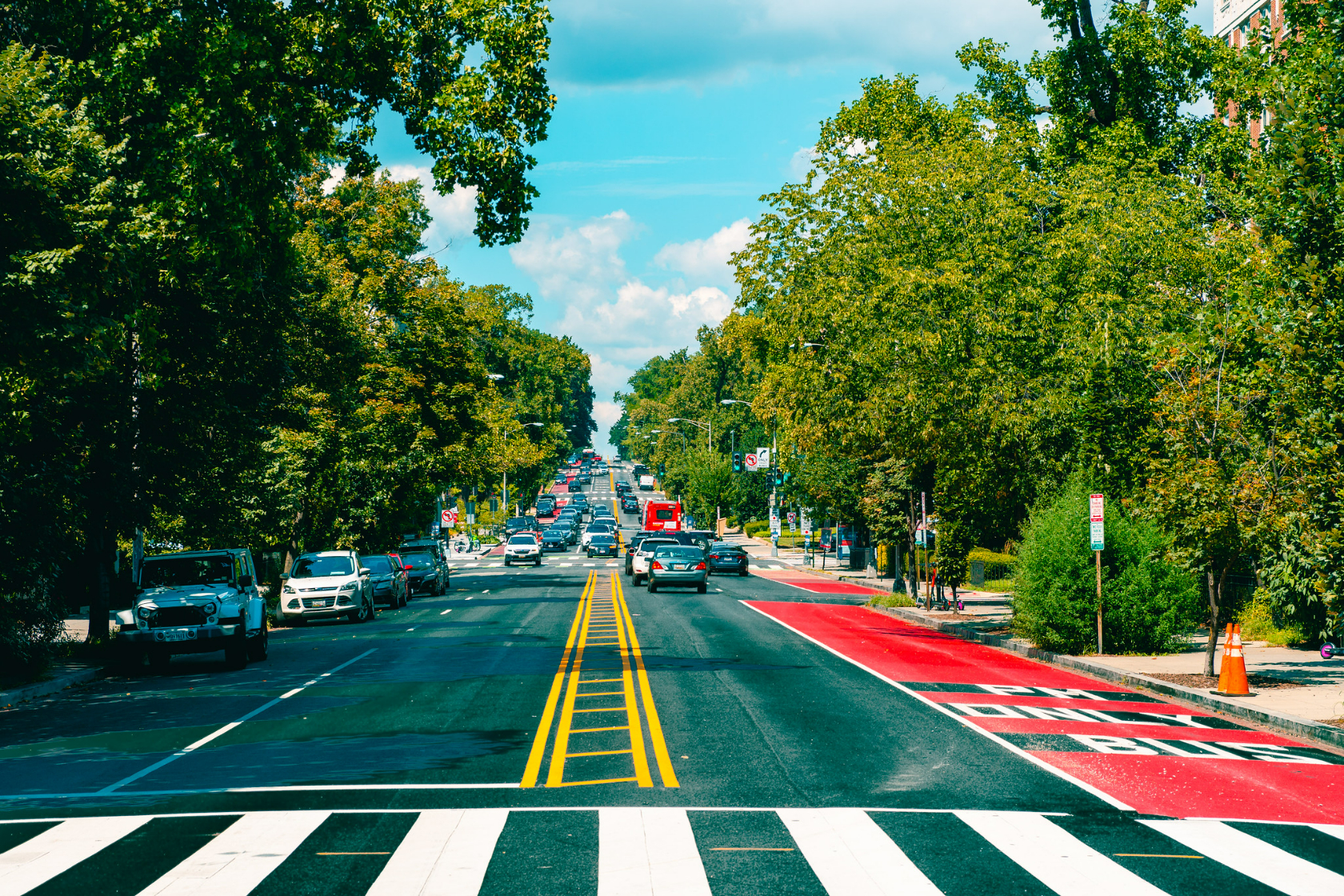
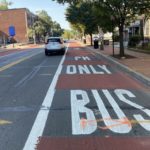
The days of cars blocking bus-only lanes may soon be coming to an end.
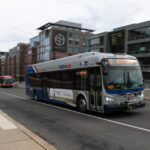
D.C. and Metro say they will soon start using 140 bus-mounted cameras as an enforcement mechanism for people who drive or park in bus-only lanes throughout the city, though actual fines aren’t expected to start until at least September.
The D.C. Department of Transportation announced this week that the bus-mounted cameras will be put into use starting on July 24, when they will be able to capture the license plates of any cars that drive in or block the network of bus-only lanes intended to improve service on designated Metrobus routes.
Warnings will be mailed out for the first 45 days of the cameras’ use, after which fines will be issued amounting to $100 for unauthorized driving in a bus-only lane or parking in a bus zone, or $200 for parking or standing in a bus lane.
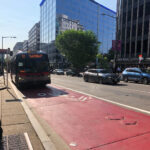
The bus-mounted cameras are part of D.C. and Metro’s new Clear Lanes Project, an initiative to improve bus travel times, in particular on 31 routes that travel through bus lane areas like H and I streets NW in downtown, 14th Street in Columbia Heights, 16th Street NW, M Street SE, Martin Luther King Avenue SE, Pennsylvania Avenue SE, and Minnesota Avenue S.E. (Parking may be allowed in some of the lanes during non-rush hours times; signs will indicate enforcement times.)
“Bus lanes and stops are often blocked by stopped or parked vehicles. When vehicles block bus lanes, this slows down everyone because buses must merge into traffic to navigate around the vehicles blocking the bus lane,” explains Metro.
The new program will be a first of its kind in the country to use automated cameras to enforce bus lane and bus stop restrictions, and will further beef up the city’s already extensive network of cameras used to catch drivers who speed, run red lights and stop signs, and make illegal turns on red.
But all those cameras have raised a number of concerns, from whether the fines disproportionately impact low-income drivers to if cameras are being used more to generate revenue than they are to promote traffic safety.
The Urban Institute’s Lindiwe Rennert, a researcher at the institute’s Metropolitan Housing and Communities Policy Center, worried late last week that the new Clear Lanes Project may suffer from similar “equity blind spots” and “could exacerbate inequities by perpetuating racially prejudicial enforcement practices.” She advised D.C. officials to consider decreasing the $200 fine (or otherwise make it income-adjustable), ensure that revenue is used for traffic safety projects, and doing more public outreach so that drivers are fully aware of the tickets to come and the purpose of the bus lanes.
“The program will undergo a familiarization period this summer (those found in violation of lane or stop restrictions will receive a warning by mail), and fines will begin being issued in the fall. However, there’s been no announcement of a broader awareness campaign. Transparency is critical to building the sense of legitimacy needed to gain public support for the program and offers an opportunity to raise public faith in civic agencies beyond the topic of enforcement,” wrote Rennert.
Much like speed and red light cameras, the new bus-mounted cameras will likely face another challenge: because of the lack of a reciprocity agreement with Maryland and Virginia, the city has limited tools to come after non-D.C. drivers who rack up traffic tickets but never pay them.