The Home Rule Music Festival returns this weekend for its second year with a more ambitious program in honor of the 50th anniversary of the District winning more autonomy in the District of Columbia Home Rule Act of 1973.
The festival’s first iteration in 2022 was a one-day outdoor event to celebrate and honor the lasting legacy of the cultural forces that gave rise to D.C.’s push for home rule. This year, it spans two weekends, with live go-go and jazz music events on June 16-17 and June 24.
The Home Rule Music And Film Preservation Foundation, CapitalBop, and a number of other partners will present an impressive lineup of music and related offerings.
“A lot of the musicians have drawn inspiration from that era and eras since then,” says CapitalBop co-founder Giovanni Russonello of the 1960s and ‘70s. “The festival is about announcing how present, radical, and revolutionary that music remains today.”
Like last year, the festival’s centerpiece will be a day of free outdoor performances at The Parks at Walter Reed on June 17. Songbyrd Music House hosts a kickoff show the night before and the festival’s finale, featuring more acts, is on June 24 at Black Cat. (Both the kickoff and finale shows are ticketed; the outdoor festival Saturday is free, though there are VIP ticket options that get you closer to the stage and the artists.)
If there is a central figure responsible for bringing the Home Rule Music Festival to fruition, it is Charvis Campbell, co-owner of HR Records and executive director of the Home Rule foundation. Located in D.C.’s Brightwood Park neighborhood, Campbell’s business got a splash of attention last month when Vice President Kamala Harris stopped by the store to dig for vinyl, leaving with classic albums by Charles Mingus, Roy Ayers, and others.
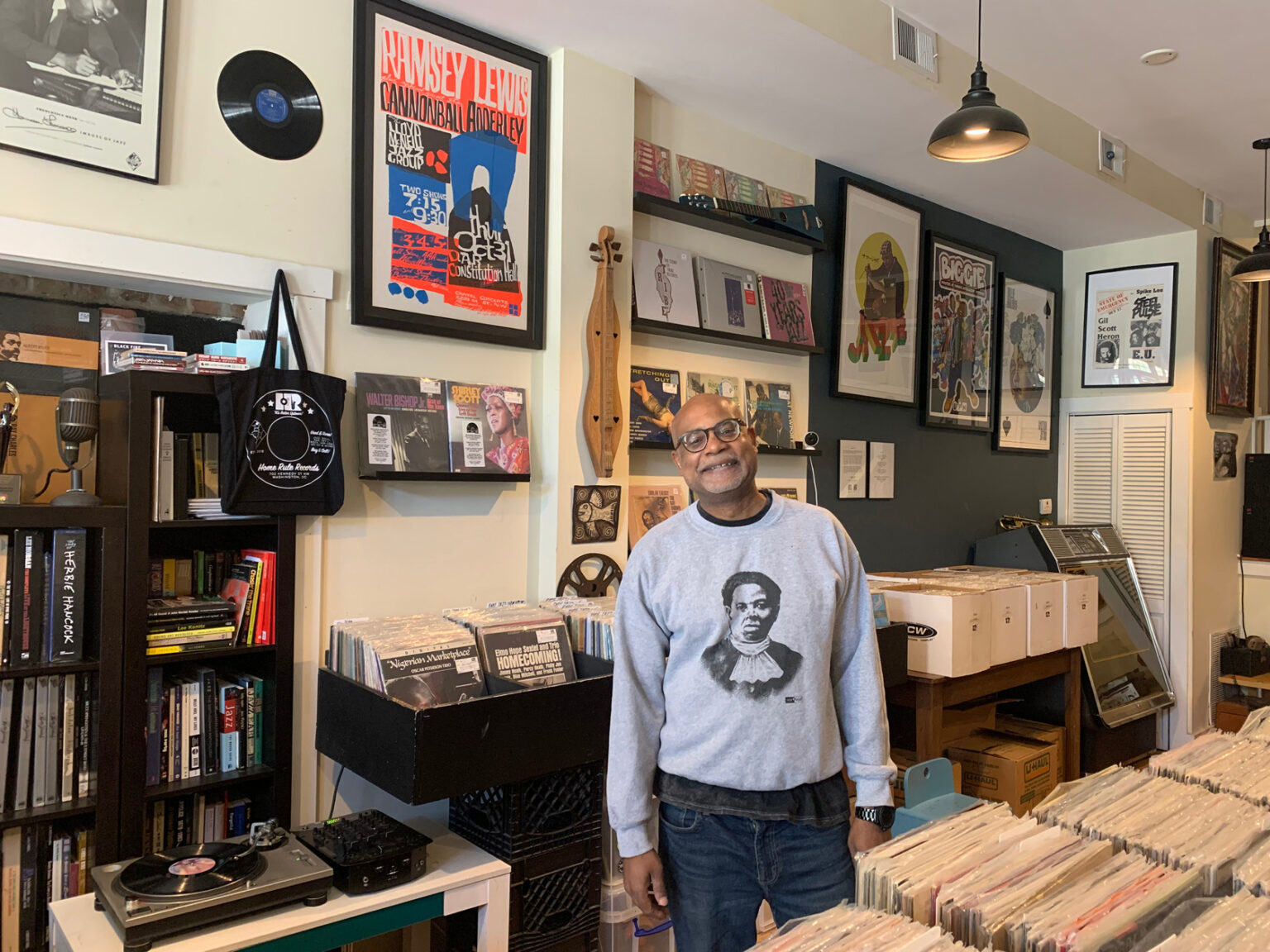
That visit placed a welcome spotlight on a local, Black-owned small business, but the retailer is about more than selling records since its 2018 launch, Campbell says.
“My view of community not only involves music, but also involves neighbors,” says Campbell. “I look at music as unifying. It’s an opportunity to bridge gaps, whether it’s young men on the corner or the Vice President of the United States.”
During the pandemic, when venues shut down and musicians had nowhere to play, HR Records opened its doors for “tiny stage” concerts, held weekly and broadcast online. Fourteen acts played the room over four months. This effort led Campbell and a small team to form the foundation in 2021, which launched an outdoor film series, also held at The Parks at Walter Reed, in the summer of that year.
The foundation’s first original film was a documentary on Black Fire Records, a locally-based independent record label formed by area DJ Jimmy Gray and saxophonist James “Plunky” Branch in the 1970s. The label’s discography is not large, but it represents D.C.’s take on the Black spiritual jazz movement of that era. The bands that recorded for Black Fire added a groove that would eventually evolve into go-go. Legendary go-go act E.U.’s first album came out on Black Fire shortly before the District’s homegrown funk became a genre unto itself.
“We needed a way to display the music to support the film,” explains Campbell about how the music festival was born.
“Being able to claim spaces and create spaces where people can come together to reconnect and be together is essential. That’s what this festival is really special for doing,“ Russonello says. “The most crucial question for building community is space. If you have space, if you have reliable homes for musical presentation, there’s a lot that you can do.”
Conceptually, the event started as a way to elevate the music highlighted in the documentary, but its scope expanded to include a broader context and draw connections between the cultural and political movements that arose out of D.C.’s African American community in the late 1960s and through the ‘70s.
Campbell illustrates the point using the term “home rule.” While there is a political connotation behind the phrase, Campbell’s use of it also honors D.C.’s jazz history. He cites Lloyd McNeill, a jazz flutist who was the first recipient of Howard University’s Master of Fine Arts degree in 1963. McNeill’s first album, 1970’s Washington Suite, is a musical homage to D.C. and its opening track is titled “Home Rule.”
“We’re witnessing the rapid erasure of that legacy and that history; it’s gentrification of the culture itself,” says Luke Stewart, CapitalBop’s other co-founder and artistic director. “This entire offering is a strong statement of re-implanting that legacy within the context of the ‘new D.C.,’ whatever that means.”
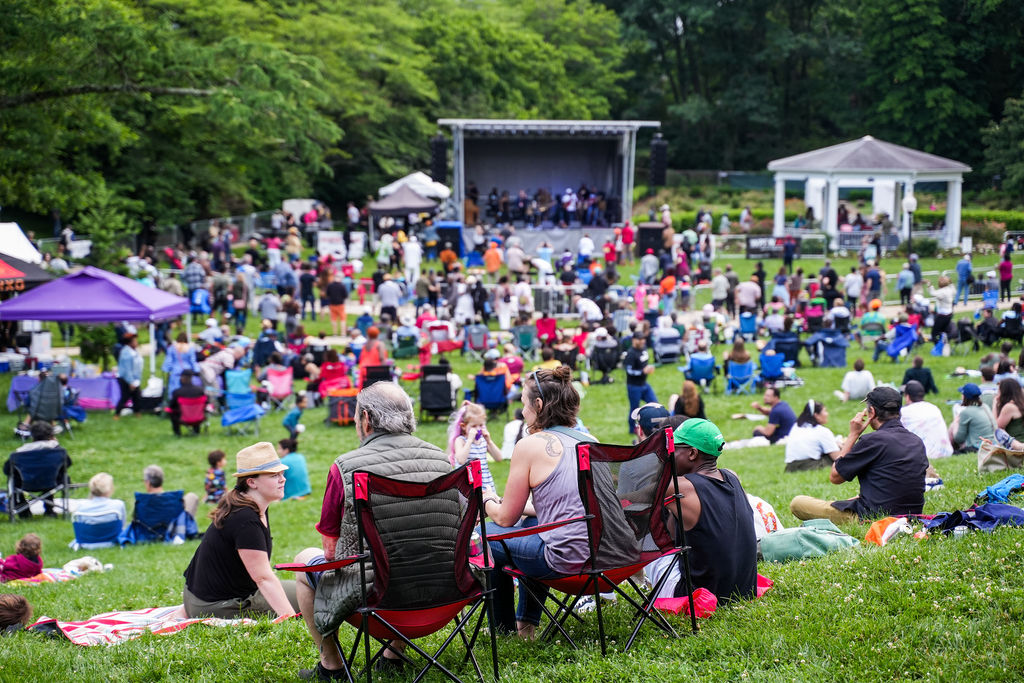
The bill for the outdoor concert spotlights musicians that came of age during this era. The June 17 lineup includes the aforementioned E.U., Brian Jackson (who lead spoken word icon Gil Scott-Heron’s bands during the 1970s), keyboardist Doug Carn, and Kahil El’Zabar’s Ethnic Heritage Ensemble. Local musician Mark Meadows opens the show. In addition to the concert, there will be local food and beverage vendors on hand, family activities, and a record fair.
The remaining events represent the musical descendents of those performing at The Parks. Headlining the festival launch at Songbyrd is Kassa Overall, a cutting edge drummer and bandleader whose genre-defying album, ANIMALS, is making waves.
The festival’s closing concert includes Hear In Now, a trio co-lead by cellist and area native Tomeka Reid, along with a tribute to jazz legend Alice Coltrane by Hamid Drake’s Turiya. Baltimore-based saxophonist Jamal Moore is also scheduled to perform, as is Nag Champa Art Ensemble, whose membership includes Jamal Gray, son of Black Fire Records co-founder Jimmy Gray.
Though the pandemic is officially over, there is still a lot of economic uncertainty creating challenges for festivals such as this one. The Down In The Reeds Festival, which was scheduled for May at The Parks at Walter Reed, was canceled due to a funding shortage. The Home Rule Music Festival, similarly, did not receive the funding from the city and corporate sponsors that it had hoped, but Campbell says that the foundation remains financially solvent and healthy despite the setback, with the festival likely returning in 2024.
“The focus seems to be on supporting downtown and the landmark institutions,” Campbell says.”Clearly there’s an argument that with Carter Barron gone and jazz clubs closing, that there is a gap for other parts of the city.”
The Home Rule Music Festival takes place on June 16, 17, and 24 at Songbyrd Music House, The Parks at Walter Reed, and Black Cat. Visit the festival website for full schedule and ticketing information.