Margaret Barthel
 Tyrone Turner
It’s official: all the relevant VIPs, including Virginia Governor Glenn Youngkin, ceremonially cut the ribbon at Metropolitan Park, phase one of Amazon’s long-awaited headquarters in Arlington.
“I want to thank everyone from the broad Amazon family for believing in Virginia, for investing in Virginia, for partnering with Virginia and for delivering,” Youngkin said in remarks to the gathering. “This is an economic engine. We know it.”
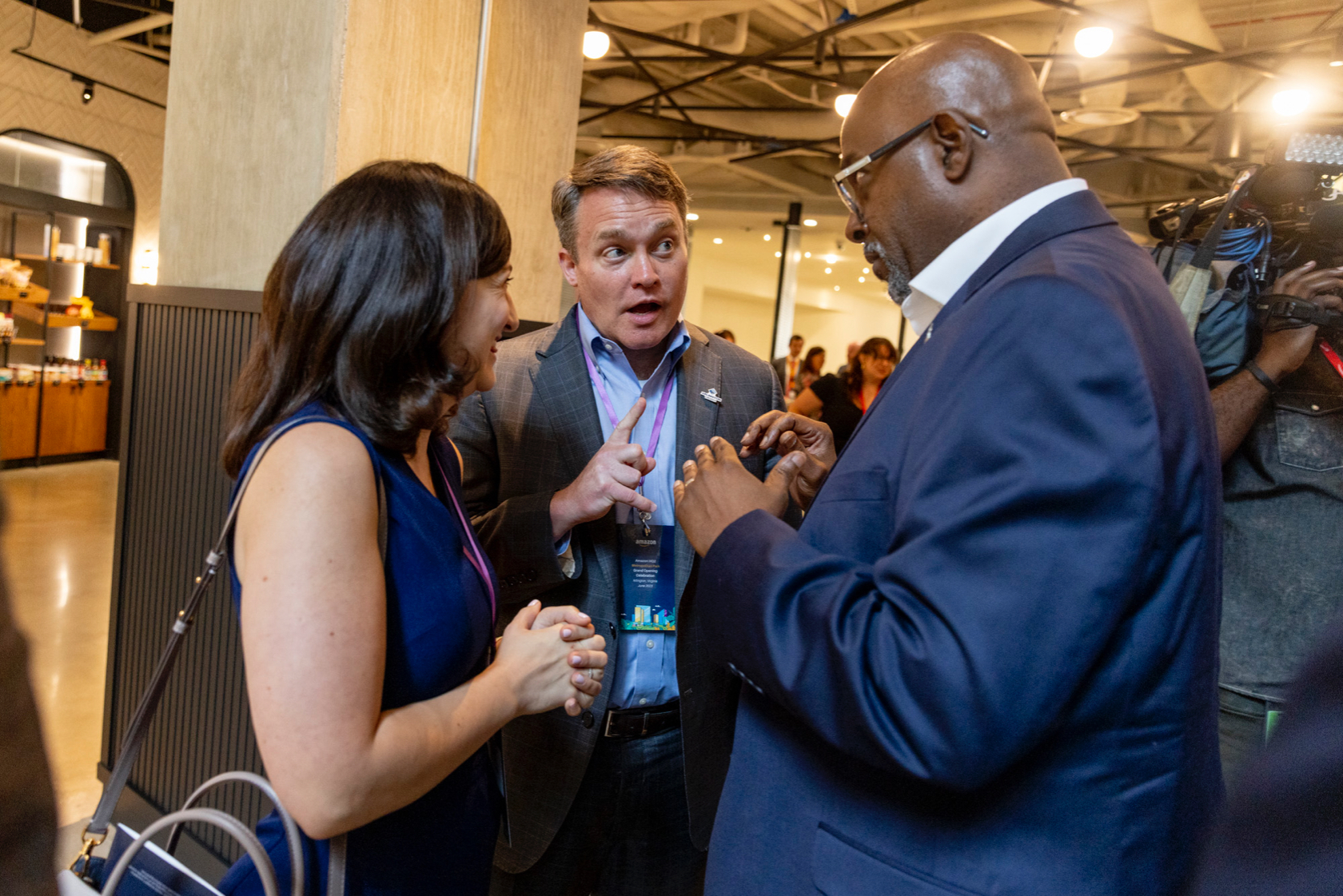
“In the great words of our elder statesman, President Joe Biden, this is a big effing deal,” said Arlington Board Chair Christian Dorsey, who spoke immediately after Youngkin. Dorsey focused his comments at the event on the community benefits he said Amazon has brought to Arlington, including union construction jobs, improvements to the local streetscape, and extensive housing investments.
“We looked to Amazon to learn about our community’s values and embrace them as their own,” Dorsey said. “I want to commend Amazon’s leadership for doing exactly that.”
Amazon has invested over $1 billion in grants and loans to support affordable housing development in the D.C. region, and has put an additional $160 million into about 100 local nonprofits and schools so far, said Brian Huseman, Amazon’s Vice President for Public Policy and Community Engagement.
“I hope that you agree that we’ve worked hard to become a part of the fabric of this community,” Huseman said.
One of the primary community concerns over the arrival of Amazon in Arlington is the possible impact it might have on already steep housing prices, possibly resulting in displacement of lower-income residents.
Dorsey said the county board was particularly monitoring housing production in Arlington as one way to keep an eye on possible displacement.
“We’ve got more supply coming in and the demand has in no way exceeded that supply,” he said. “That said, look, this is the Washington metropolitan region. It’s expensive. It’s been expensive. It’s going to continue to be expensive.”
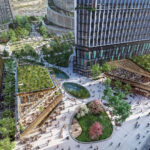
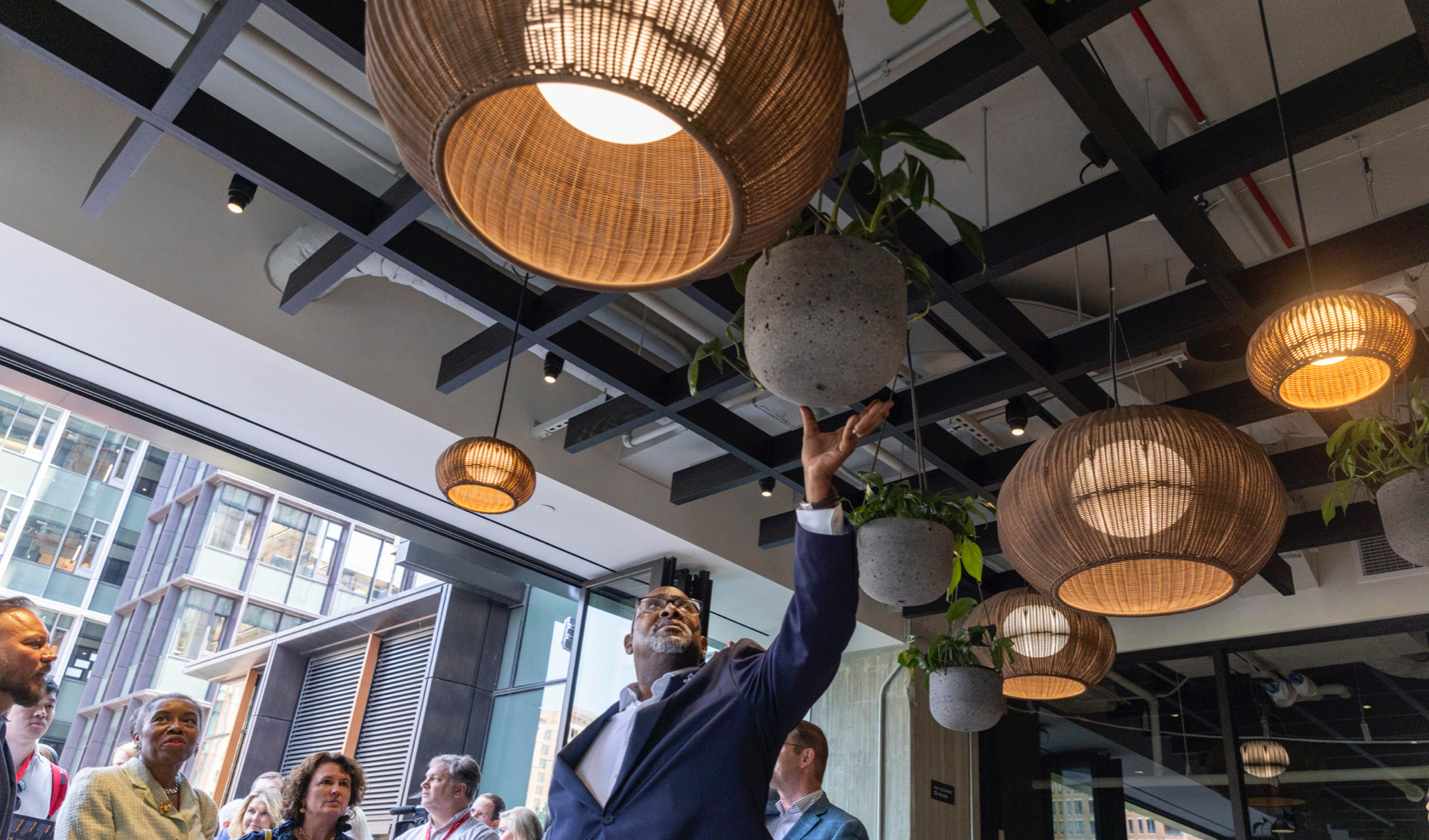
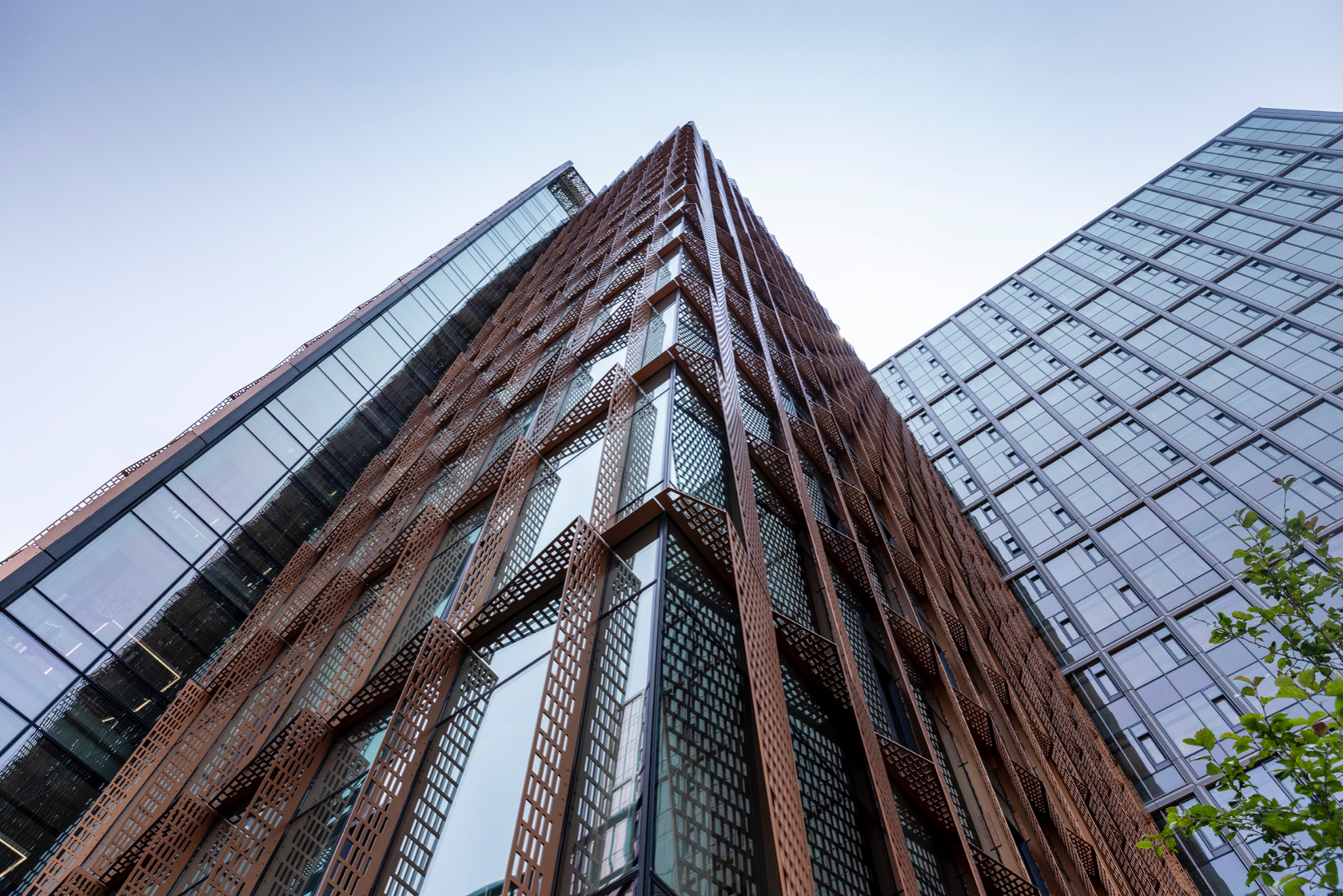
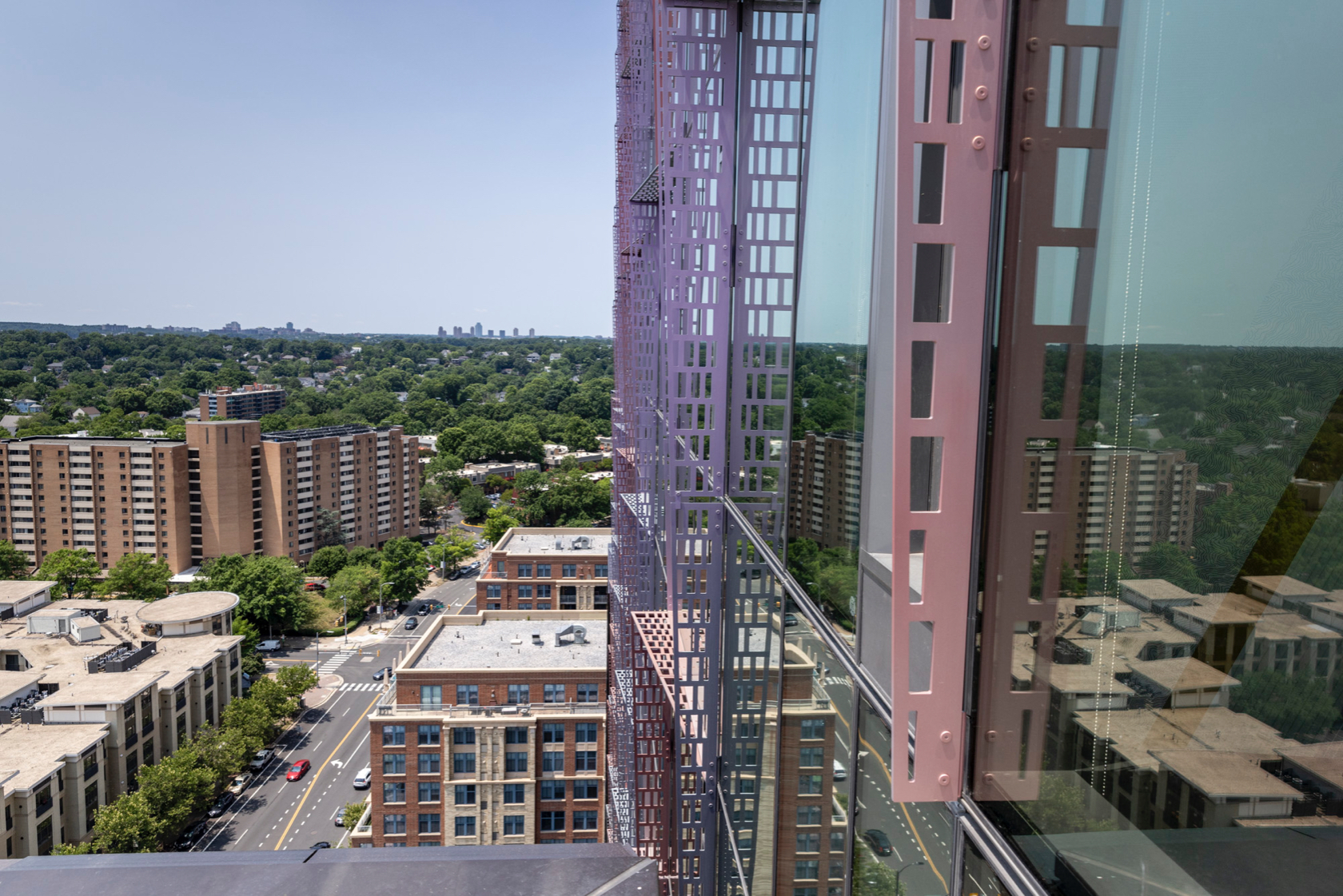
The Met Park complex is 2.1 million square feet across two 22-story buildings, boasting all of the slick glass and modern design you’d expect from one of the world’s most powerful companies. Think rooftop gardens with expansive views (watered by recycled greywater), cafes and informal meeting spaces, interior design of your mid-century modern dreams, more than 600 bike racks and nearly 300 electric vehicle charging stations, over a dozen local businesses owned by women and people of color, public art, a banana stand…you get the picture.
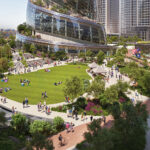
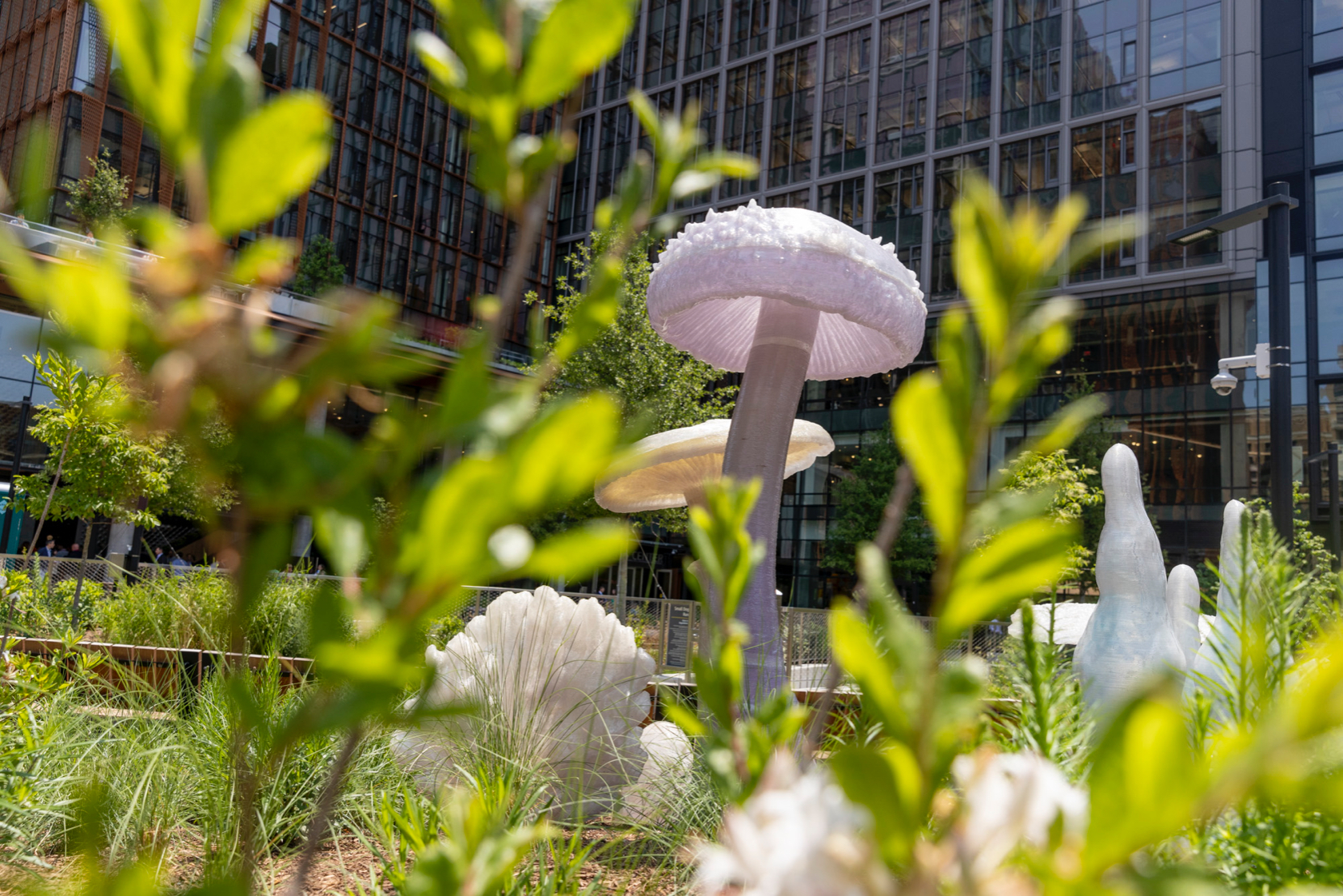
Did we mention all the indoor plants? It’s a jungle in there. And also out there: the two Met Park buildings open up to a 2.5-acre public park with open green space, a playground, a dog park, and lots of native plants. One outdoor art installation, a tower of bricks, pays homage to Queen City, the settlement of Black families who lived in the area before they were displaced by the construction of the Pentagon. Another one depicts bioluminescent mushrooms (yes, really) native to Virginia.
The ground floor of the buildings — complete with garage-style doors that can open up to the park space on nice days — will be open to the public. For those who are curious to see for themselves, Amazon is hosting a community day on Saturday morning for residents to come visit and enjoy a farmer’s market, a DJ, photo booths and a children’s play area.)
Met Park achieves a high standard of sustainability: the buildings run off of renewable energy, and produce zero operational carbon emissions, according to John Schoettler, Amazon’s Vice President of Global Real Estate and Facilities.
8,000 workers, nearly all of them drawn from the D.C. region, worked on the construction of the project, including from 104 women- or minority-owned small businesses. The project broke ground in January 2020 and navigated the challenges of construction in the pandemic. The plot of land was previously an abandoned warehouse.
Met Park is an office-worker’s paradise, but the big question is whether fancy amenities will be enough to entice Amazon workers out of their pandemic remote-work rhythms and into hard pants.

The complex is meant to hold the 8,000 employees the company says it has in Arlington, a sizable number of the 25,000 total Amazon intends to bring to HQ2 by 2030. Those current employees began moving into the new buildings in May, and are expected to be fully moved in by this fall. Company policy requires them to be on-site three days a week.
Under the 2018 deal that brought Amazon to Arlington, the commonwealth of Virginia agreed to pay out $22,000 per new job created, provided they hit an average annual salary above $150,000. As of the end of 2022, Amazon claimed it had created 6,939 jobs associated with HQ2.
In April, Amazon filed its first request for incentive payments from the state, asking for more than $152 million, a request Virginia economic development officials said the state had evaluated and would be paying.
In order for the jobs to qualify for the Virginia incentives, they must be primarily located in Arlington and work in the office three days per week, in-line with the company’s current hybrid work policy. Just how physically present Amazon employees will be in the area in the wake of the pandemic has been a big question mark for local residents and businesses.
Meanwhile, Arlington has yet to pay Amazon any incentives. That’s because county payments — which could be more than $20 million over 15 years — are tied to increases in revenue from taxes paid by travelers for hotels and other lodging. But with the pandemic slowdown, hotel occupancy hasn’t gone up, so Arlington hasn’t had to pay.
The opening of Met Park comes amid some uncertainty about the rest of the company’s HQ2 plans. The second phase of HQ2, including the soft-serve ice-cream-shaped swirl building and others at PenPlace, is currently on pause.
“We are still committed to Arlington, and we own the land,” Schoettler told WAMU/DCist of the PenPlace project. “And so it is certainly a project that we would love to see happen. But we’re trying to measure that with exactly how are our employees coming back, how are they using the spaces we want to make.”
Schoettler said there was no timeline on when the company would break ground on PenPlace. He said the company is trying to make tweaks to the building designs to reflect how people work now, adding more collaborative spaces and de-emphasizing assigning seats to every single employee.
Regardless of what happens with PenPlace, some of the public benefits tied to Amazon’s arrival are already in place, in the form of public space, bike lanes, a new Virginia Tech campus which will open in nearby Alexandria next year, and (perhaps most importantly) the much-longed-for new Potomac Yard Metro station, which opened last month. Amtrak and Maryland’s MARC commuter train system have both announced plans to build station stops in the area. Dorsey, the Arlington Board chair, also noted a planned pedestrian bridge to National Airport.
Amazon’s arrival has tripled the amount of street-level retail in National Landing, according to Kai Reynolds, the Chief Development Officer at JBG Smith, the real estate developer that is working with Amazon on HQ2.
The opening of Met Park does nothing to halt Arlington’s rising office vacancy rate, which stands at 22%. But Dorsey said the shiny new office buildings were overall a good economic story for the county.
“It does add to our overall economic vitality,” he said.