 Cole Kindiger
This story was produced by Street Sense Media.
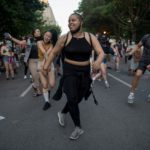
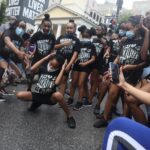
Every year, D.C. comes alive for Juneteenth. Individuals and local groups have organized a patchwork of independent activities for decades. This year, D.C. residents are doing everything from jamming at the Home Rule music festival to running a 5K at the 46th annual Peterbug Day. But there has never been an official celebration.
That will change under the the District Juneteenth History and Planning Commission. The group was approved by the D.C. Council in June 2022 and will soon coordinate and supplement existing events so that organizers might work together to celebrate the holiday.
As many observers have noticed, the Juneteenth Commission has not yet been activated. But Chuck Hicks, future commission member and the founder and director of the D.C. Black History Celebration Committee, is excited for it to launch.
Hicks has devoted his life to racial justice. Born in Bogalusa, Louisiana, he temporarily studied at a local university before administrators kicked him out when they discovered his father’s involvement in the civil rights movement. Hicks later went on to Syracuse University and was elected its first Black student body president, while earning his bachelor’s and master’s degrees.
Hicks later moved to D.C., where over the last several decades he led and acted in many prominent community-oriented organizations, like the NAACP, the Southern Poverty Law Center, and the Martin Luther King Scholarship Committee. In addition to founding the Black History Celebration Committee, he founded Bread for the Soul, a group that provides support for children and families living with HIV/AIDS.
In 2019, he was recognized by the Washington D.C. Hall of Fame Society, a nonprofit. In 2021, he set his sights on the Juneteenth Commission.
Juneteenth was designated as an official holiday locally in 2003 and federally in 2021. But there was no commission to help commemorate it like the D.C. government has for other important events, such as the birthday of Martin Luther King Jr. and the emancipation of enslaved Washingtonians.
To Hicks and African American Civil War Museum Director Frank Smith, that was a problem.
Hicks and Smith proposed the idea for a commission to Ward 6 Councilmember Charles Allen. With support from fellow councilmembers, Allen introduced the bill in January 2022. The group’s purpose would be to plan District-wide activities to celebrate Juneteenth and to educate people on its history, both within and beyond D.C.
Street Sense Media caught up with Hicks to ask about the status of the commission and what to expect next year. (The conversation was edited for length and clarity.)
The Juneteenth Commission was approved last year, but it hasn’t been officially named or activated yet. Why the wait?
Well, the commission hasn’t been activated because it has a monetary budget attached to it. By the time we got it signed last year, the D.C. budget had already been allocated. So that’s the first part. The next part that has to happen is that the commission has to be named — there is technically no commission, as of yet.
We wanted the commission to be independent. It would have a chairman and a board who would set policy. We wanted to have a director and a staff who would help create the activities that we wanted to see happen in D.C. So that became a very, very important piece for us.
But because the legislation attaches money to the commission, it can’t really be active until the council allocates the funds to it, and they can’t do that until next year. (It was not funded in the fiscal year 2024 budget D.C. Council passed last month.)
You worked with Dr. Frank Smith to present the idea for the Juneteenth Commission to the D.C. Council. Can you walk me through that process?
Oh, yeah. I have been doing Juneteenth programs for 20 years. I worked at the Martin Luther King Library and it started there. But what happened more recently is that as Juneteenth became more popular, it just started to blossom again.
[Charles] Allen, my councilmember, was the councilmember that I asked to help write the legislation with Dr. Smith. After we talked about all the things that we’d like to see the commission do, the legislation was written and introduced.
All of the councilmembers signed on as co-sponsors. We didn’t have anybody who didn’t vote yes. Then it went to the mayor and she signed off on it, too.
What we’re hoping to do now is get the commission named within the next couple of months — we had hoped we could get it named by Juneteenth but I don’t think that’s a reality — and then councilmembers can begin to appoint commission members.
Then we can start to talk about planning, to talk about the kind of things we want to see in the structure of the commission.
So, while you’re waiting for the council to allocate the budget, what are you doing in the meantime?
We are starting to talk to some of the community groups that are putting on events for Juneteenth.
One of the most important things the commission should do is not ignore the many different activities going on in the city.
Last year, I learned that there is a Georgia Avenue Juneteenth Commission, and it’s been around for years. I didn’t know that!
There are all kinds of local community groups who celebrate Juneteenth. And we don’t want to ignore those voices. We want to be able to bring those voices together. That’s what Juneteenth is all about.
Can you say more about what Juneteenth means to D.C. residents?
When we talk about Juneteenth, we need to understand there was a Juneteenth — widespread emancipation — before Juneteenth. But when slaves were freed in Galveston, Texas, that was the last place for news of emancipation to reach. Then it became Juneteenth.
But Juneteenth is more than a celebration. It’s an opportunity to talk about where we ought to be going, how we ought to look at ourselves as people, and how we ought to look at ourselves as a community.
And so, we want the commission to ask these kinds of questions, to look at the kinds of issues that face us today, and help build coalitions to solve them. This commission is going to make more than a parade and some fireworks. We deserve more than that.
Juneteenth is about growth, it’s about understanding and building community.
Juneteenth is about all of us.