Research shows that even a small increase in income for low-income families leads to better outcomes for their children: including school attendance and performance, graduation rates, and future employment.
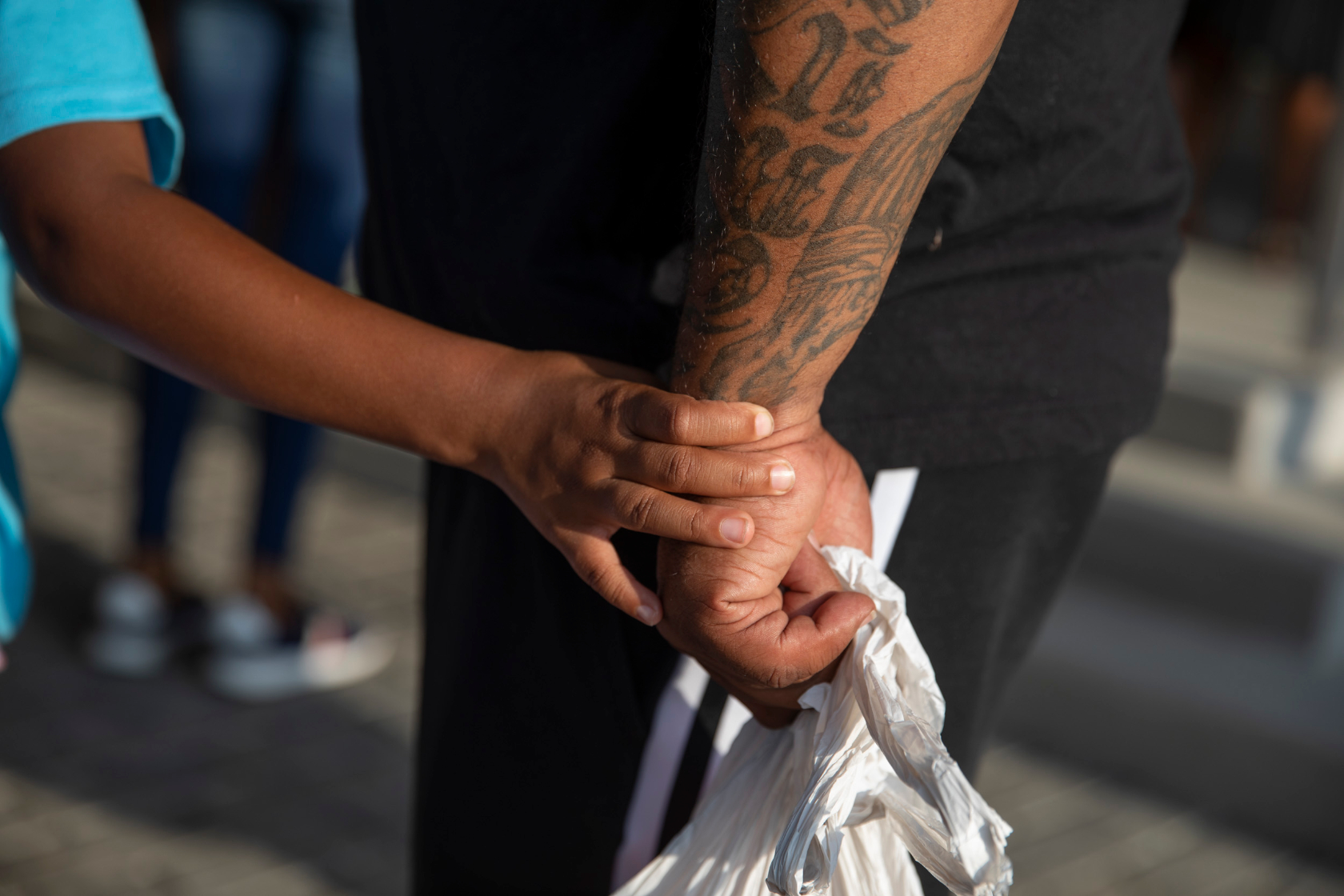
A new pilot program is providing no-strings-attached monthly cash assistance to Black mothers with children involved in the child welfare system.
Mothers living with their children and who have a current or recently open case with a social worker are eligible to receive $500 per month for three years under Mother Up, a community-funded cash assistance managed by the local nonprofit, Mother’s Outreach Network. Unlike many other social safety net programs such as the Supplemental Nutrition Assistance Program and Temporary Assistance for Needy Families, Mother Up provides assistance without requiring participants to meet any work requirements. Mother’s Outreach Network said it hopes to support to a total of 50 mothers.
“It’s intended to give families the support that they need to stay together to prevent their involvement in the system, but also to address the real needs that they have,” said Melody Webb, co-founder of Mother’s Outreach Network.
A “soft launch” of the program began recently, and five mothers started receiving payments in May. Additional cohorts will begin receiving funds later this year. While Mother Up is currently community-funded, Mother’s Outreach Network hopes to raise awareness of the utility of the project among local, state and federal governments, which in turn could explore the creation of more government-funded guaranteed income programs.
What is guaranteed income?
Guaranteed income programs provide unconditional cash assistance, often to people living below the federal poverty line — $24,860 for a family of three in 2023. Usually, programs target a specific demographic and provide payments for a set amount of time.
Many programs began during the pandemic, which revealed how vulnerable many people are to poverty, Webb said. The stimulus payments demonstrated how direct economic support can be effective in helping families meet their basic needs, she added.
“It’s good for the individual, it’s good for their family, community and in fact, the entire economy,” Webb said.
The majority of people who received the first round of stimulus checks during the pandemic used the money for household expenses like food, rent and utilities, according to the U.S. Census Bureau. For the later payments, many saved the money or used it to pay off debts, per a survey from the New York Federal Reserve.
An analysis of D.C.’s income support programs, released last week by the United Planning Organization, found that the current safety net leaves families with children in poverty (23% of D.C. children). But it said local guaranteed income pilot programs are successfully “reducing food insecurity, increasing employment outcomes for adults, and improving educational outcomes for children.”
UPO recommends D.C. should go ahead and incorporate the strongest features of these pilot programs — such as higher payments — into its administration of TANF, while taking more time to evaluate other elements such as monthly payments vs. annual lump sums.
Temporary Assistance for Needy Families (TANF)**
THRIVE
Career Map
Strong Families,
Strong Futures (SFSF)
# of Families:
15,000
590
600
132
Target Population:
Families with children with low income
Ward 8 residents with low incomes
Families with children in the Rapid Re-Housing program for people experiencing homelessness
Expecting and new mothers living in Wards 5, 7, or 8
Length:
No time limit
5 months
60 months
12 months
Monthly Cash:
$696/ family of 3
$1,100
Up to $833
$900
Phases Out As Earnings
Rise?
Yes
No
Increase as earnings rise, up to a maximum
No
Other Benefits:
Job readiness services
Access to free food, workforce development, mental health services
All families receive housing subsidies; $1,000/year emergency aid; $2,400/year set aside in escrow; Career support
Access to services provided by Martha’s Table, the program manager
Other Features:
Benefits designed to offset decline in other public benefits as earnings rise
**TANF included for comparison. Many families in the pilot programs receive TANF in addition to pilot’s benefits. / Table courtesy of the United Planning Organization (UPO)
Why mothers with children in the child welfare system?
In her time as a parents’ defense attorney, Webb said she often saw D.C. remove children from families for reasons largely related to poverty.
Poverty alone is not a legal reason to remove a child from their parents. But poverty is, time and again, conflated with neglect, Webb wrote in a 2022 article for the Columbia Journal of Race and Law.
Involvement in the child welfare system is often linked to economic status, race, and having a single mother, according to the report. For example, while just over half of children in D.C. are Black, 79% of children in the the District’s foster system are Black. Neglect is the main reason why children are removed from households in D.C., according to oversight responses from the Child and Family Services Agency.
No-strings-attached payments can aid families involved in the child welfare system, Webb said. And the Mother Up pilot is focused on helping Black mothers specifically because “they’re the most vulnerable mothers,” Webb said.
“That’s what we need, and doing it in a way that sort of helps support the dignity and the fulfillment of that person in their humanity,” Webb said.
A similar program in Jackson, Mississippi, has shown programs like this work, Webb said. The Magnolia Mother’s Trust, created by the nonprofit Springboard to Opportunities, began offering cash payments to single mothers in the fall of 2018. According to an impact report for the program, mothers involved felt less stressed, happier, and generally experienced a better quality of life. Many went back to school and were hired for better-paying jobs.
This program was one of the inspirations that drove Webb to start Mother Up.
The Magnolia Mother’s Trust also put a dent in the narrative that poverty is a flaw of the person, not of the structural inequality, Webb said. She, too, hopes to dismantle this misconception through her work with Mother Up.
“Once we remove a notion of it — poverty being sort of result of a personal flaw — then we are kind of liberated to think about really important structural solutions,” she said.
Shonta’ High, a local human rights activist who serves on the community advisory board of Mother Up, said the program would’ve been immensely helpful to her when her children were younger.
High’s oldest daughter was removed from her home when she was four. She said a false allegation was filed against her — she doesn’t remember what the particular claim was, but suspects a big driver of the allegation was that she was low-income. It took High over a year to get her daughter back, sorting through court dates and bureaucracy.
While trying to regain custody of her daughter, High said she was repeatedly stigmatized by government actors because she was a poor Black woman.
“It’s not my fault that I’m poor,” High said she remembers thinking.
High knew she had to be a part of the community advisory board when Webb approached her, because of her lived experience.
Community input like High’s has been at the forefront of the pilot. Early in its development, Webb put together a focus group of mothers to get their perspectives on what would be most helpful and effective.
“Our work has been rooted in really measuring the need based on what the community tells us,” Webb said.

 Kaela Roeder