Jacob Fenston
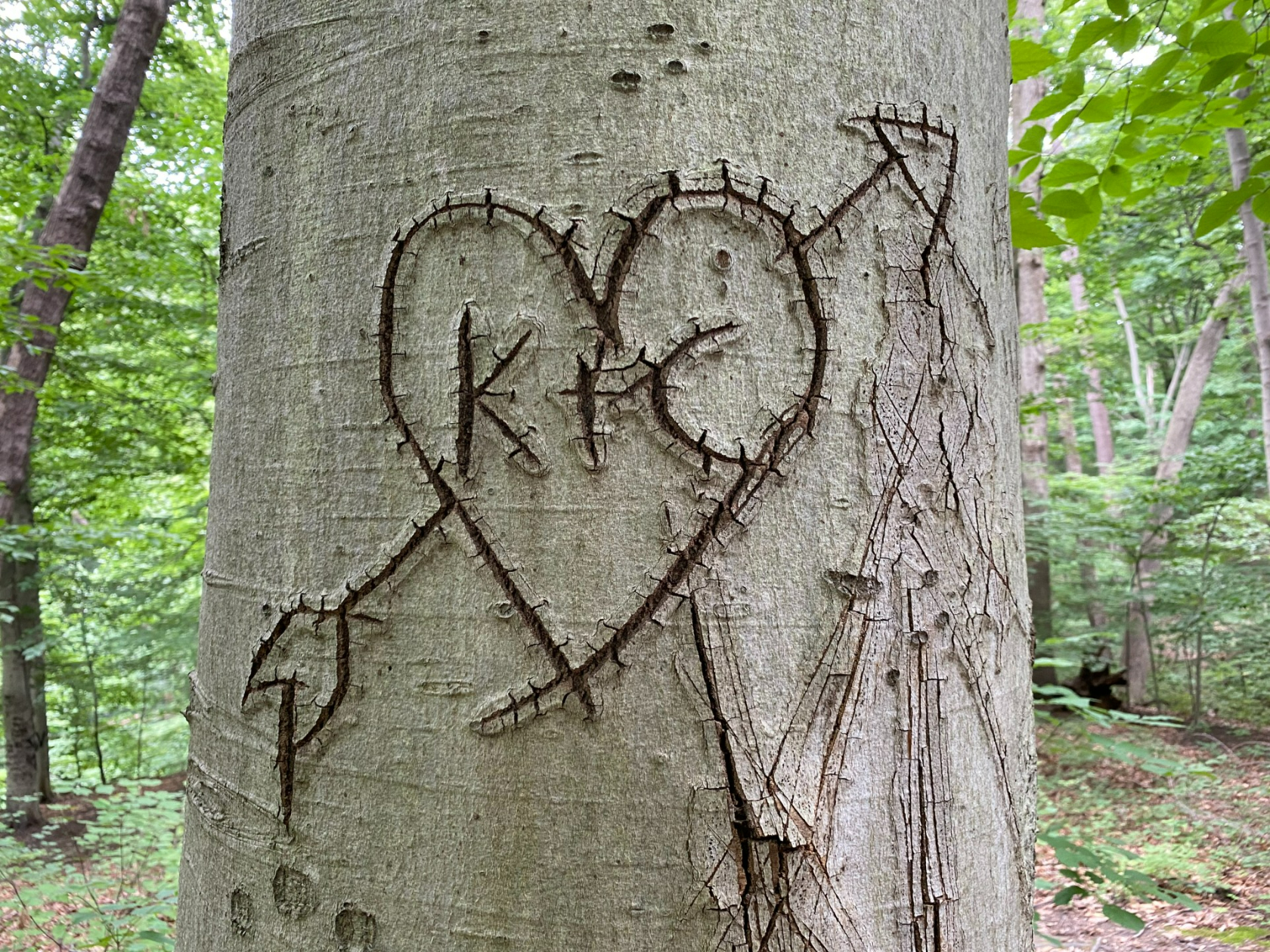
Even if you don’t recognize the American beech by name, you’ve surely seen the tree: it has distinctive, smooth, gray bark, often carved with people’s initials. In fact, beeches are the most common tree in much of the D.C. area, and now they’re under attack by a new, mysterious invasive pest. It’s just the latest threat to local forests.
The deadly ailment is called beech leaf disease, and it was first detected in the D.C. area in 2021 in Prince William County, at Prince William Forest Park. Then in May, 2022, it was found in Fairfax County, at Burke Lake Park.
“I stepped into the forest from the road and I looked up and I saw it,” says Joan Allen, who is in charge of tracking forest pests in Fairfax County’s Urban Forest Management Division.
“It was a very sad day for me,” Allen says.
Since then, the disease has been found at two other parks in Fairfax: Fountainhead Regional Park and Hemlock Overlook Park. It has not yet been detected in Maryland, or D.C., though it will likely arrive in the near future, if it hasn’t already — lurking unseen in the tree canopy.
Beech trees are ubiquitous in this part of the country. In Fairfax, there are an estimated 4 million of the trees — outnumbering humans by more than 2 to 1. If those trees were all wiped out, it would be devastating to local forests. But beech leaf disease is still new, and there are a lot of unanswered questions.
‘Dramatic’ decline
Beech leaf disease was first discovered in Ohio in 2012. “The symptom expression was really unusual. We’d never seen anything like it,” says Constance Hausman, senior conservation science manager at Cleveland Metroparks.
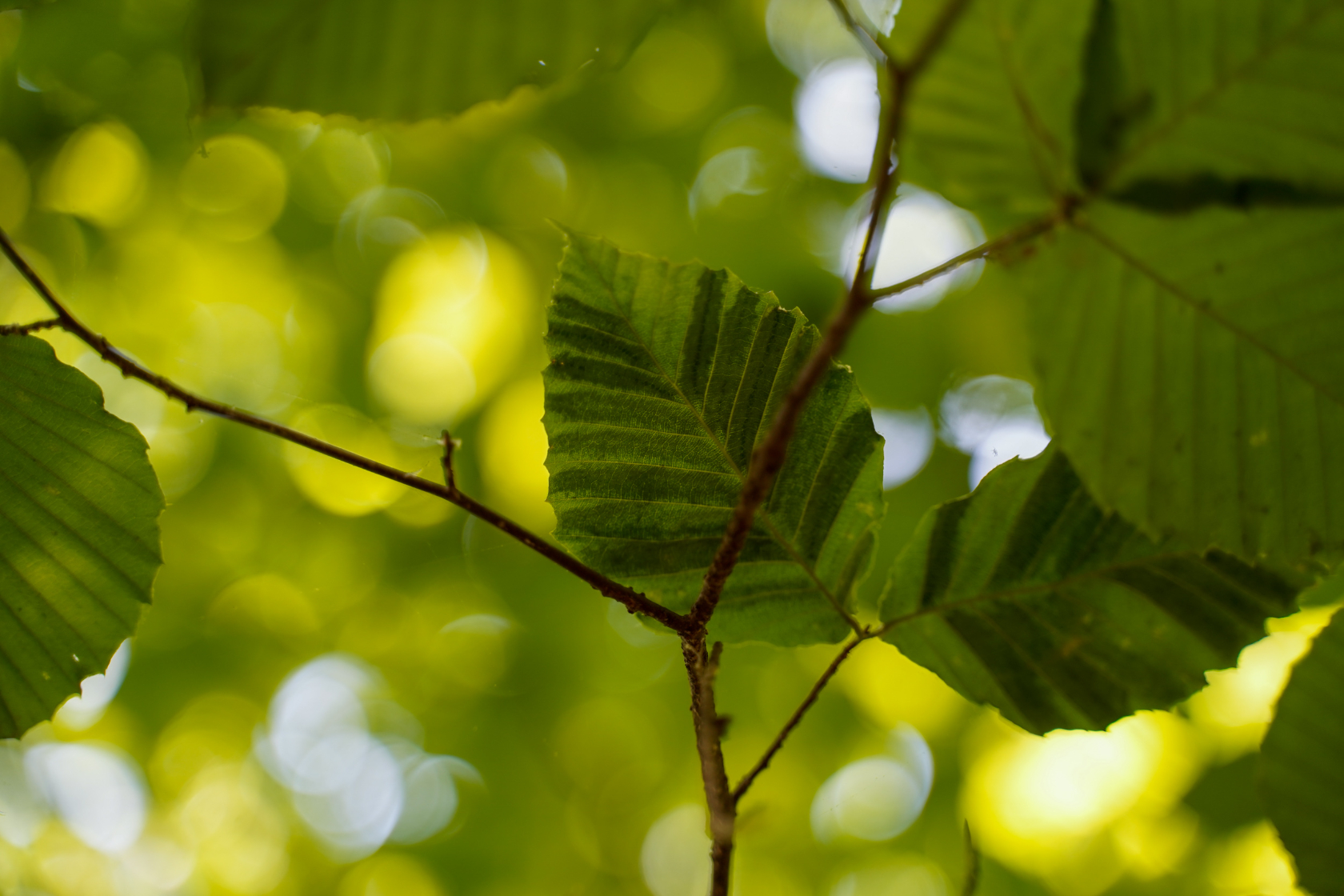
If you know what to look for, the disease is easy to identify — it appears as dark bands between the veins of leaves, visible as soon as leaves emerge in the spring. Over the course of the summer, the leaves can grow brittle and brown and start to curl.
After more than a decade observing the disease in Ohio forests, Hausman says, “the decline has been rather dramatic.”
There’s a growing list of native trees that have been virtually eradicated from the landscape by invasive pests – the American elm, the American chestnut. Most recently, ash groves are collapsing, under attack by a beetle called the emerald ash borer. So, is the American beech next?
“It’s not as clear-cut as emerald ash borer, where you experience over 99% mortality,” Hausman says.
For one thing, some beeches appear to be resistant — so it’s possible beeches could evade the pest. And, the pattern of decline is different, because so far the disease mostly kills saplings, not mature trees. This could mean a slower unraveling of beech ecosystems: if saplings can’t survive, mature trees won’t have a next generation to replace them.
Small trees often die within three or four years of being infected, Hausman says.
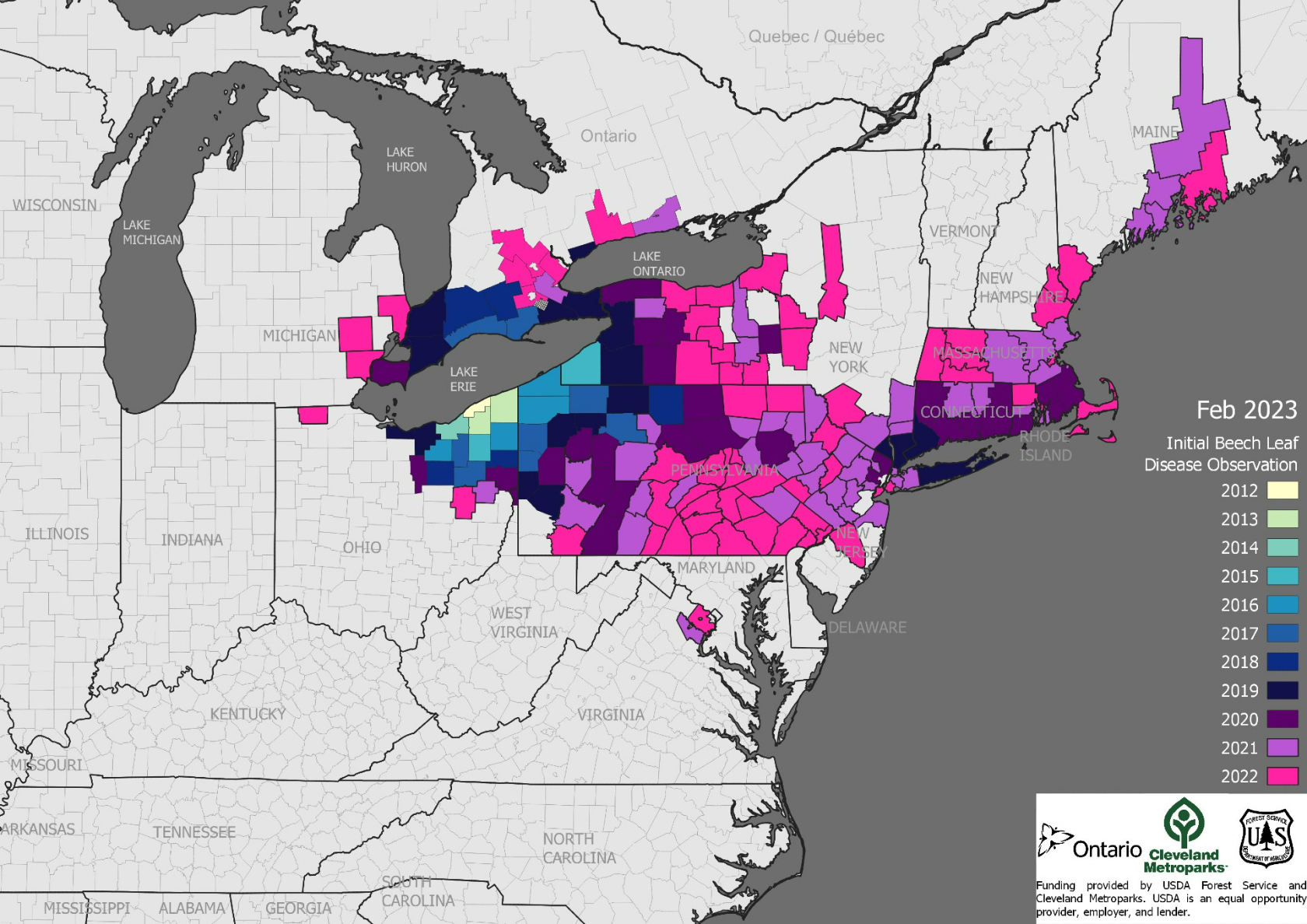
Hausman is part of a team of researchers studying the disease and its progress across North America. It has now been found in 11 U.S. states in the Midwest, Northeast and Mid-Atlantic. Hausman says the disease has been progressing at about 10 miles per year in the Midwest, but may be moving much more quickly on the East Coast.
Blame a tiny worm
For several years, the cause of beech leaf disease was a total mystery. Now scientists believe the culprit is a parasitic nematode.
What is a nematode, you ask?
Paulo Vieira surely knows the answer — he’s a nematologist at the U.S. Department of Agriculture in Beltsville.
“Just imagine a tube, a small tube,” Vieira says.
Nematodes are tiny roundworms — like earthworms, but not segmented. They are everywhere — living in the soil, in plants, in animals, in the human body. In fact, nematodes are the most numerically abundant animal on the planet. Scientists have described some 30,000 different species of nematode, but believe there are as many as a million species out there. Many are so small you need a microscope to see them, while the largest ever found can grow to nearly 30 ft. long (it lives in the placenta of sperm whales).
In the case of beech leaf disease, the nematode in question is called Litylenchus crenatae mccannii, and it was discovered in 2019.
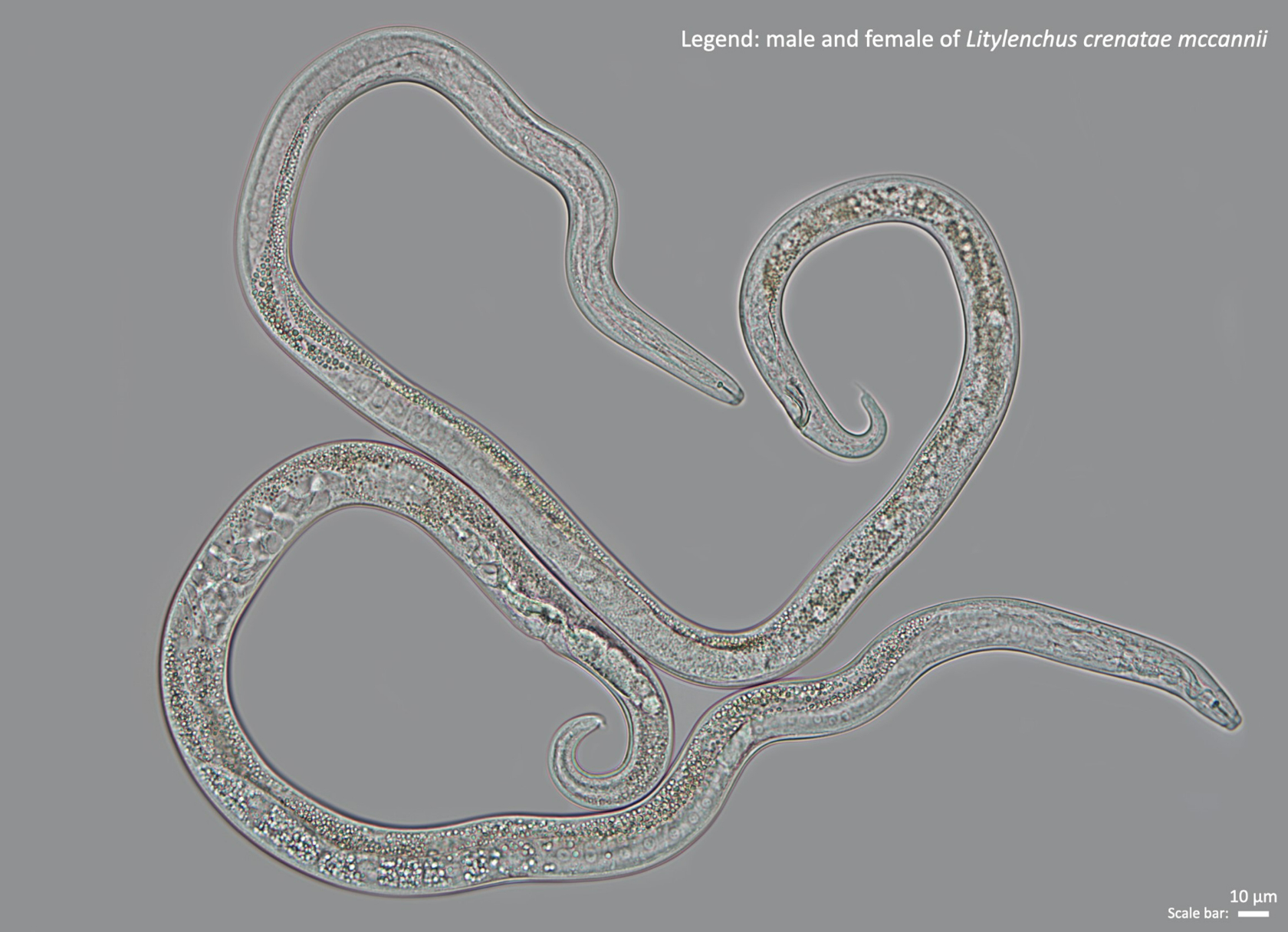
“You have a large number of these nematodes in the leaves and in the buds of the trees, and that’s why they cause a lot of problems, because they use the bud and the leaf tissue as a source of nutrients,” says Vieira. In one individual bud, he says, there can be thousands of nematodes feasting away.
With such a newly discovered creature, there are still a lot of puzzles. How exactly does it travel, particularly across large distances? How did it get to Virginia, apparently skipping over neighboring states? Where did it originate, and how did it get to North America?
“So far, we don’t have a specific answer for those questions,” Vieira says. “Our best rational hypothesis is that this is potentially coming from Asia.”
Many invasive organisms hitch rides around the world thanks to global commerce, on planes and ships. Once it arrived in North America, the nematode likely spread via wind and rain, though it may also be getting an assist from other organisms, such as insects or birds.
Visiting a nematode infested beech forest is “very depressing,” Vieira says, because of the widespread damage it causes. “I have been working with nematodes for a while and I never noticed a nematode that can damage a tree as fast as this particular nematode.”


Why it’s a problem if saplings die off
Beech trees are most noticeable in the winter. After other deciduous trees drop their leaves, beeches still cling to them — a trait known as marcescence. The golden-brown leaves rustle and shimmer in the breeze, and the trees’ grey bark catches the light.
Joan Allen says beech is her favorite tree — not just because of its beauty, but also because beech nuts are an important source of food for wildlife.
But beeches are generally not on the menu for one very abundant and very hungry creature: the white-tailed deer. In fact, one reason beech trees are so common in the D.C. area is that deer don’t like to eat them, and prefer to munch the leaves of other trees. While seedlings of other trees, like oaks, are often devoured by deer, beeches are more likely to survive.
This means that if young beech trees are killed en masse by beech leaf disease, there could be few other tree species to take their place, raising the risk that forests would be overtaken by invasive shrubs and vines.
In national parks in the D.C. area, beeches are the most common tree overall, and beech saplings outnumber other trees by an even greater margin. Beeches account for 11% of trees D.C.-area national parks, while beeches make up 20% of saplings.
In some parks the numbers are even starker: in Rock Creek Park, for example, beeches make up 17% of the forest, and 44% of saplings are beeches.
Allen says the infested area she found in Fairfax last year has roughly doubled in size, from about a half acre to about an acre.
“In just one year’s time, we can see that it’s progressed significantly since it was found last year. It was not this bad,” Allen says.
Be on the lookout
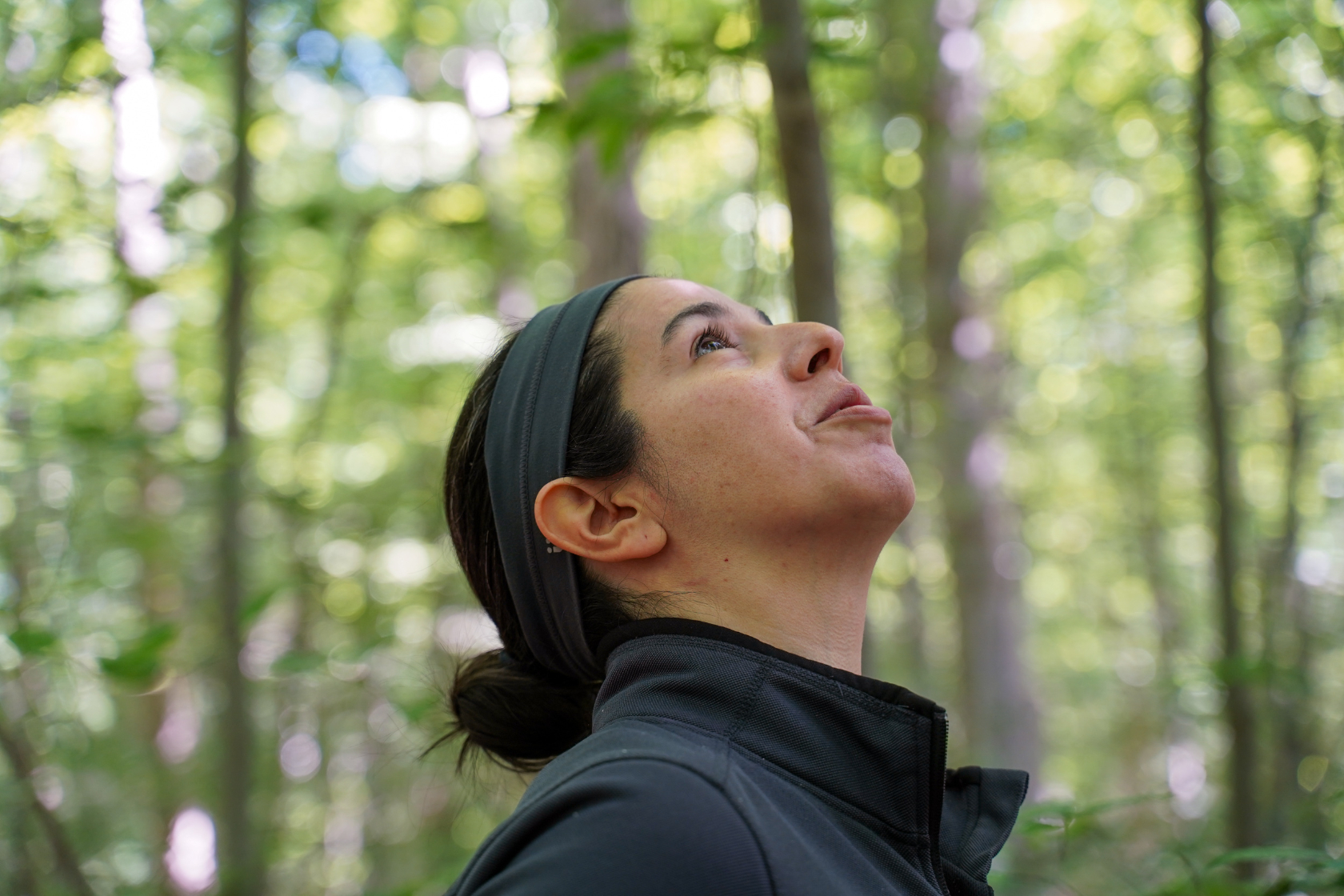
Right now there is no treatment or any way to slow down the disease. But it’s still helpful to track where it’s spreading. If you’re out in the woods, look up through the canopy – the disease’s signature dark bands are easiest to spot from underneath, with the light shining through.
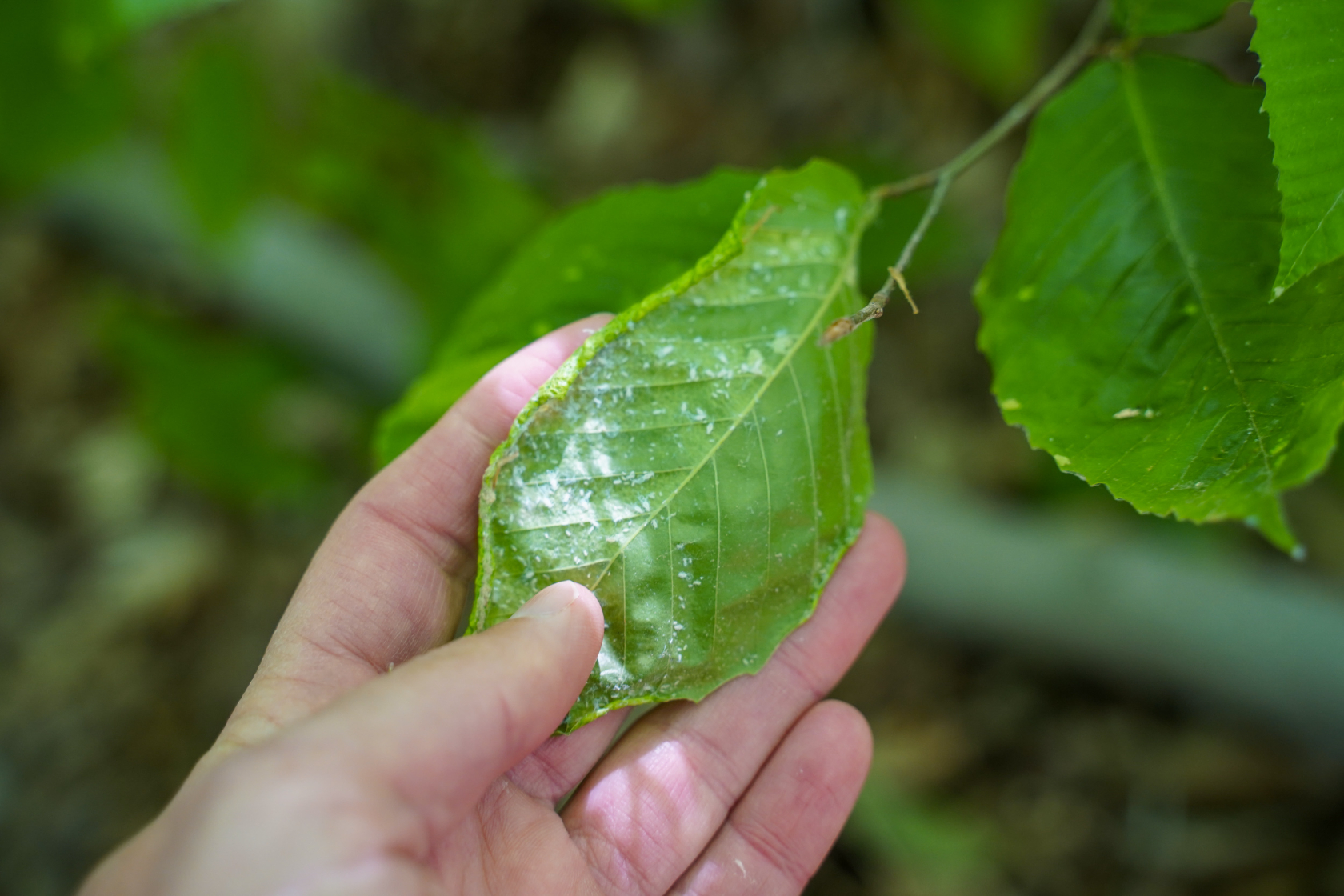
But keep in mind not all beech leaf ailments are beech leaf disease. There are also numerous native pests, such as aphids, that attack leaves but do not kill the tree. Light-colored banding in leaves is not a sign of beech leaf disease.
If you do see signs of beech leaf disease, take photos and report the sighting to local or state officials.
In Virginia:
- Email the Virginia Department of Forestry at foresthealth@DOF.virginia.gov
- In Fairfax County Urban Forestry Management at pestmail@fairfaxcounty.gov
In Maryland:
- Email the Maryland Department of Agriculture’s Forest Pest unit at fpm.mda@maryland.gov
In the District:
- Visit D.C. Urban Forestry’s online portal for reporting invasive pests, or email bad.bug@dc.gov.
In D.C.-region national parks:
- Email NPS’s Megan Nortrup at megan_nortrup@nps.gov
This story was updated to add information for reporting beech leaf disease in D.C.