Héctor Alejandro Arzate
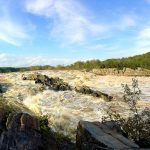
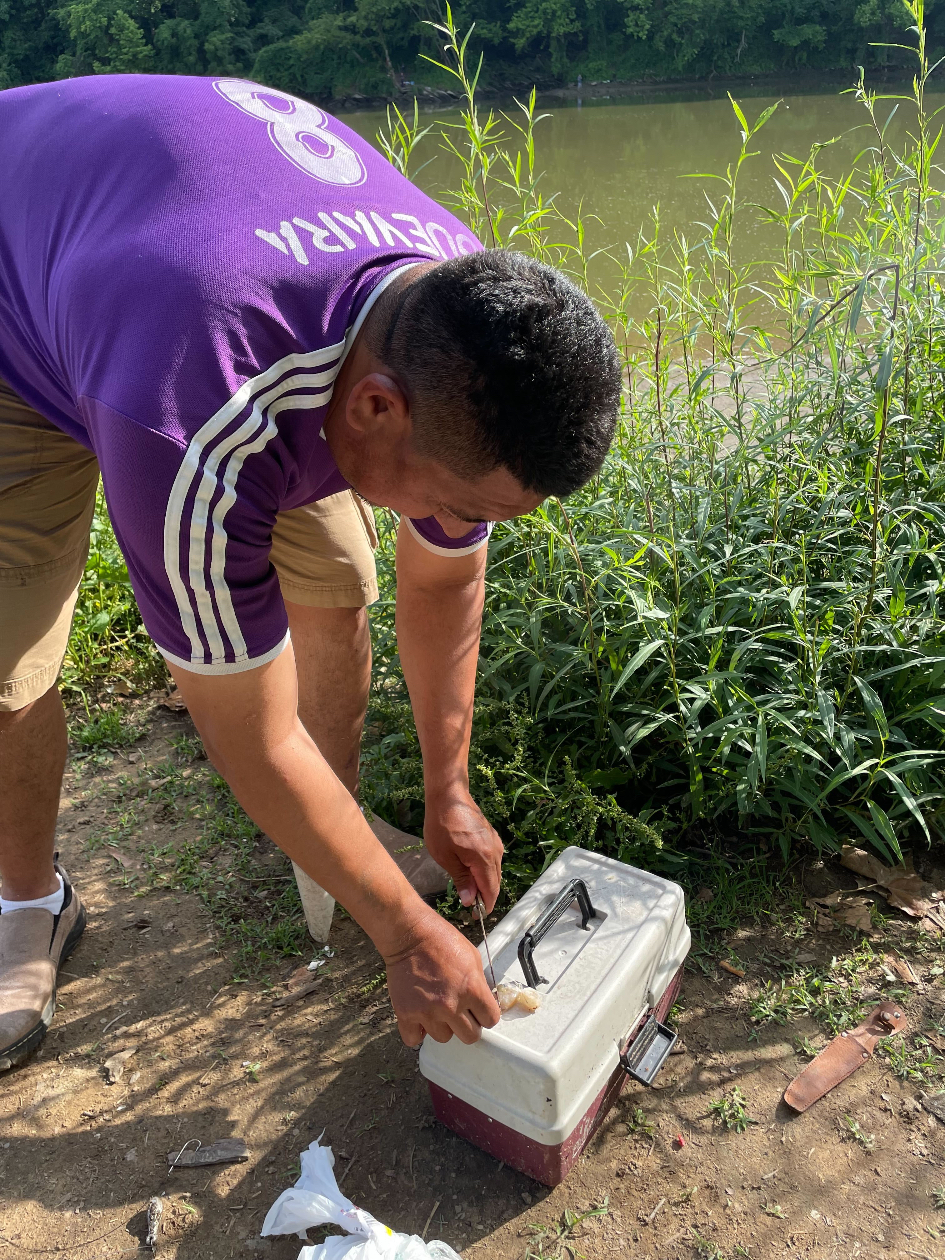
Maurico Guevara is sitting on a camping chair, waiting. His 12 year-old son, Chris, is on his lap and just as vigilant. They’re at Fletchers Cove in Northwest D.C., watching the Potomac River flow while sycamore and early paw-paw trees surround the duo from behind.
They look on silently as their cañas, or fishing rods, rest alone after being cast into the water. Today, they’ve put shrimp on the hooks in hopes of landing something big – maybe a catfish. After a few minutes, they stand, stretch their legs, and check their lines: No bites, but that’s o.k. when the point is just to be outdoors with your loved ones.
“I’ve always come here to fish – it’s beautiful,” says Guevara, 43, who lives in Wheaton, Md.
It’s these quiet afternoons that matter most to Guevara. He was born in El Salvador, where he says his father taught him how to fish at a young age. He still remembers their time together fondly at the Río Goascorán, near the border of Honduras.
They would spend most of their day working as campesinos in field crops but would fish in the morning and afternoon. “It was our favorite sport,” says Guevara.
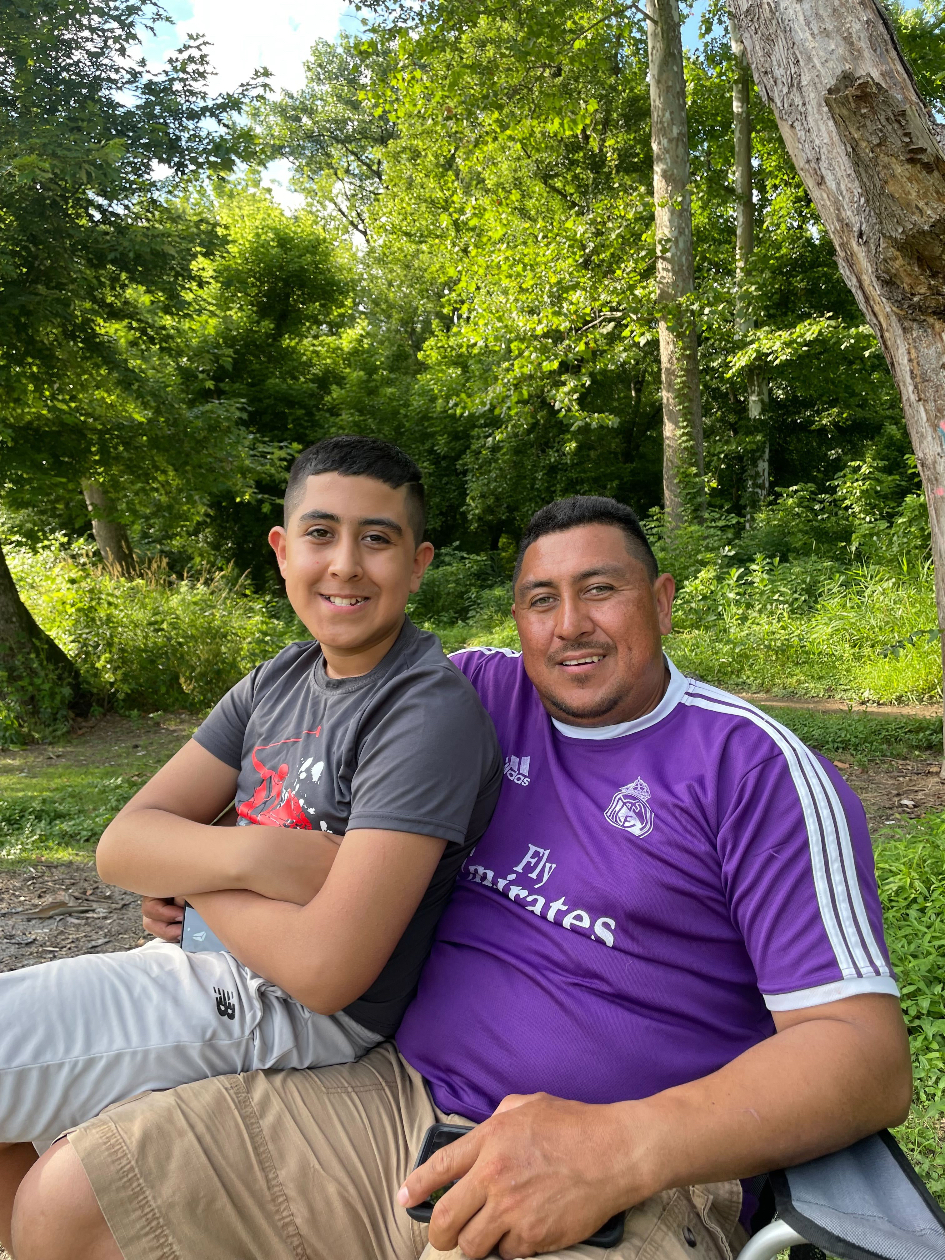
More than two decades later, Guevara now travels the D.C. region for his job working with concrete at a local construction company. While it can be demanding, he says fishing allows him to blow off steam and feel triumphant whenever he catches something. But the satisfaction is even sweeter when he gets to share it with Chris.
“I want to teach my son how to fish,” says Guevara. “I only have one son [and] I love him.”
Chris, meanwhile, says he’s just about hooked. He really likes the time he gets to share with his father. They’ve been fishing together since he was about 9 years-old. And he’s not just taking on these traditions but also learning to be just as determined as his dad.
“We didn’t catch anything but we’re gonna get it,” says Chris.
To Noel Lopez, it’s not surprising that families like Guevara’s are finding much more than fish at Fletchers Cove. Lopez is the cultural anthropologist and tribal liaison officer for the National Park Service’s National Capital Region. He’s conducted oral history interviews throughout much of the Potomac and Anacostia River regions for a 2020 study on fishing.
“It’s an amazing thing to have some space that people can use to engage in not only enjoyment of the outdoors, but in reliving and re-experiencing tradition and traditional ways of gathering food,” says Lopez. “People come back time and time again to share those experiences with the next generation and the generation after.”

According to Nicole Goines, a representative for D.C.’s Department of Energy and Environment, the District sells approximately 7,000 fishing licenses per year. About 75 to 85 percent are purchased by out-of-state anglers, particularly in Maryland and Virginia. And as a natural gathering spot for American shad, striped bass, largemouth bass, smallmouth bass, catfish, and walleye, Fletchers Cove is one of the most popular sites for recreational fishing in D.C.
“Anecdotally, the community of anglers who fish at Fletchers Cove and nearby areas is quite diverse,” says Goines.
Rob Catalanotto is the executive director of the Friends of Fletchers Cove. He says the nonprofit is focused on maintaining and preserving the historic site because of its importance as an access point for fishing within many communities, including indigenous people of the area.
“It has all kinds of history,” says Catalonatto. “It just is known as a place within D.C. where you can really experience the great outdoors. You can fish, you can bird watch, you can kayak and boat, [and] picnic.”
For Catalonatto, it’s also equally valuable for Fletchers Cove to remain accessible to people from all backgrounds, including immigrants.
“It’s just clearly a really popular spot for a really diverse array of people and families and communities,” says Catalanotto. “We want to help build those experiences, especially for kids and people who might not otherwise have the opportunity right here in the DMV.”
Although Wilbur Velazquez says he’s not very good at fishing, Fletchers Cove has enough to offer that he keeps coming back to it. He loves having access to the Potomac River and occasionally reeling in “whatever I can catch,” he jokes.
Born in the Mexican state of Chiapas, Velazquez has been living in D.C. for the past 24 years. Throughout most of that time, he’s worked in the gardening and landscaping business. Like others, he says the jobs he gets hired for have allowed him to provide for his family, but the work itself can be exhausting.
Velazquez says that’s why he likes to get down to the water whenever he can – it’s an activity that allows him to relax outdoors and get away from work.
“More than anything, I do it for de-stressing,” says Velazquez, 42.
Although he might not be as skilled as your typical angler, he says it’s worth the time – and money – to rent a rowboat or kayak for a few hours. Similar to Guevara, Velasquez also enjoys that he gets to bond with his friends and family, even if he doesn’t land any fish.
“I see that there are people who are experts. It’s like their sport, right? They know what bait to use or how to really fish. But when we fish, if we catch something, great. If not, oh well,” says Velazquez.
Around two years ago, Velazquez says he was lifting furniture and injured his hip, which led to him having surgery for a replacement. He’s recovered significantly since then but he says it’s still difficult for him to stand for long periods of time. Nowadays, he tries not to strain himself both on and off the job by resting frequently in a wheelchair.
“I suffered a lot, but here we are thanks to God,” says Velazquez.
Still, Velazquez’s mobility issues have also made it hard for him to go fishing alone or as regularly as he would like to. He needs help from others, but that hasn’t stopped him. In fact, he’s starting to feel more encouraged to get outdoors.
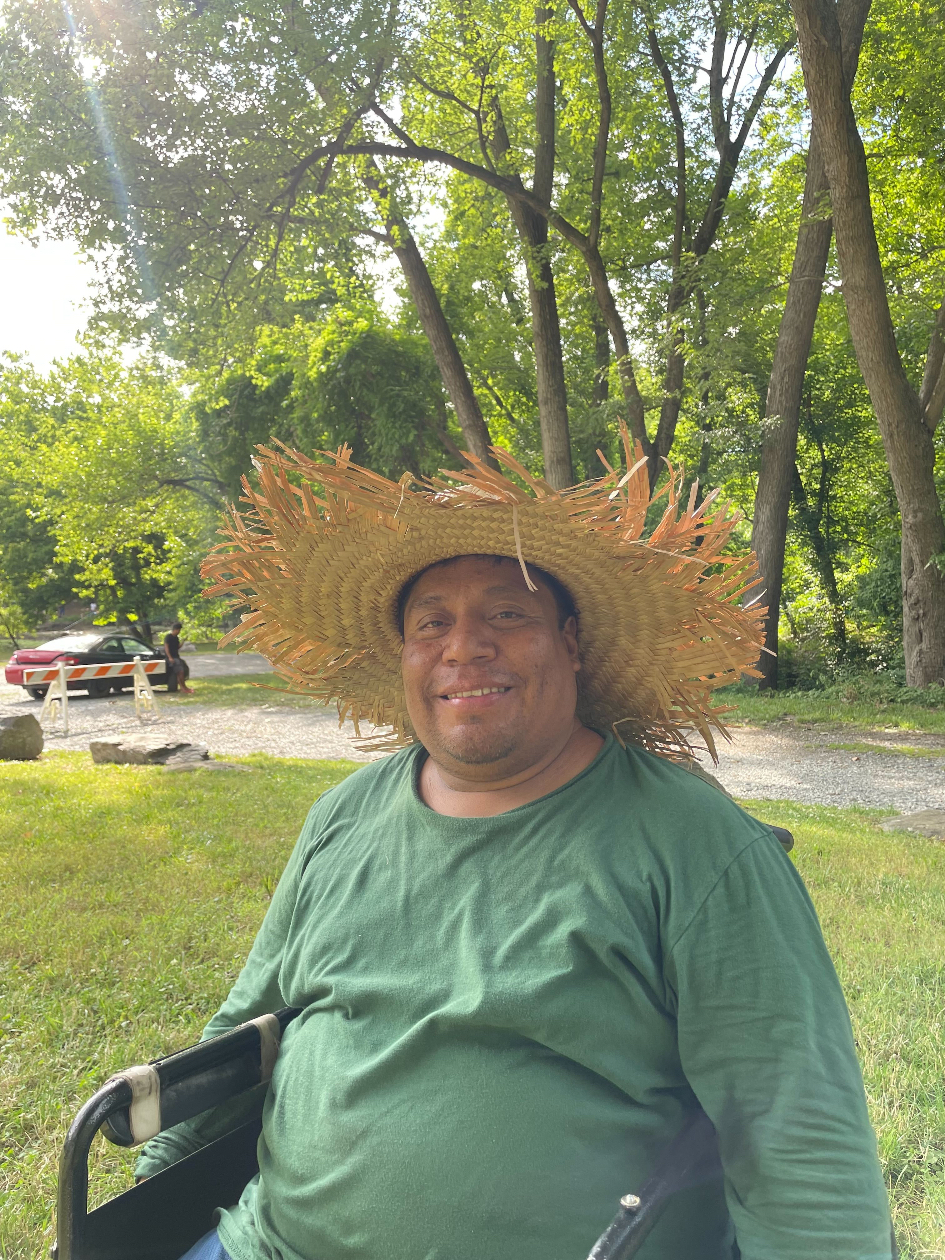
“I was in the hospital for almost four months, and I know that it is better to at least come here with this wheelchair for a while than to spend four months in a bed,” says Velazquez.
Lopez, meanwhile, says that empowerment is exactly why places like Fletchers Cove matters to immigrant communities.
“If there is a higher purpose for green spaces, it feels like that’s it. To really connect with other people, to connect with nature, and to engage in some holistic sort of healing by being outdoors,” says Lopez.
Despite not catching any fish that day, Velazquez says he’s just grateful for his health and another afternoon with his rod, reel, and good company. “The important thing in life is to live it, as the song says, ‘one day at a time.’”