 Sarah Y. Kim
When Cesar Toledo learned that most of his student loan debt might be forgiven last year, he “felt like a weight lifted from my shoulders.”
Toledo had $25,000 in student loan debts. Under President Biden’s student loan forgiveness program, he would have had $20,000 of those debts forgiven. He and his partner began talking about buying a home and adopting children.
But those plans were upended when the Supreme Court struck down the program in late June. Now, he and millions of other borrowers will need to start repaying those loans in October, and student loan interest will resume Sept. 1.
“It feels like a punch to the gut,” Toledo told DCist/WAMU. “My partner and I now have to push back some major life decisions because of this crippling debt that we both are strapped to.”
Toledo, who is in his early 30s, is uncertain of how exactly to move forward. He estimates that it would take about 10 years to pay off his debt if he stays in the region.
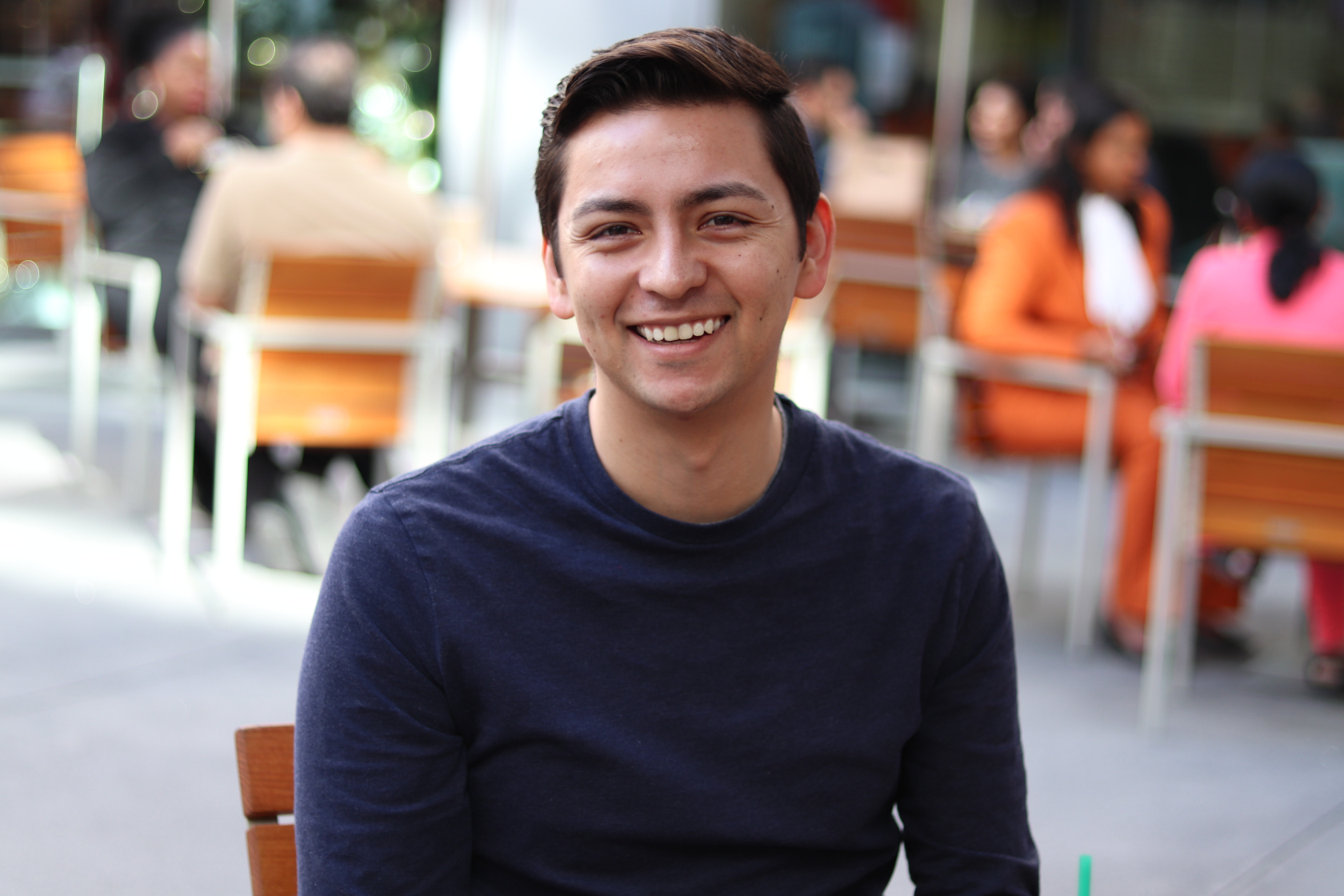
Toledo is especially attuned to education policy issues; he is the Deputy Director of Democrats for Education Reform D.C. His organization wants to see local government step up and expand programs to help lower student debt, and they hope the D.C. Council and mayor will take action.
The D.C. area has some of the highest student debt burdens in the country. Many residents are recent college graduates, and borrowers are further hampered by the area’s steep cost of living.
For some residents, Biden’s student loan forgiveness program left them more or less debt free. The program canceled up to $20,000 of federal student loans.
Many, like Toledo, were suddenly in the position to consider homeownership sooner. One resident told DCist/WAMU last year that he bought his first car because of the news.
Others were contending with much more debt, but they still would have seen relief. Dylan Wolters, a data scientist in D.C., had about $36,000 of student debt under his name and an additional $90,000 under his mother’s. But with $20,000 forgiven and income based repayments, he would have been able to get the $36,000 under control.
“Nothing immediately changed,” Wolters said. “But it was astronomical to think about what it could mean.”
Wolters is hoping the federal government might find other ways to cancel his debt. Immediately after the Supreme Court decision, the Biden administration announced new measures to help offset the end of the debt relief program. Those include the possibility of using the Higher Education Act of 1965 as a legal basis for canceling loans. The legislation allows the education department to “compromise, waive or release loans.” But that process could take months and face similar legal challenges.
The measures also include a temporary year-long on-ramp program that would prevent borrowers from being considered delinquent or referred to debt collection agencies if they miss their repayments.
But for now, Wolters isn’t optimistic the debt relief program will be replaced with anything comparable.
“It just kind of feels like Charlie Brown – I’m trying to kick the football,” Wolters said. “It’s emotionally exhausting at this point.”
Nicole LaFragola, 35, has a little over $65,000 in student loan debt. Last year, she learned that she would get $20,000 of that debt canceled.
“I remember how exciting that day was,” LaFragola said. “We started talking in a friend group chat about it, and how it was going to change things for so many of us…we all felt lighter that day.”
She’s planning to buy her first home with her partner through the Maryland SmartBuy program, which serves potential homebuyers who are paying off student debt. But the program caps student debt at $50,000, and because of the Supreme Court’s decision, LaFragola no longer qualifies.
Now, she’s focused on paying off the additional $15,000 by next spring or summer. LaFragola is finding ways to make money on top of her job as an aeronautical photographer, like dog-sitting and participating in clinical trials. She and her friends with student debt say they’re saving as much as they can, and one of them is looking for a more affordable place.
Dan Ford, 27, works for a humanitarian organization in D.C. and has about $55,000 in debt. He lives with his mom in Loudoun County and was hoping to use loan forgiveness to move into his own place.
Now, that plan seems unlikely. He said that it would take him about 10 years to pay off his student loans if he stays in the region and moves into a place of his own. If he stays with his mom, it would take about three years.
Ford said many of his friends are transplants and don’t have family to count on; some have considered leaving the region altogether because of their student debt. If he were to move out of his mother’s place, D.C. would not be very practical for Ford; he said he would probably be able to pay down his debt three or four years faster in another city.
“This just isn’t tenable,” Ford said. “I don’t think it’s good for the economy to have 27-year-olds still living at home and counting every penny instead of going out and spending it on housing and restaurants and activities and vacations.”
Ethan Miller, a financial planner in the region and owner of Planning for Progress, says his clients’ discretionary budgets will be taking a hit, and he expects that to affect the local economy.
It could be especially challenging because under rules put in place during COVID, people haven’t had to make student loan payments in more than three years. In addition, high inflation means wage increases haven’t kept up with the rising cost of living.
“That debt forgiveness plan would have been transformative for millions,” Miller said. “The fact that it was struck down simply means that those folks are going to be stuck in this sort of student debt cycle for a lot longer.”
Miller has been telling his clients to take care to manage their budgets leading up to October, and to make sure they’re on the right repayment plan. The Department of Education is introducing a new income-based repayment plan it touts as “the most affordable repayment plan ever created.” The department says the new plan would save some borrowers $1,000 a year, and would mean no monthly payments for others.
Madison Gharghoury has $127,000 in private loan debt and $38,000 in public loans. Having graduated during the pandemic, she hasn’t made payments on her public loans yet.
Gharghoury is 27, and she anticipates she’ll be 40 by the time she’s paid off her debts. She has canceled plans to buy a new car.
“They’re telling us that we don’t even deserve this little bit of help,” Gharghoury says. “So, you know, it hurts, it sucks. I’m definitely angry.”
Kat DesCamp-Renner, 24, has about $28,000 in debt. She graduated two years ago and is now a government affairs associate and defense policy analyst.
Her plan right now is to limit her spending and pay a higher flat percentage of her salary each year. She’s only at the beginning of her career, so she’s hoping as she gets older it’ll become easier to make her loan repayments as her salary goes up.
She’s not sure how long that’s going to take though, and how to juggle that with the cost of living in D.C.
Many of her friends are in the same boat. But she knows that many others had a very different experience.
“I know there are a lot of people in D.C. who, you know, their parents could pay for everything in college. They came out with absolutely no worries. And it kind of feels like they’re being given a head start,” she said.
“This was like leveling the playing field. Now it’s being taken away.”