Colleen Grablick
DC SAFE, the only organization in the city that provides around-the-clock emergency housing for domestic violence survivors, unveiled a new low-barrier crisis shelter Thursday, a massive expansion of the nonprofit’s services.
Located in Northeast D.C., the 30-unit shelter, which will be fully operational in October, includes apartment-style rooms with their own kitchens, bathrooms, and living areas, available to residents within an hour’s notice. It’s only the second of its kind in the city; DC SAFE currently operates a 10-unit emergency shelter in Southeast. Prior to the onset of the pandemic, the organization had already planned to open a shelter at the new location, which it purchased in 2017; but with the increase of domestic abuse during the COVID lockdowns, the opening became all the more vital.
“Our numbers doubled during the pandemic,” Natalia Otero, co-founder and executive director of DC SAFE told DCist/WAMU. “Now, we’re serving around 11,500 survivors a year.”
According to Otero, roughly 1,800 DC SAFE clients are at high-risk of re-assault or becoming homicide victims each year; of those, 50% are in need of critical emergency shelter. Over the past three years, the organization has also expanded who it serves, opening its doors to fill gaps in city services, even as city grant dollars for survivor support organizations were slashed. Otero said when Casa Ruby, the D.C. nonprofit dedicated to providing housing and other services for the city’s LGBTQ+ residents, closed last year amid financial mismanagement, DC SAFE began housing additional clients to make up for that loss. In the absence of a coordinated response from the D.C. government, the organization was also one of the providers that stepped up to serve the migrants bussed into the city last year, offering housing to people seeking an escape from gender-based violence once they arrived in the city.
“It’s kind of a testament to the way that the building was built — we want to make sure that we can be able to service a wide variety of people without any limitations,” Otero said.
The 30 units have the ability to expand or contract, with flex bedrooms that allow for a unit to change from a one-bedroom to a two-bedroom depending on a survivor’s needs. In total, depending on the variety of families served at a given time, the building could fit around 70 people. The roof of the six-story building contains a patio and conference area, and a playground will also be added to the roof, so survivors can go outside with their children away from the street. The ground floor houses DC SAFE offices, where residents can access wrap-around services, connect with a housing provider, or receive assistance filing protection orders. D.C. Forensic Nurse Examiners, a nonprofit which provides free exams for survivors of sexual, intimate partner, and family violence, will also have an office in the building.
“We want to provide as many resources as possible, and we want to have actually measurable outcomes…not only in preventing further harm, but minimizing all of the hurdles and the boundaries that survivors have,” Otero said.
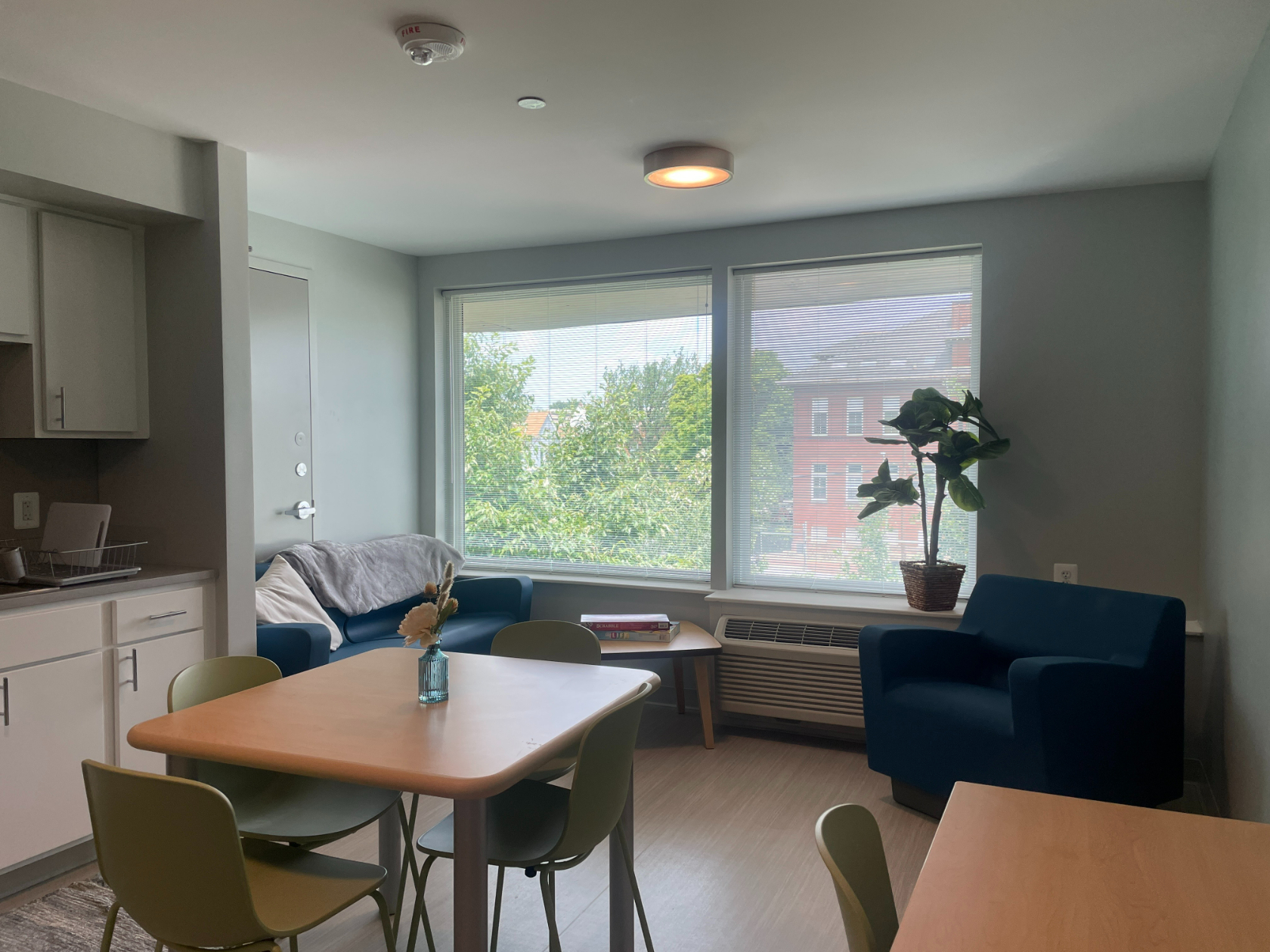
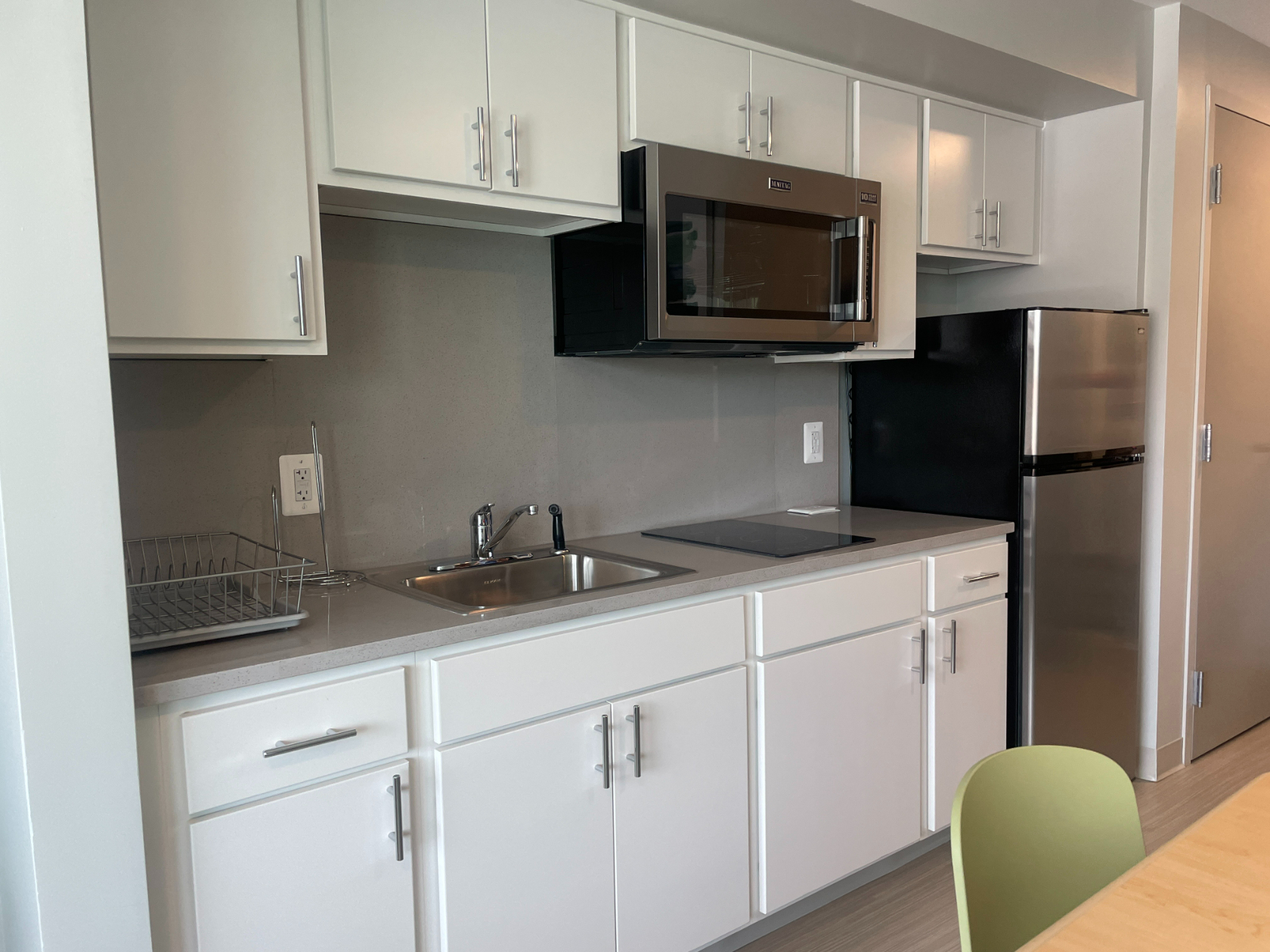
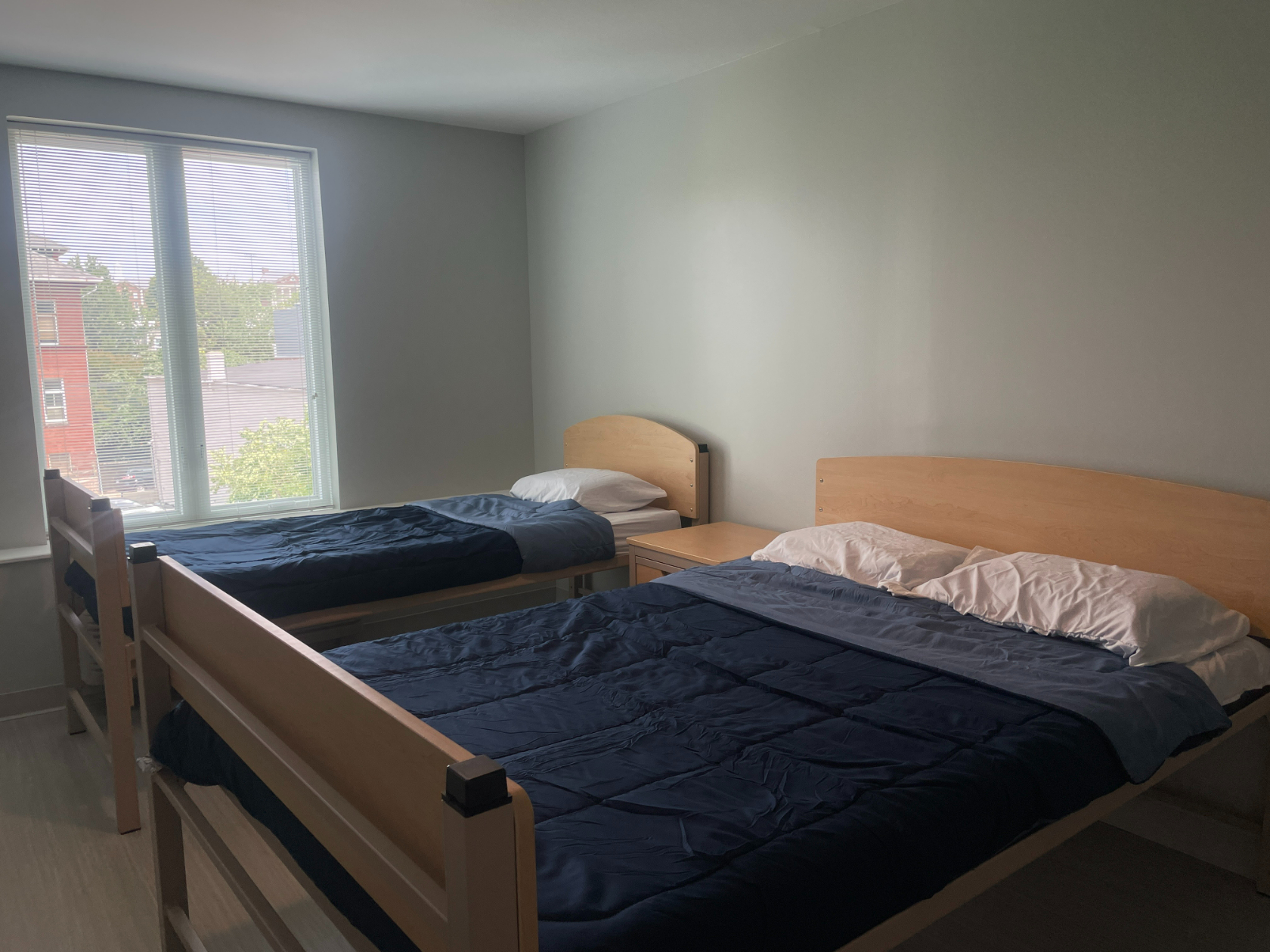
DC SAFE has operated its Southeast shelter since 2011, and Otero said over the past decade-plus they’ve learned what services and details are needed to serve its specific population, and what location makes the most sense. The new building in Northeast is within walking distance of grocery stores, meaning advocates won’t have to call Ubers for residents to get food or other supplies. It’s also close to public transit on the Red Line, and only two stops away from the D.C. courthouse, where survivors can meet with their legal advocates.
Once clients begin using the space in October, DC SAFE will eventually decommission the Southeast location.
“What we found with the Southeast location, and that’s why it took us so long to identify this location, is that so many of our clients are from that area that it becomes a safety risk for them to stay [at the shelter],” Otero said.
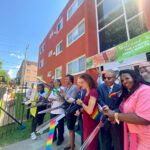
Otero and other DC SAFE leaders gathered Thursday to celebrate a ribbon cutting on the building, and were joined by D.C. lawmakers like Ward 2 councilmember and chair of the Judiciary and Public Safety Committee Brooke Pinto, former chair of that committee Charles Allen, and Ward 5 Councilmember Zachary Parker. Deputy for Public Safety and Justice Lindsey Appiah, Office of Victim Services and Justice Grants (OVSJG) Director Jennifer Porter, and Del. Eleanor Holmes Norton were also in attendance.
DC SAFE received a $5.7 million investment from OVSJG to open the shelter, and Del. Eleanor Holmes Norton also helped secure $570,000 in the fiscal year 2022 for the space. Still, for several years D.C. organizations that serve domestic violence survivors have pleaded for more money from the city. In the most recent budget cycle this spring, Mayor Muriel Bowser proposed about a $75 million cut, 30% from last year, which would’ve put funding for victim services back at pre-pandemic levels.
Otero said that while opening this space fills an immediate need, there is work to be done by the city in creating a comprehensive continuum of care that meets residents where they are. Often when a resident utilizes SAFE DC resources, they may also be interacting with five or six other organizations — federal and local — at the same time, but left with little support to navigate a complex web of governmental services.
“Not all survivors want or are the right fit for the services we provide. Likewise, they’re not always a good fit for government services or another nonprofit,” Otero said. “I think part of the problem is that there’s just not enough communication and cross-collaboration between those of us that are doing the work on the ground, and then some of the other wraparound services that the city is providing.”
“We are good at what we do, but we’re only the entry point.”