Martin Austermuhle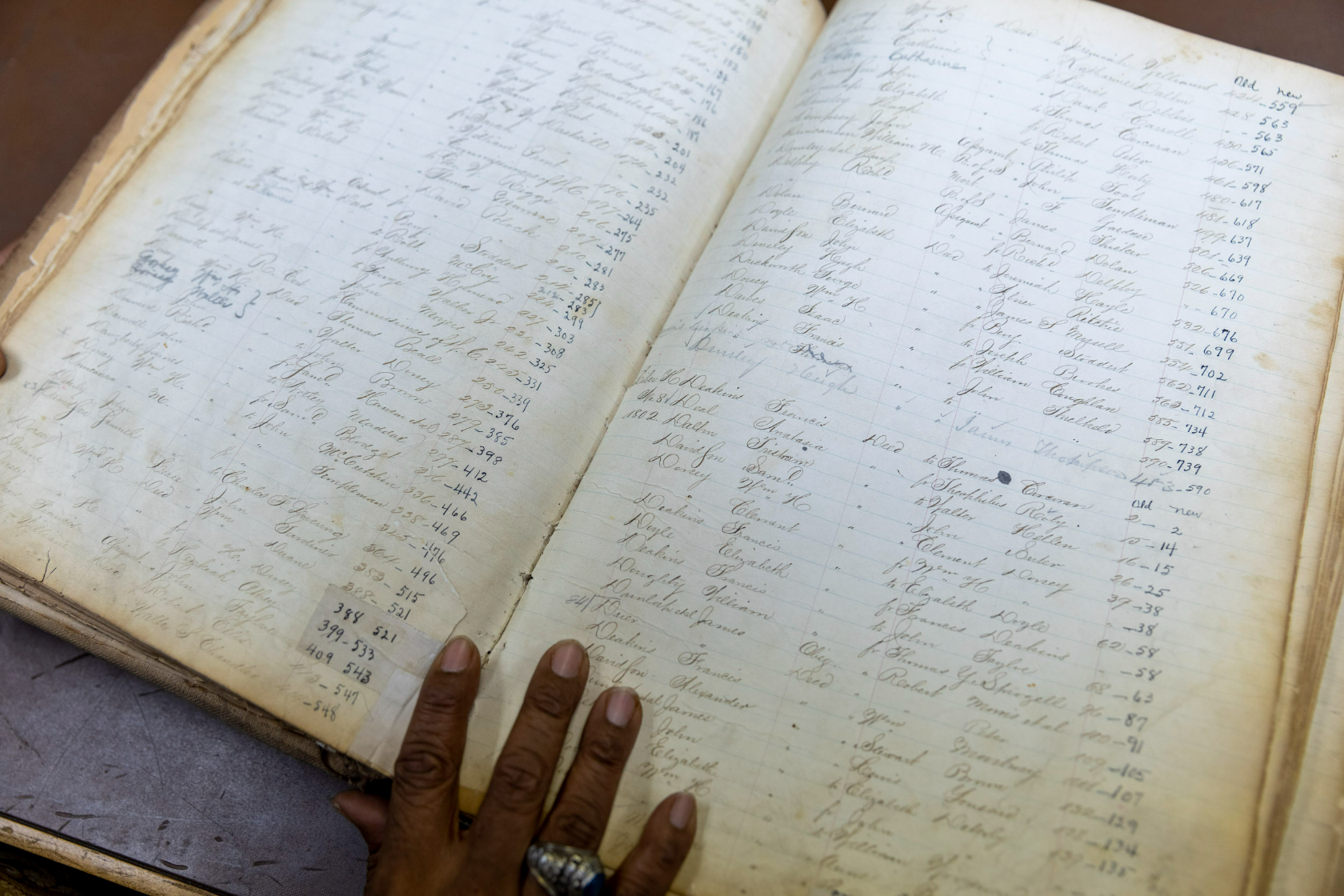
Dr. Lopez Matthews, Jr. traces his finger along a yellowing page in an oversized book. He reads a header written in ornate script, standing above columns containing names and dates.
“Register of Slave Commitments to the D.C. Jail,” he reads. “So these are slave runaways from 1848 to 1862. So when enslaved people ran away and they were caught, they were taken to the D.C. Jail, and this is the register.”
Matthews likens the book to an official lost and found; in this case, though, the “property” was people.
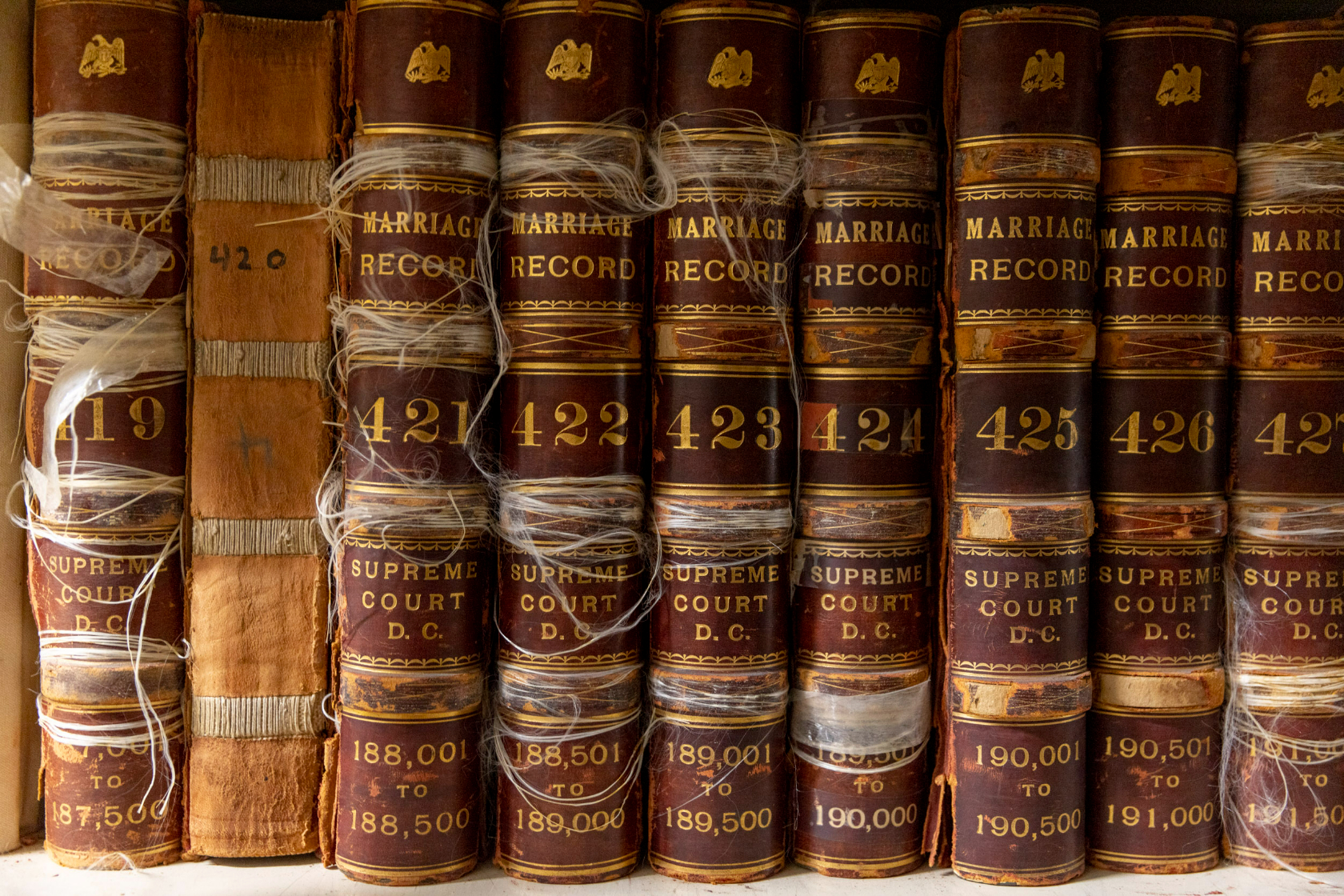
The book is a small sampling of the thousands of historical documents, artifacts, and materials that are housed inside the archives, the city’s formal repository for government records. There are property records signed by Frederick Douglass, a longtime recorder of deeds for the city; a will for Alexander Graham Bell; Duke Ellington’s birth certificate; and tens of thousands of square feet worth of other official documents that tell the story of the city’s people.
“The archives are basically the memory of the District: birth certificates, death certificates, marriage records. Those are all records that relate to the residents of D.C.,” says Matthews, who was hired last year to serve as the city’s first official state archivist. “This is your history in connection with the government.”

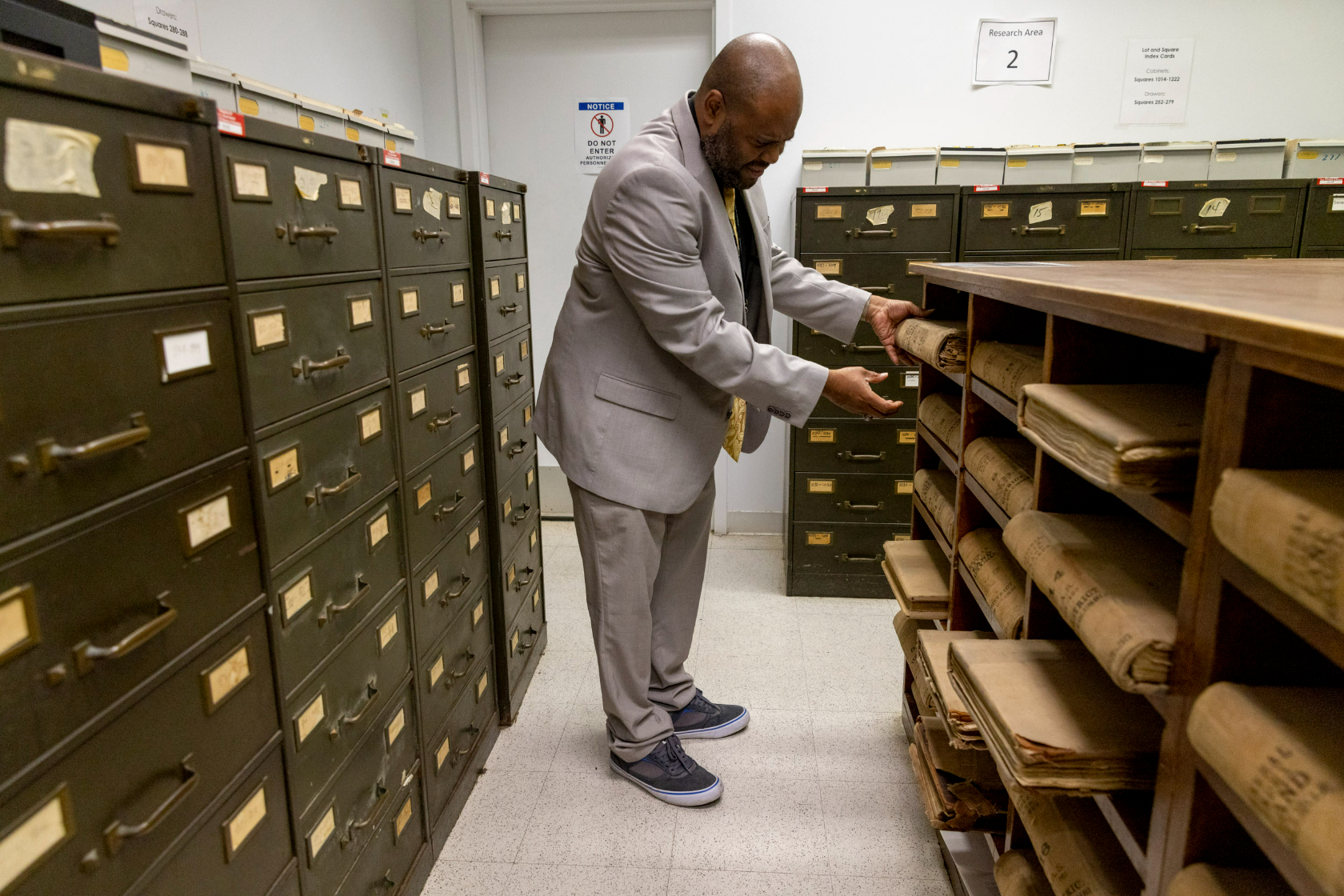
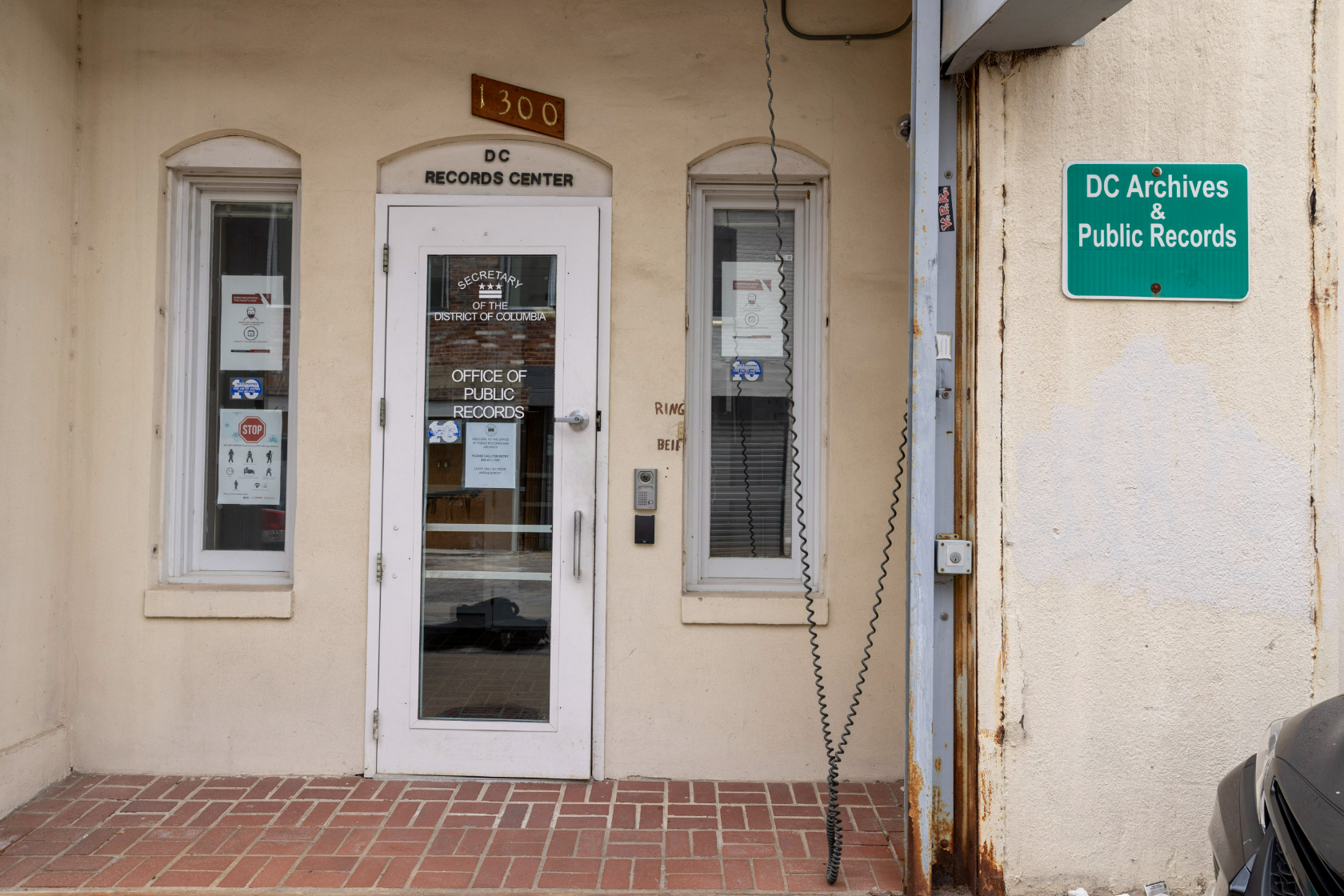
For decades much of that history has been hard to find, largely hidden away in an anonymous storage facility located in an alleyway a block off of the Washington Convention Center. But after years of advocacy by a small but committed group of local historians and archivists, the city is moving forward on building a new $104 million home for the D.C. Archives on the campus of the University of the District of Columbia in Van Ness.
Advocates say the new facility aims to be everything the D.C. Archives currently isn’t: More spacious, better organized, and with more specialized temperature and condition controls needed to protect different materials that are hundreds of years old and easily susceptible to irreparable damage.
“If you think of it in terms of a Russian doll, a matryoshka, you need to get the external fabric of the building right. So rain doesn’t come in. So air doesn’t come in. You don’t have dust blowing in and getting all over this stuff,” says Trudy Huskamp Peterson, who serves as the chair of the D.C. Archives Advisory Group, created by the D.C. Council to oversee the efforts to locate and build a new archives building.
“If you’ve got the external skin of the building right, then you’ve got to get the internal skins of the storage areas right. Because it depends on the kind of material you’re storing, what conditions are going to be best for them to last,” she adds. “Think about your refrigerator. I mean, it’s better to put your vegetables in the vegetable keeper than in the general refrigerator.”
Peterson spent more than two decades at the U.S. National Archives, where she oversaw historic documents related to D.C.’s government when it was still controlled by Congress. She had always wanted to turn them over to the city, but says she wouldn’t until an appropriate archival facility was built. Her advocacy started almost two decades ago.
Neil Flanagan also knows the challenging conditions of the existing D.C. Archives well; he’s a local architect and historian, and he used an extensive number of government documents in the archive for a 2017 article in the Washington City Paper on the government’s push a century ago to evict a thriving African American community in what’s now Fort Reno. (That story helped influence a book he’s now writing.)
“A large number of the records are stored in a way that is too dense and requires a lot more work by the staff,” he says. “They’re double-stacked, and the shelves are packed very closely.”
Flanagan also says that the city spends money storing a large number of its documents and records in contracted facilities, making them harder to access. Additionally, “Because they have been under-resourced for 30 years, they have preserved the records and they have kept them safe, but they have not necessarily made them legible to researchers and the general public. You have a large number of records that are still not fully catalogued,” he says.
Matthews, who formerly worked as an archivist at Howard University, says the new facility will improve conditions for storing and preserving documents and artifacts, while also making them more available to the public. While no state or federal archive is as publicly accessible as, say, a public library, the existing D.C. Archives is especially limited in how many people are able to access it. A new facility will allow more researchers and curious residents in, and that it will be located on the UDC campus will also allow for more engagement, says Peterson.
“It brings research material to the campus. It’s going to provide a way for their students to come in and use the archives to understand a lot better what is the history of the city and how it affects them,” she says.
Flanagan says improvements in not just the facility but also how the documents are stored and organized will pay dividends in the stories that researchers and residents will be able to tell about the city and its people.
“The archives is upstream of an enormous amount of cultural production,” he says. “No one else is going to tell those stories besides D.C. residents. And it’s through supporting the D.C. Archives that you will have an enormous amount of cultural products five, ten years down the road from when they become available.”