Colleen Grablick
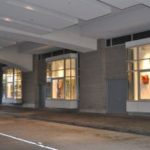
Tucked among the strip of closely nestled bars, restaurants, and bakeries on 18th Street in Adams Morgan sits an inconspicuous building that has an outsized impact on local artists.
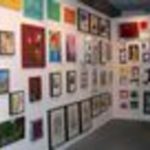
It’s the DC Arts Center, which despite its location above a tobacco shop and Mola Empanada is home to one of D.C.’s largest community art exhibitions. The annual “WallMountables” exhibit, a monthlong takeover of the center’s gallery space that closes Aug. 6, offers local artists at all levels an opportunity to showcase their work. Every summer, the small gallery is covered wall-to-wall (literally) in paintings, pictures, and sculptures, with no required theme, guidelines, or rules.
“There’s no jury to process, there’s no application review, there’s no resume that we ask artists to submit; it truly is an open invitation for any artist at any level to participate,” says DC Arts Center executive director Sean Elias. “It really merges all of our constituency base — from the public, to emerging artists, to established artists, to those who are engaged in our education programming, all into one show.”
(The DC Arts Center also serves as an incubator for performing artists in the region, using its black box theater for productions by companies that don’t have their own theaters — or the resources to rent a more prominent one.)
At “WallMountables,” artists rent a two-foot by two-foot square (or multiple squares) at a price ranging from $30 to $50, depending on the wall space, and sell their work at whatever price point they set. The exhibit also includes a new “nano gallery” space this year, which was added on for small format work that might otherwise go unnoticed on a wall covered in larger pieces.
Unlike at many galleries where the gallery owner takes a commission, “WallMountables” participants keep 100% of the proceeds of the sale of their work. The wall rental fees serve as fundraiser for the center, which is an independent nonprofit that also receives grant money from the District.
The annual exhibit is the clearest manifestation of the center’s founding mission, Elias says, which since its opening in 1989 has been to support underrepresented and emerging artists at any stage of their career. The center also runs the Sparkplug Artist’s Collective, a yearlong support program for artists trying to build a sustaining professional career with their work. The center has run the collective since 2007, and has served more than 100 artists.
This year’s “WallMountables” marks somewhat of a turning point for DC Arts Center, as it prepares to go undergo renovations for the first time in nearly three decades. With the help of a Great Streets grant from the city, the center’s gallery space will be getting a refresh, as will the black box theater, which will have new storage space, lighting, and ceiling.
“[For three decades] it has literally looked the same, just because the funding hasn’t been there,” Elias said. “Now we can update the space so it meets the standards and expectations not only of patrons but also the artists.”
The “WallMountables” exhibit runs through Aug. 6, after which point anyone interested in purchasing the artists’ work can inquire directly on the DC Arts Center website.
DCist/WAMU checked in with a few artists participating in the show, and spoke with them about their work, and the value of a space that offers a low-barrier entry in the local art industry. These interviews have been lightly edited for length and clarity.
Kanchan Balsé

Kanchan Balsé is an artist based in D.C. After the birth of her first child, Balsé began painting to channel intense postpartum feelings and contest unhealthy expectations placed on mothers. She says her work counters whitewashed depictions of family life and society; individual and collective memory, identity, and mental health are recurring themes in her practice. Kanchan’s recent mixed-media work involves collecting and assembling found items to build an understanding of a specific location over time. She’s a member of DC Arts Center’s Sparkplug Collective, Red Dirt Studios in Mt. Rainier, and is active at Rhizome DC.
How would you describe your work? My work is experimental and includes painting, sculpture, and a combination of the two. It holds binaries and contradictions — new and old, transparent and opaque, loose and controlled.
What was the first piece you displayed at a “WallMountables” exhibit? I displayed two paintings at my first WallMountables in 2005. They had surreal elements and a bold, graphic style. One featured a close-up of a couple whose faces conveyed distress and the other was of three women partying outside at night amongst trees and houses.
How do community-based exhibits like “WallMountables” benefit artists? Community-based exhibits are particularly important for self-taught or experimental emerging artists or for those with little exhibition experience.
My first “WallMountables” was one of the first times I showed work outside of my home. I had to learn a lot of basics like how to install hanging hardware, and what to say if anyone asked about the work. I didn’t talk to many people at the opening, but it was exhilarating to have my work on gallery walls. The experience gave me the confidence to apply for my first group show a few months later and from there I started building my CV and relationships with other artists.
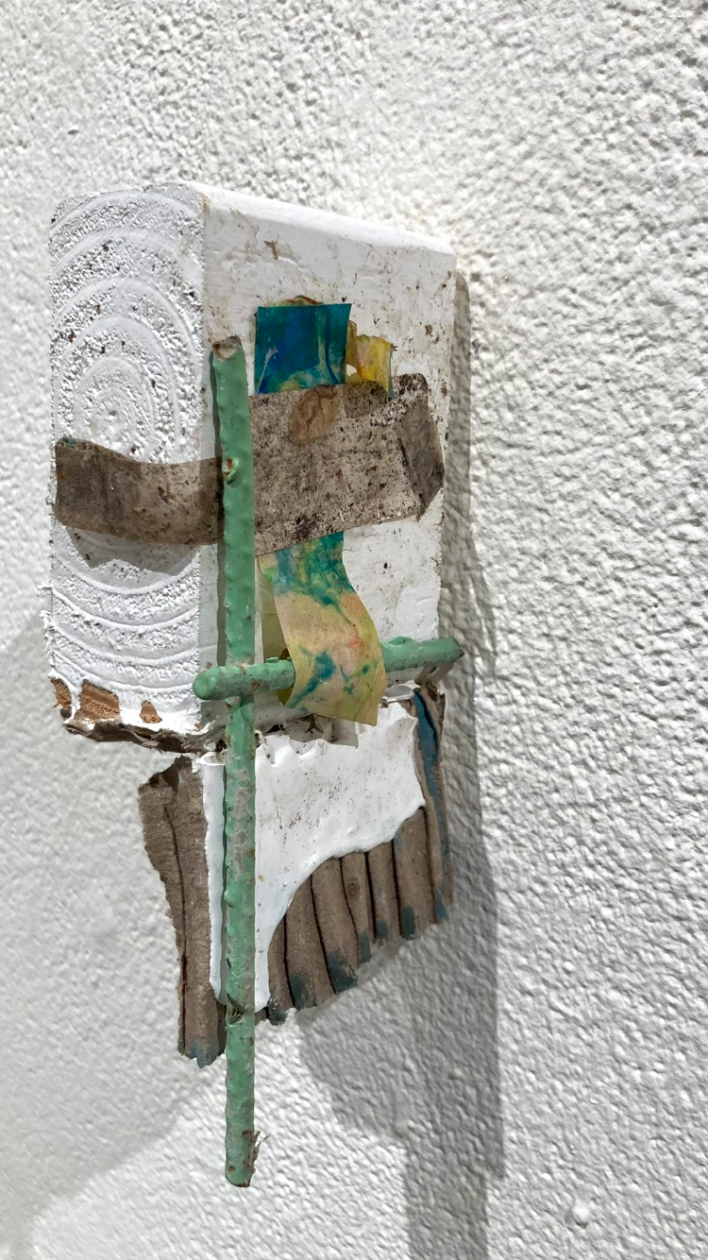
What works are you currently displaying? I’m displaying three paintings and a group of four small works combining studio scraps and found objects. It’s been great to get feedback on the 3D work I’m developing, as it’s an exciting new direction for me and I haven’t shown it before.
What around the D.C. area inspires you? Rhizome DC is a huge inspiration because it exists outside of the hierarchical, commercial art scene and promotes experimentation and community connection across disciplines. I’ve been able to develop my curation skills there without having prior experience. Most importantly, my work there has shown me that it is possible to help create an “art world” based in equity and social justice instead of following the traditional routes to a successful career, which are often inaccessible and exclusionary.
I am also inspired by Margaret Boozer, founder and director of the arts incubator Red Dirt Studios in Mt. Rainier, Maryland. In addition to creating impactful art, she is committed to developing and empowering artists and organizations and providing opportunities for marginalized artists to take up space and sell work.
Who are some of your favorite local artists? Nekisha Durrett, Wayson Jones, Nicole Salimbene, Sheldon Scott, and Rebecca Perez.
What are you working on next? I’m planning to spend the next few months developing a body of sculptural work combining materials found at Rhizome DC and the adjacent construction site, while also finishing a series of figurative paintings.
Jorge Henriquez
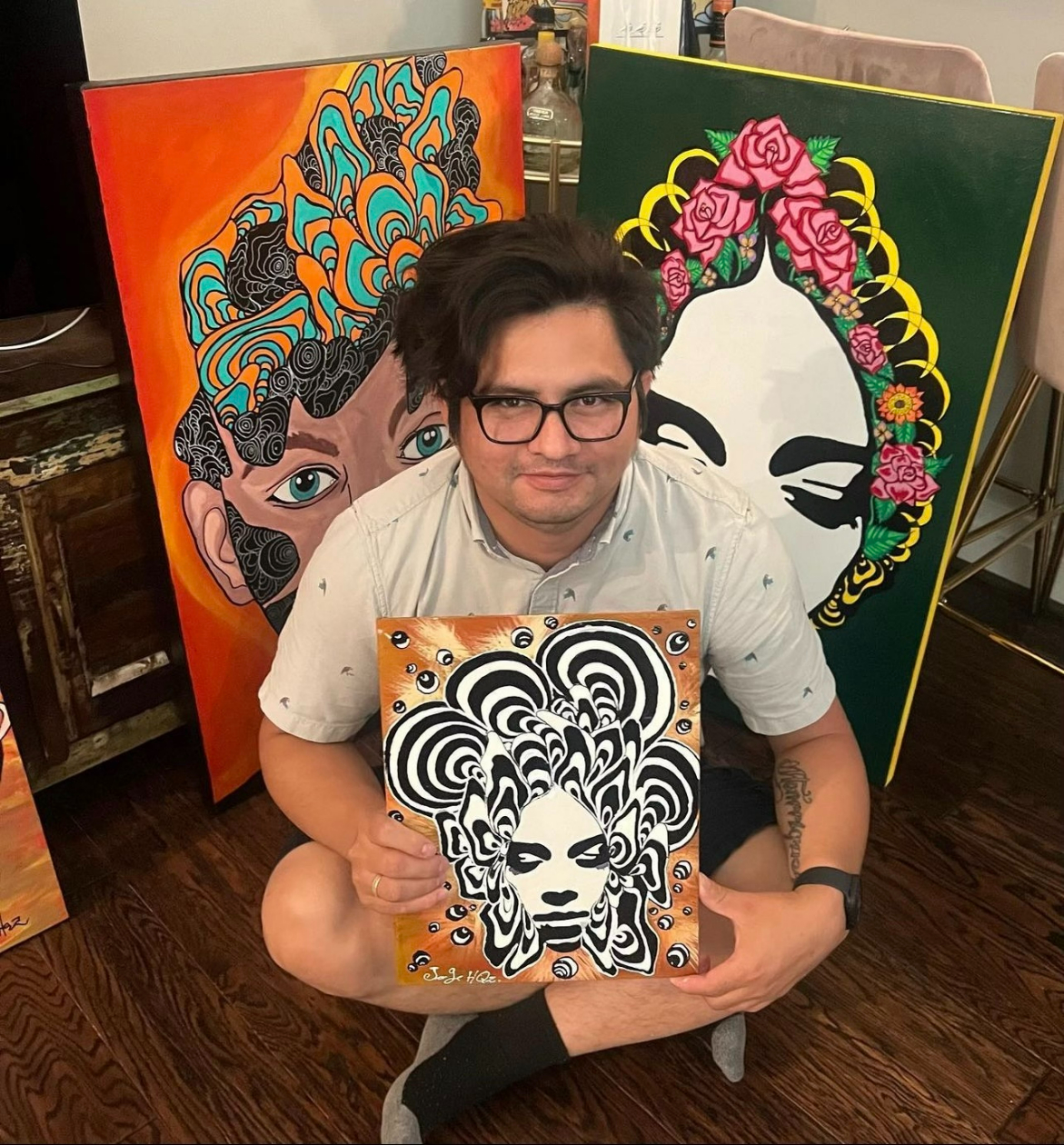
Jorge Henriquez is a D.C.-based artist who specializes in paintings and illustrations. He is a Salvadoran-born longtime D.C. resident, and self-taught artist. His experiences growing up in Salvadoran culture and as an immigrant in the District influence his artistic style, which ranges from street art to landscapes. He lives in Northwest D.C. with his wife, Cassie, and dog, Chula, and their infinitely expanding book and plant collections.
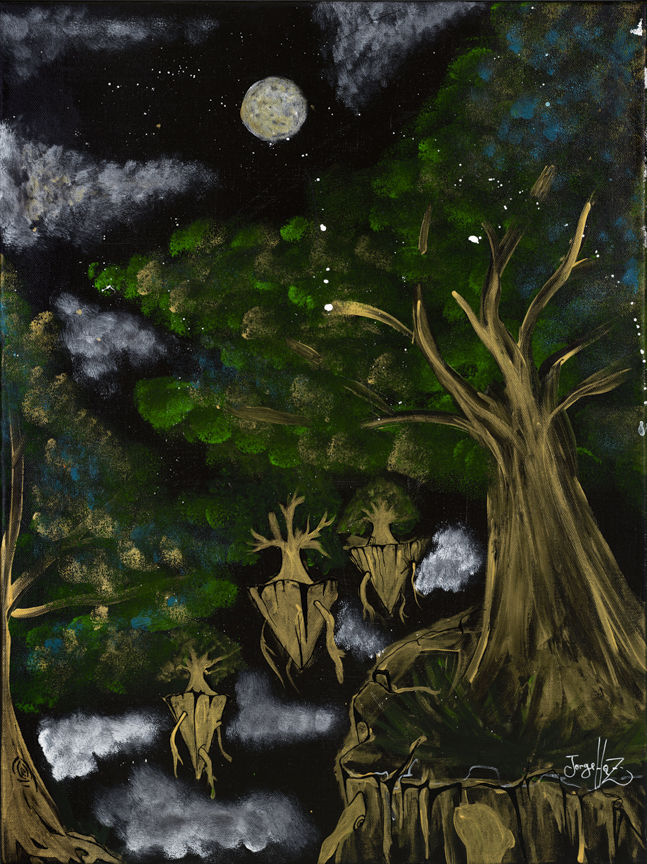
How would you describe your work? I create pieces ranging from portraits to street art to abstract and even landscapes. I paint whatever style and subject comes to me in the moment and don’t box myself into any particular style or approach. I love to experiment with color and lately have enjoyed introducing 3D texture to some pieces. Many of my pieces have a component of fantasy to them.
What works are you currently displaying at WallMountables? I initially installed a work called Synesthesia 1 and another called Cara 3: El Principito Moreno (Face 3: The Brown Prince) at the beginning of July. However, Synesthesia 1 sold through another platform and I replaced it with a third painting, Aura. [I painted Aura] after being inspired by the colors and visualizations I experienced while meditating during the pandemic. Cara 3: El Principito Moreno (Face 3: The Brown Prince) is the third in a series of semi-abstract portraits that coincidentally ended up resembling the late musician, Prince.
How do community-based exhibits like “WallMountables” benefit artists? Because it does not require selection by a jury panel and is instead a pay-to-play, yet affordable, fundraiser, emerging and amateur artists such as myself are able to participate. Starting up a small art business with a website requires capital — providing this infrastructure is a huge asset to folks just starting out. Participation in “WallMountables” is also a great entry point into the art community that is the DC Art Center. I’m really excited to be a new member of this community and I’m looking forward to getting to know the other members and find other artists to collaborate with and learn from.
What around the D.C. area inspires you? The Potomac and the natural beauty of the area. I also appreciate the architecture and communal spaces and parks such as Malcolm X (Meridian Hill). My Salvadoran community and the diverse tapestry of cultural communities from around the world [inspires me], and my experience as an immigrant navigating this city is an inspiration for my work. For me, the opportunity to pursue my art is a component of the American dream.
Who are some of your favorite local artists? Melanie Royster, I first saw her work at a pop-up at the Shop Made in DC Union Market a few months back. I love her use of color and the Caribbean influence in her work. Lilly Wilder of Relume Co is a creator who makes candles, clothing, jewelry, and more. Ben Riddlebarger’s work is fantastical, whimsical, and sometimes dark. My wife and I recently purchased his wonderfully comical portrait and ode to the actress Bea Arthur.
What are you working on next? I’m getting involved in more markets and pop-ups to share my original works and prints with a broader audience. On Aug. 27, I’ll be at Dupont Little Flea Market, and on Sept. 30, I’ll be participating in Art All Night at the U Street location.
Mohammad Obaid
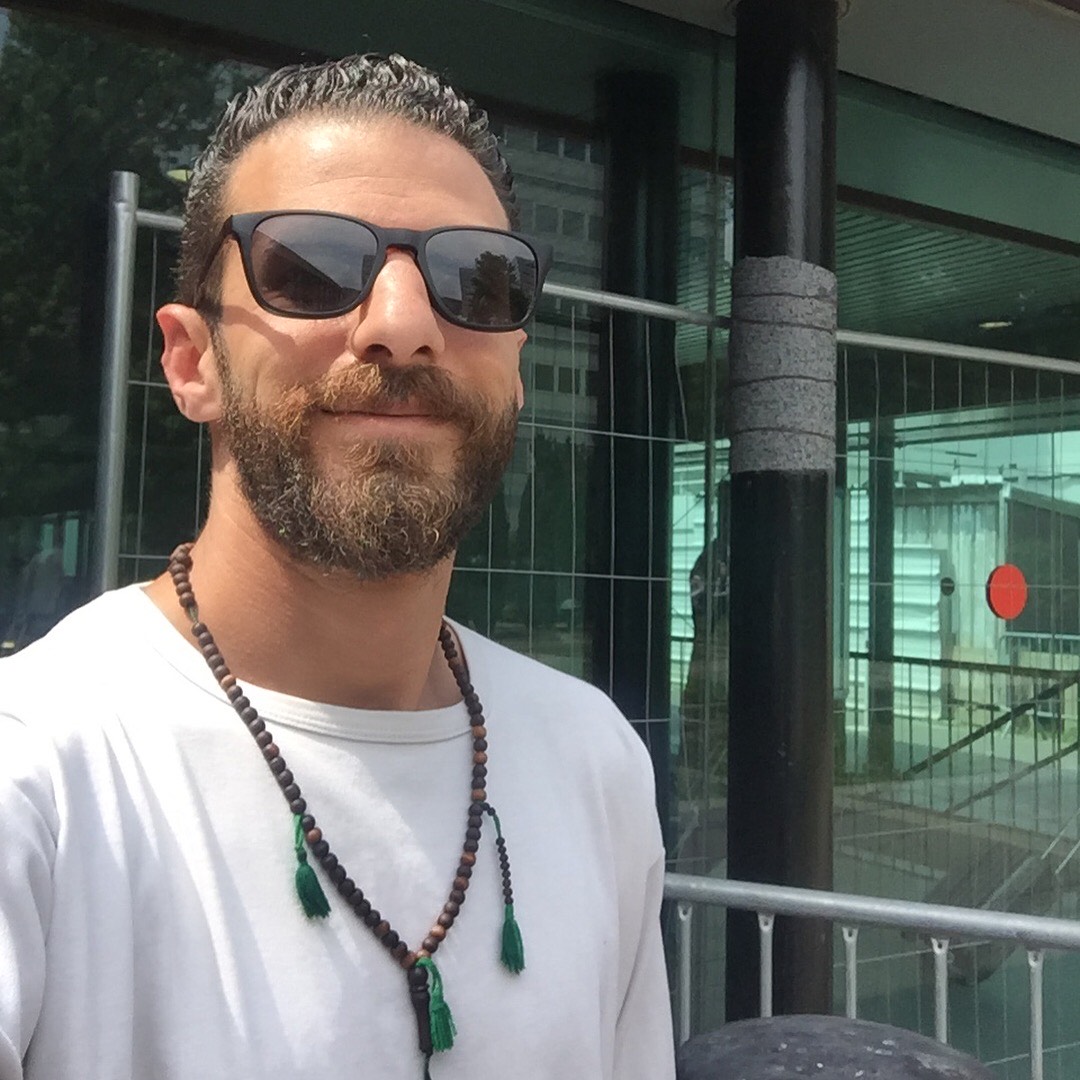
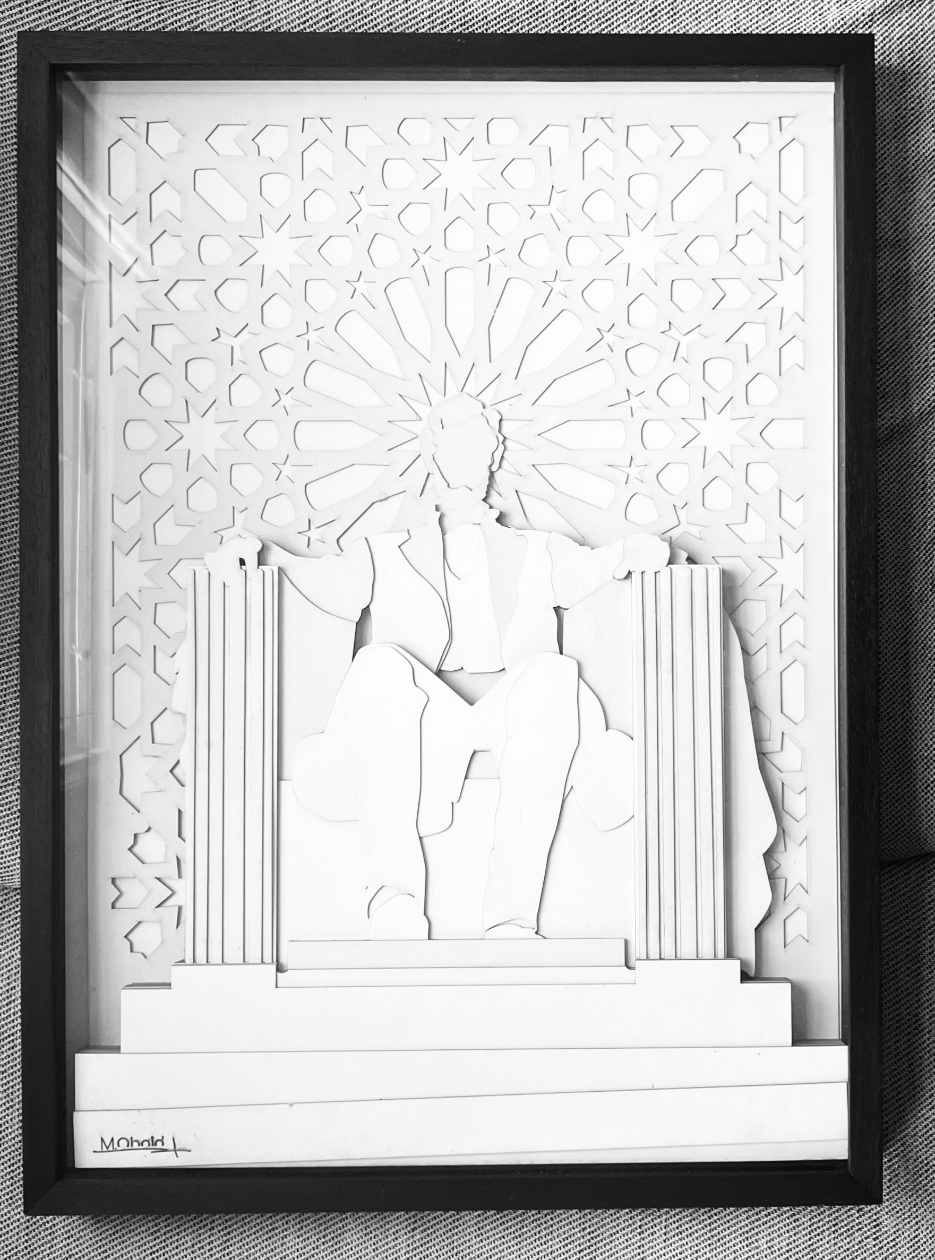
Mohammad Obaid is based between D.C. and his hometown, Amman, Jordan. After studying graphic design and exploring forms of artistic expression such as calligraphy and street art, he moved towards specializing in layered paper art. Influenced by his Syrian ancestry, Obaid says his work is a tribute to both the heritage and the vibrant youth of the Middle East, but also reflects his own experience living at the crossroads of continents and cultures.
How would you describe your work? I am of Syrian origin and grew up in Jordan, so I draw my inspiration from the natural and urban landscapes of the Middle East, as well as the geometry and symmetry of Islamic art. I like to blend these patterns and influences in order to create unique and modern compositions made of paper. I see my art as a celebration of cross-cultural influences and dialogue between civilizations.
What was the first piece you displayed at a “WallMountables” exhibit? The first piece I displayed is an artistic reinterpretation of the Martin Luther King Jr. Memorial, where I played with the perspectives of the massive carved statue and a background layered with interlacing shapes and traditional patterns.
How do community-based exhibits like “WallMountables” benefit artists? With little or no restrictions on the type of work exhibited, the DC Arts Center chooses to welcome all artists, regardless of their background. I really appreciate this inclusive approach.
What around the D.C. area inspires you?
The National Mall is an endless source of inspiration for me, I love how this place of history and collective memory coexists so harmoniously with nature. More broadly, the place of nature in this city is very unique. Washingtonians are probably used to it but, as a person born in a country where 75% of the land is desert, seeing nature everywhere here never ceases to amaze me.
Who are some of your favorite local artists? I’m a big fan of street art and Washington has its fair share of beautiful murals, especially around Shaw and the U Street Corridor. My favorite is James Bullough’s The Swimmers on 9th and U. As someone who also explored this medium back when I was in Jordan, I find his work very impressive.
What are you working on next? I’m currently working on a commissioned work for a boutique hotel in my hometown, Amman. I’m also looking for a space in Washington, D.C. or New York City to exhibit the totality of my latest work. Next year, I will be moving to Paris, so this will be a completely new experience for me, but I will continue to travel regularly to the U.S. and hopefully keep building bridges between our cultures.