 Sarah Y. Kim
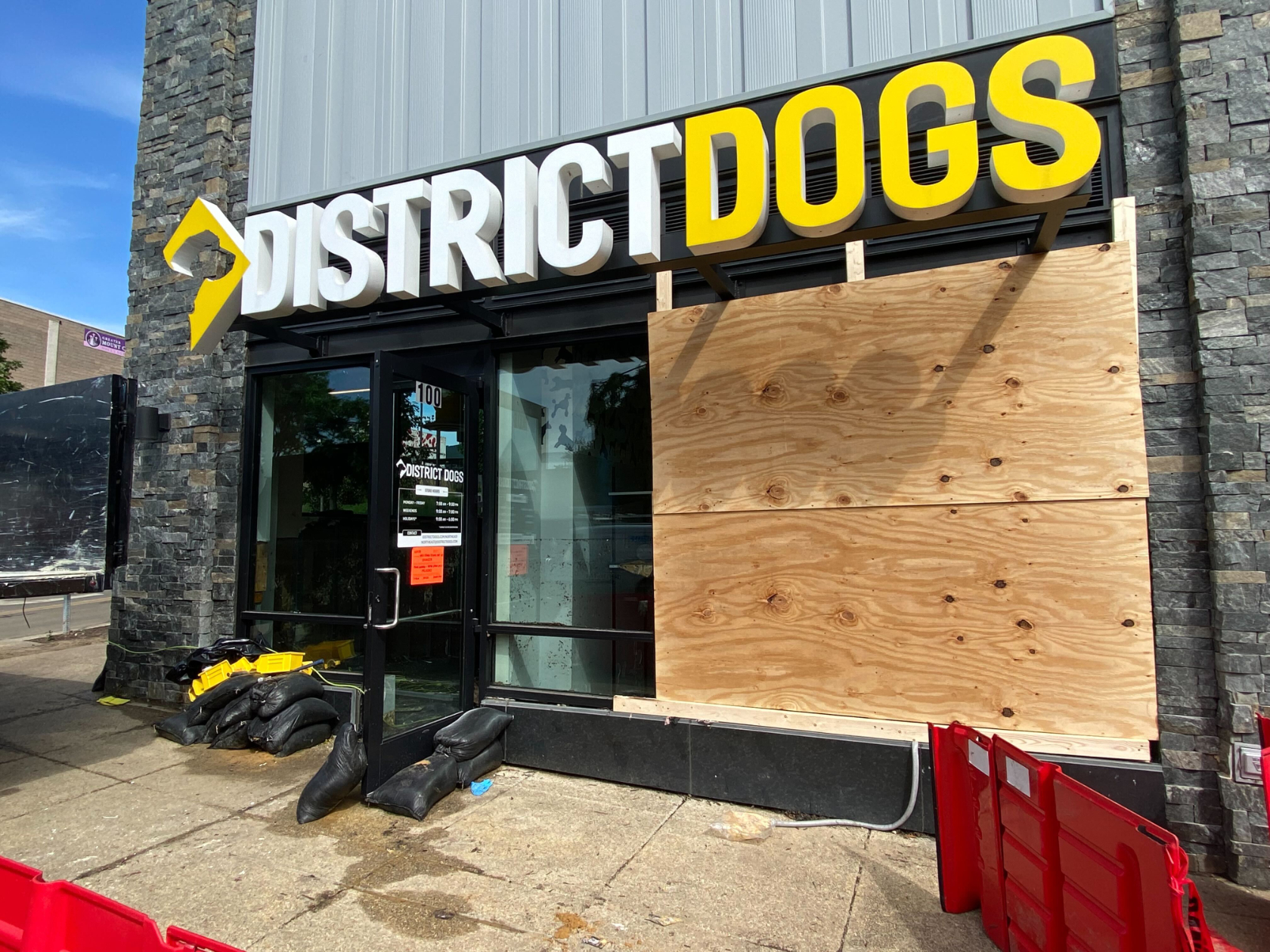
D.C. lawmakers, officials and the owner of District Dogs are trying to figure out how to avoid another flood like the one that killed several dogs and injured an employee the pet care facility in Northeast D.C. on Monday.
The flash flood was the result of heavy rains that passed through the region in the late afternoon, but was not the first time this summer that a storm caused flooding around the D.C. region.
It also wasn’t the first time District Dogs flooded; in the summer of 2022, this same facility flooded at least three times as this block of Rhode Island Avenue NE became submerged.
This area has been vulnerable to chronic flooding during heavy rainstorms since the 1800s, says John Lisle, a spokesperson for DC Water. It’s a low point in the District and shaped like a bowl, drawing in stormwater from multiple directions.
DC Water has for the past six years been building a tunnel, called the Northeast Boundary Tunnel, to help with this flooding. When it’s finished — currently expected for the end of September — it’s expected to mitigate the severity of flooding, says Lisle. The tunnel runs directly under Rhode Island Ave. and will add 90 million gallons of stormwater storage.
The tunnel is designed to be able to provide drainage for the amount of rain involved in a “15-year storm” — meaning a storm severe enough that it’s expected to only occur every 15 years, or which has a one-in-15 chance of occurring in any given year. (A 100-year storm, Lisle said, would be extremely severe).
But in the meantime, the area is prone to floods because the current sewer system at Rhode Island Avenue only accommodates a 2- to 5-year storm, even with some interim measures DC Water has taken in the area, including installing backwater valves in people’s homes. (The valves prevent flooding in a building when the sewer system becomes overwhelmed.)
Monday’s storm could have been between 10- to 25-years, Lisle says.
The flood claimed the lives of 10 dogs, the Humane Rescue Alliance confirmed. District Dogs Northeast will not reopen after Monday’s flood, owner Jacob Hensley told NBC4 Washington, though he said he is considering opening a new facility at a different location in Northeast. District Dogs has several other locations throughout the D.C. region, including in Park View, Shaw, and Clarendon.
District Dogs is continuing to work with officials to review the incident, Hensley said Monday. On Tuesday, he shared a more detailed statement outlining how quickly the floodwaters overtook the facility.
— Jacob Hensley (@jacobhensley) August 15, 2023
Residents began circulating a GoFundMe Monday night to raise $10,000 for the District Dogs staff. They later bumped up the fundraising goal to $15,000. As of Wednesday morning there have been at least 262 donations, totaling $14,854.
Ward 5 Councilmember Zachary Parker sent letters Tuesday to various agencies — including DC Water — asking them to address a series of questions about the most recent flood by Aug. 24.
Parker asked DC Water whether any of the storm drains were blocked by construction materials or debris on the day of the flooding, and when DC Water last cleared the catch basins in the storm drains on Rhode Island Ave.
“Residents deserve to know what precautions are taken when heavy rain is forecast and whether the long-term efforts underway to address flooding and sewage overflow offer sufficient protection,” Parker wrote. He also wrote to the Office of Unified Communications and to Fire and EMS.
Lisle said his agency is not immediately able to respond to the letter. “We’re really heartbroken about what happened,” he said. “We want to extend our deepest sympathies to any of the owners who lost their dogs yesterday.”
MRP Realty, the owner of the building where District Dogs is located, says it is looking into the flooding.
“We are in communication with the appropriate authorities and are working to fully understand the causes behind this flooding,” the statement read. “We will hold further comments until we have a better understanding of these issues.”
MRP Realty declined to answer questions from DCist/WAMU on whether it took any measures to mitigate damage since a similar flood occurred last year, and whether relocating District Dogs to a different part of the building may be a possibility.
“We share in the sorrow of the pet owners and their families affected by this tragic event, and we extend our sympathies to them,” the company’s statement reads.
Areas in Alexandria also experienced extensive flooding on Monday evening. Residents posted photos and videos of flooded streets and cars in deep water in neighborhoods across the city, including Old Town, Rosemont, near Glebe Road, by Braddock Road Metro station, and on the GW Parkway.
Alexandria has struggled with stormwater and sewer management, and the city is working to replace and update its aging infrastructure, which in some places is a century old. One major project, similar to D.C.’s Northeast Boundary Tunnel, is building an underground storage tunnel under the Potomac River, which will keep sewage from flowing into the river during torrential rains. The city also offers matching funds to property owners doing their own flood mitigation projects.
Some residents say all that is good progress — but worry that Alexandria will need to do more to address future flash floods, which are expected to get more severe and more frequent as the climate changes. Alexandria Mayor Justin Wilson noted on social media that Monday’s storm was significantly less severe than previous major flooding in the city.
While there’s hope that D.C.’s new tunnel reduces the risk of flood damage, it does not necessarily eradicate that risk, especially given climate change, says Lisle. (Even the system of using years as a storm severity measure is becoming increasingly tricky, as storms and flooding become increasingly frequent due to climate change, he says.)
“It’s not designed for every possible storm you might get. That’s just sort of prohibitively expensive to do,” he said. The tunnel was originally designed to improve the water quality of the Anacostia and Potomac Rivers and Rock Creek, but building was accelerated after severe storms hit the D.C. region in 2012.
“This is sort of an ongoing challenge that DC Water and other agencies are trying to find solutions to, to mitigate the impacts of flooding, ” Lisle said. “Especially as we see the impacts of climate change increase.”
Margaret Barthel contributed reporting.
This post has been updated with information on the future of District Dogs Northeast and the status of the fundraiser as of the morning of Aug. 16, and as more detailed definition of a 15-year storm.