Martin Austermuhle
Often in the morning, and sometimes at night, Rachelle Nigro takes to the streets around her condo building in Mt. Vernon Square.
She’ll keep her eyes open for anything that’s amiss, regularly jumping on to Instagram Live or Twitter to let people and D.C. agencies know of what she finds: illegally dumped garbage, an abandoned property that needs to be tended to, a street where cars are regularly running the stop sign. In recent weeks, much of her attention has been on fighting a push by the D.C. government to move the city’s central cell block to an unused police building in her district.
You could call her a neighborhood busybody. Or just a concerned citizen. But she prefers her formal title: “I’m Advisory Neighborhood Commissioner for ANC 2G06,” she says.
Nigro, 53, is one of 345 ANCs across the city, the corps of hyperlocal volunteers who are supposed to serve as the eyes, ears, and voices of their communities. They each represent roughly 2,000 of their neighbors in what are known as single-member districts; those districts are grouped into 46 commissions running from Spring Valley to Shipley Terrace and from Brightwood to Bellevue. (In Nigro’s case, her single-member district is 2G06, which is part of the 2G commission; there are 46 SMDs grouped into seven commissions in Ward 2.)
“I chose to be an ANC commissioner and to run for it because I love the neighborhood,” she says. “I live here too, so I wanted to see better things for the neighborhood, improved communication from the D.C. government, and for people to be involved too.”
That ANCs are elected by their neighbors every two years to serve as a layer of hyperlocal government sets D.C. apart from many U.S. cities. And that’s how it has been since the mid-1970s, when ANCs were created as part of a broader congressional bill that gave the city a popularly elected mayor and D.C. Council for the first time. Commissioners do not write legislation and have little formal power, but they are supposed to be granted certain deference by city agencies when it comes to everything from zoning changes to liquor licenses.
The novel system has its supporters and critics.
Many say that it empowers residents and better informs the government of what’s happening in neighborhoods across D.C. And they say it’s vastly more democratic and accountable than civic associations and informal neighborhood groups, many of which can influence local policy but may not answer to any actual residents’ needs.
But others claim ANCs merely create a legal system for elected gadflys to say “no” to everything. ANCs have been known, for example, to force bars and restaurants to enter into binding agreements governing hours of operation and noise, lest the commissioners formally protest a liquor license application.
For their part, many commissioners say the position is a critical bridge between the D.C. Council and the city’s residents, but they also concede they operate with little formal authority or assistance, making it a punishing and thankless job — one often performed after hours. Those challenges often manifest in the form of burnout and high turnover. The 2022 election cycle saw a large number of ANC races go uncontested, and more than 60% of the commissioners ultimately elected that year were new to the position.
Still, proponents of the system say that for all its imperfections — and the need for improvements — ANCs can be a force for good.
“I’m always reminded about [Winston] Churchill’s comment about democracy,” says Gottlieb Simon, who for 20 years was the director of the D.C. Office of Advisory Neighborhood Commissions. “Which is, ‘It’s the worst form of government except for every other one we’ve tried.’ ANCs certainly are imperfect. But arguably it is better to have them than not to have had them.”
‘Neighborhoods need all the champions they can find’
Were it not for one D.C. resident and a congressman from Minnesota, D.C. may never have come to have Advisory Neighborhood Commissions.
The idea for what would eventually become the city’s unique form of hyperlocal government came as Congress was finalizing a bill that would give D.C. an elected mayor and legislature. The Home Rule Act, approved at the end of 1973, largely granted the city’s residents the ability to govern themselves, a right they had only intermittently enjoyed since Washington was founded in 1790.
Around the time the Home Rule Act was being debated, there was growing concern among activists, academics, and some policymakers that residents of cities across the U.S. — including D.C. — were becoming more disconnected from and disenchanted with their elected leaders. A possible solution was to bring government closer to the people, and one of its main proponents was Milton Kotler, a Chevy Chase D.C. resident and scholar at the left-leaning Institute for Policy Studies.
His proposal for a new layer of neighborhood-level government caught the attention of Rep. Don Fraser (D-Minnesota), who included a provision in the Home Rule Act requiring what were then called Advisory Neighborhood Councils. (The name was eventually changed to Advisory Neighborhood Commissions, to avoid any confusion with the D.C. Council.)
“The new system should provide many neighborhoods with the spokesmen and advocates they often lack today,” he wrote in 1974, the same year that 73% of D.C. residents endorsed the new ANCs in a citywide referendum. “Certain areas of the city, Georgetown is a good example, already speak with a strong voice at City Hall. Georgetown may not need the advocacy services that a local council could offer. But other neighborhoods need all the champions they can find.”
Sam Smith, a progressive activist and journalist in D.C. at the time, hailed ANCs as a “radical and subversive concept,” a means for the city’s residents to be much more intimately involved in their new democratically elected government.
“Even our well-meaning new city councilmembers will soon find themselves drowning in their inability to deal with all the problems that develop, say, in a ward constituency of 90,000 people. Unless they discover hitherto unknown cosmic power, they will bit by bit surrender their political responsibilities to appointed administrators in the District building,” he wrote in 1975. “Neighborhood government offers an antidote to this chronic gap between what big city councilmembers are supposed to do and what they can do.”
There were other examples of neighborhood government that popped up across the U.S. at the time. In New York, Mayor John Lindsay created “little city halls” located in communities around the city, while Portland, Oregon and Pittsburgh, Pennsylvania empowered community associations and boards. Even in D.C. there was a nascent movement towards neighborhood-based self-government, best seen in the Adams Morgan Organization that was created in 1972.
But for all the examples of neighborhood-level engagement that existed in other U.S. cities, D.C. stood out as one of the only places that formally made ANCs a popularly elected position, says Marie Nahikian, 76, a co-founder of the Adams Morgan Organization who later became one of the neighborhood’s first elected ANCs.
“There’s not any place in the country that I think supports the concept of that kind of neighborhood representation,” she says.
‘It’s the voice of the people’
And that’s largely what attracted Mary Gaffney to run to represent her single-member district on the easternmost edge of Ward 7 shortly after ANCs came into existence in the mid-1970s. She first took office in 1980, and served almost continuously until she lost a tight race for re-election in 2022. (She fell five votes short, out of the 394 total votes cast.) Gaffney stands as the city’s longest-serving ANC commissioner.
“I enjoyed it very much,” says Gaffney, a radiologist now in her 80s, of her decades serving as an ANC. “I knew there was no pay in it, but I wasn’t looking for any pay. My point was I was interested in helping the community.”
Gaffney said she used her perch to urge city agencies to repair streets and alleys, more quickly pick up trash, and improve housing options in her neighborhood. “Most of the time all of the government agencies and the council only knew what happened in the community because of the ANCs,” she says. “Otherwise, they don’t know anything.”
Issues like those have always been the bread and butter of many ANCs: By virtue of their status as elected officials, they’re supposed to have a more direct line to the city’s bureaucracy to get these kinds of quality-of-life problems solved and to pinpoint emerging issues.
But Advisory Neighborhood Commissions also have more formal lines of authority. A range of official government actions — whether to build a homeless shelter, change a traffic pattern, or even grant a liquor license — allow for formal input from an impacted ANC. In many cases, the opinions of the ANC are supposed to be given “great weight” by government agencies.
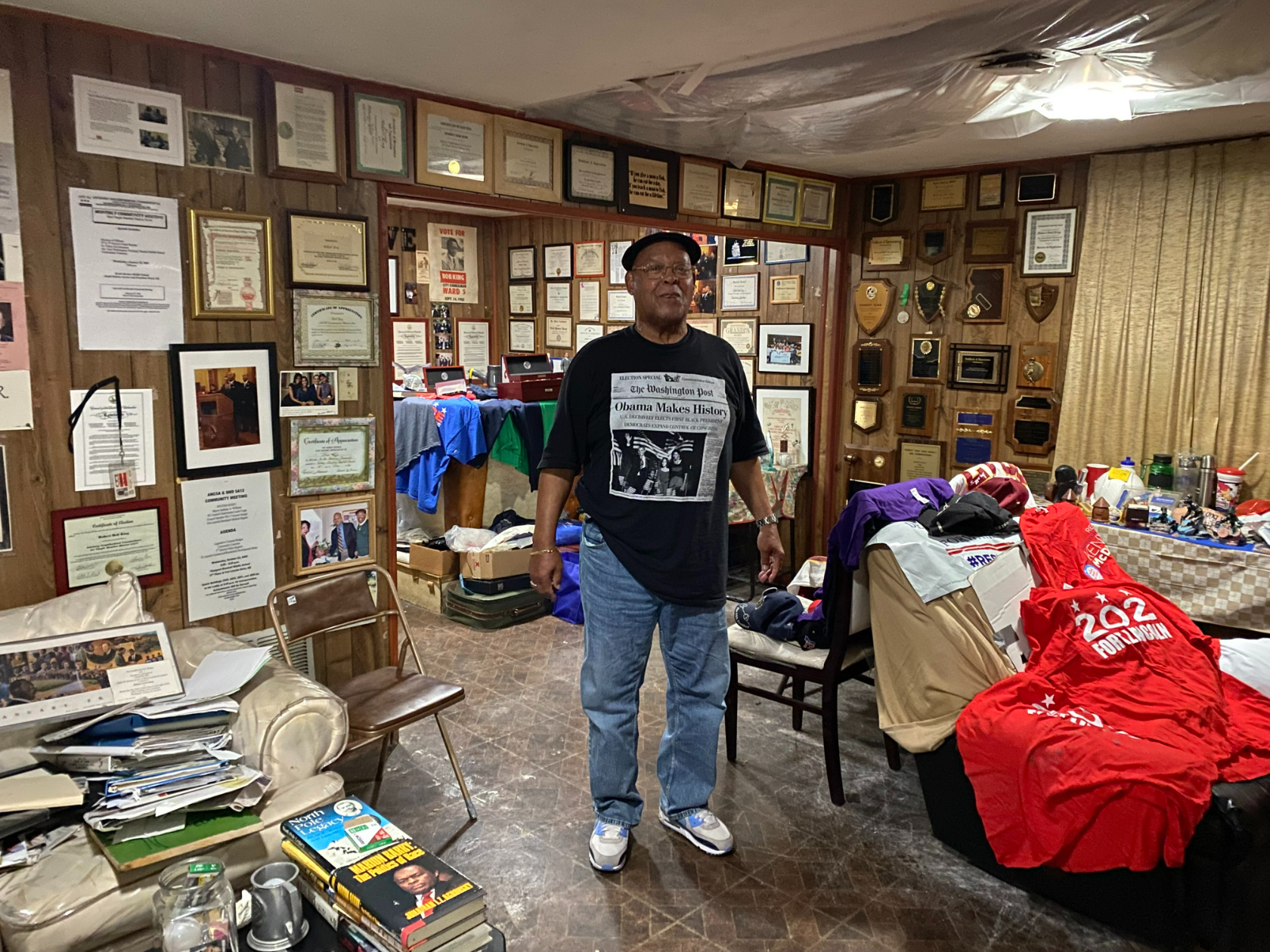
“It matters because it gives us an opportunity on crime, recreation, zoning, sanitation. It’s the voice of the people,” says Bob King, 78, who for three decades served as the ANC for Fort Lincoln in Northeast. “You’ve got 2,000 [constituents]. That’s a lot of people. And if you know how to move those people, you can hold councilmembers accountable for how they spend the taxpayers’ dollars in your ward.”
King adds that ANCs can be a jumping-off point for people eyeing higher office. Both Mayor Muriel Bowser and D.C. Council Chairman Phil Mendelson are former ANCs, as are Councilmember Brianne Nadeau (D-Ward 1) and Councilmember Matt Frumin (D-Ward 3).
Of course, ask any commissioner whether D.C. government agencies always listen to them, and they’ll say no. Additionally, ANCs are often bedeviled by the same political machinations and scandals that befall those in higher office. Commissioners have almost come to blows during heated debates, there have been allegations of corruption and sustained claims of self-enrichment, and petty infighting and political dysfunction in some ANCs has been well-documented.
“It’s a tool,” says Topher Mathews, who serves as an ANC commissioner in Georgetown. “It’s only as good or bad as the person wielding it.”
‘It really is treated… as an afterthought’
While the quality or success of a particular Advisory Neighborhood Commission may come down to the individuals holding those seats, many say that the challenges they face are actually structural.
The job is unpaid, largely conducted before and after the traditional workday, comes with many of the same legal responsibilities as elected officials higher up the ladder, and has often lacked broader government support. That has created a situation where some commissions operate as well-oiled mini-legislatures, with regularly updated websites and a consistent presence in the Wilson Building to testify on pending legislation, while others struggle just to keep up with the pace of constituent concerns.
“This is a serious job, despite what many may think,” says Amanda Beale, a first-term ANC commissioner in Ward 8. “To be the best at it, my community needs my attention and I just can’t do that as a full-time employee and mother of three.”
That reality has led to periodic moments of high turnover on Advisory Neighborhood Commissions across the city, and challenges recruiting candidates. In the 2022 election cycle, 17% of the 345 seats up for grabs had no candidates at all, while 56% of the races were uncontested. Only 28% of races had two or more candidates participating, lower than at any point since 2010. After the Nov. 2022 election, fully 63% of commissioners were new to the position.
“I think it’s not particularly sustainable. ANCs are volunteers, people who serve often have full-time jobs, have children, and have other things going on in their lives. And it really is treated in terms of resources and support as an afterthought,” says Erin Palmer, a three-term ANC commissioner in Ward 4 who has chosen not to run again, in part because of the burdens of the position.
Palmer recalls the year she first became a commissioner, when there was particularly high turnover in her Ward 4 commission. Instead of focusing immediately on constituent concerns, Palmer and her colleagues discovered that her commission was actually in debt, a product of poor bookkeeping by their predecessors. (ANCs receive modest budgets they can use for grants to community groups, or other projects. Those budgets vary based on the number of people represented by a commission, but generally top out around $25,000 a year.)
There have been repeated calls over the years for ANCs to be paid a stipend or salary; a council bill proposed in 2016 would have given each commissioner $500 a year for their service. “It’s a tremendous labor of love, and that’s why I think it should be compensated,” says King.
Palmer agrees, and adds that she’d like to see a smaller corps of “professionalized” commissioners, operating more like a lower house of an expanded D.C. Council.
Many of the concerns about ANCs have existed about as long as the commissions have. In 1978, a study by Howard University on the initial rollout of the new commissions noted that the “lack of budget and resources is one of the major problems in managing ANCs,” as was their “ill-defined scope and role.”
Dealing with many of these concerns is left to the Office of Advisory Neighborhood Commissions in the Wilson Building, which last November got a new director: Kent Boese, a former Advisory Neighborhood Commissioner in Ward 1.
Boese says he’s working on expanding training opportunities for commissioners, while at the same time trying to standardize technological offerings like government Zoom accounts, individual ANC websites, and financial reporting software so that the city’s 46 commissions don’t all operate like separate fiefdoms.
Boese’s office has also recently hired a general counsel to help commissioners navigate government ethics and legal requirements like making records available for the public and how to manage social media. (This year an ANC commissioner was sued for blocking a constituent on Twitter; it’s generally considered unconstitutional for elected officials to block people on their official accounts. The case was settled this week.) Boese will also soon hire a land-use attorney to help commissioners better understand complex zoning and planning issues that ANCs are often asked to weigh in on.
“I always found being a commissioner that when you went before a board or commission and you were able to argue whether in favor or in opposition of a case using the language that that board or commission has purview over, you were far more successful,” he says. “I would like to give every commissioner and commission the same opportunity to excel.”
Still, Boese and many existing and past commissioners say that despite fixes that should be made to facilitate the job, the position remains as useful as it is unique, even after almost 50 years in existence.
“It’s a bully pulpit,” says Josh Gibson, a former ANC commissioner in Adams Morgan. “You technically have no power, only that which you personally create. It’s also the best possible crash course in how the D.C. government does and does not work. In my imaginary perfect world, every D.C. resident would be required to serve one time as an ANC commissioner.”