Margaret Barthel
 Tyrone Turner
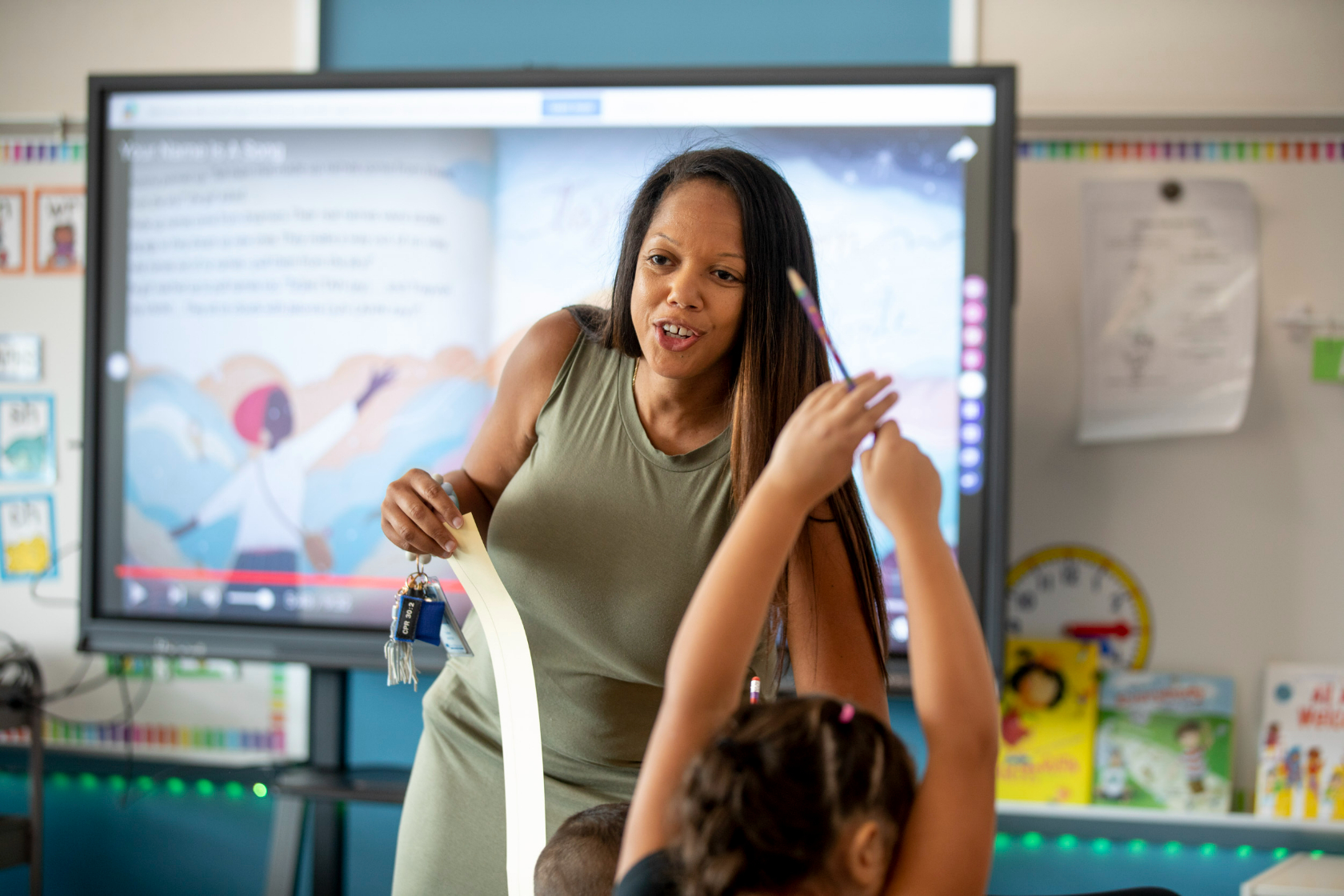
The second graders in Tasha Haston’s class at Innovation Elementary School are writing and then decorating their full names on big strips of paper. Haston is talking to them about vowels, circling the classroom to find stragglers, and praising the kids who are getting right to work. It’s only the second day of school, but already, her command of the classroom is clear. When she needs to, she cuts straight through the babble of kids talking to each other.
“If you can hear my voice, clap once!” she says, inspiring a sprinkling of claps.
“If you can hear my voice, clap twice!” Clap, clap, mostly in sync.
Principal Kelle Stroud, who’s spent 30 years as an elementary school educator and is peeking around the doorframe, says she likes what she sees and hears.
“There’s that nice hum of kids working and talking and focused,” she says. “The teacher is beginning those really good systems of letting them be kids and talk and learn together.”
It’s taken a lot of work to get here. Innovation Elementary is brand new this year, a shiny new $37 million school building designed to relieve overcrowding at three established elementary schools nearby. The construction, Stroud says, was delayed a year due to inflation and supply chain issues.
But the finished product, she thinks, is worth the wait. It’s full of natural light and cozy seating areas for small group learning. It smells new. A muralist is painting a “Falcons” mural in the gym, a nod to the school’s mascot, and next to the stairs between the first and second floor is a kind of natural amphitheater, with deeper steps for kids to sit on.
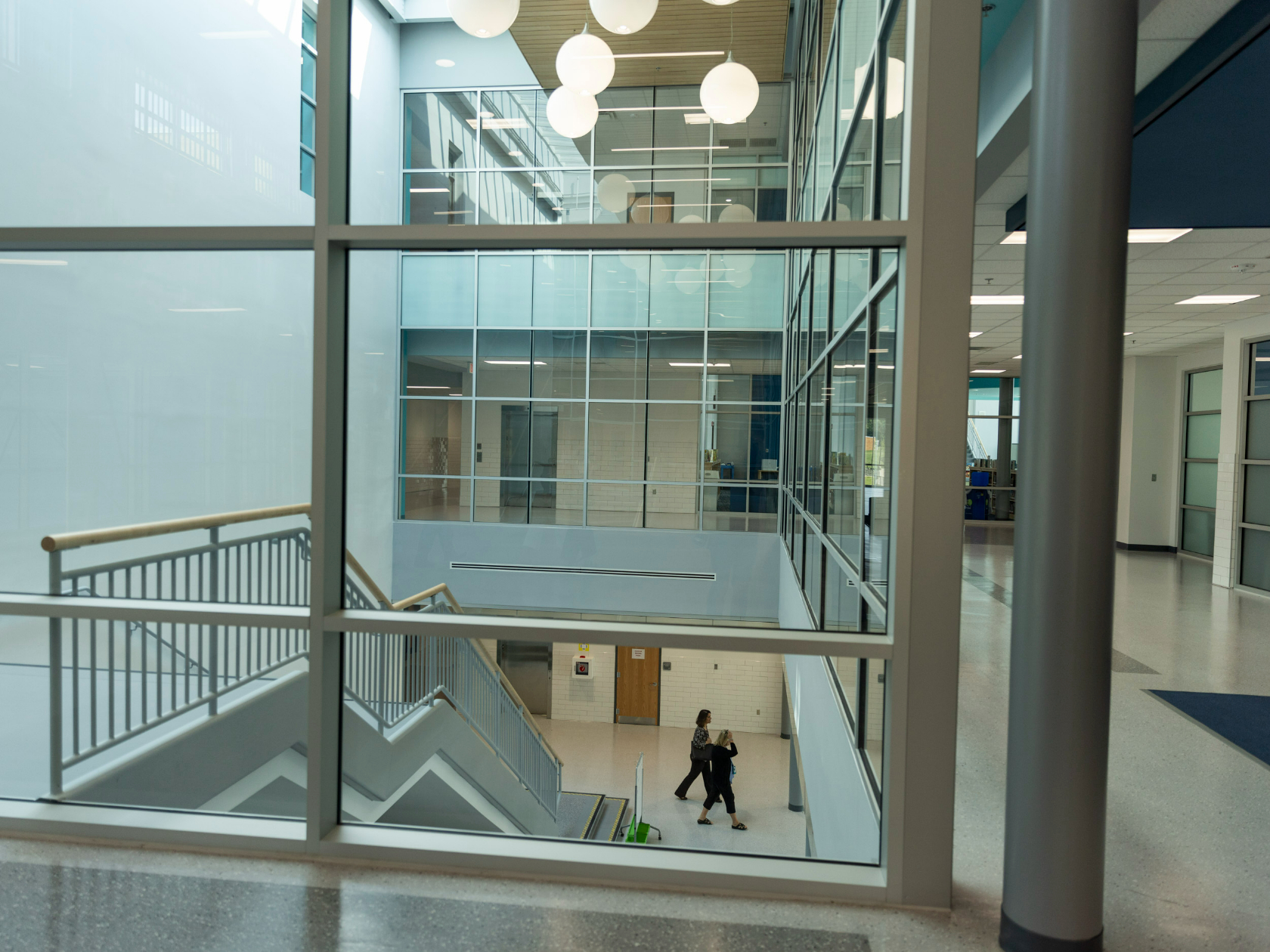
Stroud started planning for the opening, helping with the interior design, and hiring the school’s staff a year ago. Despite broader struggles across the D.C. region with teacher hiring, Innovation is fully staffed. Many educators were drawn to the idea of building a school community from scratch, Stroud says.
The first week back in school always comes with a sense of opportunity. It’s the precipice before everyone dives into the messy, thrilling, and tough process of learning. But for students and staff in brand new schools like Innovation, there’s the added dimension of creating a brand new community, with all the new traditions, new systems, and new expectations that entails.
So it’s no wonder that people are a little jittery with the newness of it all.
“I was a little bit scared, but I got used to it,” as first-grader Malana Farber puts it.

That seems to resonate with Stroud too. Asked about what the first day of school was like for her, she focuses immediately on the systems she’d put in place to get kids safely to and from the school building, making sure no one rode the wrong bus. She talks about getting staff familiar with the layout of the building.
Stroud and Haston, the second-grade teacher, say they’re particularly eager to get into the work of creating a positive culture at school. Haston’s room decor makes no secret of that: a sign on her door says, “The future of the world is in this classroom,” in big curly letters.
“I just want them — when they come in, they see themselves in this building,” she says. “I want them to be able to know their future starts here, and I’m here to help them grow.”
The student body — which is highly diverse and includes a wide variety of different languages spoken at home — comes from three existing elementary schools. Innovation staff have been trying hard to make families feel welcome and at home in the new space. They’ve held open houses and even done a bus tour through the neighborhoods where their students live.
Haston thinks that work is paying off, helped in part by how beautiful the new learning environment is.
“The community were very welcoming,” she says, reflecting on her interactions with parents at a back-to-school open house. “They love the school. You can see it on their faces.”
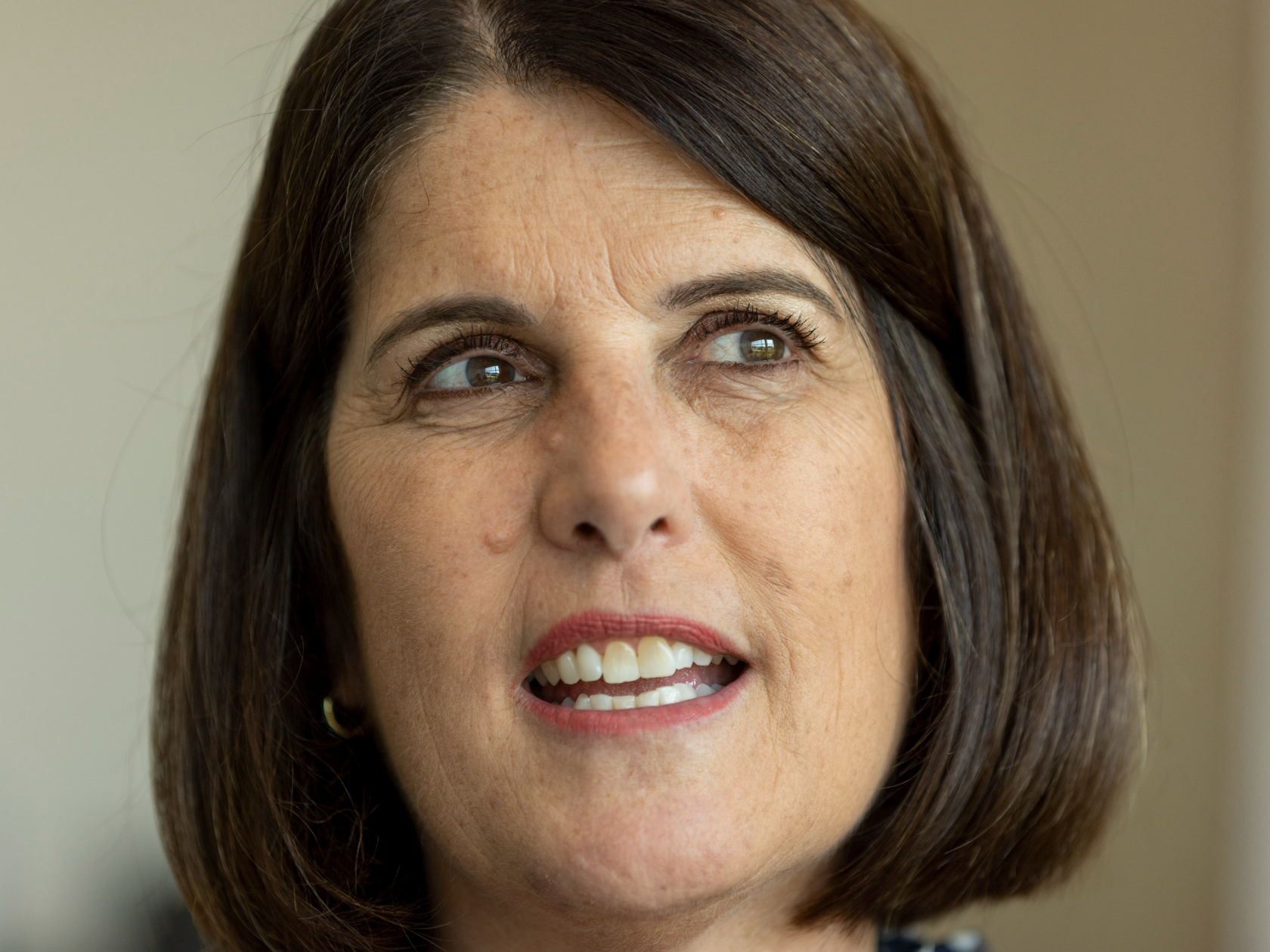
For Principal Stroud, all that focus on building a positive culture could also help fix a problem she and her parent liaison will be watching for in the next week: early patterns of absenteeism among her students, a nationwide issue in the wake of the pandemic.
“If the kids like their teacher and they like to be there, they’re going to tell their parent they want to be there,” she says.
Getting parents to get their students to class is particularly critical in the first month of school. Missing multiple days of school in September can predict which students are likely to ultimately miss close to a month of the whole school year, according to Attendance Works, an organization focused on improving student achievement by minimizing absences.
Nationally, chronic absenteeism — when students miss 10% or more of the school year — jumped by about 10 percentage points, from 15% before the pandemic to 25% in the 2021-2022 school year, according to figures compiled by the Associated Press. Chronic absenteeism particularly affected Latino, Black and low-income students.
In Prince William County Schools — Virginia’s second-largest school division — about a quarter of students were chronically absent in the second quarter of last year, setting off alarm bells for administrators. Attendance has rebounded some since, and the division has placed a particular focus on educating families about the long-term effects of missing school.
In Virginia as a whole, absenteeism doubled, from 10% in 2018-2019 to 20% in 2021-2022. Elsewhere in the region, the situation is even more dire: D.C. Public Schools had a 48% chronic absenteeism rate in 2021-2022, according to the AP. In Maryland schools, the rate was 30%.
Stroud says missed days usually come down to some kind of barrier at home. Once she and her staff identify an emerging attendance issue, they’ll try to figure out the root cause.
“Sometimes it’s just, they need a referral to something or they need support with food or they need support with clothing,” she says. “If we can support those [things], it takes one more little piece off of their plate.”
Stroud recognizes that the school and families are navigating a transition after the pandemic, with some families scarred from COVID-19’s impact and worried about sending their children back to the physical school building where they could come into contact with illness.

But she’s clear that the Innovation community will have to nip absenteeism in the bud if she wants to make progress on another key goal for the year: raising students’ math and reading scores.
Luckily, Stroud has some small helpers on that front.
Fourth grader Ariah Graham says she made two new friends on her first day of school and mainly views this school year as a stepping stone to fifth grade and then middle school, when her parents will allow her to have a cell phone. But she’s got her eye on an academic goal, too.
“I want to be able to — if anybody asks me a multiplication question, I can answer it real fast,” she says.